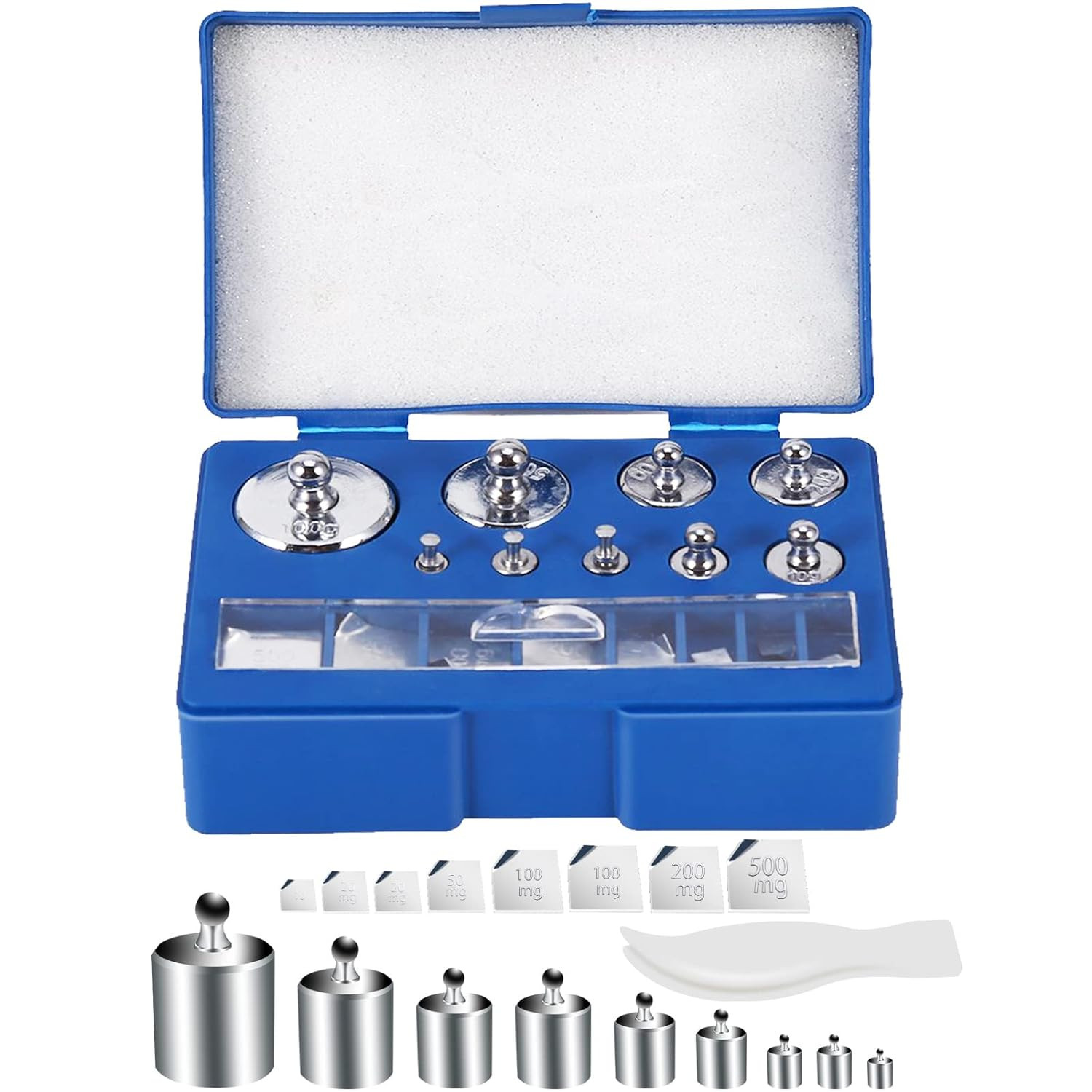

Photos from current listings. Actual item, color, and included accessories may vary.
Calibration Weight Set Buying Guide
A calibration weight set is a certified mass reference used to verify and adjust digital scales, balances, and force instruments. The decisive trade-off is weight class accuracy (OIML/ASTM) versus cost: lower classes are fine for routine checks, while higher classes demand tighter tolerances and certified calibration. Buy the lowest class that meets your scale resolution, and always match weight material to corrosion environment.
Median $90.00
Key takeaways
- OIML classes run E1, E2, F1, F2, M1, M2, M3 in descending accuracy; ASTM classes 0-7 map inversely (Class 0 tightest). M1/M2 covers most industrial bench scales; E2/F1 needed for analytical balances.
- Stainless steel (304/316) resists corrosion and holds adjustment; brass and painted cast iron are cheaper but drift with humidity and handling wear, making them unsuitable for lab-grade verification.
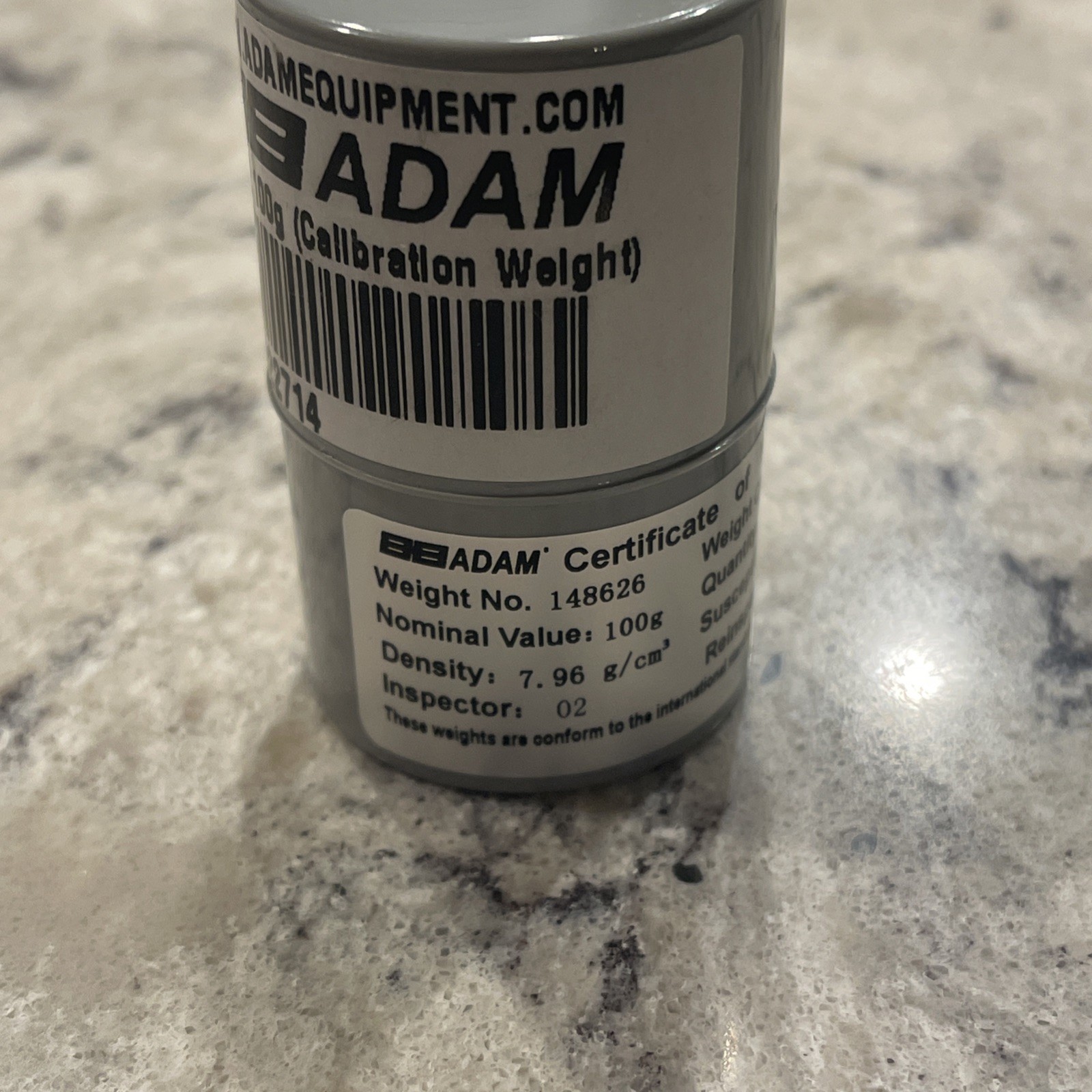
- Calibration certificates matter: OIML/ASTM-compliant sets ship with traceable certificates stating nominal mass, class, and uncertainty, which auditors and ISO 9001 programs require.
At a glance
- Category
- Calibration Equipment & Standards
- Last updated
- Nov 28, 2026
Current offers
Highlights
- OIML classes run E1, E2, F1, F2, M1, M2, M3 in descending accuracy; ASTM classes 0-7 map inversely (Class 0 tightest). M1/M2 covers most industrial bench scales; E2/F1 needed for analytical balances.
- Stainless steel (304/316) resists corrosion and holds adjustment; brass and painted cast iron are cheaper but drift with humidity and handling wear, making them unsuitable for lab-grade verification.
- Calibration certificates matter: OIML/ASTM-compliant sets ship with traceable certificates stating nominal mass, class, and uncertainty, which auditors and ISO 9001 programs require.
- Weight sets come as individual weights or nested kits; a 1mg-200g kit covers micro-balances, while 1g-2kg covers industrial platform scales, so range must match your scale's capacity and readability.
Best use cases
- Best fit: laboratory analytical balances (0.1mg readability) — choose E2 or F1 stainless steel sets with individual certificates; skip M1 kits, which are too coarse for sub-milligram verification.
- Best fit: industrial bench and platform scales (0.1g-1g readability) — M1 or F2 stainless steel sets from 1g to 2kg verify accuracy economically; E2 is unnecessary overkill and costs more.
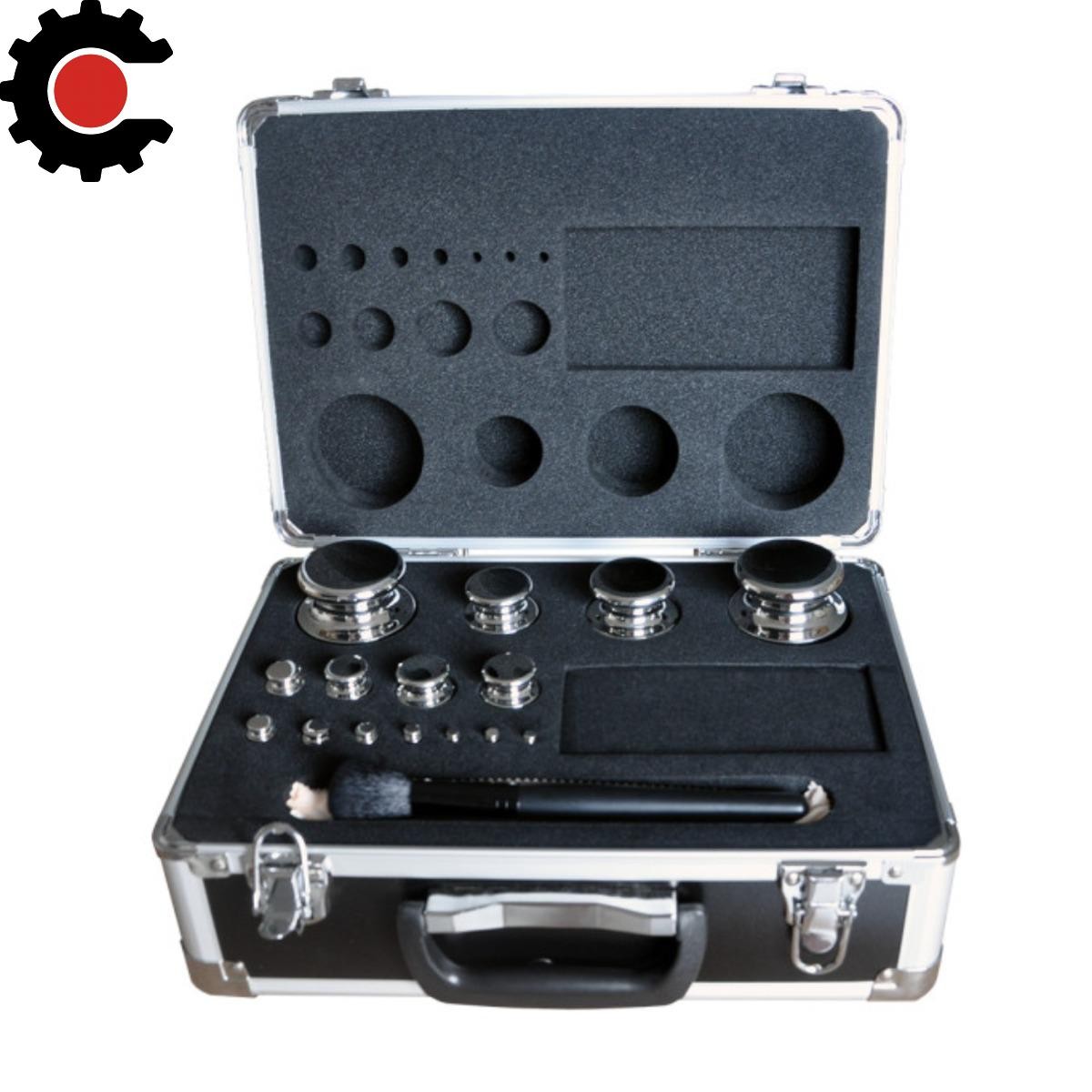
- Best fit: field service and rental fleets — pick rugged stainless steel M2 sets with foam-lined cases; avoid brass or painted weights that chip and lose certification in transit.
- Wrong fit: using a single 100g ASTM 2 weight to calibrate a full-range scale — one-point checks only verify at that load; multi-point calibration needs a graduated set spanning 10-100% of capacity.
Buying tips
- Match class to resolution: E2/F1 for 0.1mg-0.01g balances, F1/F2 for 0.01g-0.1g, M1/M2 for 0.1g-1g industrial scales — buying tighter than needed wastes budget without accuracy gain.
- Choose 304 or 316 stainless steel over brass or painted iron; stainless resists oxidation and keeps mass stable through repeated handling, while plated weights flake and drift.
- Select a set spanning at least 10% to 100% of your scale capacity with enough increments for multi-point linearity checks; a 1mg-200g kit suits micro-balances, 1g-2kg suits platform scales.
- Demand a traceable calibration certificate naming nominal mass, OIML/ASTM class, and uncertainty; uncertified sets cannot support ISO, GMP, or audit compliance.
Specs
| Accuracy Class | OIML E1-M3 / ASTM 0-7 |
|---|---|
| Material | Stainless steel 304/316 vs brass |
| Weight Range | 1mg-200g / 1g-2kg kits |
| Certification | Traceable OIML/ASTM certificate |
Related searches
What to check before buying
- Confirm your scale's capacity and readability first: a 0.001g balance needs E2/F1 class weights at 1mg-100g, while a 30kg platform scale needs M1 weights up to 20kg or a substitution method.
- Verify the certificate standard your quality system requires — OIML R111 or ASTM E617 — and ensure the set's class and certificate match that standard before purchase.
- Check environmental conditions: stainless steel is required in humid, washdown, or corrosive areas; brass and painted iron only suit dry, controlled rooms.
- Ensure storage is included — foam-lined or wooden cases protect weights from dust, scratches, and handling damage that degrade class accuracy over time.
FAQ
Data sources: eBay / Amazon listings and product attribute feeds. Updated Nov 28, 2026.
Some links on this page are affiliate links. If you buy after clicking one, we may earn a commission at no extra cost to you. This does not change which products appear here or their order. Affiliate disclosure.