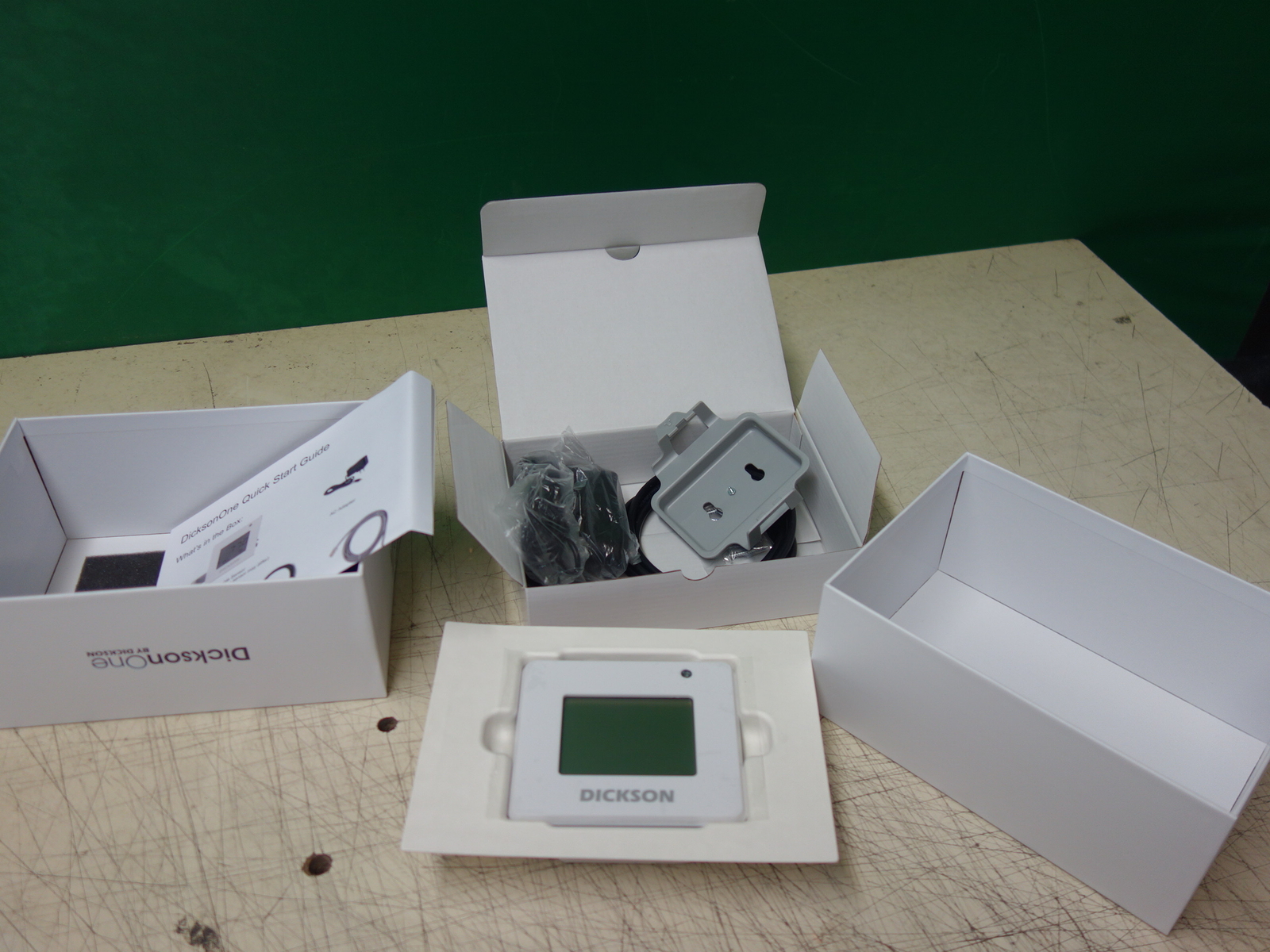

Photos from current listings. Actual item, color, and included accessories may vary.
Dickson Data Logger Buying Guide
Dickson data loggers are dedicated temperature, humidity, and pressure recording instruments used for cold-chain, laboratory, and facility monitoring. The core trade-off is between standalone USB-stick loggers (manual download) and networked or cloud-connected models (real-time alarms and audit trails). Choose a networked logger when compliance or alarm response matters; choose a USB logger only for simple, periodic record-keeping.
Key takeaways
- DicksonOne is Dickson's cloud-connected platform with real-time dashboards, SMS/email alarms, and 21 CFR Part 11-ready audit trails; USB loggers like the DWE series store data internally and require manual download.
- Standalone Dickson loggers typically log at user-set intervals from 1 second to hours, with internal memory sized for tens of thousands of samples; networked models stream to the cloud and are effectively unlimited in retention.
- Sensor accuracy separates tiers: standard models are often ±0.5°C / ±3% RH, while calibrated or high-accuracy options reach ±0.2°C / ±1.5% RH with NIST-traceable certificates.
At a glance
- Category
- Data Acquisition & Recorders
- Last updated
- Nov 28, 2026
Current offers
Highlights
- DicksonOne is Dickson's cloud-connected platform with real-time dashboards, SMS/email alarms, and 21 CFR Part 11-ready audit trails; USB loggers like the DWE series store data internally and require manual download.
- Standalone Dickson loggers typically log at user-set intervals from 1 second to hours, with internal memory sized for tens of thousands of samples; networked models stream to the cloud and are effectively unlimited in retention.
- Sensor accuracy separates tiers: standard models are often ±0.5°C / ±3% RH, while calibrated or high-accuracy options reach ±0.2°C / ±1.5% RH with NIST-traceable certificates.
- Display and alarm hardware varies: entry USB loggers may lack a screen, while DicksonOne-compatible and premium standalone models include LCD readouts, LED alarms, and relay or email alerting.
Best use cases
- Best fit: regulated pharma or food cold-chain storage — pick a DicksonOne networked logger with NIST-traceable calibration and alarm escalation; skip basic USB loggers that cannot prove continuous monitoring.
- Best fit: single refrigerator or incubator checked weekly by staff — choose a standalone USB logger with an LCD and sufficient memory for the interval; skip cloud subscriptions you do not need.
- Best fit: multi-site facility monitoring — standardize on DicksonOne cloud loggers for centralized dashboards and audit reports; skip mixed fleets of manual-download units.
- Wrong fit: high-vibration or condensing environments without an enclosure — choose an IP-rated or probe-style logger instead of a bare circuit-board USB unit.
Buying tips
- Match logging interval to memory: at a 1-minute interval, a 32,000-sample logger holds about 22 days; at 15 minutes, roughly 333 days. Calculate your download cycle before choosing.
- Specify sensor accuracy by application: ±0.5°C suits general storage; ±0.2°C with NIST calibration is required for validation and regulatory audits.
- Decide connectivity first: USB download for occasional checks, Ethernet/Wi-Fi cloud (DicksonOne) for alarms and remote access, and 4-20mA or relay outputs only for building-automation integration.
- Check probe style and range: internal sensors suit ambient rooms, while external probes and stainless or glycol-buffered probes are needed for freezers, ovens, and autoclaves.
Specs
| Connectivity | USB download vs DicksonOne cloud |
|---|---|
| Sensor Accuracy | ±0.5°C / ±3% RH std; ±0.2°C / ±1.5% RH cal |
| Logging Memory | 16k-64k samples typical (USB models) |
| Probe Type | Internal ambient vs external stainless/glycol |
Related searches
What to check before buying
- Measure the storage volume and sensor placement: internal-sensor loggers need free air circulation; freezers and ovens require external probes rated for the temperature range.
- Confirm the power and network environment: cloud loggers need continuous power and Wi-Fi or Ethernet coverage at the monitoring point.
- Verify calibration certificate requirements: regulated use demands NIST-traceable calibration and a defined recalibration interval, usually annual.
- Check the mounting and enclosure: clip, magnet, or wall-mount options and IP-rated cases matter in wet, dusty, or high-vibration locations.
FAQ
Data sources: eBay / Amazon listings and product attribute feeds. Updated Nov 28, 2026.
Some links on this page are affiliate links. If you buy after clicking one, we may earn a commission at no extra cost to you. This does not change which products appear here or their order. Affiliate disclosure.