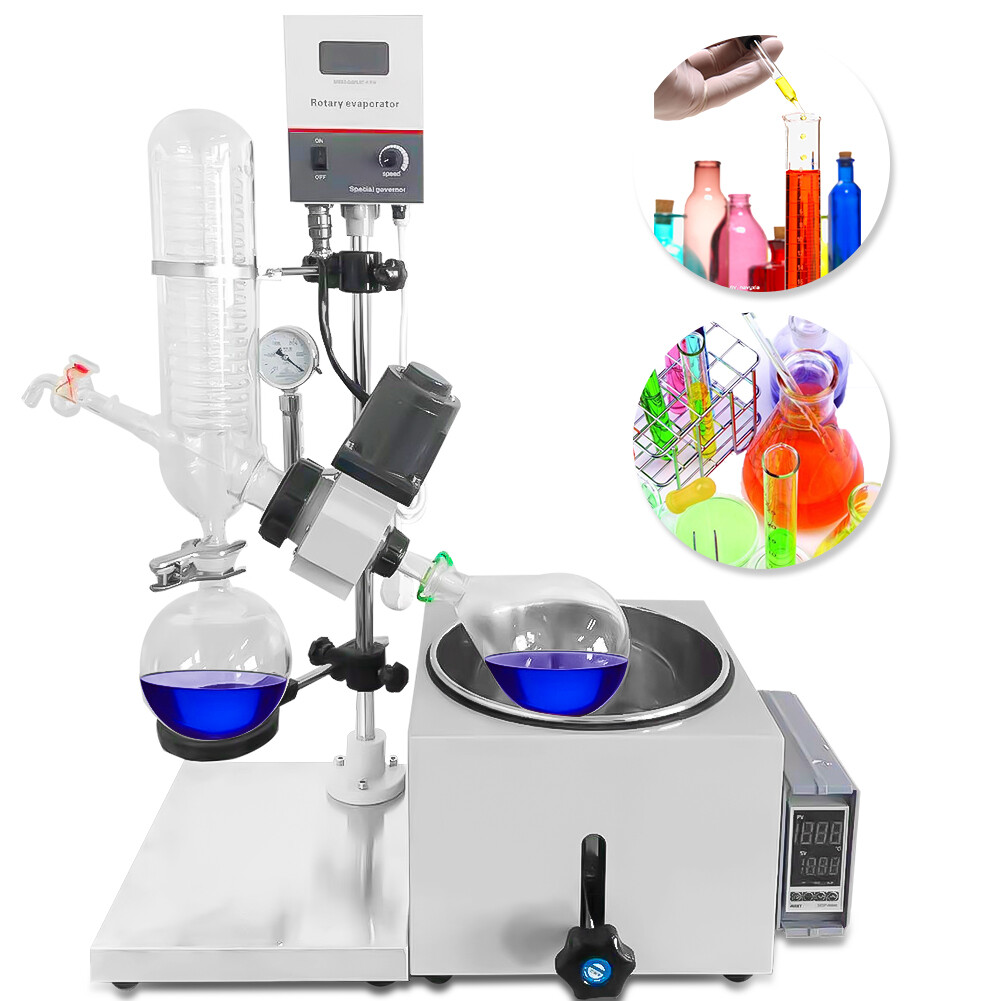

Photos from current listings. Actual item, color, and included accessories may vary.
Manual Vacuum Pump Buying Guide
A manual vacuum pump is a hand-operated positive-displacement device that pulls a rough vacuum (typically 10–100 mbar) for filtration, distillation, rotary evaporation, and degassing where a powered pump is unnecessary or unavailable. The primary trade-off is between piston/plunger pumps that reach deeper vacuum but require continuous hand effort and diaphragm/venturi styles that offer lower ultimate vacuum but smoother, oil-free operation. The clear rule: for wet chemistry with rotary evaporators or vacuum filtration, choose a chemical-resistant piston pump rated to ≤50 mbar with PTFE seals; skip any plastic-bodied pump labeled only for automotive fluid transfer.
Key takeaways
- Hand piston pumps typically achieve 20–80 mbar ultimate vacuum; single-stage rotary vane pumps reach 0.5–2 mbar for comparison
- PTFE (Teflon) piston seals and PTFE-lined diaphragms resist solvent and acid vapors; nitrile/Buna-N seals swell and fail with acetone or DCM
- Manual pumps are rated for intermittent duty (not continuous >30–60 min) because hand effort and heat buildup limit sustained operation
At a glance
- Category
- Lab Heating, Cooling & Vacuum Equipment
- Last updated
- Nov 28, 2026
Current offers
Highlights
- Hand piston pumps typically achieve 20–80 mbar ultimate vacuum; single-stage rotary vane pumps reach 0.5–2 mbar for comparison
- PTFE (Teflon) piston seals and PTFE-lined diaphragms resist solvent and acid vapors; nitrile/Buna-N seals swell and fail with acetone or DCM
- Manual pumps are rated for intermittent duty (not continuous >30–60 min) because hand effort and heat buildup limit sustained operation
- Inlet connections are typically 6–10 mm hose barbs or 1/4-inch NPT; rotary evaporators use 8–10 mm ID vacuum tubing to the pump inlet
Best use cases
- Best fit: vacuum filtration and rotary evaporation with a 2L rotovap — pick a hand piston pump with PTFE seals rated ≤50 mbar and a 8–10 mm hose barb inlet; skip plastic automotive transfer pumps.
- Best fit: field or teaching-lab degassing and solvent recovery where no wall power exists — choose an oil-free diaphragm hand pump; skip rotary-vane electric pumps that need mains power and oil.
- Wrong fit: continuous 8-hour vacuum distillation or Schlenk-line work below 1 mbar — these require a two-stage rotary vane or scroll pump; a manual pump cannot hold deep vacuum unattended.
- Wrong fit: filtering viscous or large-volume slurries where fast draw-down matters — use a water aspirator or electric diaphragm pump; manual pumps tire the operator and slow throughput.
Buying tips
- Match the pump's ultimate vacuum to your application: filtration needs only 100–200 mbar, rotary evaporation 20–50 mbar, and vacuum distillation below 10 mbar — buying deeper than needed wastes money and effort.
- Demand PTFE or PTFE-lined wetted parts if pumping acetone, DCM, methanol, or acids; nitrile seals degrade within weeks of solvent exposure.
- Confirm the inlet barb diameter matches your tubing: 8 mm ID for rotovap condensers, 6 mm for small filtration flasks; mismatched barbs leak and kill vacuum.
- Choose a piston pump over a bulb-style aspirator when you need a stable, repeatable vacuum reading; bulb aspirators give variable vacuum that drifts with hand pressure.
Specs
| Pump Type | Hand piston / diaphragm / aspirator |
|---|---|
| Ultimate Vacuum | 20–100 mbar (manual); 0.5–2 mbar (rotary vane) |
| Wetted Seal Material | PTFE (solvent) vs Nitrile (aqueous) |
| Inlet Connection | 6–10 mm hose barb / 1/4-in NPT |
Related searches
What to check before buying
- Measure your receiving flask and condenser hose barb (6, 8, or 10 mm ID) before ordering — the pump inlet must match or you need an adapter.
- Confirm your workspace has a flat, stable surface for one-handed pumping and clearance for the exhaust port; manual pumps vent solvent vapors and need fume-hood or ventilated placement.
- Verify chemical compatibility of the pump body and seals against every solvent in your process, not just the primary one.
- Check whether your rotovap or filtration setup includes a vacuum controller or gauge; a manual pump without a gauge gives no repeatable vacuum setpoint.
FAQ
Data sources: eBay / Amazon listings and product attribute feeds. Updated Nov 28, 2026.
Some links on this page are affiliate links. If you buy after clicking one, we may earn a commission at no extra cost to you. This does not change which products appear here or their order. Affiliate disclosure.