
Photos from current listings. Actual item, color, and included accessories may vary.
Vacuum Pump Buying Guide
A vacuum pump removes gas from a sealed volume to create negative pressure for HVAC evacuation, lab filtration/rotovap, degassing, or vacuum chucking. The core trade-off is ultimate vacuum depth versus oil maintenance: two-stage oil-sealed rotary vane pumps reach deep micron levels for refrigeration and distillation, while oil-free diaphragm pumps deliver clean, low-vibration flow at shallower vacuums. Choose two-stage oil-sealed when you need to pull below 100 microns for moisture removal, and oil-free when solvent or sample contamination is unacceptable or the duty cycle is short.
Median $159.49 · New & pre-owned listings
Key takeaways
- Stage count sets ultimate vacuum: single-stage rotary vane bottoms near 100-200 microns, two-stage reaches 10-50 microns with roughly double the pumpdown speed at deep vacuum.
- Sealed-system pumps are rated in CFM (HVAC evacuation) or L/min (lab flow): 3.5 CFM ≈ 100 L/min, so a 12 CFM two-stage unit is ~6x the flow of a 50 L/min diaphragm pump.
- Oil-free diaphragm pumps use PTFE-coated heads and are rated for continuous low-vacuum duty; oil-sealed rotary vane pumps need oil changes every 50-100 hours of solvent-heavy use.
At a glance
- Category
- Lab Heating, Cooling & Vacuum Equipment
- Last updated
- Nov 27, 2026
Current offers
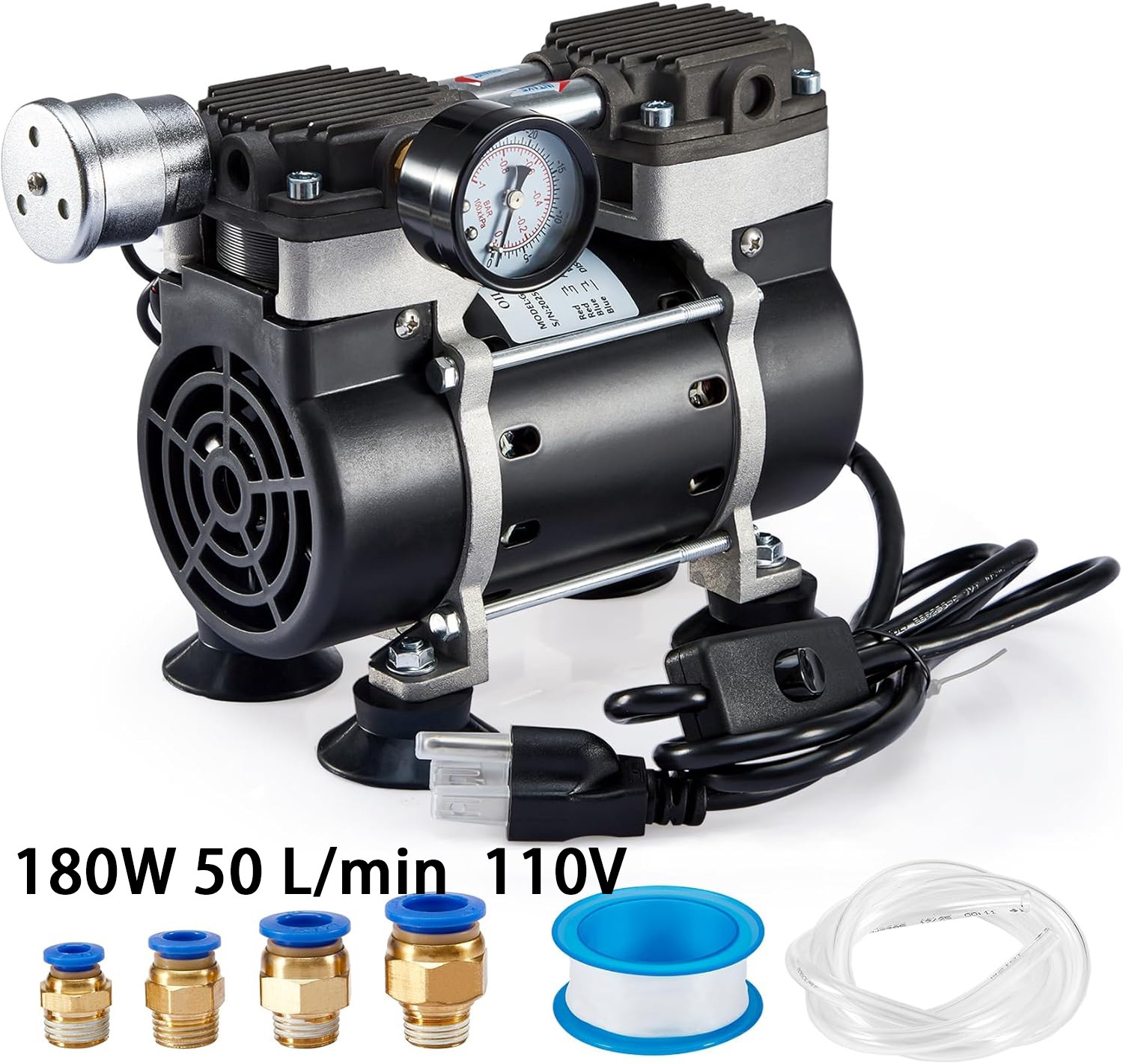 Lab Vacuum Pump 85L/Min with Switch 380W Oilless Vacuum Pump (or 180W 50 L/min)$89.99Last checked Nov 27, 2026View on eBay
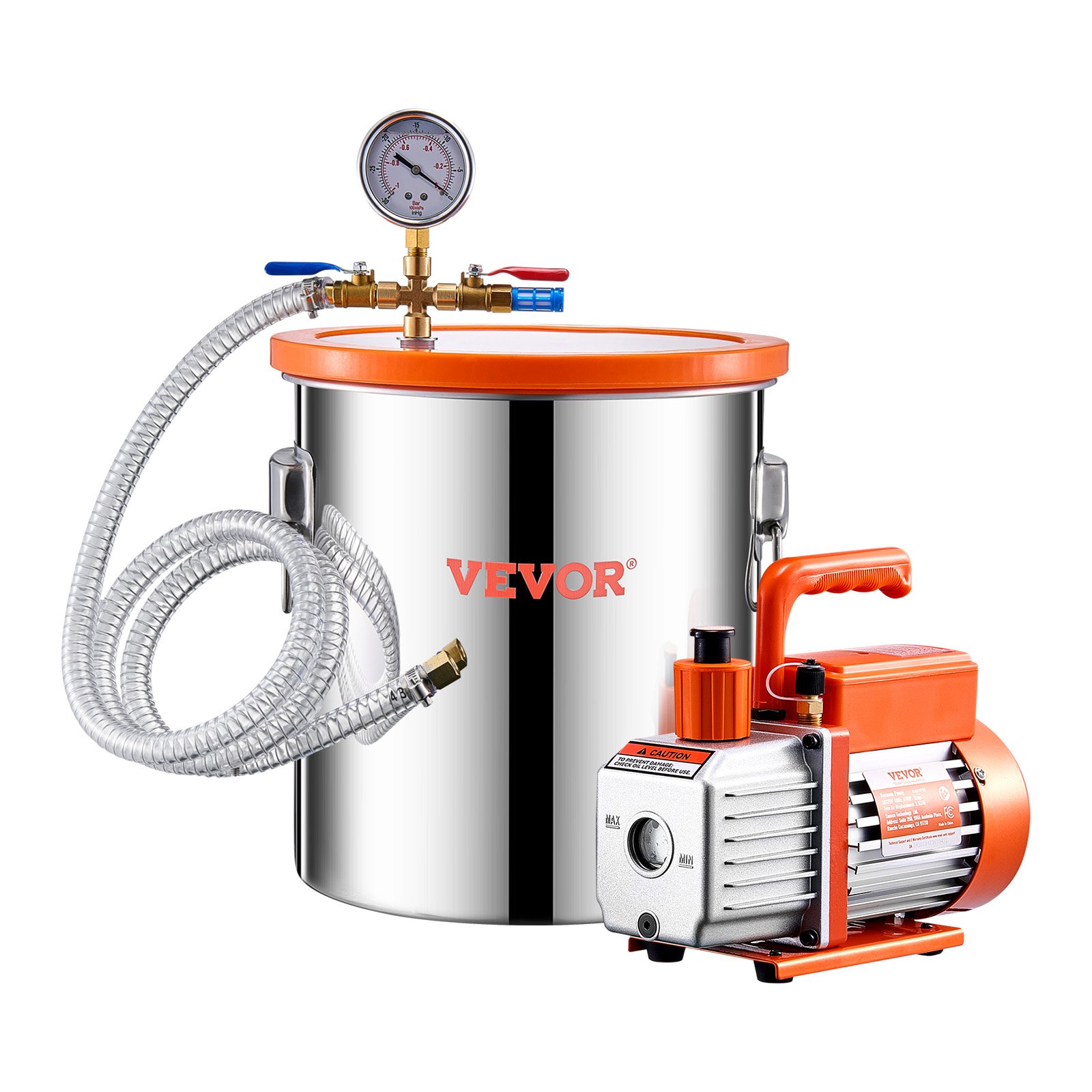 5 Gallon Vacuum Chamber 3.5CFM Single Stage Pump Degassing Kit$157.99View on Mallflare
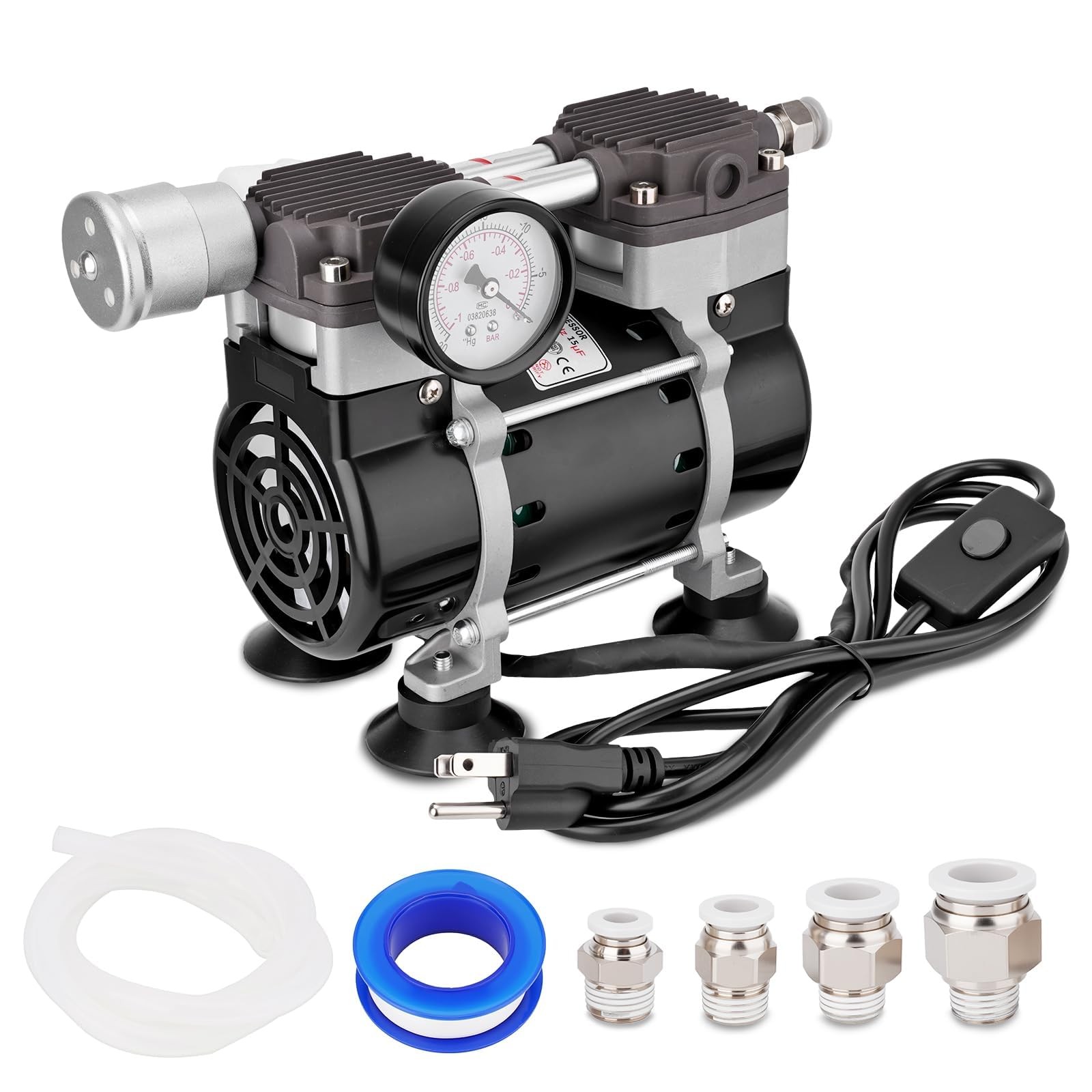 Lab Vacuum Pump Oilless Vacuum Pump 180W 50L/Min w/ Pressure Gauge,Silencer$95.99Last checked Nov 27, 2026View on eBay
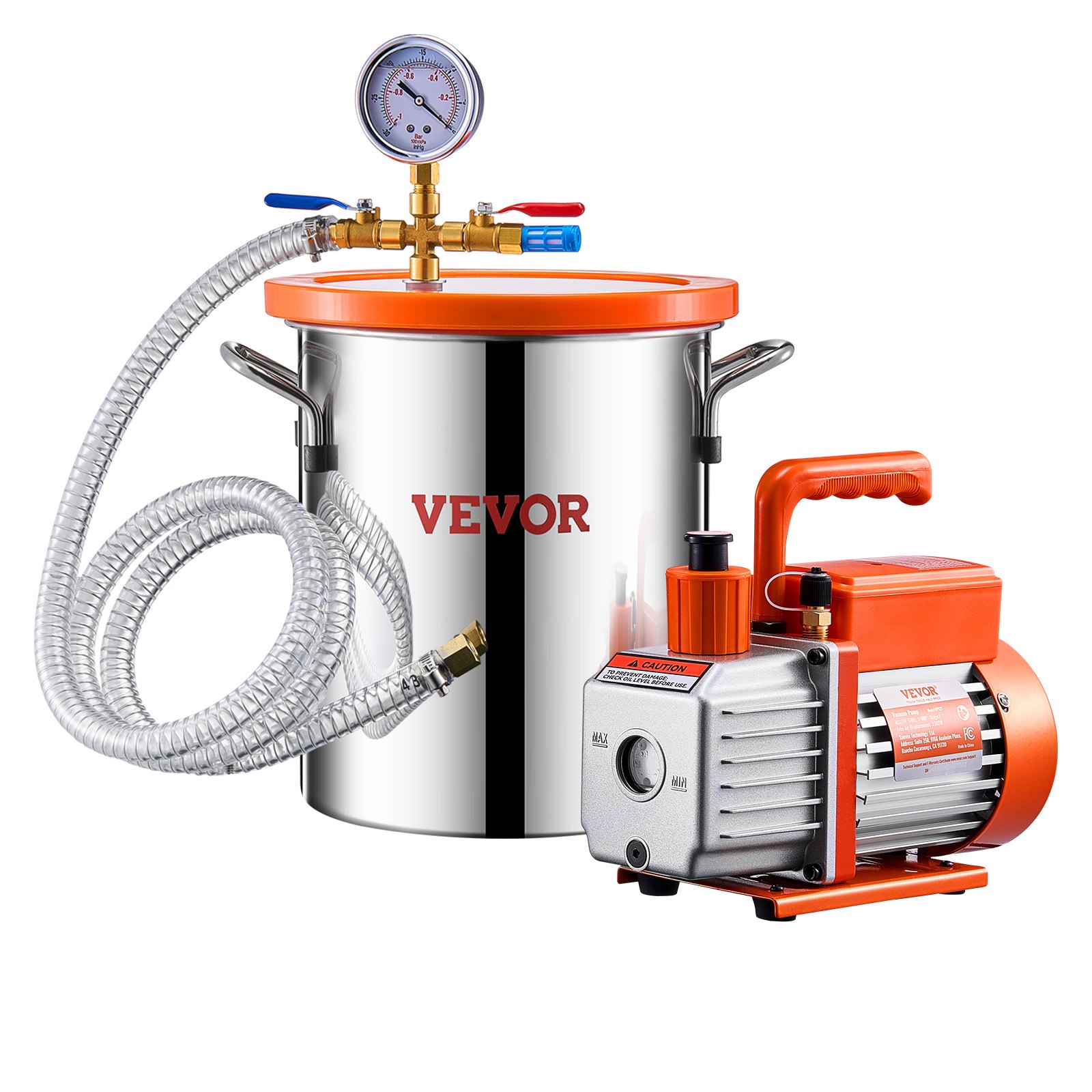 1.5 Gallon Vacuum Chamber 3.5CFM Single Stage Pump Degassing Kit$160.99View on Mallflare
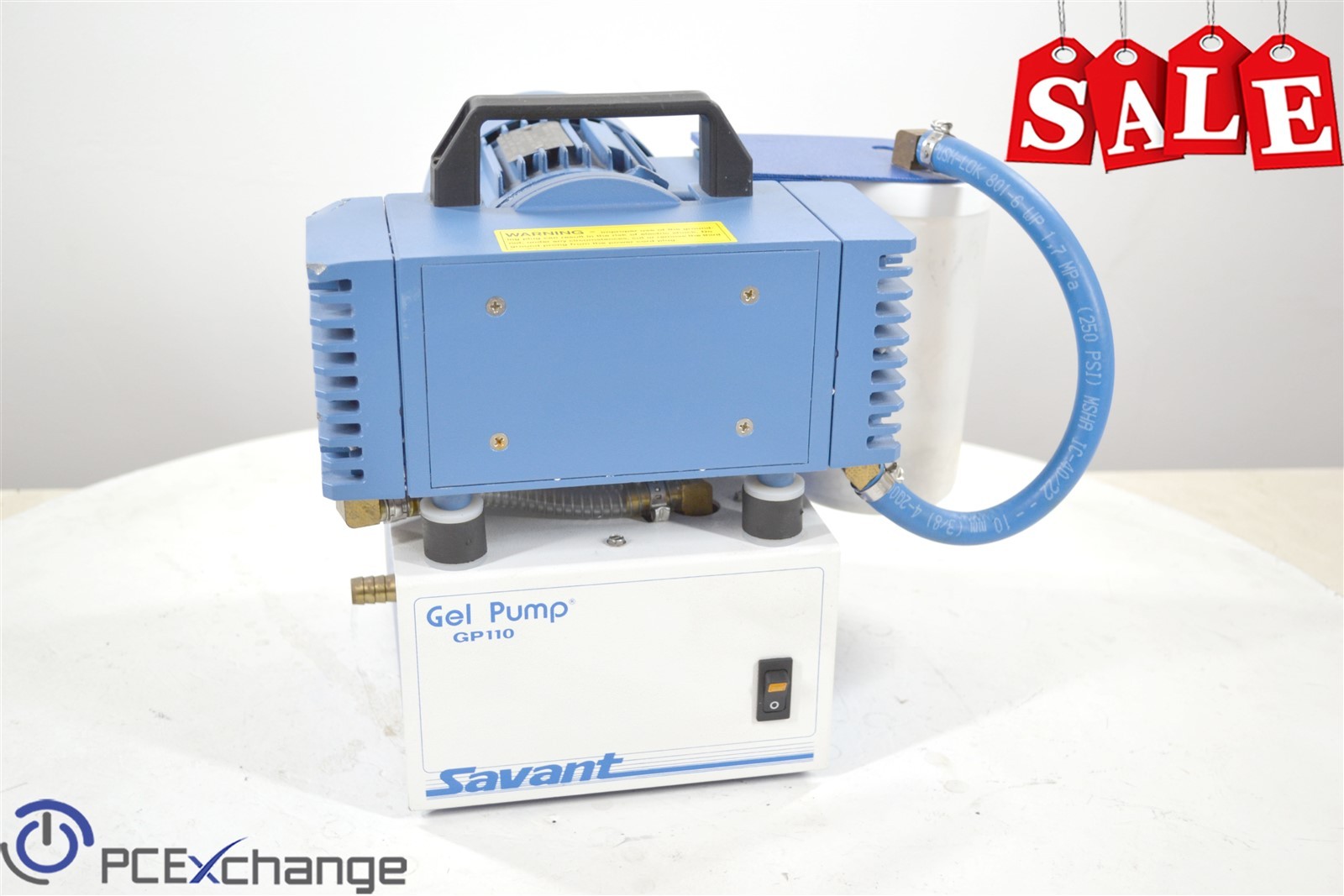 Savant Instruments Laboratory Vacuum Gel Pump GP110-120$149.00View on eBay
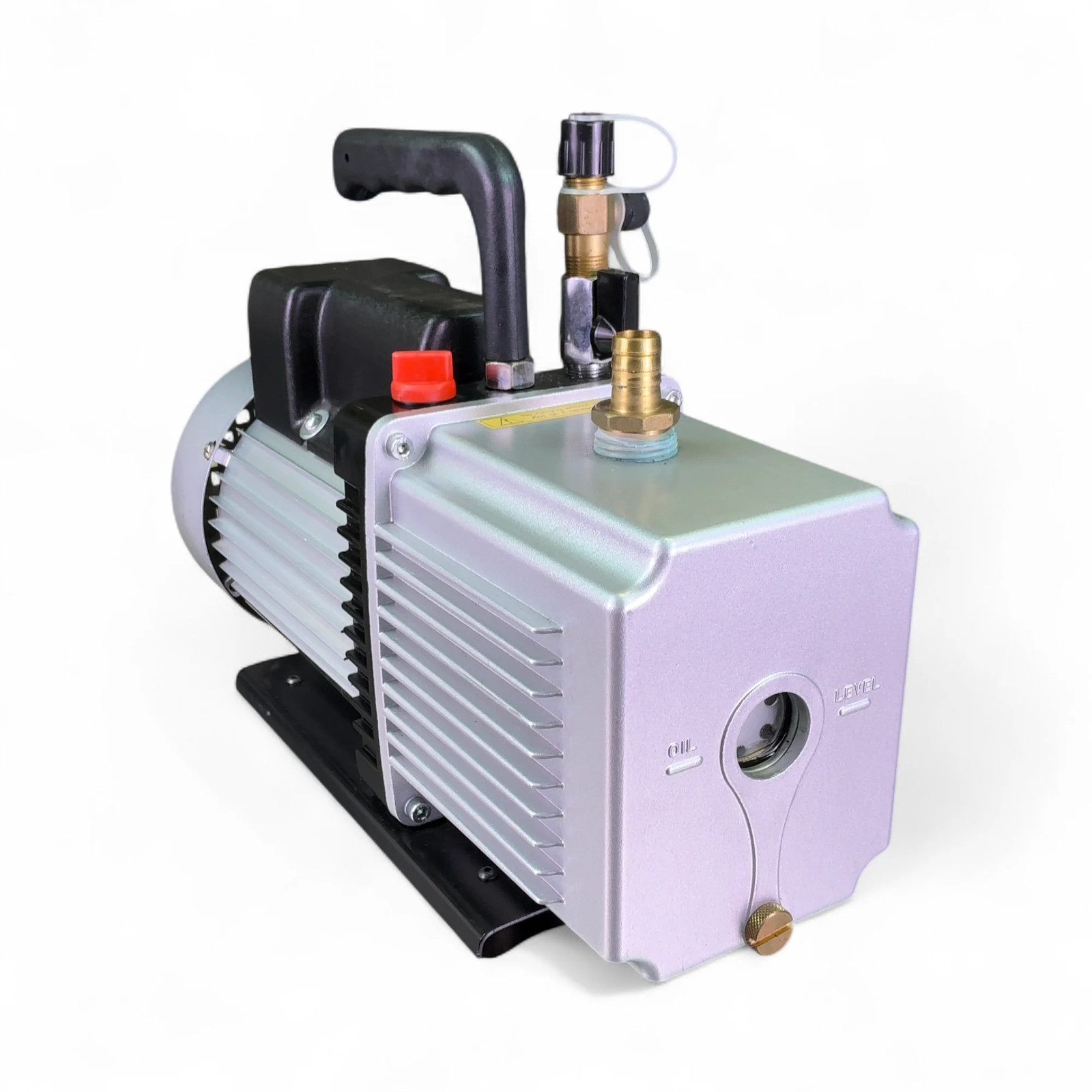 HFS 2 Stage 12CFM 1HP Laboratory Vacuum Pump VP 2200 (Best Offer!)$199.00View on eBay
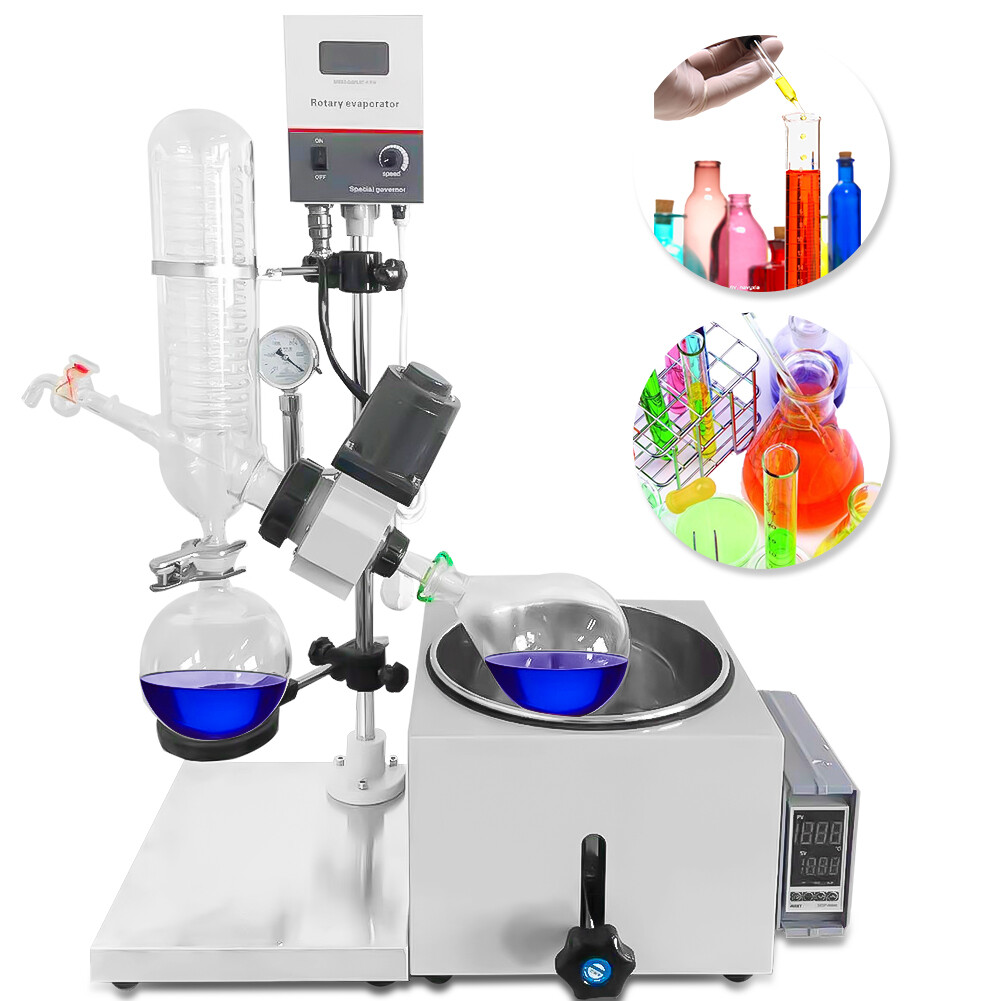 2L Rotary Evaporator Lab Connect to Vacuum Pump Chiller Manual Lifting Rotovap$556.25New · Last checked Nov 25, 2026View on eBay
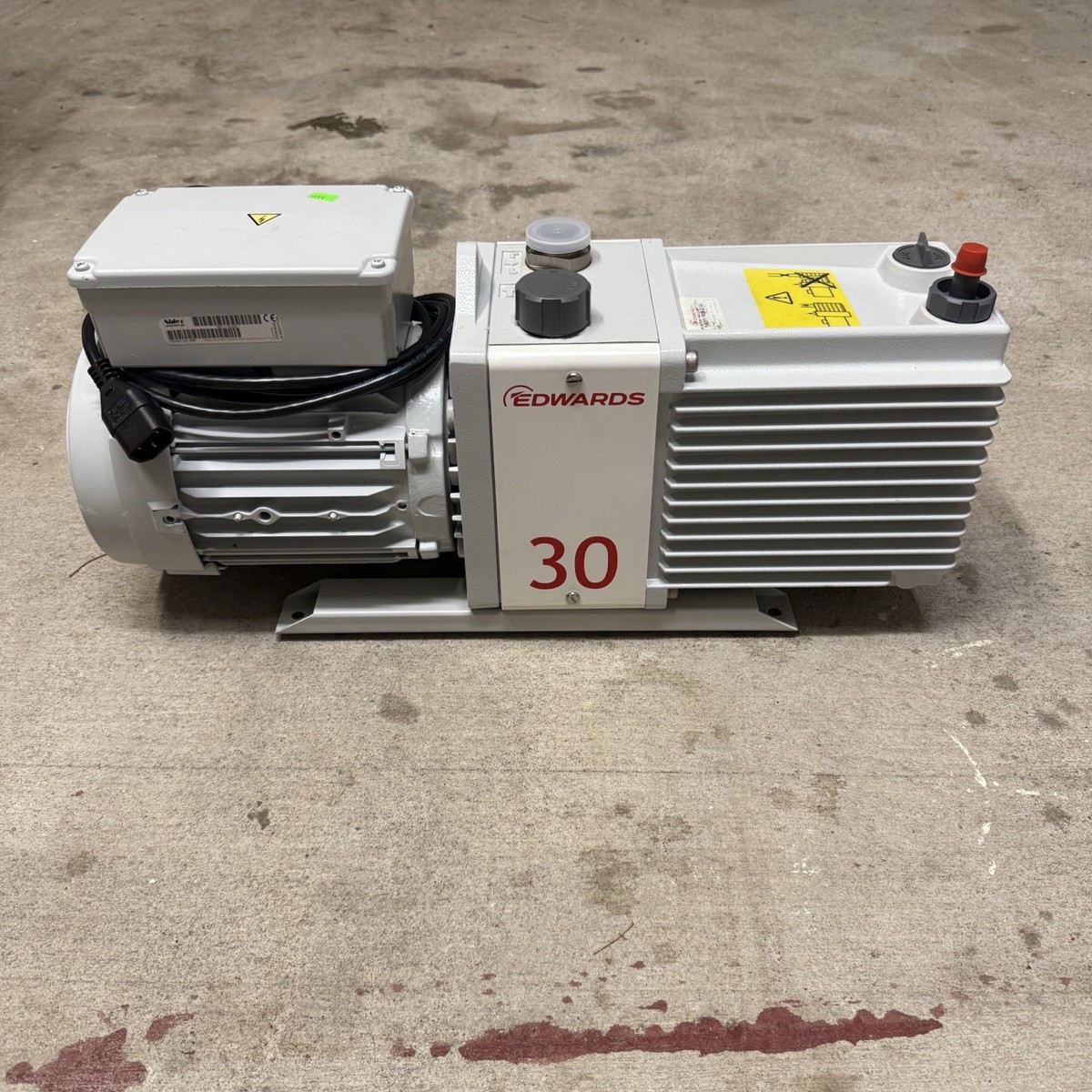 Edwards E2M30 Two Stage Rotary Vane Vacuum Pump A374-15-903 30 CFM ~ MINT$1,099.99Used · Last checked Nov 25, 2026View on eBay
Highlights
- Stage count sets ultimate vacuum: single-stage rotary vane bottoms near 100-200 microns, two-stage reaches 10-50 microns with roughly double the pumpdown speed at deep vacuum.
- Sealed-system pumps are rated in CFM (HVAC evacuation) or L/min (lab flow): 3.5 CFM ≈ 100 L/min, so a 12 CFM two-stage unit is ~6x the flow of a 50 L/min diaphragm pump.
- Oil-free diaphragm pumps use PTFE-coated heads and are rated for continuous low-vacuum duty; oil-sealed rotary vane pumps need oil changes every 50-100 hours of solvent-heavy use.
- Motor power tracks flow: 180-380 W class pumps deliver 50-85 L/min for filtration and gel drying; 1 HP / 750 W two-stage units deliver 12 CFM for HVAC and chamber work.
Best use cases
- Mini-split or HVAC line-set evacuation: buy a two-stage oil-sealed rotary vane pump rated at least 3 CFM with a vacuum gauge and micron-level ultimate vacuum; skip single-stage oil-free units that stall above 200 microns.
- Rotovap, vacuum filtration, or gel drying: pick an oil-free diaphragm pump at 50-85 L/min with a silencer and pressure gauge; skip high-CFM HVAC pumps whose oil mist contaminates samples.
- Resin/silicone degassing or wood stabilizing: use a kit pairing a 3.5 CFM single-stage pump with a 1.5-5 gallon chamber rated for full vacuum; skip oversized 12 CFM pumps that collapse thin chambers and waste power.
- Handheld field sampling or spot suction: choose a manual hand vacuum pump; skip it for any continuous or high-volume process where flow rate matters.
Buying tips
- Match CFM to system volume: HVAC evacuation needs roughly 3-6 CFM for residential split systems and 6-12 CFM for multi-zone or larger lines; undersized pumps cannot reach target microns in reasonable time.
- For lab work, convert L/min to CFM by dividing by 28.3: 50 L/min ≈ 1.8 CFM and 85 L/min ≈ 3 CFM; choose flow based on flask size and filtration speed, not marketing wattage.
- Select two-stage oil-sealed pumps when pulling below 100 microns; select single-stage or oil-free when the target is above 500 microns or the process involves solvents that would emulsify oil.
- Confirm voltage and plug standard: 110V/60Hz US models vs 220V/50Hz export models; a 110V pump on a 220V circuit destroys the motor, and inverters degrade pump performance.
Specs
| Pump Stage | Single-stage vs two-stage |
|---|---|
| Ultimate Vacuum | 10-50 micron (2-stage) / 100-200 (1-stage) |
| Flow Rate | 1.8-12 CFM / 50-340 L/min |
| Lubrication | Oil-sealed rotary vane vs oil-free diaphragm |
Related searches
What to check before buying
- Measure your chamber or system volume in gallons or cubic feet and confirm the pump CFM can evacuate it with margin; 3.5 CFM suits 1.5-5 gallon chambers, 12 CFM suits larger or multi-port systems.
- Verify your circuit supports the pump's running watts (180-750 W typical) and that the plug matches your outlet; oil-sealed 1 HP pumps draw high inrush current.
- Check inlet fitting size (typically 1/4 SAE, 3/8 SAE, or KF-25 flange) and that hose and adapters match your chamber or line-set service port.
- Confirm oil type and change interval for oil-sealed pumps, and place the pump on a level surface with ventilation; oil-free diaphragm pumps need clean, dry inlet gas to protect PTFE valves.
FAQ
Data sources: eBay / Amazon listings and product attribute feeds. Updated Nov 27, 2026.
Some links on this page are affiliate links. If you buy after clicking one, we may earn a commission at no extra cost to you. This does not change which products appear here or their order. Affiliate disclosure.