
Photos from current listings. Actual item, color, and included accessories may vary.
Electrical Test Lead Buying Guide
Electrical test leads are the insulated conductors and connector terminations that carry a measurement signal from a circuit to a meter, probe, or fixture, and their safety and accuracy are governed by voltage/current ratings and CAT safety classifications rather than by brand or length alone. The core trade-off is between thin, high-flexibility silicone wire with proper double insulation and molded strain relief versus cheap PVC wire with soldered or crimped joints that fail open or arc under load. The decision rule: buy leads explicitly rated for your meter's highest CAT environment and current range — typically CAT III 1000V/10A or CAT IV 600V for mains work — and skip any listing that advertises only a bare '1000V 20A' number without a CAT rating or a stated wire gauge.
Median $9.95
Key takeaways
- CAT safety rating is the primary durability and safety spec: CAT III 1000V and CAT IV 600V leads have thicker insulation and longer creepage distances than CAT II 600V leads, and the CAT number, not the voltage alone, determines whether the lead is safe at a distribution panel.
- Conductor gauge drives current capacity and voltage drop: 18 AWG silicone leads handle 10A continuously, while 20-22 AWG PVC leads heat and drop voltage above roughly 5A; 20A claims on thin leads are surge ratings, not continuous ratings.
- Silicone insulation stays flexible from about -60°C to +200°C and resists soldering-iron contact, whereas PVC stiffens in cold, melts near 80-105°C, and cracks at flex points; silicone is the correct choice for bench and automotive work.
At a glance
- Category
- Test Leads, Probes, Fixtures & Accessories
- Last updated
- Nov 28, 2026
Current offers
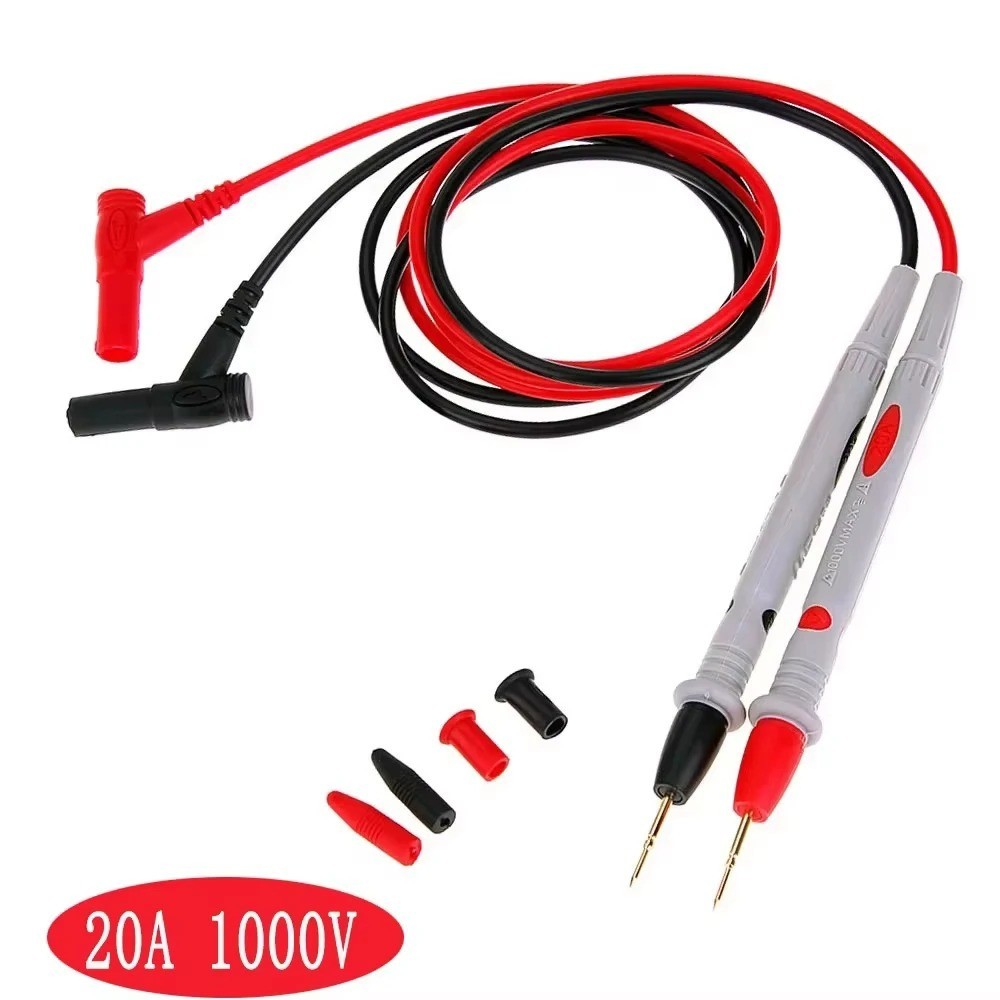 Multimeter Test Leads for Fluke Meter Electrical Alligator Clip Probes 1000V 20A$4.28View on eBay
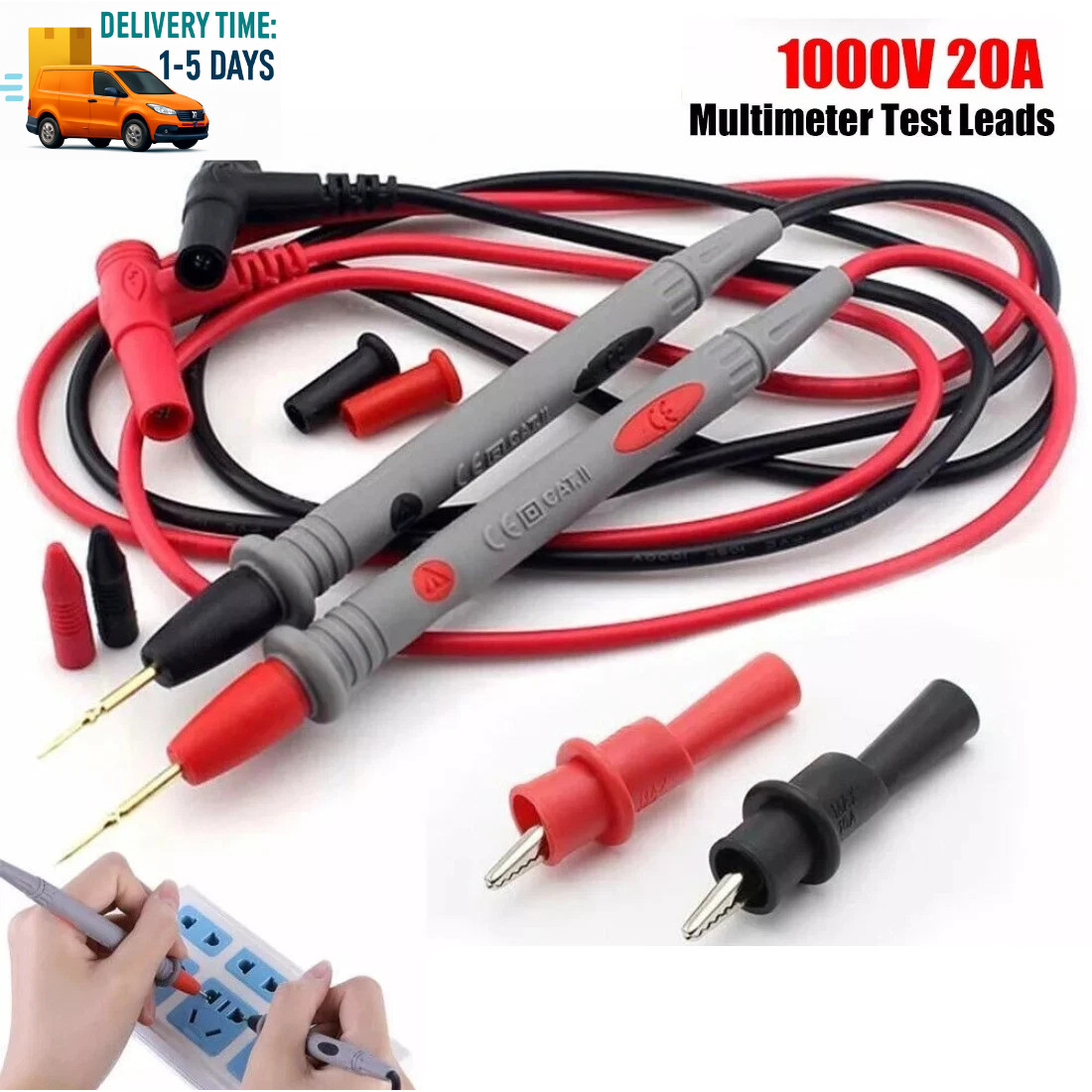 Multimeter Test Leads for Fluke Meter Electrical Alligator Clip Probes 1000V 20A$6.01View on eBay
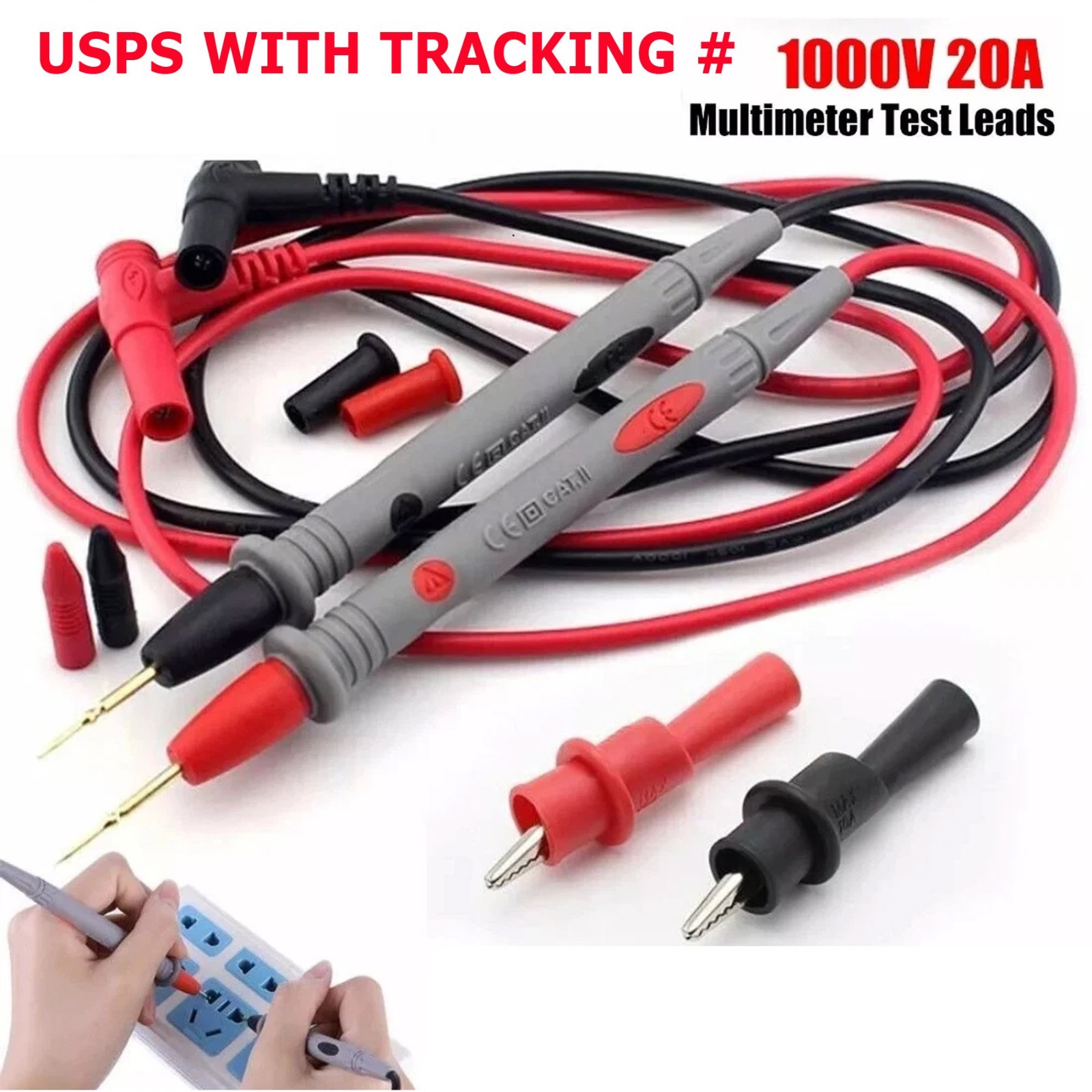 Multimeter Test Leads for Fluke Meter Electrical Alligator Clip Probes 1000V 20A$6.99View on eBay
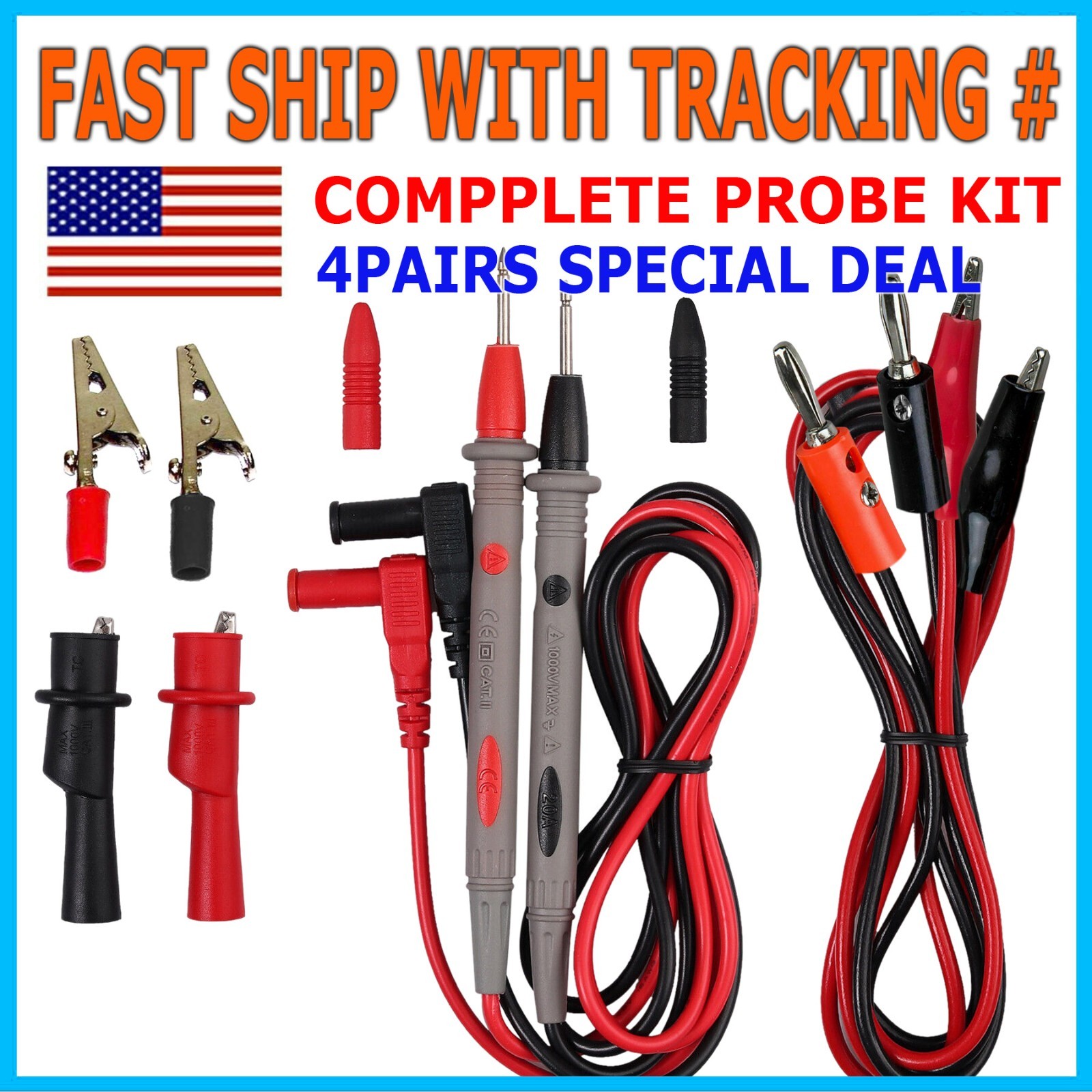 Multimeter Test Leads for Fluke Meter Electrical Alligator Clip Probes 1000V 20A$9.95Last checked Nov 27, 2026View on eBay
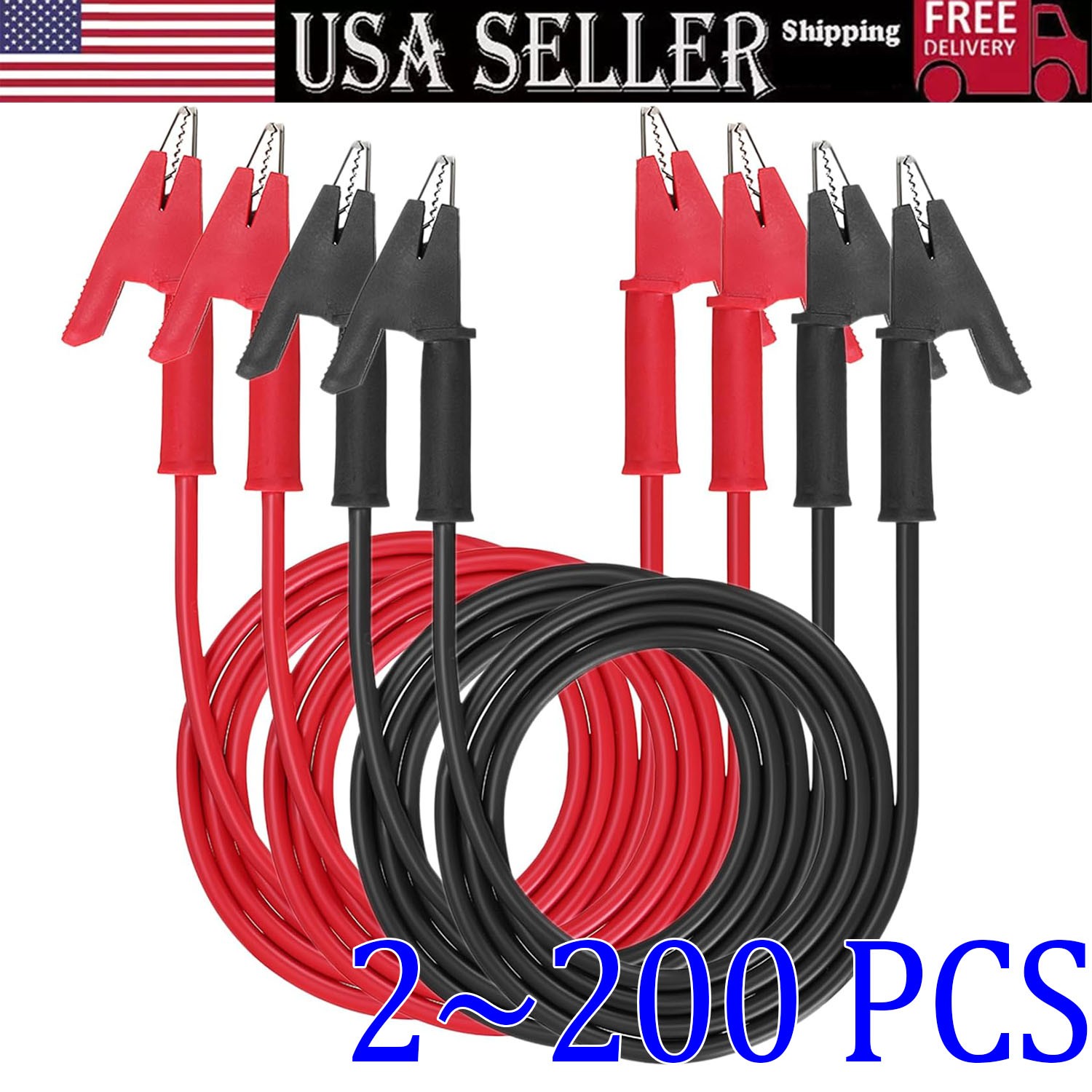 Alligator Clips Electrical Multimeter Test Leads 1500V/15A Jumper Wires Set Lot$45.36View on eBay
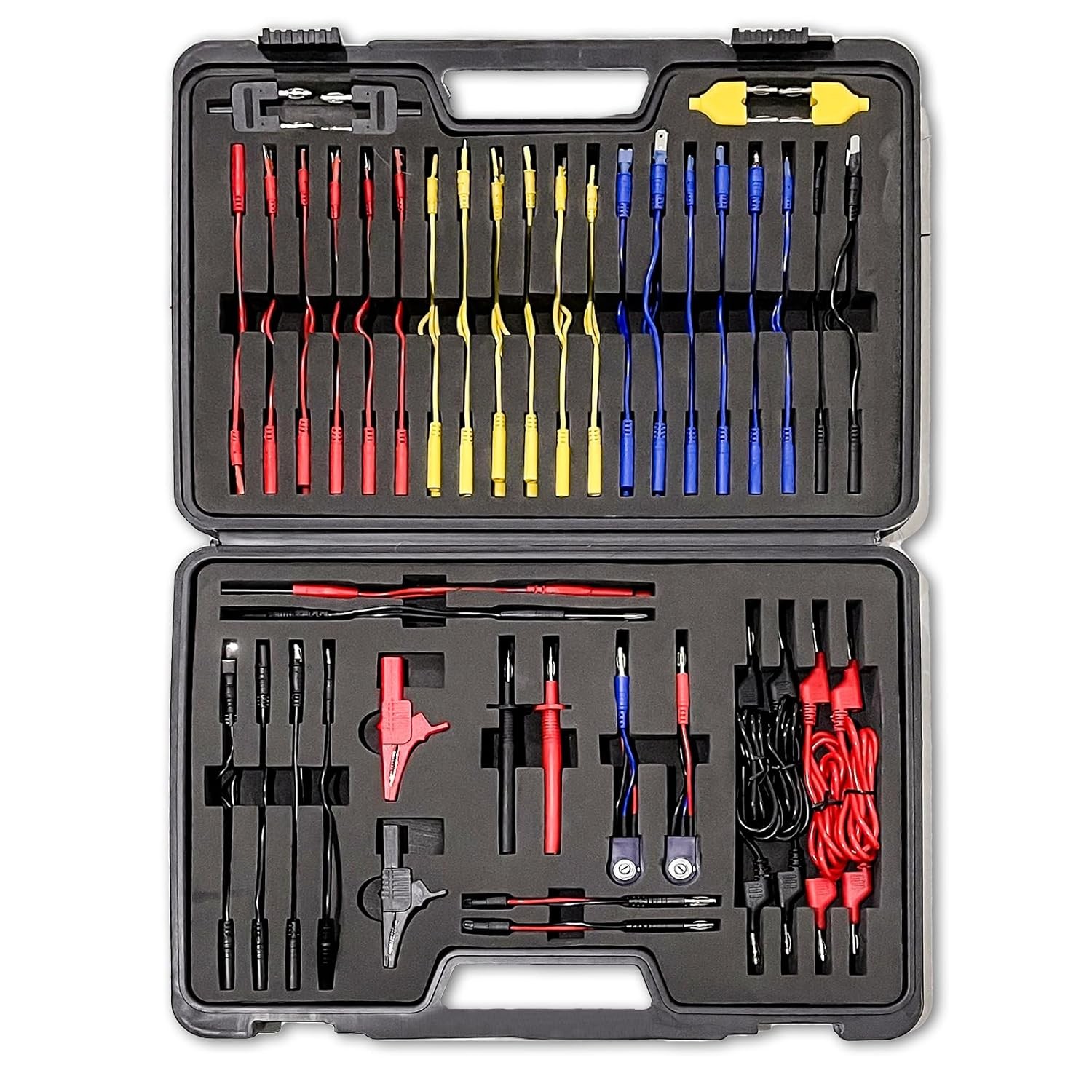 Automotive Test Lead Kit 92 Pieces Electrical Testers Auto Diagnostic Tools Set$99.99View on eBay
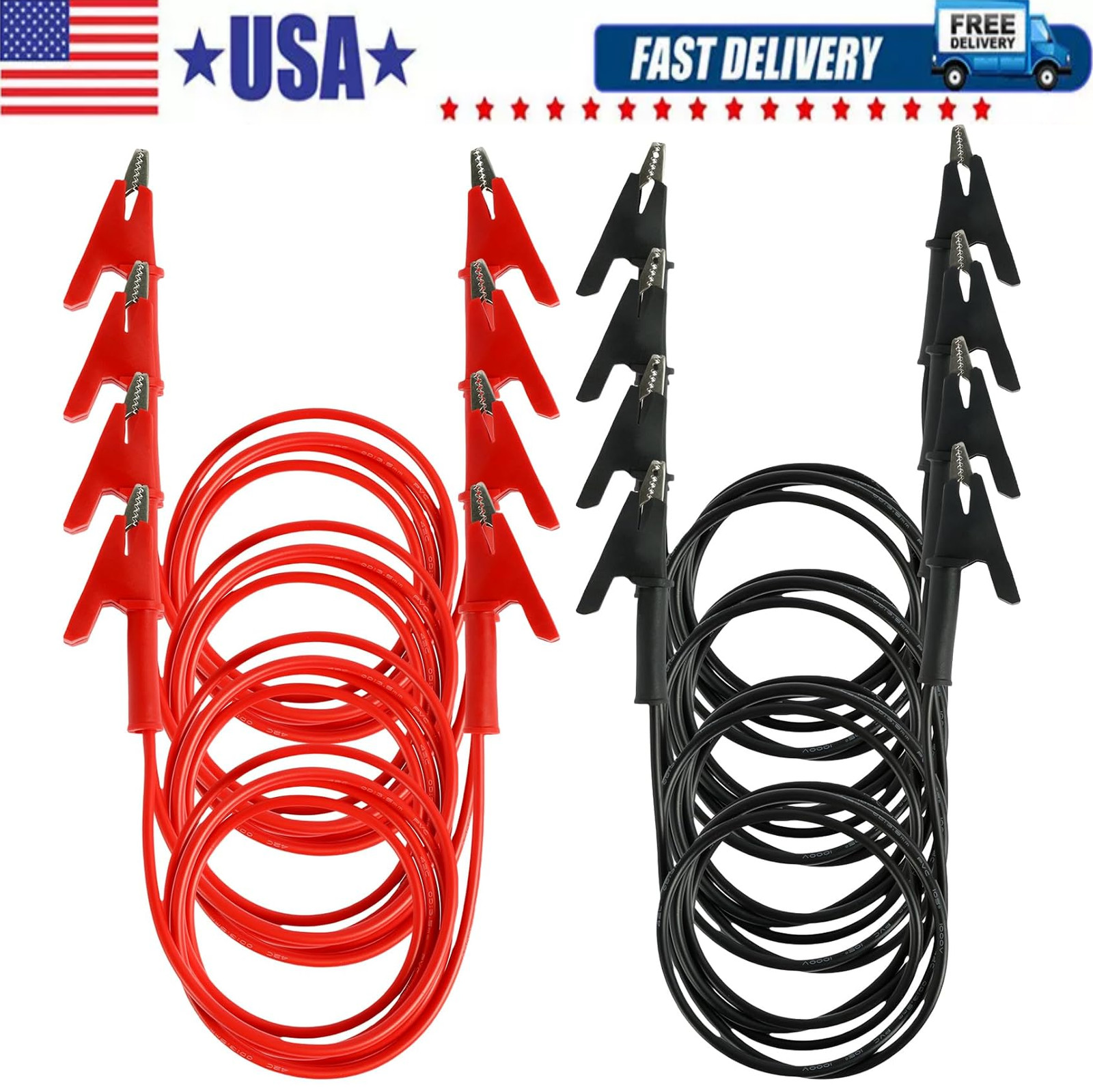 Alligator Clips Electrical Multimeter Test Leads 1500V/15A Jumper Wires Set LOT$631.99Last checked Nov 16, 2026View on eBay
Highlights
- CAT safety rating is the primary durability and safety spec: CAT III 1000V and CAT IV 600V leads have thicker insulation and longer creepage distances than CAT II 600V leads, and the CAT number, not the voltage alone, determines whether the lead is safe at a distribution panel.
- Conductor gauge drives current capacity and voltage drop: 18 AWG silicone leads handle 10A continuously, while 20-22 AWG PVC leads heat and drop voltage above roughly 5A; 20A claims on thin leads are surge ratings, not continuous ratings.
- Silicone insulation stays flexible from about -60°C to +200°C and resists soldering-iron contact, whereas PVC stiffens in cold, melts near 80-105°C, and cracks at flex points; silicone is the correct choice for bench and automotive work.
- Termination quality separates durable leads from compromises: molded double-crimp strain relief and gold-plated or nickel-plated beryllium-copper banana plugs maintain low contact resistance, while soldered joints and unplated brass plugs corrode and fail at the plug body.
Best use cases
- Best fit — Bench electronics and low-voltage diagnostics: choose 18 AWG silicone leads with 4mm shrouded banana plugs, CAT II 600V rating, and interchangeable probe tips; skip heavy CAT IV leads, which are stiff and over-insulated for breadboard and PCB work.
- Best fit — Residential and commercial mains testing: choose CAT III 1000V-rated leads with 18 AWG wire, finger guards, and 10A continuous rating; skip any lead whose only marking is '1000V 20A' with no CAT classification, because it may be CAT II construction sold on a peak number.
- Best fit — Automotive and high-current 12V/24V work: choose a kit with alligator clips, back-probe pins, and 18-20 AWG leads rated at least 10A continuous, plus fused or shrouded connectors; skip 22 AWG jumper-style leads for starter or battery draw tests, as voltage drop and heating distort readings.
Buying tips
- Match the CAT rating to the measurement environment, not the meter's display: CAT III 1000V covers distribution panels and fixed mains wiring, CAT IV 600V covers service entrances and outdoor feeders, and CAT II 600V is only for portable plug-in appliances.
- Use 18 AWG as the minimum for 10A continuous work and 20 AWG only for signal-level measurements under about 1A; a lead advertised at 20A should state a continuous rating and a wire gauge, otherwise treat 20A as a short-duration peak.
- Confirm plug geometry before buying: standard 4mm shrouded banana plugs fit most handheld multimeters, but Fluke and some bench meters use recessed sockets that reject thick shrouds, and older meters use unshrouded 4mm plugs.
- Prefer silicone insulation over PVC for any lead that will be flexed, coiled, or exposed to heat; silicone leads cost more but survive soldering-iron contact and cold-weather coiling, while PVC leads crack at the strain relief within typical bench use.
Specs
| Safety Category | CAT II 600V to CAT IV 600V |
|---|---|
| Wire Gauge | 18 AWG (10A) / 20-22 AWG (signal) |
| Insulation Type | Silicone (-60 to +200°C) vs PVC |
| Connector Standard | 4mm shrouded banana / 2mm pin |
Related searches
What to check before buying
- Measure your meter's jack spacing and depth: recessed 4mm sockets need slim shrouded plugs, while exposed sockets accept standard shrouded or unshrouded banana plugs, so a plug that is too wide will not seat.
- Verify the highest CAT environment you will work in — panel interior, service entrance, or appliance outlet — and confirm the lead's CAT roman numeral and voltage match or exceed it.
- Check the lead's continuous current rating against your meter's fuse and your expected load; a 10A meter with 10A fused input needs leads rated at least 10A continuous, not 20A peak.
- Confirm the accessory termination standard: 4mm banana for meters, 2mm pin or back-probe for connectors, and alligator clips with insulated or shrouded jaws for temporary connections; mismatched terminations require adapters that add resistance.
FAQ
Data sources: eBay / Amazon listings and product attribute feeds. Updated Nov 28, 2026.
Some links on this page are affiliate links. If you buy after clicking one, we may earn a commission at no extra cost to you. This does not change which products appear here or their order. Affiliate disclosure.