
Photos from current listings. Actual item, color, and included accessories may vary.
Fluke Meter Lead Buying Guide
Fluke meter leads are the test-lead sets, probes, and clip accessories that connect a Fluke multimeter to the circuit under test, and the decisive trade-off is electrical safety rating versus copper quality and connector fit. Genuine Fluke leads carry CAT III/IV voltage ratings and 600V-rated silicone insulation with low-resistance copper; generic 'for Fluke' leads routinely claim 1000V/20A on the listing but ship PVC insulation and thin copper that fail at real fault currents. The rule: buy leads with an explicit CAT III 1000V / CAT IV 600V rating and silicone insulation, and treat any lead sold only on a 20A current claim as a bench-only compromise.
Median $6.50
Key takeaways
- Safety rating is the hard tier: CAT III 1000V / CAT IV 600V leads are built for panel and feeder work; CAT II 300V leads are electronics-bench only and must not see mains.
- Insulation material drives durability: silicone stays flexible from about -20°C to +150°C and resists solder burns; PVC stiffens in cold and cracks at the strain relief.
- Probe tips are standardized at 4mm banana plugs on Fluke meters, but tip geometry differs: 2mm slim tips for tight terminals, 4mm lantern tips for general probing, and shrouded plugs for safety.
At a glance
- Category
- Test Leads, Probes, Fixtures & Accessories
- Last updated
- Nov 28, 2026
Current offers
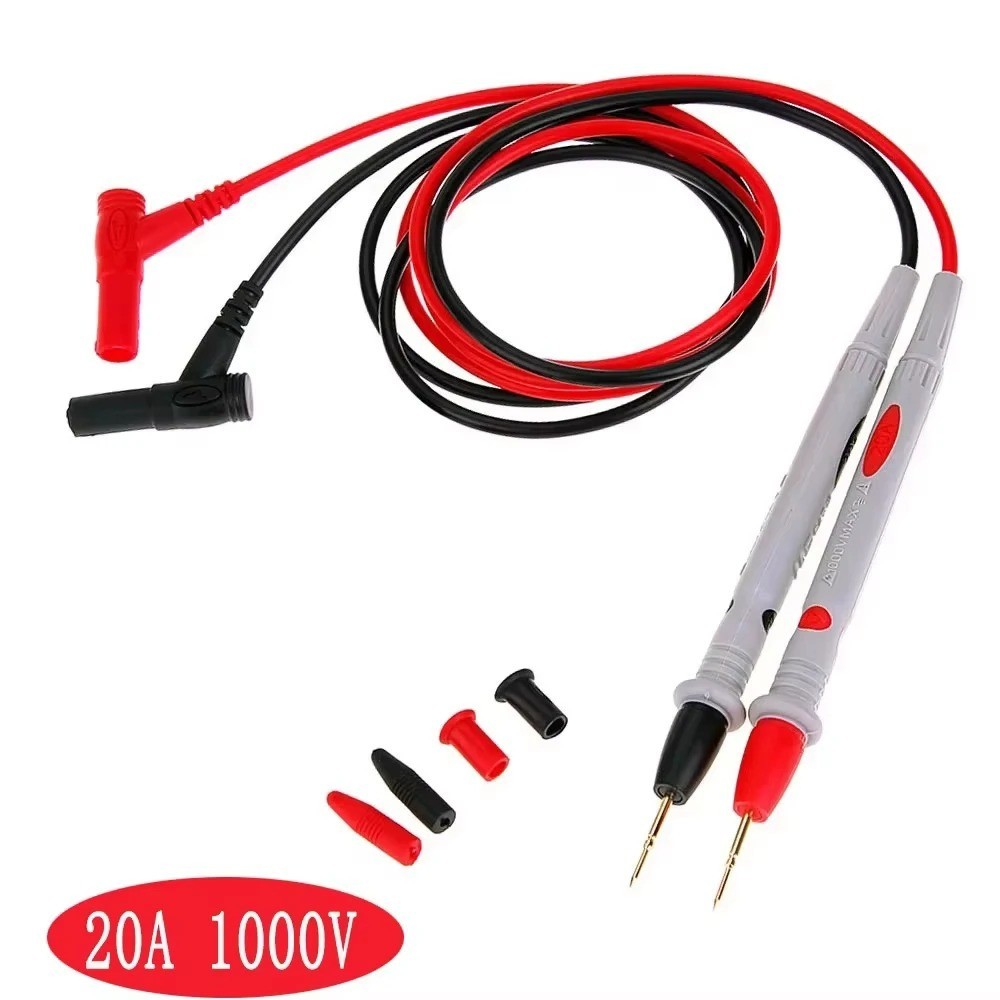 Multimeter Test Leads for Fluke Meter Electrical Alligator Clip Probes 1000V 20A$4.28View on eBay
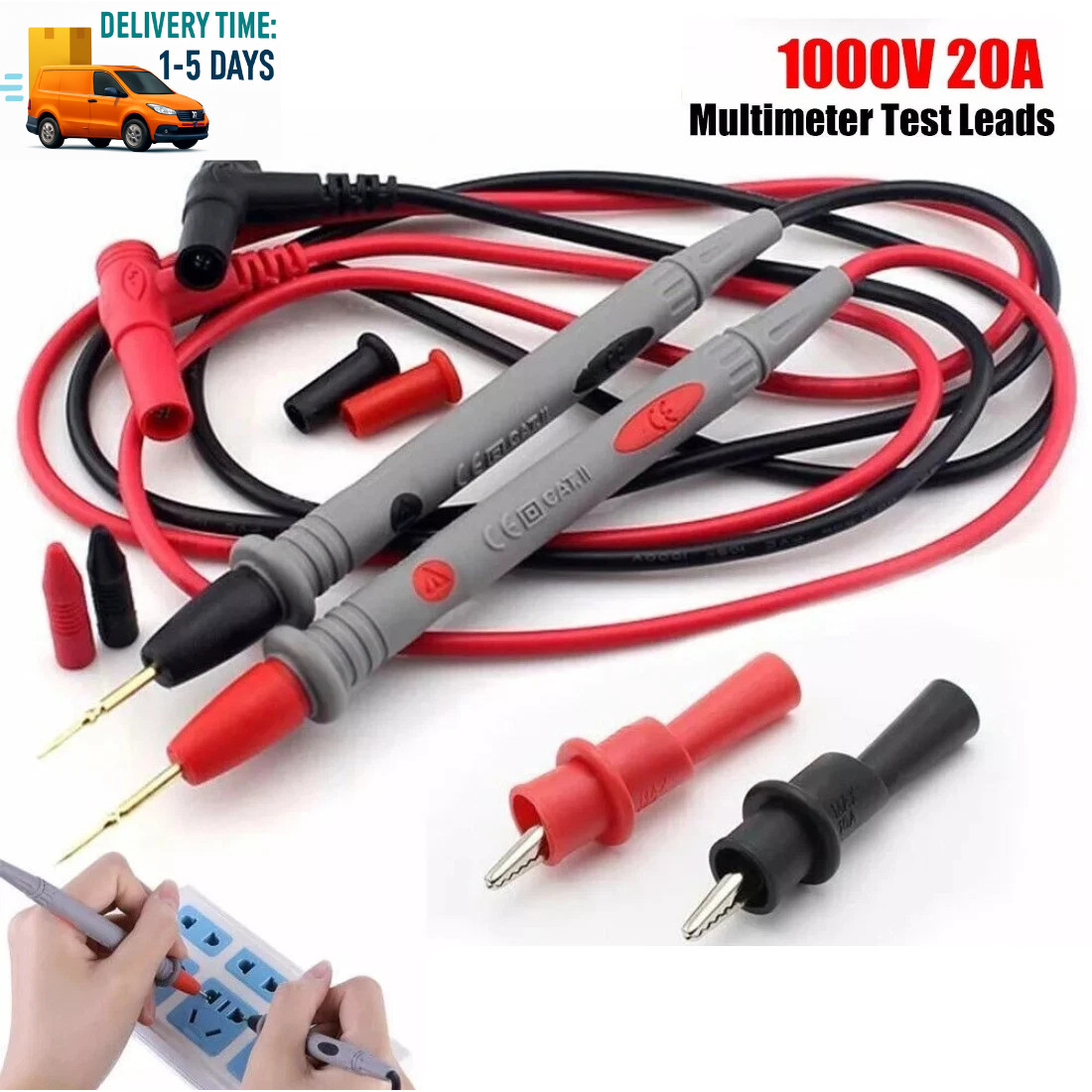 Multimeter Test Leads for Fluke Meter Electrical Alligator Clip Probes 1000V 20A$6.01View on eBay
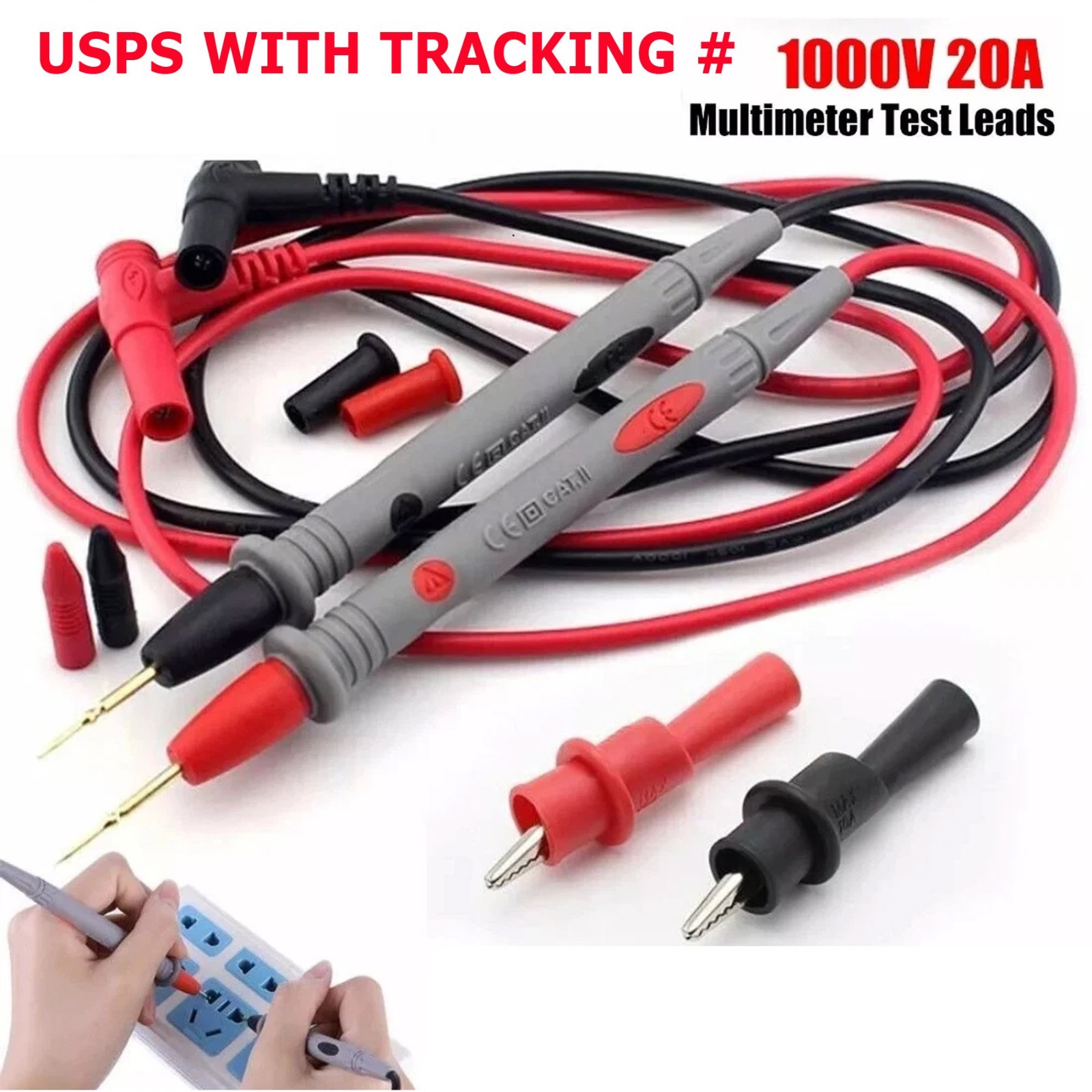 Multimeter Test Leads for Fluke Meter Electrical Alligator Clip Probes 1000V 20A$6.99View on eBay
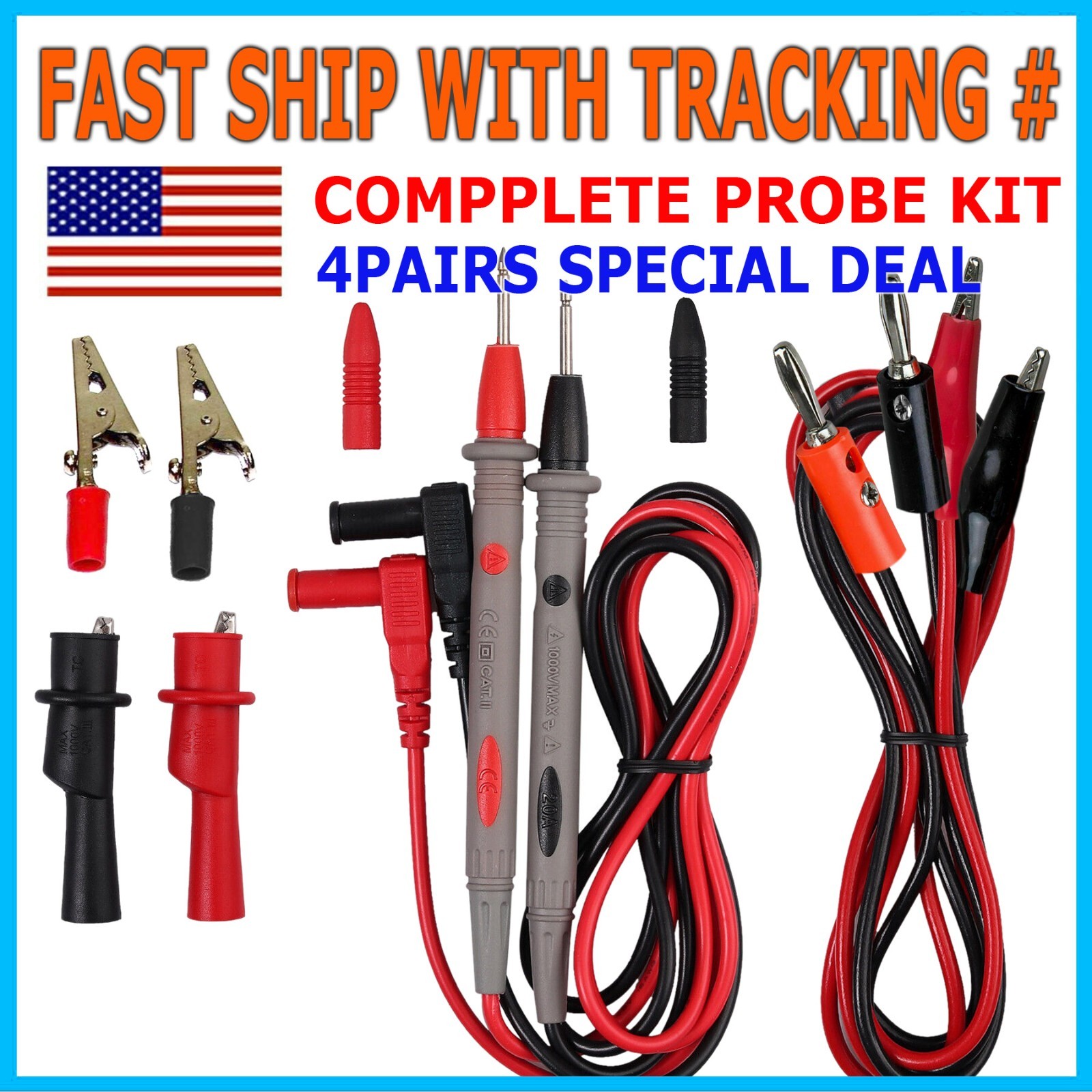 Multimeter Test Leads for Fluke Meter Electrical Alligator Clip Probes 1000V 20A$9.95Last checked Nov 27, 2026View on eBay
Highlights
- Safety rating is the hard tier: CAT III 1000V / CAT IV 600V leads are built for panel and feeder work; CAT II 300V leads are electronics-bench only and must not see mains.
- Insulation material drives durability: silicone stays flexible from about -20°C to +150°C and resists solder burns; PVC stiffens in cold and cracks at the strain relief.
- Probe tips are standardized at 4mm banana plugs on Fluke meters, but tip geometry differs: 2mm slim tips for tight terminals, 4mm lantern tips for general probing, and shrouded plugs for safety.
- Genuine Fluke lead conductor resistance is specified in the low-milliohm range; generic leads often add 0.1-0.5 ohm per lead, which skews low-ohm and 4-wire measurements.
Best use cases
- Bench electronics and low-voltage DC work: a CAT II 300V silicone lead set with 2mm tips is the right pick; skip CAT III/IV heavy leads that are stiff and overpriced for the bench.
- Industrial panel, motor, and distribution-board testing: choose CAT III 1000V / CAT IV 600V silicone leads with shrouded banana plugs and fused or 10A-rated test points; generic PVC leads are the wrong fit.
- Automotive and 12-48V DC diagnostics: pick leads with insulated alligator clips and back-probe pins, rated for the meter's 10A current range; skip 20A-claim leads that lack a CAT rating.
- High-current measurement above 10A: use a clamp meter or shunt, not a 20A test lead; the 20A claim on generic leads refers to the connector, not to continuous safe current.
Buying tips
- Match the CAT rating to the highest-energy circuit you will touch: CAT III 1000V for three-phase panels, CAT IV 600V for service entrances, CAT II 300V for wall-outlet-level electronics.
- Insist on silicone insulation and a molded strain relief; PVC leads with a sliding boot are the first failure point on repeated flexing.
- Confirm 4mm shrouded banana plugs on both ends for Fluke 87V/117/179-class meters, and check whether the probe end is fixed or accepts interchangeable tips.
- For current measurements, verify the lead's stated current rating against the meter's fuse: a 10A fused input needs leads rated at least 10A continuous, and 20A claims are peak, not continuous.
Specs
| Overvoltage Category | CAT II 300V / CAT III 1000V / CAT IV 600V |
|---|---|
| Insulation Material | Silicone vs PVC (silicone -20 to +150°C) |
| Connector Standard | 4mm shrouded banana plug |
| Probe Tip Type | 2mm slim / 4mm lantern / alligator clip |
Related searches
What to check before buying
- Identify your meter's input jacks and fuse rating: Fluke handhelds use 4mm banana jacks with a 10A or 400mA fused current input; leads must match the shroud depth.
- Measure the terminal spacing and depth you probe: 2mm slim tips reach recessed terminals, while 4mm lantern tips need clearance around the contact.
- Confirm the working voltage and overvoltage category of your environment before choosing CAT II, III, or IV leads.
- Check the lead length you need: standard sets run about 1-1.5 m; long leads add resistance and should be avoided for low-ohm measurements.
FAQ
Data sources: eBay / Amazon listings and product attribute feeds. Updated Nov 28, 2026.
Some links on this page are affiliate links. If you buy after clicking one, we may earn a commission at no extra cost to you. This does not change which products appear here or their order. Affiliate disclosure.