
Photos from current listings. Actual item, color, and included accessories may vary.
Fluke Meter Test Lead Buying Guide
Fluke meter test leads are the interchangeable probe-and-clip assemblies that connect a Fluke multimeter to the circuit under test, and the defining trade-off is safety-rated insulation and connector integrity versus generic aftermarket copies. Genuine Fluke leads carry a CAT III/CAT IV safety rating with double or reinforced insulation and shrouded banana plugs, while bargain replacements often advertise voltage but skip the arc-flash and finger-guard standards. The decision rule is simple: match the CAT rating and current rating to your measurement environment, and reject any lead that does not state both on the probe body.
Median $6.50
Key takeaways
- Safety category is the primary discriminator: Fluke TL71/TL75 leads are rated CAT IV 600 V / CAT III 1000 V, while generic 1000 V 20 A leads typically carry no published CAT rating at all.
- Connector type must match the meter jack: Fluke 87V/117 use 4 mm shrouded banana jacks, so leads need right-angle or straight shrouded banana plugs, not bare 4 mm pins.
- Probe tip geometry determines usability: 2 mm or 4 mm slim tips reach recessed terminals, while blunt 1 mm tips are safer for general bench work and reduce accidental shorting.
At a glance
- Category
- Test Leads, Probes, Fixtures & Accessories
- Last updated
- Nov 28, 2026
Current offers
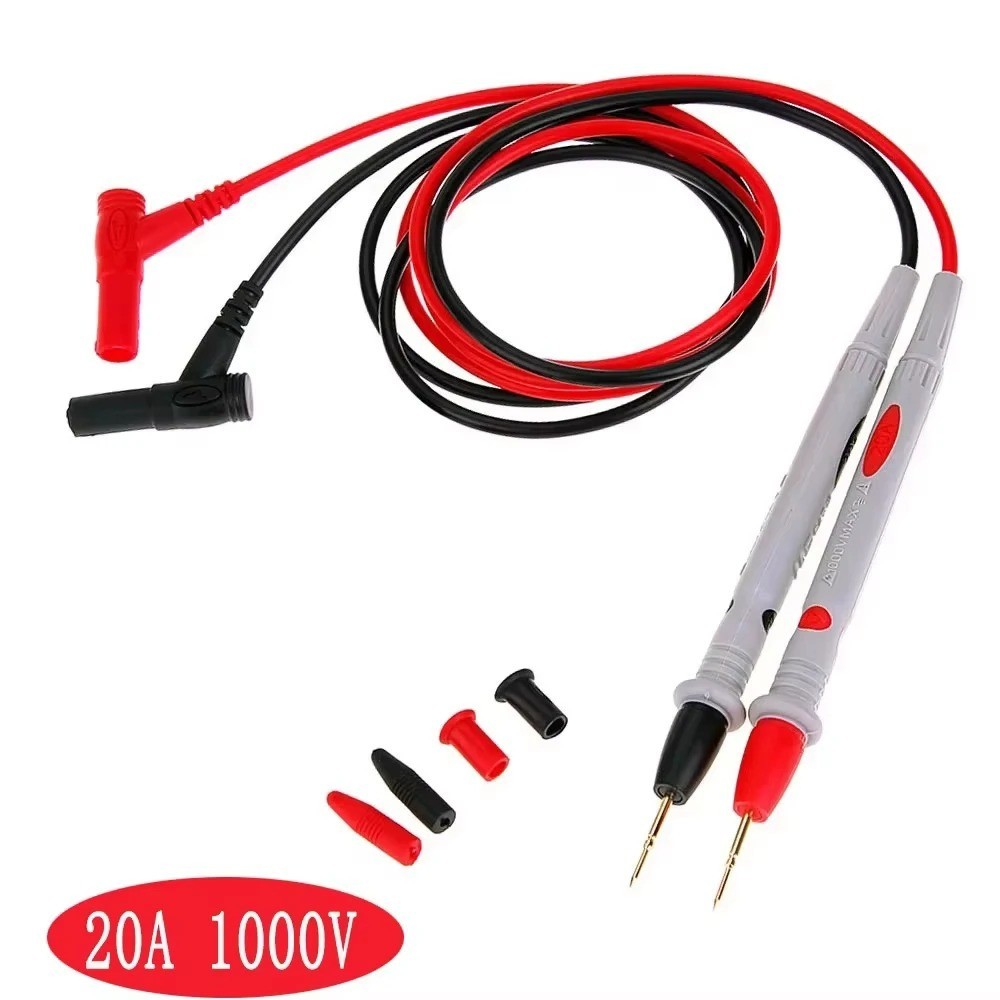 Multimeter Test Leads for Fluke Meter Electrical Alligator Clip Probes 1000V 20A$4.28View on eBay
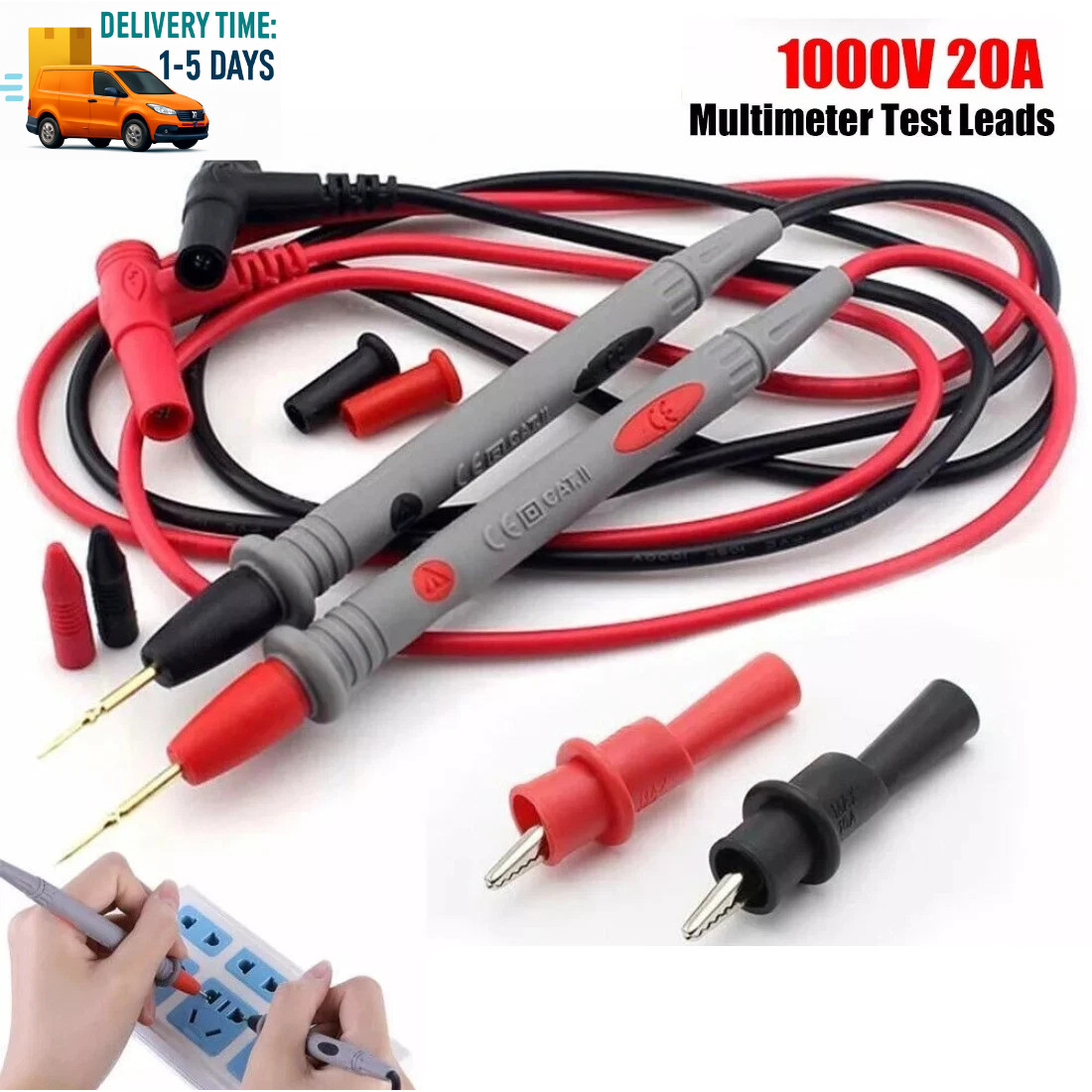 Multimeter Test Leads for Fluke Meter Electrical Alligator Clip Probes 1000V 20A$6.01View on eBay
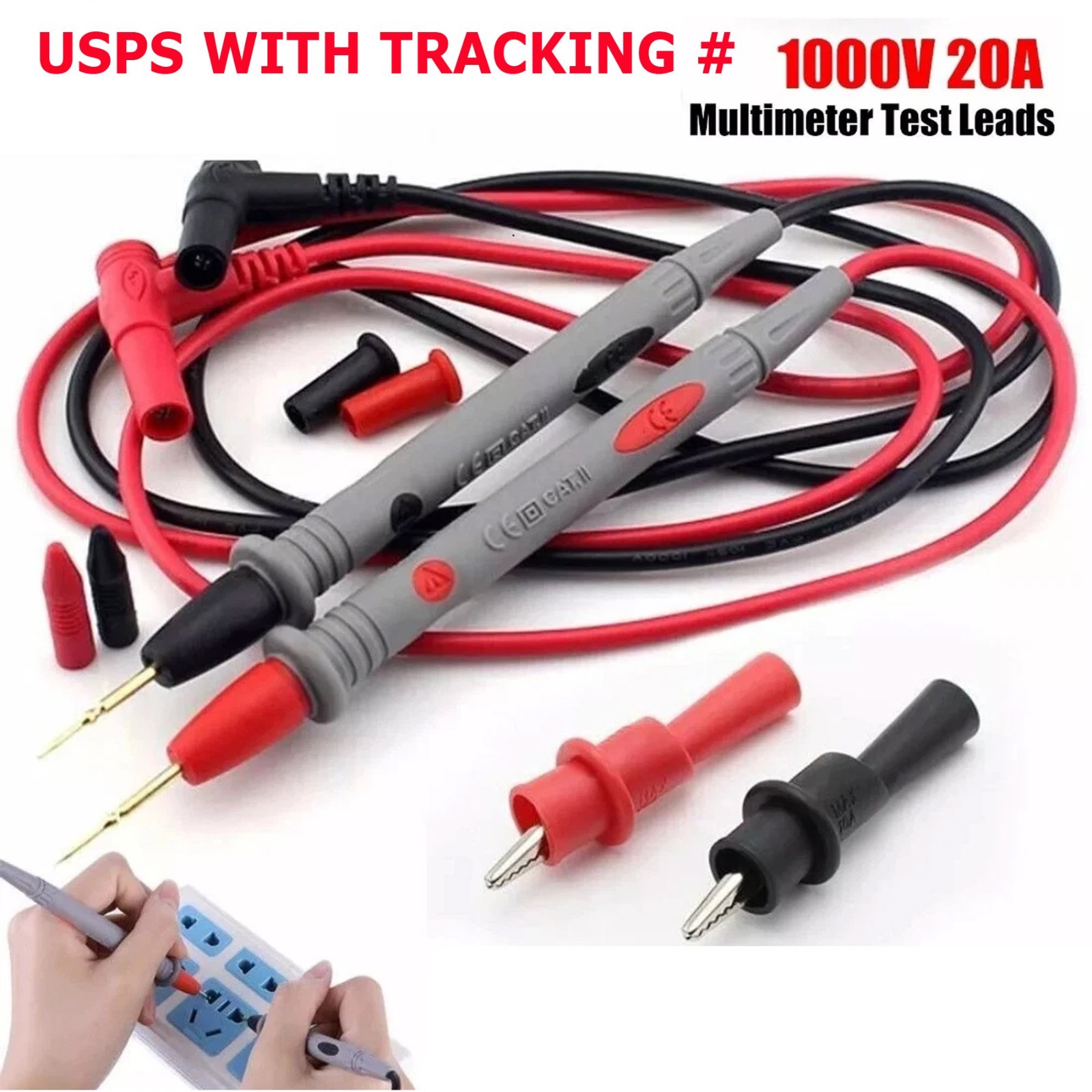 Multimeter Test Leads for Fluke Meter Electrical Alligator Clip Probes 1000V 20A$6.99View on eBay
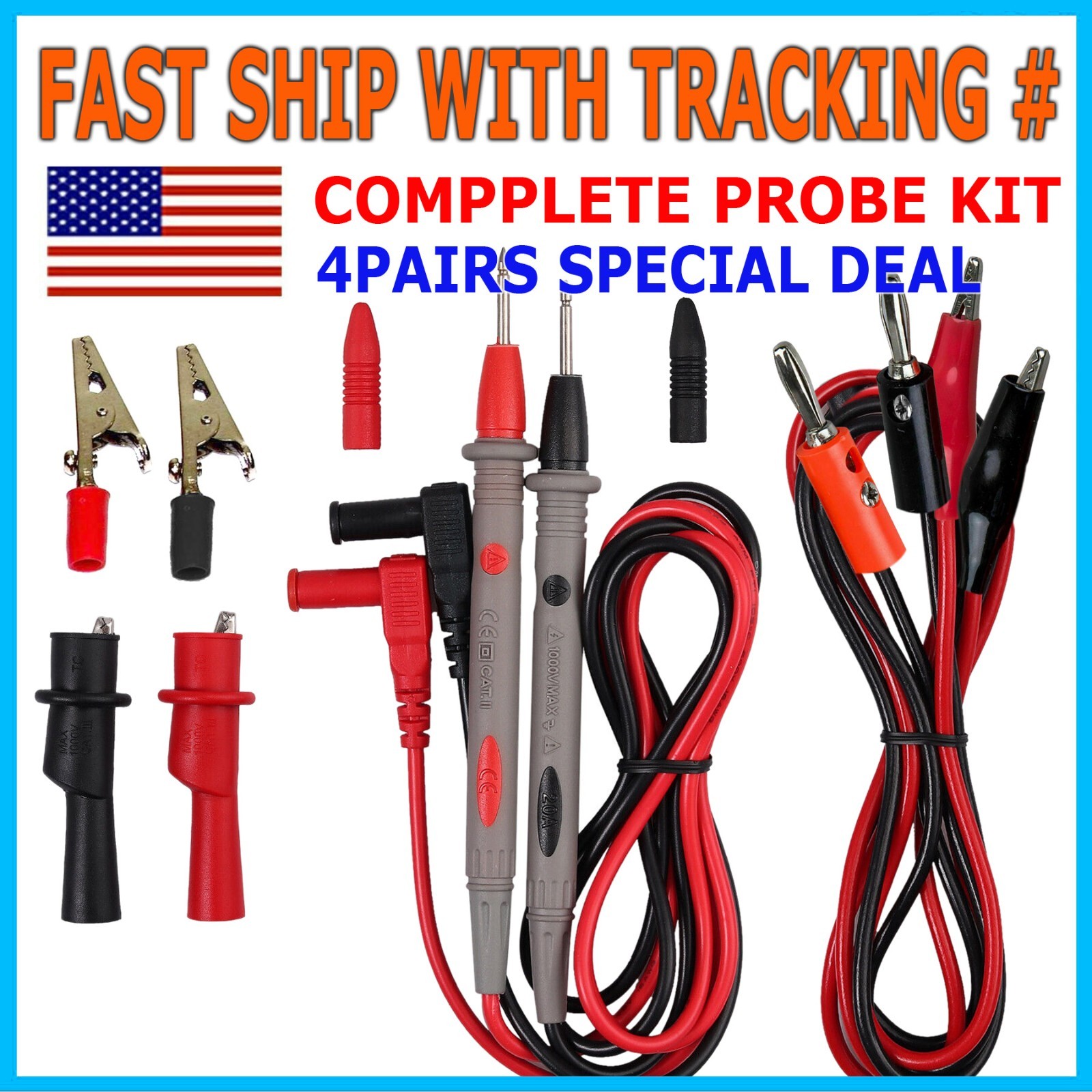 Multimeter Test Leads for Fluke Meter Electrical Alligator Clip Probes 1000V 20A$9.95Last checked Nov 27, 2026View on eBay
Highlights
- Safety category is the primary discriminator: Fluke TL71/TL75 leads are rated CAT IV 600 V / CAT III 1000 V, while generic 1000 V 20 A leads typically carry no published CAT rating at all.
- Connector type must match the meter jack: Fluke 87V/117 use 4 mm shrouded banana jacks, so leads need right-angle or straight shrouded banana plugs, not bare 4 mm pins.
- Probe tip geometry determines usability: 2 mm or 4 mm slim tips reach recessed terminals, while blunt 1 mm tips are safer for general bench work and reduce accidental shorting.
- Current rating is limited by the lead and fuse, not the meter: standard Fluke leads are rated 10 A continuous, and alligator clip accessories must carry an equal or higher rating to stay safe.
Best use cases
- Best fit: electricians doing CAT III/CAT IV panel or feeder work should choose genuine Fluke TL71 or TL75 silicone leads with the stated CAT rating and 10 A rating; skip unrated 1000 V 20 A generic leads entirely.
- Best fit: bench electronics and low-voltage hobby work can use the 1000 V 20 A alligator-clip lead sets, provided the meter's 10 A fuse protects the circuit; skip them for any live mains panel measurement.
- Best fit: field technicians who swap between probes and clips should pick a modular lead set with interchangeable tips and clips sharing one silicone lead; skip fixed all-in-one clip leads that limit reach and tip access.
- Wrong fit: anyone measuring CAT IV 600 V outdoor or service-entrance circuits should not use generic eBay leads regardless of printed voltage; only Fluke-rated CAT IV leads with finger guards are appropriate.
Buying tips
- Match the lead's CAT rating to the installation category: CAT III 1000 V for distribution boards and fixed wiring, CAT IV 600 V for service entrances and outdoor feeders, and never rely on a bare '1000 V' print without a CAT mark.
- Confirm the meter jack standard: Fluke handhelds use 4 mm shrouded banana sockets, so buy leads with matching shrouded banana plugs; 4 mm unshrouded pins fit but defeat the finger-guard safety margin.
- Check the current rating against the meter's fuse: Fluke 87V and 117 have a 10 A/11 A fuse, so leads rated 10 A continuous are the correct match; a 20 A lead claim does not raise the meter's safe current limit.
- Choose silicone insulation for any lead that will see cold, heat, or repeated flexing; PVC is acceptable only for fixed bench use where the lead is not coiled tightly or left in sunlight.
Specs
| Safety Category | CAT III 1000V / CAT IV 600V |
|---|---|
| Connector Type | 4 mm shrouded banana plugs |
| Current Rating | 10 A continuous (meter-fuse limited) |
| Insulation Material | Silicone vs PVC |
Related searches
What to check before buying
- Read your meter's input jack labels and manual to confirm the banana socket diameter (4 mm standard on Fluke handhelds) and the maximum current and voltage rating before ordering leads.
- Verify the lead's printed CAT rating and voltage on the probe body or strain relief, not just the listing title; CAT III 1000 V / CAT IV 600 V is the baseline for mains work.
- Confirm the accessory tips and clips are rated at or above the lead's voltage and current, since a mismatched alligator clip becomes the weakest link in the measurement chain.
- Check probe tip length and diameter against your terminal depth: slim 2 mm tips for recessed European terminals, standard 4 mm tips for general bench and panel work.
FAQ
Data sources: eBay / Amazon listings and product attribute feeds. Updated Nov 28, 2026.
Some links on this page are affiliate links. If you buy after clicking one, we may earn a commission at no extra cost to you. This does not change which products appear here or their order. Affiliate disclosure.