
Photos from current listings. Actual item, color, and included accessories may vary.
Fluke Test Lead With Alligator Clip Buying Guide
Fluke-compatible test leads with alligator clips are the interface between your meter and the circuit, and the primary trade-off is safety-rated insulation and contact metallurgy versus generic commodity wire. Genuine Fluke leads use silicone insulation, CAT III/IV ratings, and hardened steel or brass clips; generic 1000V/20A leads often meet the voltage number on paper but lack certified CAT safety margins. The decision rule: buy leads with an explicit CAT III 1000V or CAT IV 600V rating and silicone insulation for any work near mains or industrial panels; generic PVC leads are only acceptable for low-voltage bench work.
Median $6.50
Key takeaways
- Safety ratings are CAT III 1000V / CAT IV 600V for genuine Fluke silicone leads; generic '1000V 20A' leads usually carry no CAT rating and use PVC insulation that stiffens in cold and cracks with heat.
- Contact quality is defined by clip jaw material and plating: hardened steel or brass with nickel plating holds tension; stamped copper or thin plated steel clips deform and lose grip after repeated use.
- Fluke's modular system (TL71/TL75/TL175 test leads plus AC285/AC175 alligator clips) lets you replace clips independently; molded one-piece generic leads force whole-lead replacement when a clip fails.
At a glance
- Category
- Test Leads, Probes, Fixtures & Accessories
- Last updated
- Nov 28, 2026
Current offers
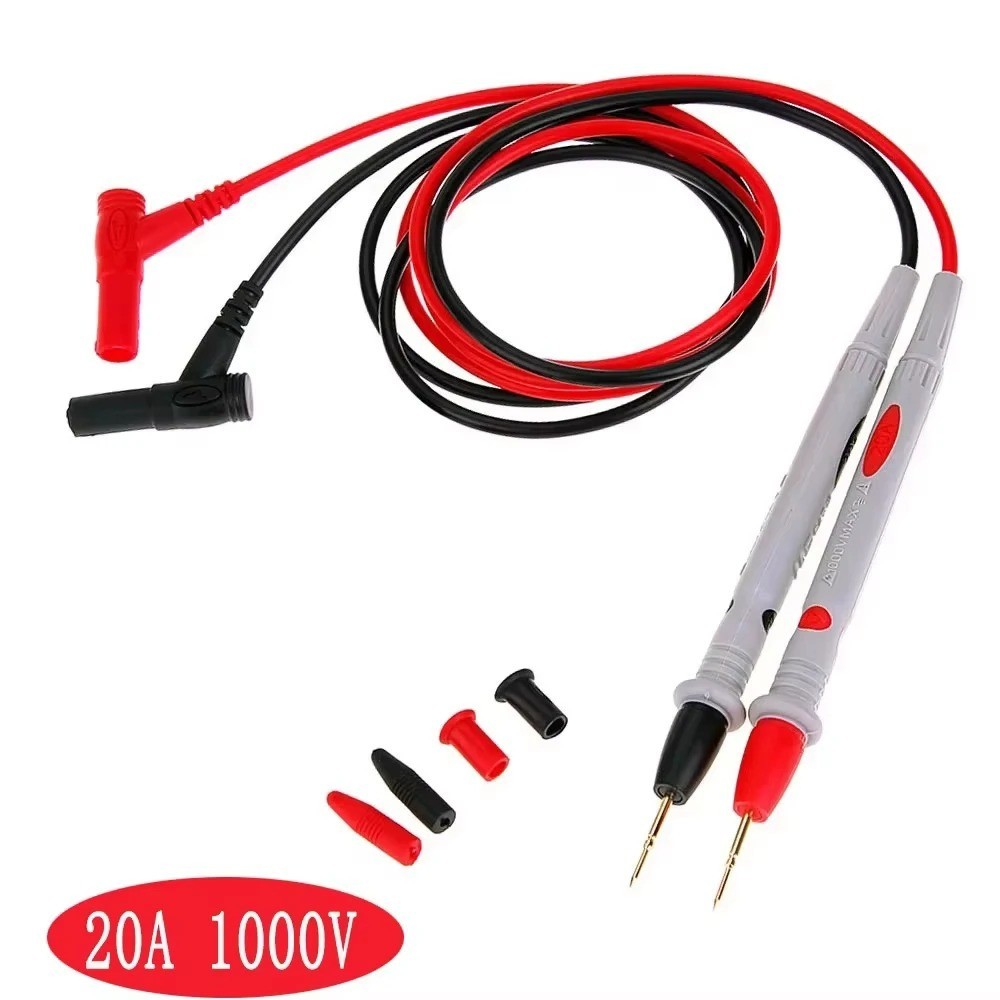 Multimeter Test Leads for Fluke Meter Electrical Alligator Clip Probes 1000V 20A$4.28View on eBay
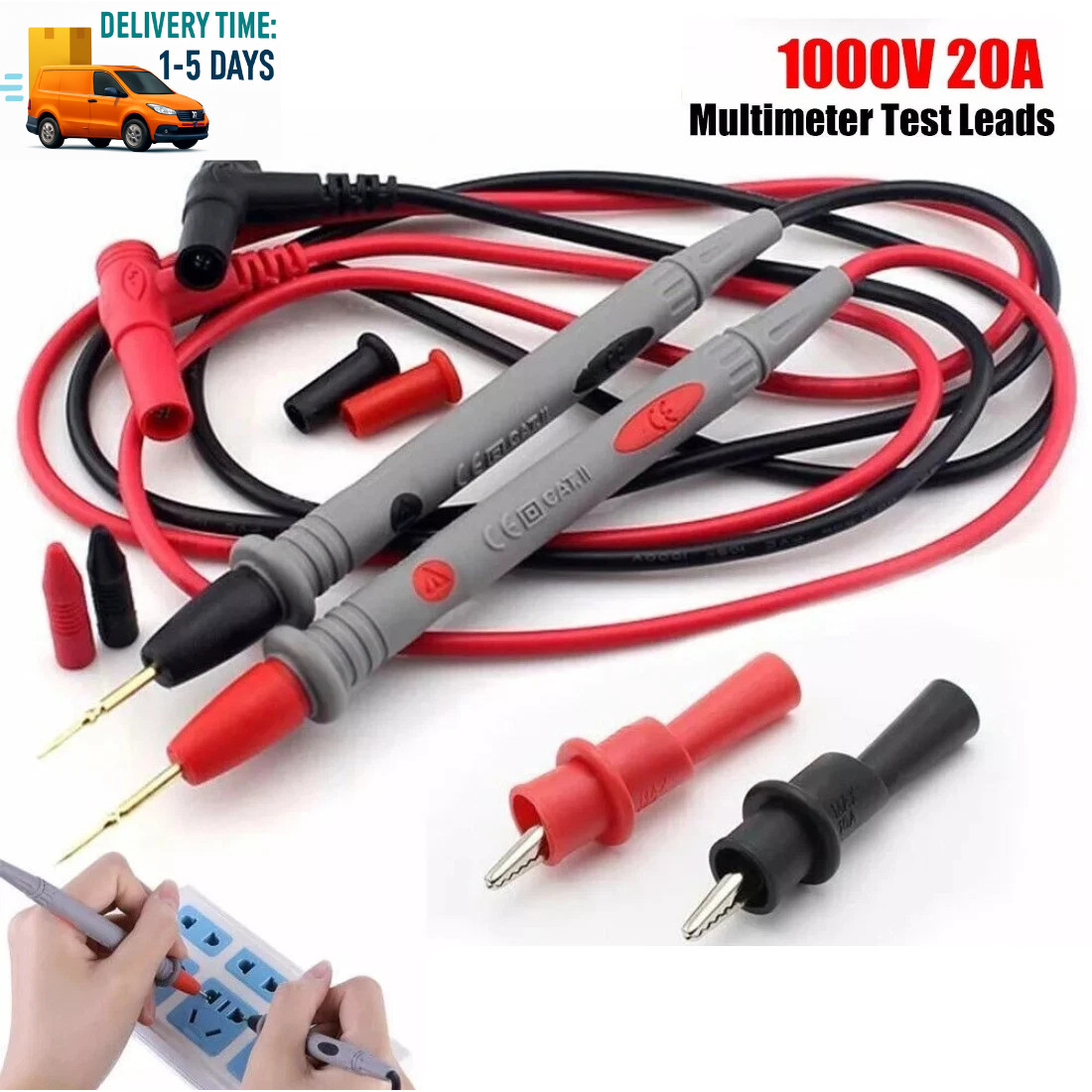 Multimeter Test Leads for Fluke Meter Electrical Alligator Clip Probes 1000V 20A$6.01View on eBay
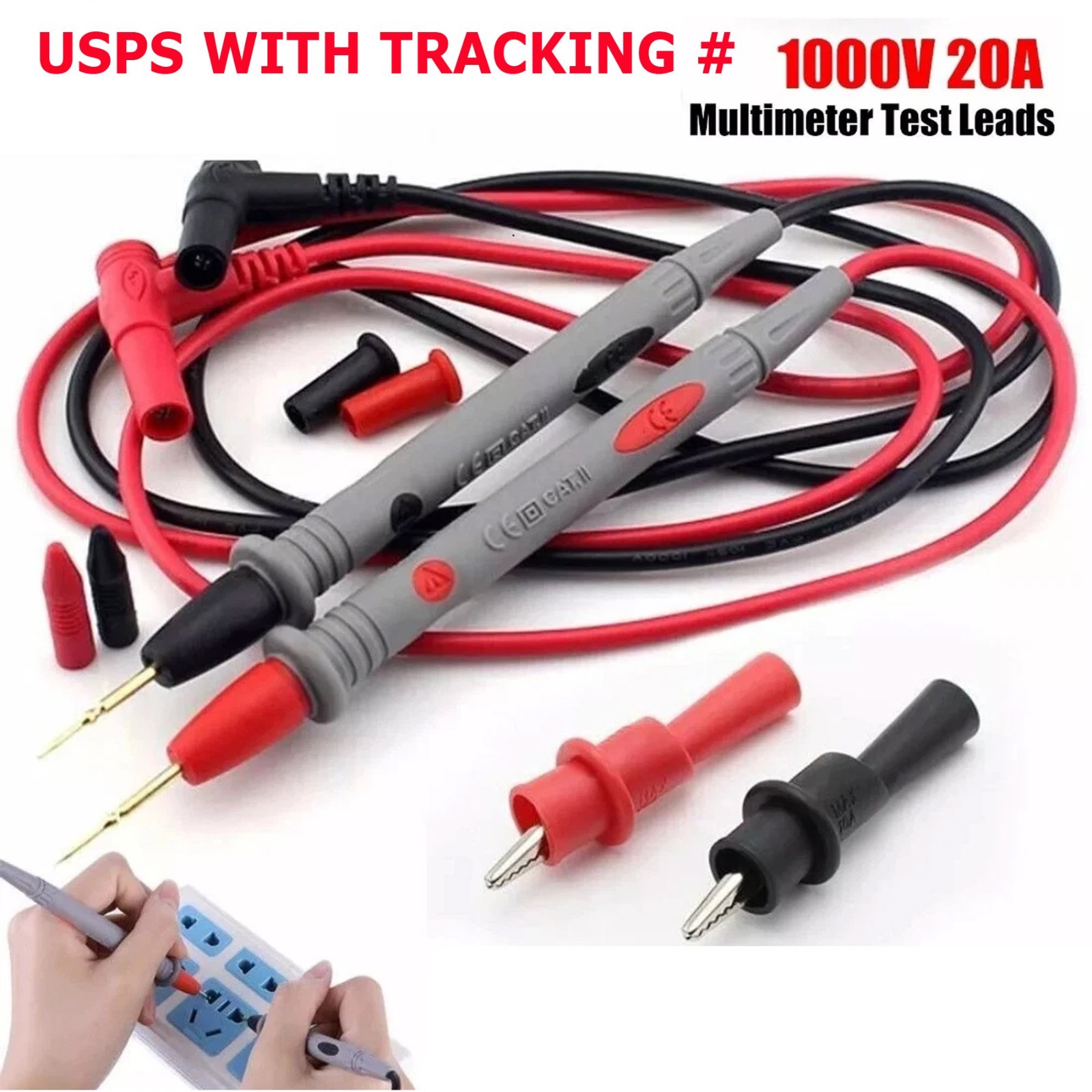 Multimeter Test Leads for Fluke Meter Electrical Alligator Clip Probes 1000V 20A$6.99View on eBay
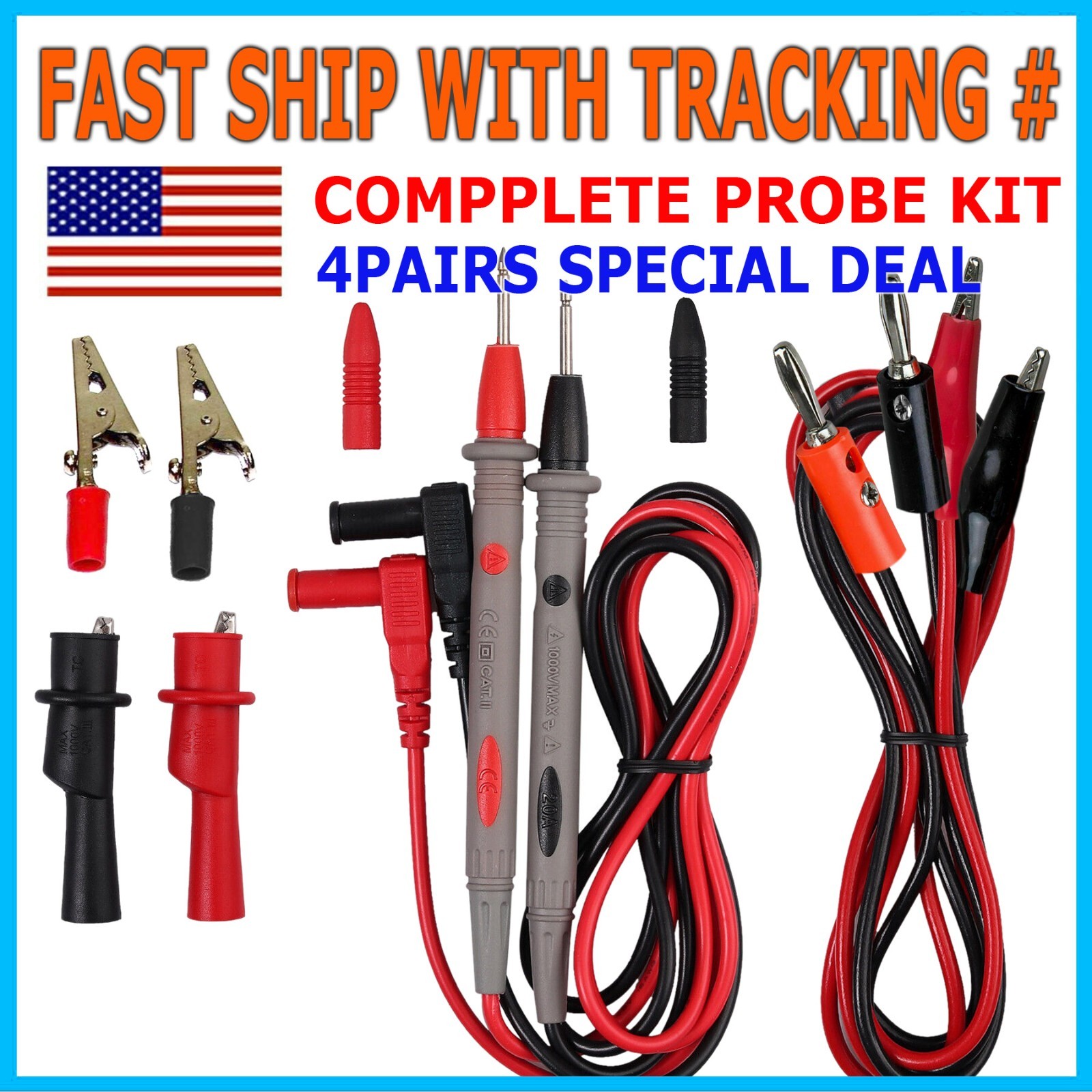 Multimeter Test Leads for Fluke Meter Electrical Alligator Clip Probes 1000V 20A$9.95Last checked Nov 27, 2026View on eBay
Highlights
- Safety ratings are CAT III 1000V / CAT IV 600V for genuine Fluke silicone leads; generic '1000V 20A' leads usually carry no CAT rating and use PVC insulation that stiffens in cold and cracks with heat.
- Contact quality is defined by clip jaw material and plating: hardened steel or brass with nickel plating holds tension; stamped copper or thin plated steel clips deform and lose grip after repeated use.
- Fluke's modular system (TL71/TL75/TL175 test leads plus AC285/AC175 alligator clips) lets you replace clips independently; molded one-piece generic leads force whole-lead replacement when a clip fails.
- Current rating is limited by the clip and connector, not just the wire: 20A-rated leads need matching 20A clips and shrouded banana plugs; standard 10A clips on 20A wire create a thermal bottleneck at the joint.
Best use cases
- Industrial and panel work at CAT III 1000V: choose genuine Fluke silicone leads with CAT III/IV-rated alligator clips (AC285 or AC175) — skip generic PVC '1000V' leads that lack CAT certification.
- Low-voltage bench and hobby electronics (under 50V): generic 1000V/20A alligator-clip leads are adequate and economical — you do not need CAT-rated silicone leads here.
- Replacing only worn clips on existing Fluke leads: buy modular AC285/AC175 clips and keep your TL-series leads — do not replace the entire lead set when only the clip jaws are worn.
- High-current battery or power-supply testing near 20A: select leads and clips both rated 20A with shrouded banana plugs — mixing 20A wire with 10A clips overheats the clip-to-lead joint.
Buying tips
- Match the CAT rating to the panel: CAT III 1000V for distribution panels and fixed installations, CAT IV 600V for service entrance and outdoor feeders; a plain '1000V' marking without CAT is not equivalent.
- Choose silicone insulation over PVC: silicone stays flexible from -20°C to 150°C+ and resists soldering heat and cold-weather cracking; PVC stiffens and can hide conductor damage.
- Verify clip jaw metallurgy: hardened steel or brass with nickel plating for grip tension; avoid stamped thin-gauge clips that bend open and lose contact pressure.
- Check connector compatibility: Fluke meters use 4mm shrouded banana jacks; confirm leads have shrouded 4mm banana plugs and that clips attach via 4mm socket or fixed lead, not proprietary pins.
Specs
| Safety Category | CAT III 1000V / CAT IV 600V (genuine) |
|---|---|
| Insulation Material | Silicone vs PVC |
| Clip Jaw Material | Nickel-plated steel or brass |
| Connector Standard | 4mm shrouded banana, 19mm spacing |
Related searches
What to check before buying
- Confirm your meter's jack spacing and type: standard Fluke handhelds use 4mm shrouded banana jacks with 19mm spacing — measure before buying fixed-lead clip sets.
- Check the working voltage category of your environment (CAT II/III/IV) and buy leads rated at or above it; CAT rating is the safety floor, not a suggestion.
- Verify clip jaw opening fits your test points: standard alligator clips open to about 8-10mm; larger bus bars and bolt heads need wider-jaw clips or hook probes.
- Confirm your meter's current range and fuse rating match the lead/clip 10A or 20A rating so the clip joint does not become the thermal weak point.
FAQ
Data sources: eBay / Amazon listings and product attribute feeds. Updated Nov 28, 2026.
Some links on this page are affiliate links. If you buy after clicking one, we may earn a commission at no extra cost to you. This does not change which products appear here or their order. Affiliate disclosure.