
Photos from current listings. Actual item, color, and included accessories may vary.
Multimeter Lead Buying Guide
Multimeter leads are the insulated probes, wires, and connectors that carry voltage and current from a circuit to your meter, and their safety and accuracy depend on silicone vs PVC insulation, CAT safety ratings, and probe tip construction. The core trade-off is between cheap universal leads with unverified ratings and correctly rated silicone leads that match your meter's CAT environment. Buy silicone-insulated leads with a CAT III or CAT IV rating and a current rating at or above your meter's fuse rating; skip unbranded PVC leads for anything beyond low-voltage bench work.
Median $6.99
Key takeaways
- Silicone insulation stays flexible from -20°C to 150°C+ and resists solder burns; PVC stiffens in cold and melts at soldering temperatures.
- CAT III 1000V / CAT IV 600V ratings indicate tested transient withstand; leads marked only '1000V' without a CAT rating lack that safety certification.
- 20A-rated leads use thicker copper stranding than 10A leads; the 10A figure matches the common meter fuse, while 20A suits high-current bench supplies.
At a glance
- Category
- Test Leads, Probes, Fixtures & Accessories
- Last updated
- Nov 28, 2026
Current offers
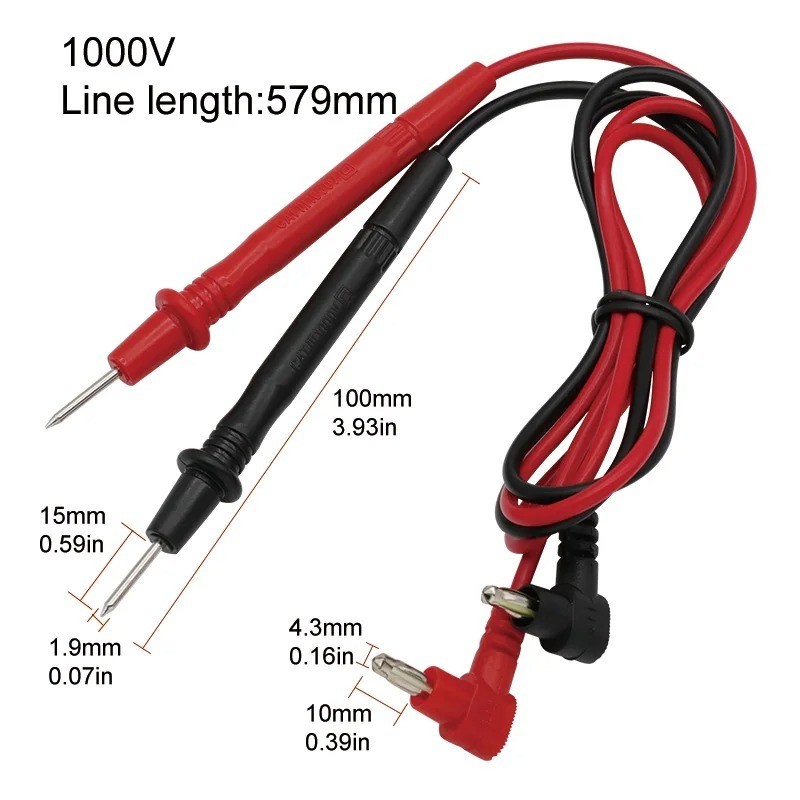 Universal Digital Multimeter MultiMeter Test Lead Probe Wire Pen Cable 1000V 10A$2.40View on eBay
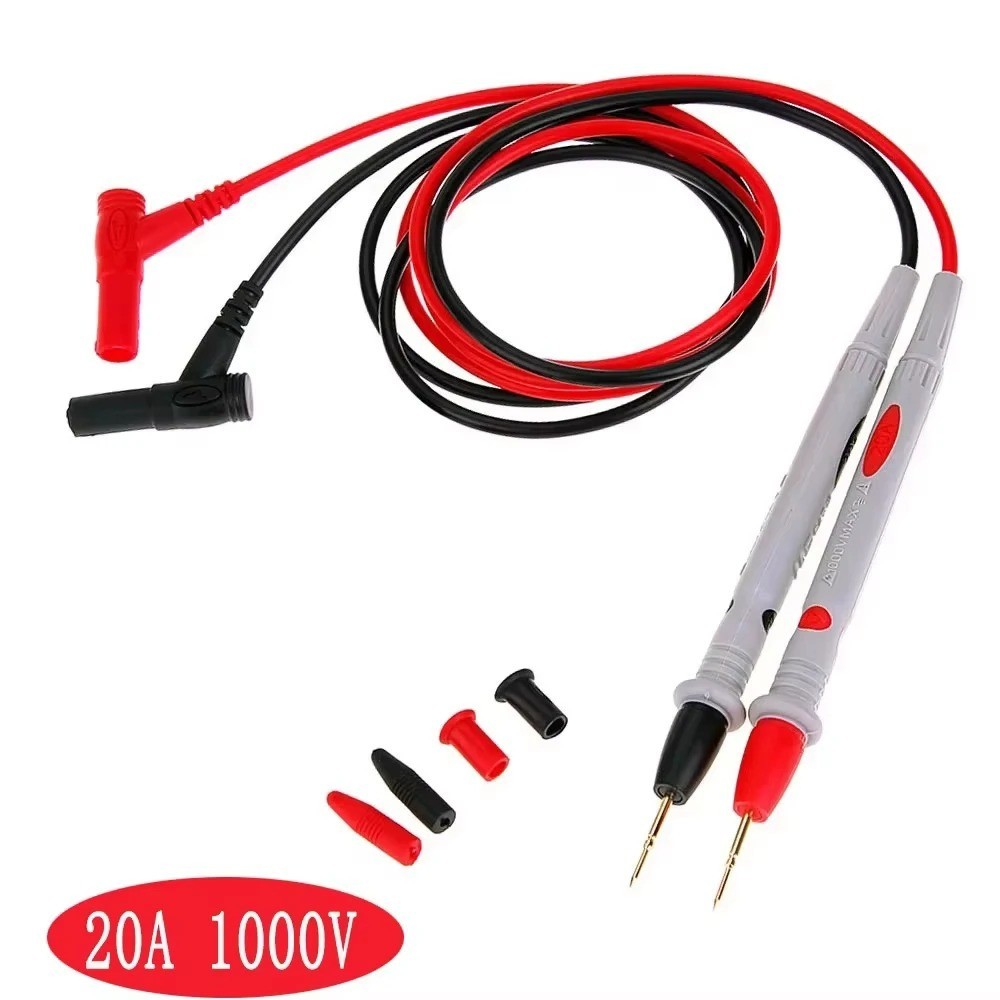 Multimeter Test Leads for Fluke Meter Electrical Alligator Clip Probes 1000V 20A$4.28View on eBay
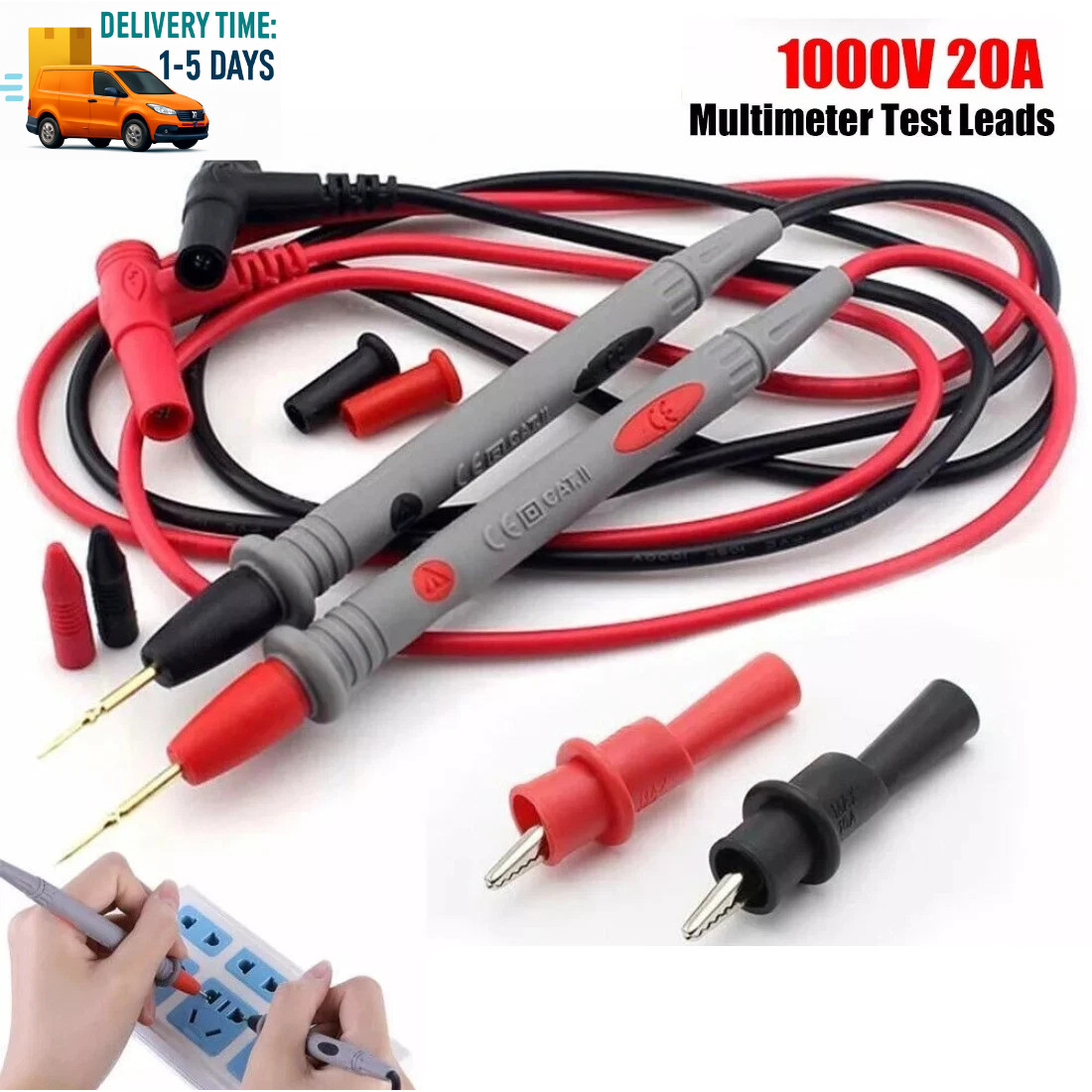 Multimeter Test Leads for Fluke Meter Electrical Alligator Clip Probes 1000V 20A$6.01View on eBay
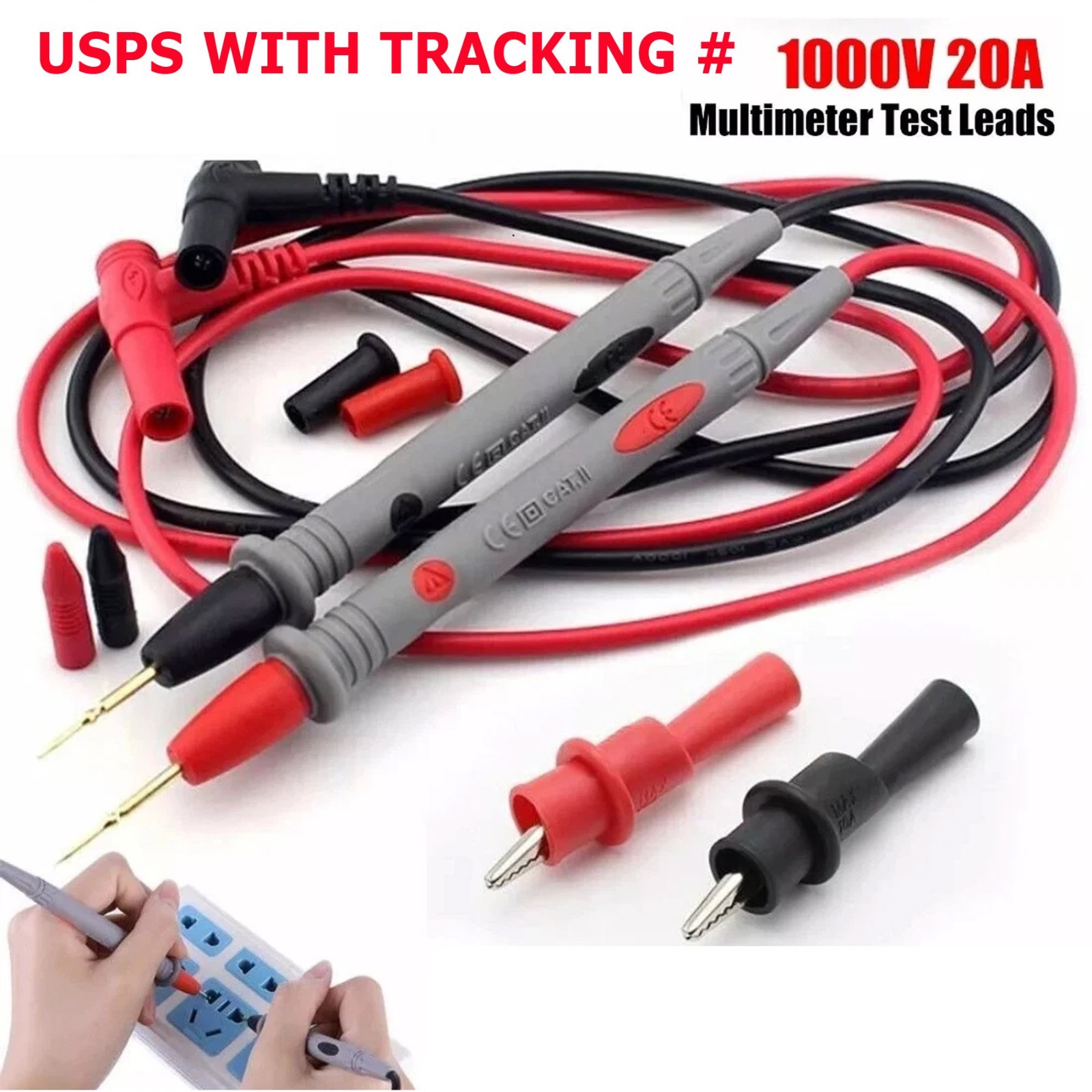 Multimeter Test Leads for Fluke Meter Electrical Alligator Clip Probes 1000V 20A$6.99View on eBay
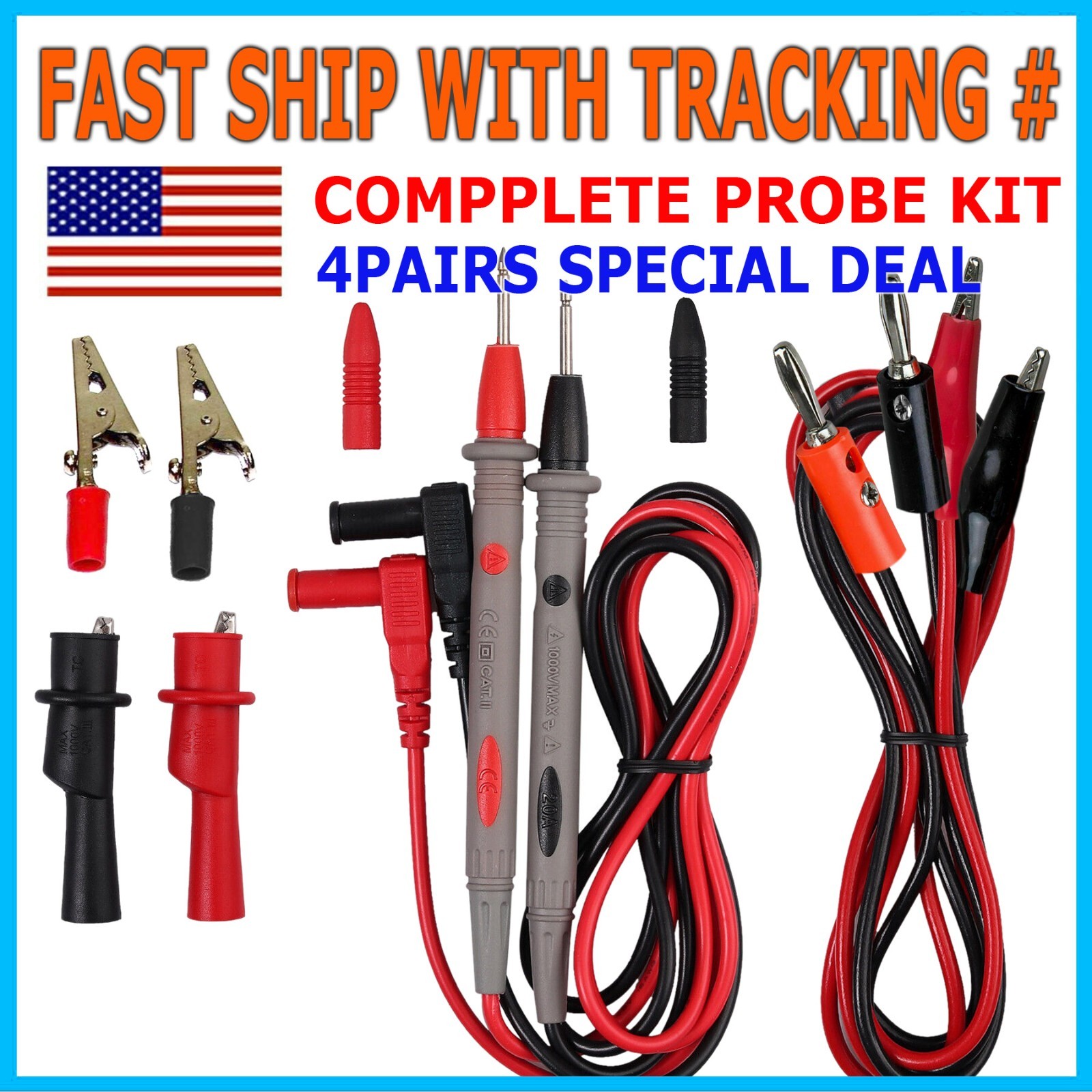 Multimeter Test Leads for Fluke Meter Electrical Alligator Clip Probes 1000V 20A$9.95Last checked Nov 27, 2026View on eBay
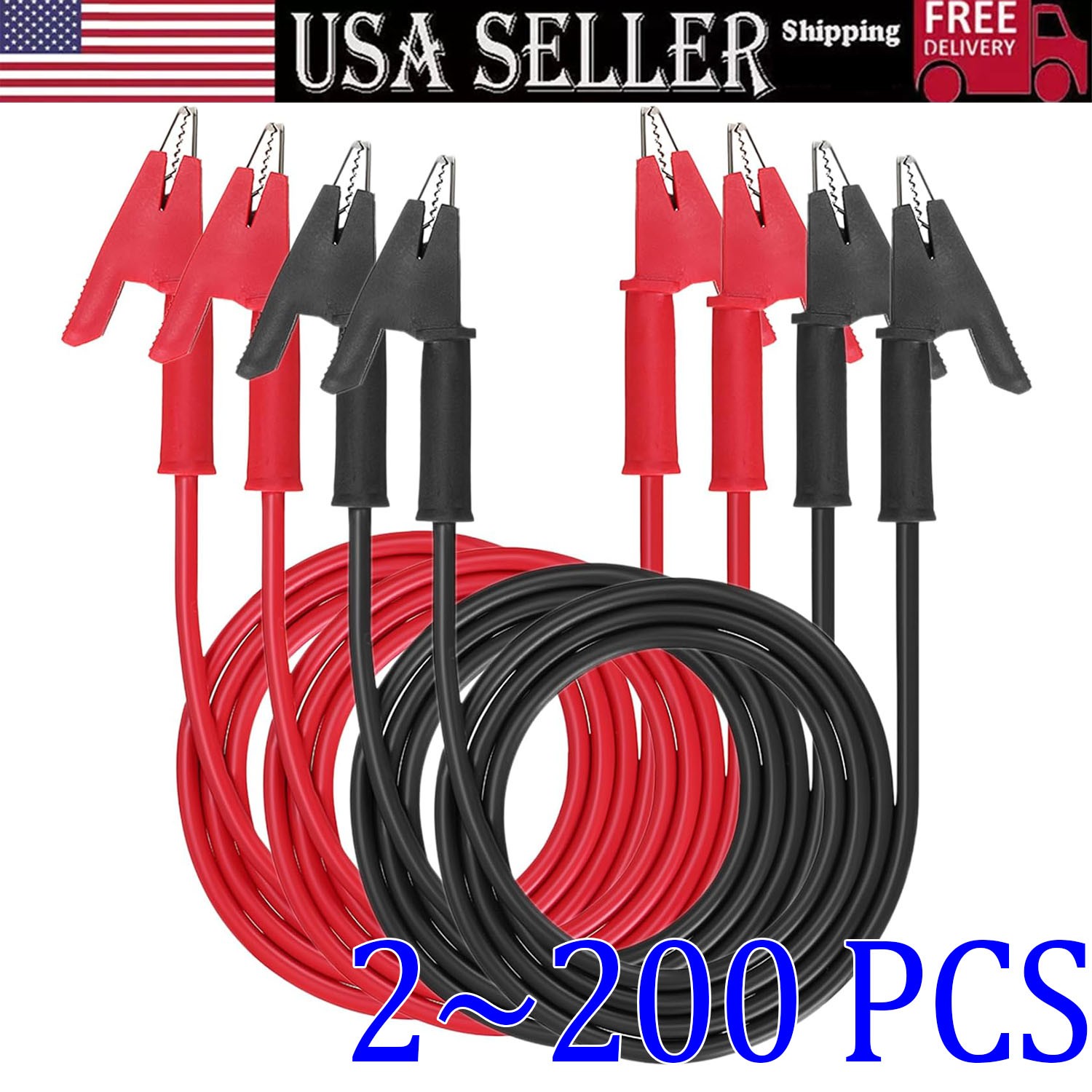 Alligator Clips Electrical Multimeter Test Leads 1500V/15A Jumper Wires Set Lot$45.36View on eBay
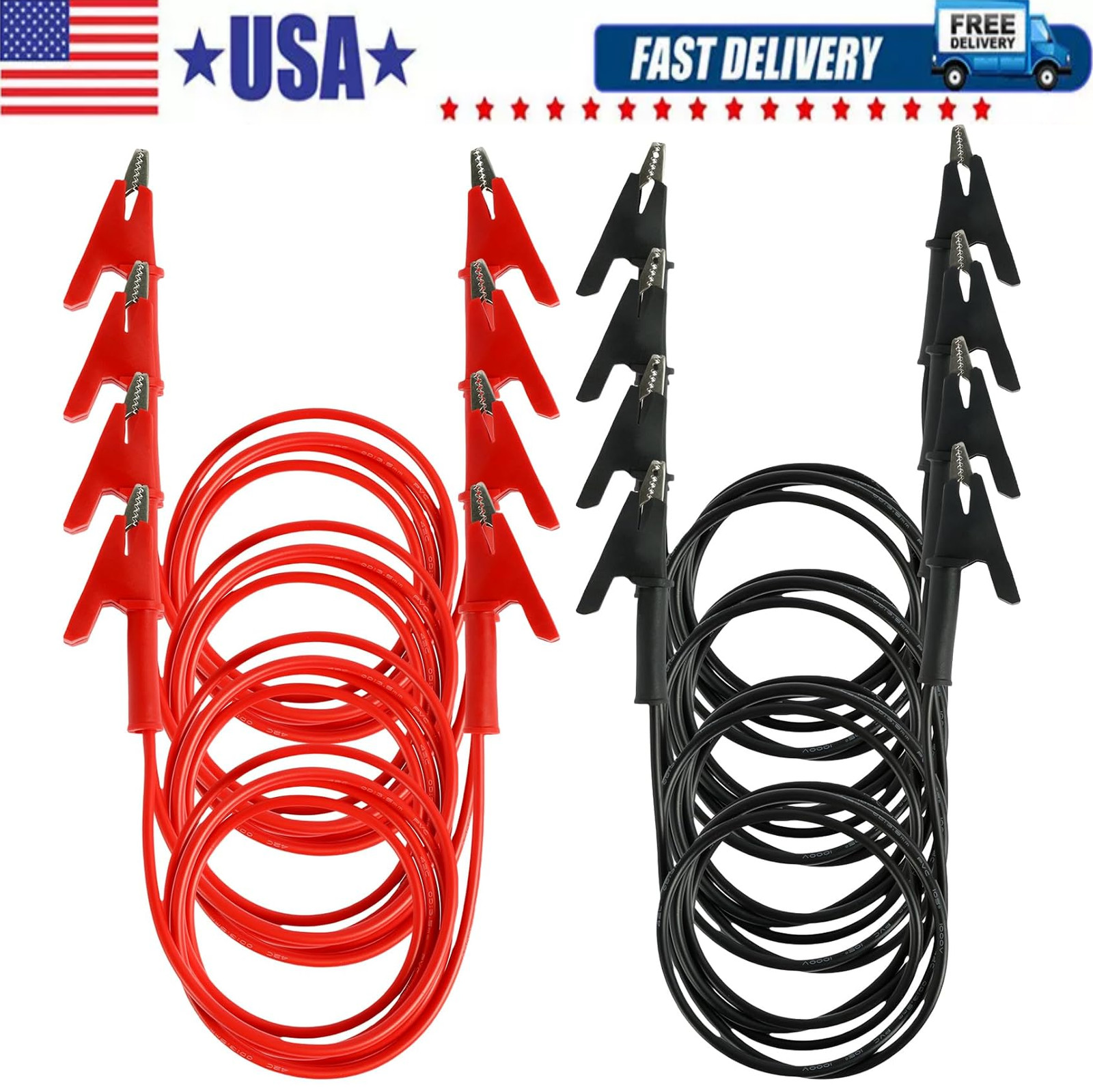 Alligator Clips Electrical Multimeter Test Leads 1500V/15A Jumper Wires Set LOT$631.99Last checked Nov 16, 2026View on eBay
Highlights
- Silicone insulation stays flexible from -20°C to 150°C+ and resists solder burns; PVC stiffens in cold and melts at soldering temperatures.
- CAT III 1000V / CAT IV 600V ratings indicate tested transient withstand; leads marked only '1000V' without a CAT rating lack that safety certification.
- 20A-rated leads use thicker copper stranding than 10A leads; the 10A figure matches the common meter fuse, while 20A suits high-current bench supplies.
- Probe tips range from 4mm banana to 2mm slim-tip and hard-point needle styles; 4mm shrouded banana plugs are the universal meter jack standard.
Best use cases
- Choose a silicone CAT III 1000V lead set with 4mm shrouded banana plugs and interchangeable probe tips for general electrical troubleshooting and HVAC work.
- Choose alligator-clip or jumper-wire lead sets rated 15A–20A for bench power-supply testing, battery banks, and hands-free current measurement.
- Skip PVC-insulated '1000V' leads with no CAT rating for mains panel or outdoor work; reserve them for low-voltage electronics and breadboard use.
- Skip 10A leads on meters with 20A fused ranges if you regularly measure high current; match lead current rating to the meter's fuse to avoid nuisance blows.
Buying tips
- Match lead CAT rating to your meter and environment: CAT III 1000V for distribution panels, CAT IV 600V for service entrance and outdoor feeders.
- Choose silicone insulation over PVC for flexibility in cold weather and resistance to soldering-iron contact; PVC leads crack and stiffen over time.
- Confirm 4mm shrouded banana plugs fit your meter's jack spacing; most handheld meters use 4mm jacks with 19mm center spacing.
- Select 20A-rated leads with 18 AWG or thicker copper for high-current work, and 10A leads with finer stranding for general electronics probing.
Specs
| Insulation Material | Silicone vs PVC |
|---|---|
| Safety Rating | CAT III 1000V / CAT IV 600V |
| Current Rating | 10A vs 15A vs 20A |
| Connector Standard | 4mm shrouded banana plugs |
Related searches
What to check before buying
- Measure your meter's jack spacing and confirm 4mm shrouded banana plugs fit; check whether the meter uses recessed or protruding jacks.
- Verify the lead's CAT rating meets or exceeds the meter's CAT rating and the environment you will probe, including transient category and voltage.
- Check the lead current rating against your meter's fuse rating (commonly 10A or 20A) so leads do not become the weak point.
- Confirm probe tip style and included accessories (alligator clips, fine tips, spade lugs) match your typical test points.
FAQ
Data sources: eBay / Amazon listings and product attribute feeds. Updated Nov 28, 2026.
Some links on this page are affiliate links. If you buy after clicking one, we may earn a commission at no extra cost to you. This does not change which products appear here or their order. Affiliate disclosure.