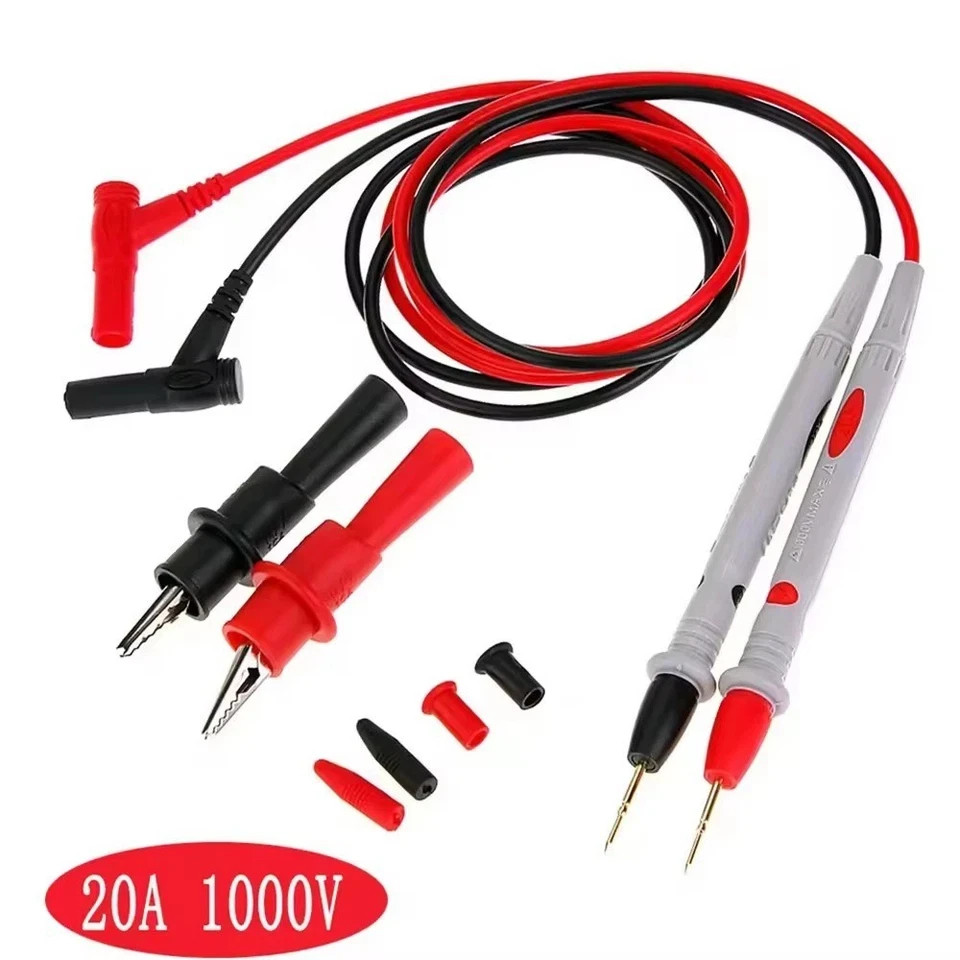

Photos from current listings. Actual item, color, and included accessories may vary.
Multimeter Test Probe Buying Guide
Multimeter test probes are the safety-critical interface between your meter and live circuits, and the primary trade-off is insulation integrity and probe-tip geometry versus cost. Durable probes use silicone insulation rated to 1000V CAT III/IV with fused or shrouded connectors, while compromises use PVC wire that stiffens in cold and cracks at flex points. The decision rule: buy probes whose voltage/current rating meets or exceeds your meter's CAT rating and whose tips match your measurement points (4mm banana jacks, fine-pitch SMD, or alligator clips).
Median $15.24
Key takeaways
- Voltage/current tiers: 1000V 10A and 1000V 20A ratings are common; the 20A rating requires thicker 18-16 AWG wire and is needed for high-current measurements.
- Insulation material: silicone stays flexible from -20°C to 200°C and resists cracking; PVC stiffens in cold and degrades at flex points.
- Connector standard: 4mm shrouded banana plugs with safety collars are standard for CAT III/IV meters; unshrouded plugs are only for low-voltage bench work.
At a glance
- Category
- Test Leads, Probes, Fixtures & Accessories
- Last updated
- Nov 28, 2026
Current offers
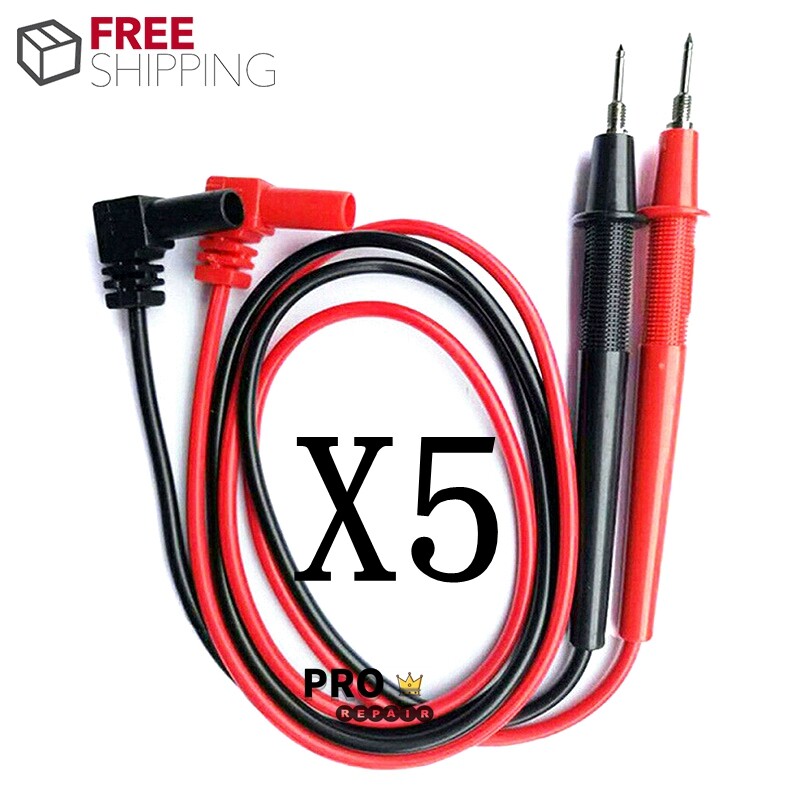
Highlights
- Voltage/current tiers: 1000V 10A and 1000V 20A ratings are common; the 20A rating requires thicker 18-16 AWG wire and is needed for high-current measurements.
- Insulation material: silicone stays flexible from -20°C to 200°C and resists cracking; PVC stiffens in cold and degrades at flex points.
- Connector standard: 4mm shrouded banana plugs with safety collars are standard for CAT III/IV meters; unshrouded plugs are only for low-voltage bench work.
- Probe tip geometry: 2mm fine-pitch tips reach SMD and terminal blocks; 4mm blunt tips are for general wiring; hard-point stainless tips pierce oxidation on contacts.
Best use cases
- Best fit: electricians testing 240V panels should pick 1000V CAT III/IV silicone probes with 4mm shrouded banana plugs and 20A rating for occasional high-current checks.
- Best fit: electronics bench work on SMD boards needs fine-pitch 2mm gold-plated tips and flexible silicone leads; skip bulky alligator-clip sets.
- Wrong fit: automotive 12V testing with 1000V 10A PVC probes wastes money and stiffens in cold; choose silicone 1000V 20A probes with alligator clips instead.
Buying tips
- Match probe CAT rating to your meter: a CAT III 600V meter needs at least CAT III 600V probes; never use lower-rated probes on higher-rated meters.
- For current measurements above 10A, choose 20A-rated probes with 16 AWG or thicker wire; 10A probes will overheat and fail.
- Silicone insulation outlasts PVC by 3-5x in flex fatigue; buy silicone if leads are coiled daily.
- Check plug diameter: 4mm banana plugs fit most handheld meters; 2mm pins are for bench meters and require adapter sleeves.
Specs
| Voltage Rating | 1000V CAT III/IV typical |
|---|---|
| Current Rating | 10A or 20A (wire gauge dependent) |
| Insulation | Silicone vs PVC |
| Plug Type | 4mm shrouded banana / 2mm pin |
Related searches
What to check before buying
- Confirm your meter's jack spacing and plug type: 4mm banana jacks are standard, but some meters use 2mm or recessed jacks.
- Verify probe voltage rating meets or exceeds the highest CAT environment you work in (CAT II 300V for appliances, CAT III 600V for panels).
- Measure your test point pitch: fine-pitch SMD work needs 2mm tips; standard terminal blocks accept 4mm tips.
- Check lead length: 1m leads suit bench work; 1.5-2m leads are needed for floor-level or panel work.
FAQ
Data sources: eBay / Amazon listings and product attribute feeds. Updated Nov 28, 2026.
Some links on this page are affiliate links. If you buy after clicking one, we may earn a commission at no extra cost to you. This does not change which products appear here or their order. Affiliate disclosure.