
Photos from current listings. Actual item, color, and included accessories may vary.
Test Lead Buying Guide
Test leads are the insulated conductors and probe/clip terminations that connect a meter to a circuit. The core trade-off is safety-rated insulation and current capacity versus flexibility and price: silicone leads stay supple and resist heat, while cheap PVC stiffens and cracks, exposing you to live voltage. Buy leads whose CAT safety rating and current rating meet or exceed your meter's highest-energy measurement environment, and treat unrated or mislabeled leads as disposable.
Median $17.99
Key takeaways
- Safety ratings follow IEC 61010 CAT II/III/IV tiers; CAT III 1000V leads are mandatory for panel and distribution-board work, CAT II covers appliance and outlet testing.
- Conductor current capacity is limited by wire gauge and probe tips: 10A leads use thinner wire, 20A leads use heavier gauge and rated probe tips; exceed the lead rating and tips overheat.
- Silicone insulation stays flexible from -50°C to +200°C, resists soldering splatter and cold-crack; PVC leads stiffen in cold and can melt against hot components.
At a glance
- Category
- Test Leads, Probes, Fixtures & Accessories
- Last updated
- Nov 28, 2026
Current offers
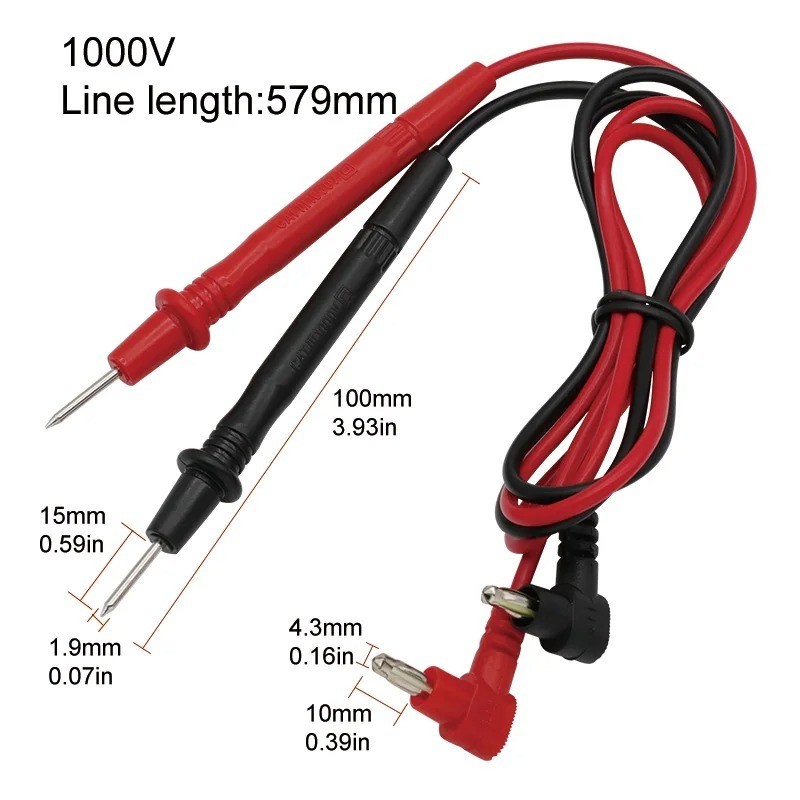 Universal Digital Multimeter MultiMeter Test Lead Probe Wire Pen Cable 1000V 10A$2.40View on eBay
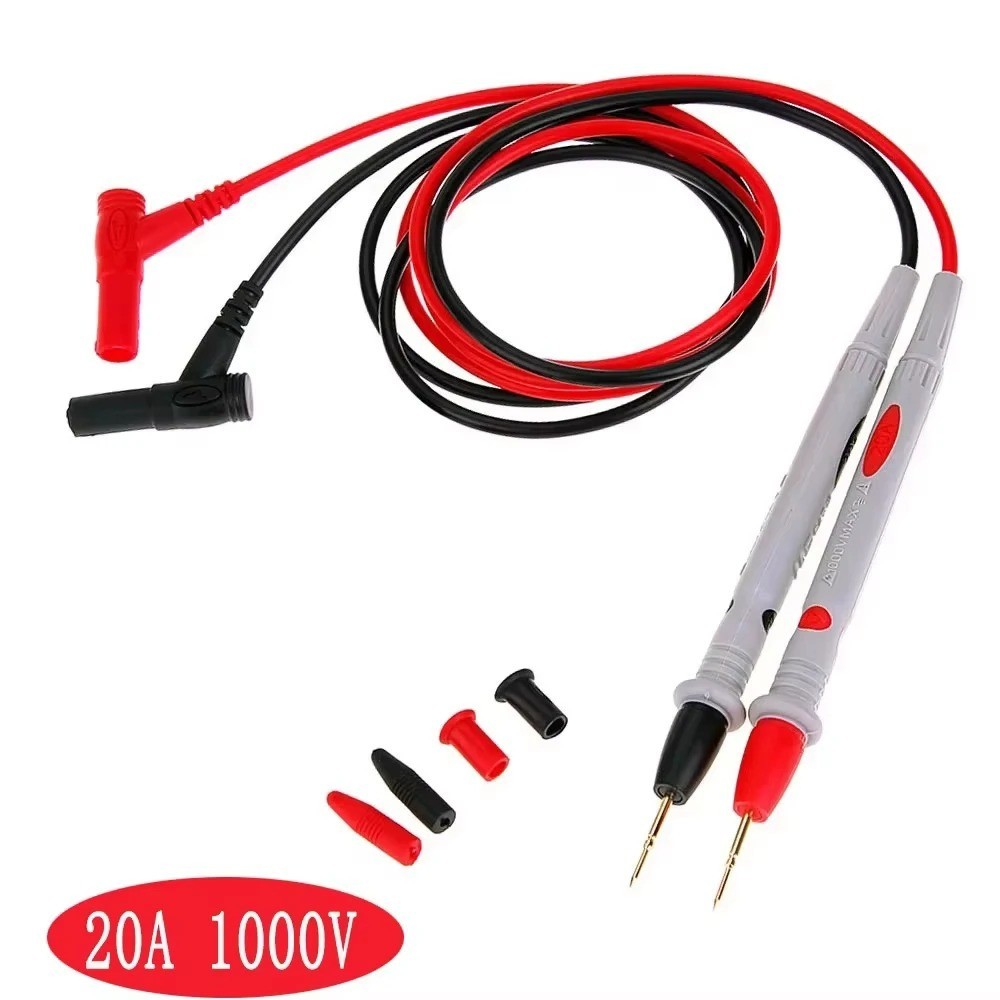 Multimeter Test Leads for Fluke Meter Electrical Alligator Clip Probes 1000V 20A$4.28View on eBay
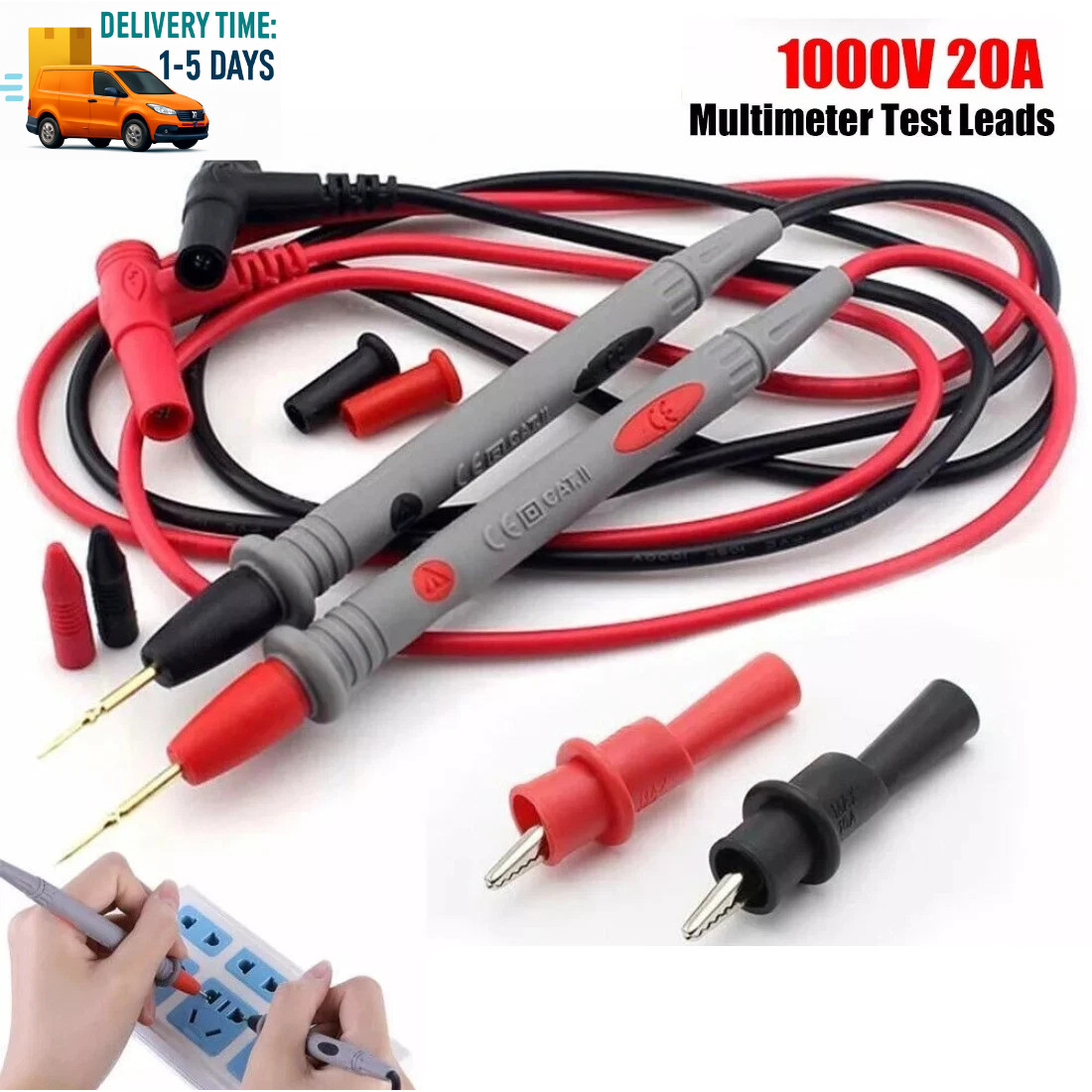 Multimeter Test Leads for Fluke Meter Electrical Alligator Clip Probes 1000V 20A$6.01View on eBay
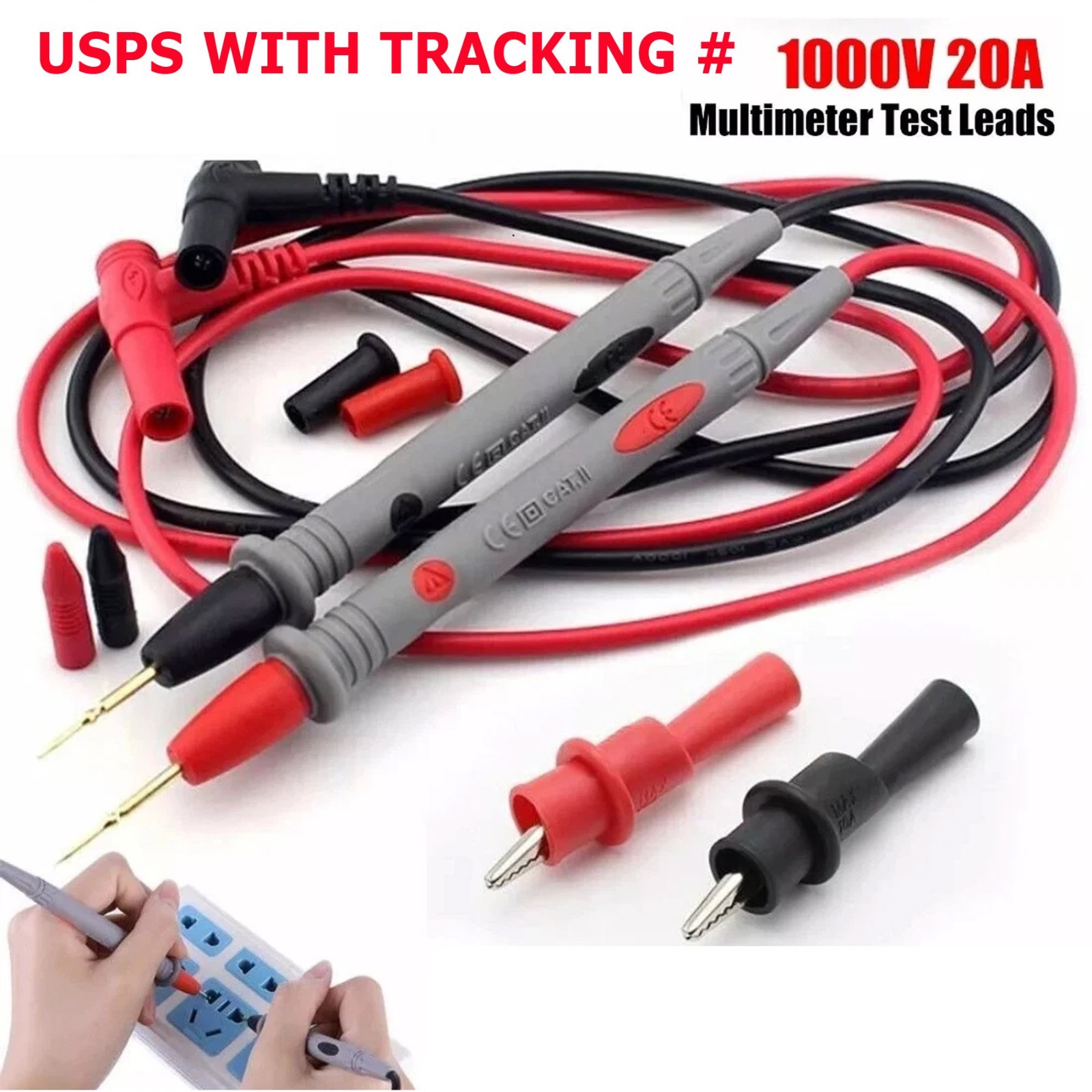 Multimeter Test Leads for Fluke Meter Electrical Alligator Clip Probes 1000V 20A$6.99View on eBay
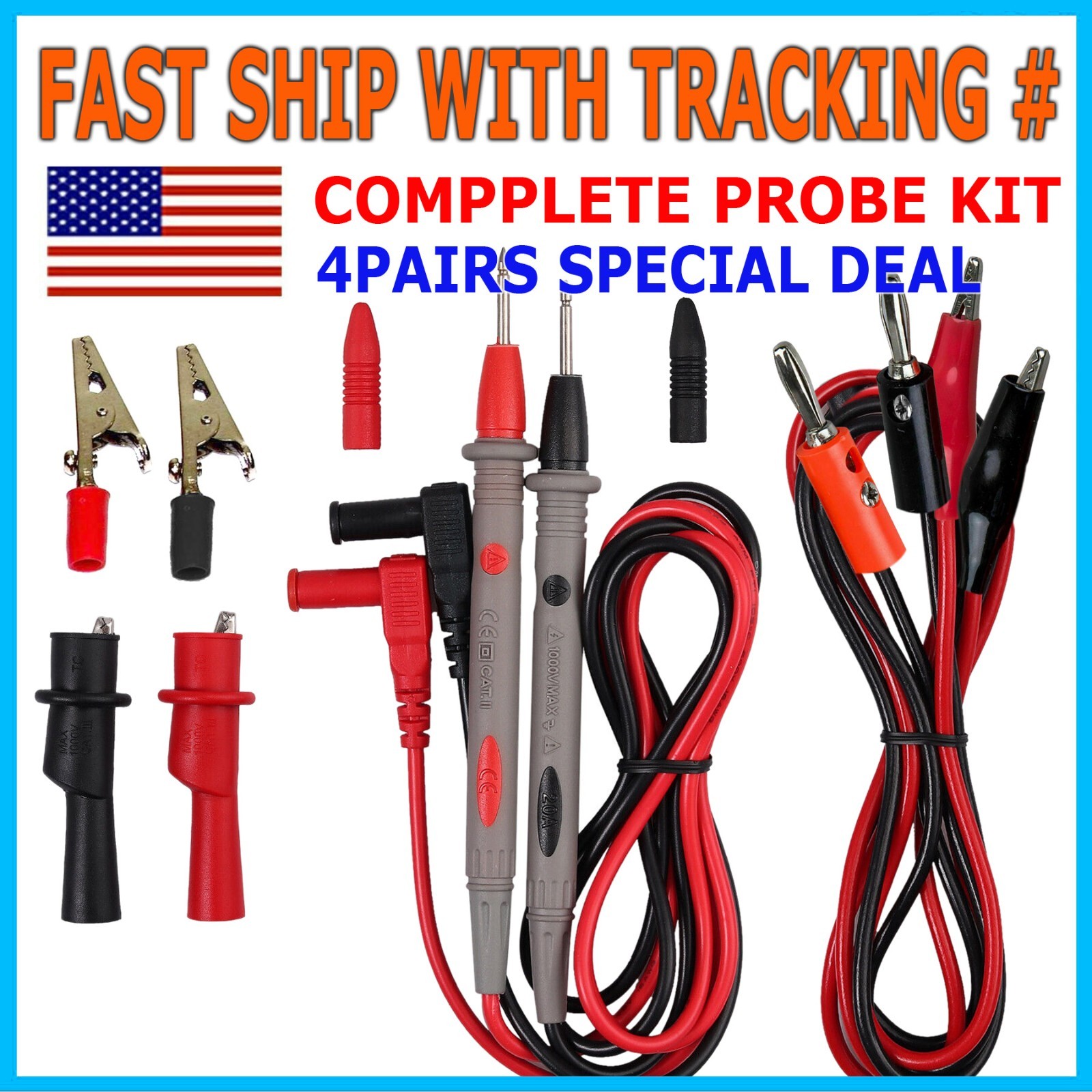 Multimeter Test Leads for Fluke Meter Electrical Alligator Clip Probes 1000V 20A$9.95Last checked Nov 27, 2026View on eBay
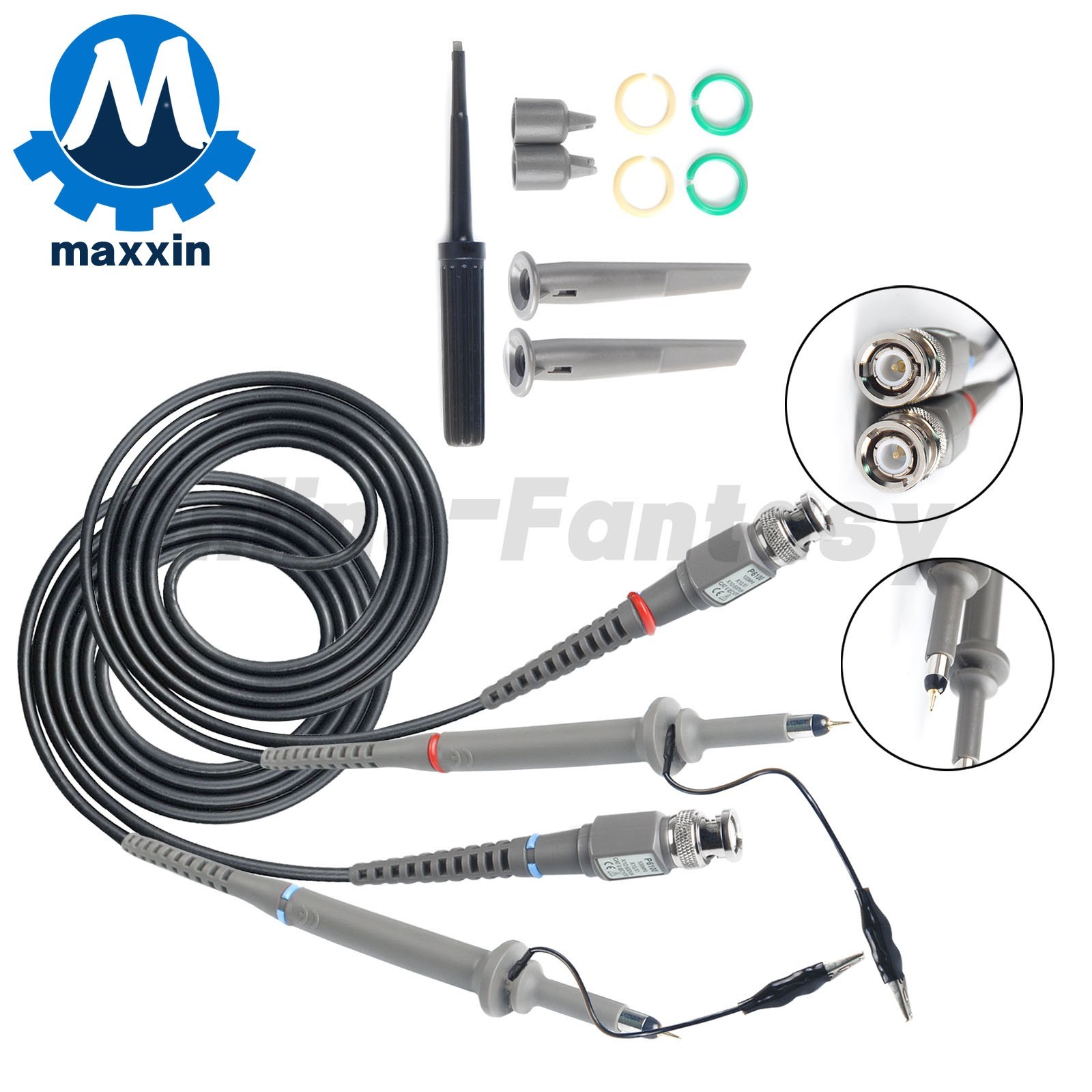 2X100MHz Oscilloscope Scope analyzer Clip Probe test leads kit for HP Tektronix$11.89Last checked Nov 27, 2026View on eBay
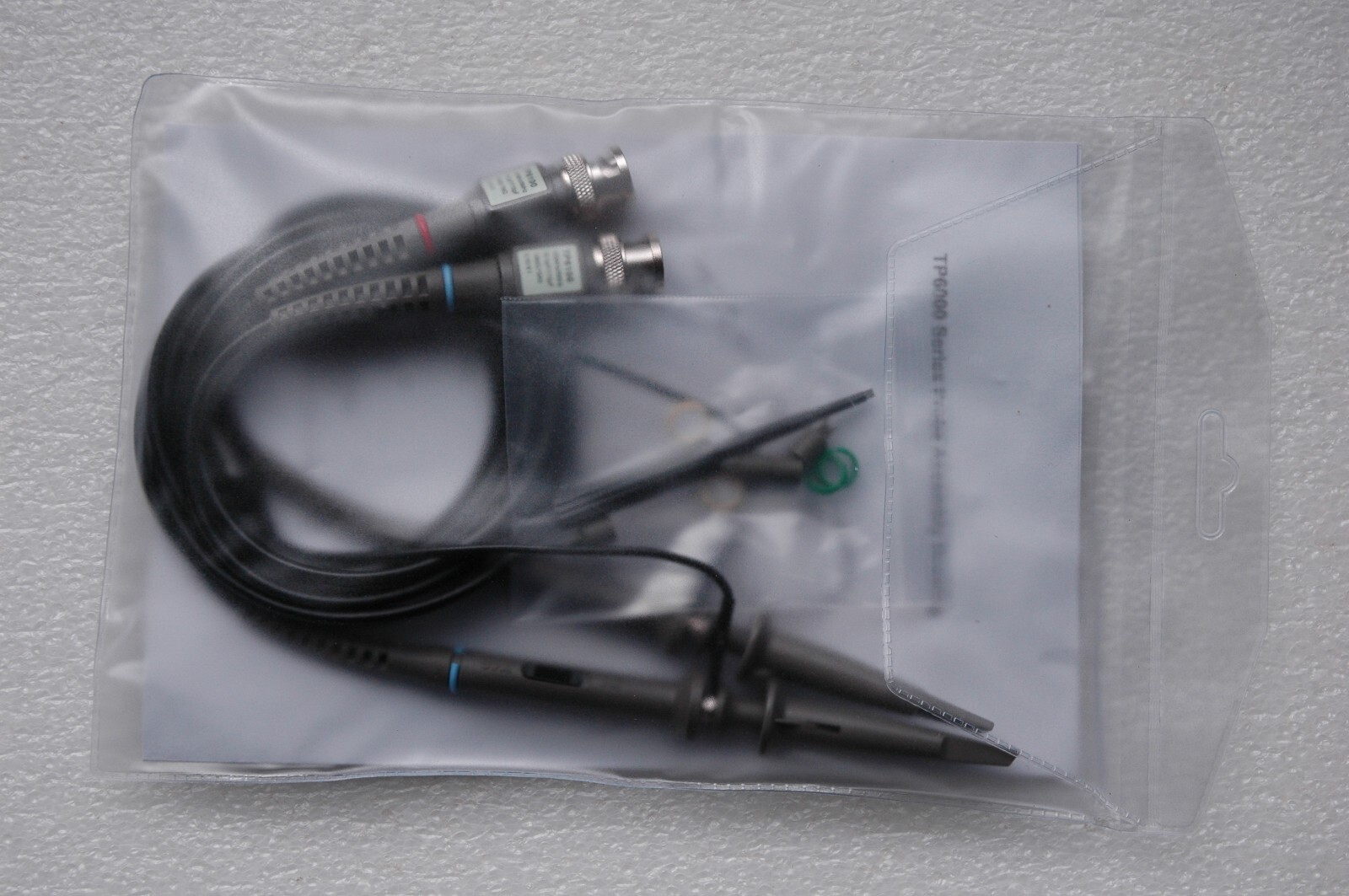 2x 100MHz Oscilloscope Scope analyzer Clip Probe test leads kit for HP Tektronix$17.99Last checked Nov 27, 2026View on eBay
- 2x 100MHz Oscilloscope Scope analyzer Clip Probe test leads kit for HP Tektronix$17.99View on eBay
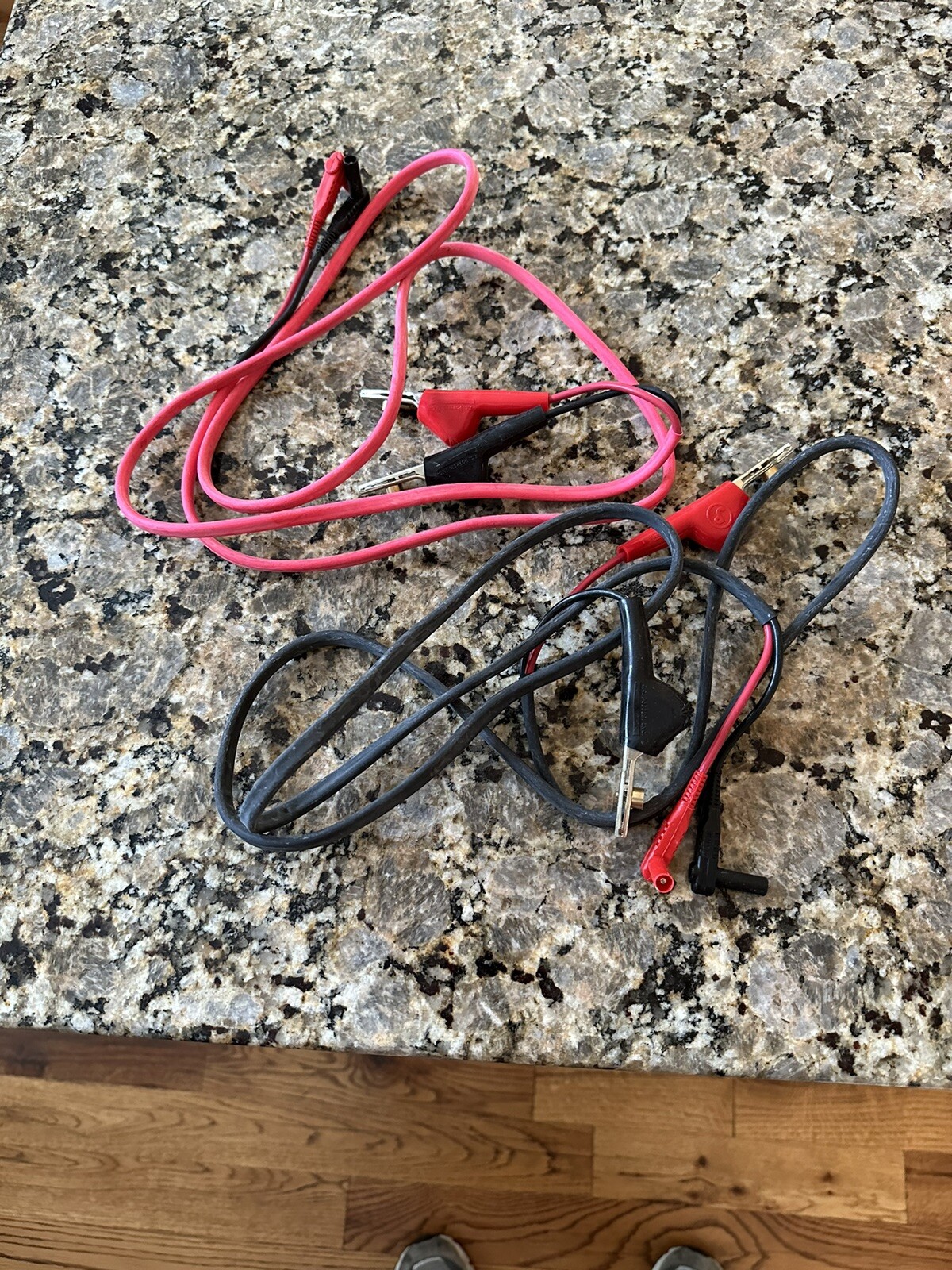 Telecom Test Lead Set, JS Popper Clips, Ham Radio, DMM, Telephone, Heavy Duty$28.33Last checked Nov 27, 2026View on eBay
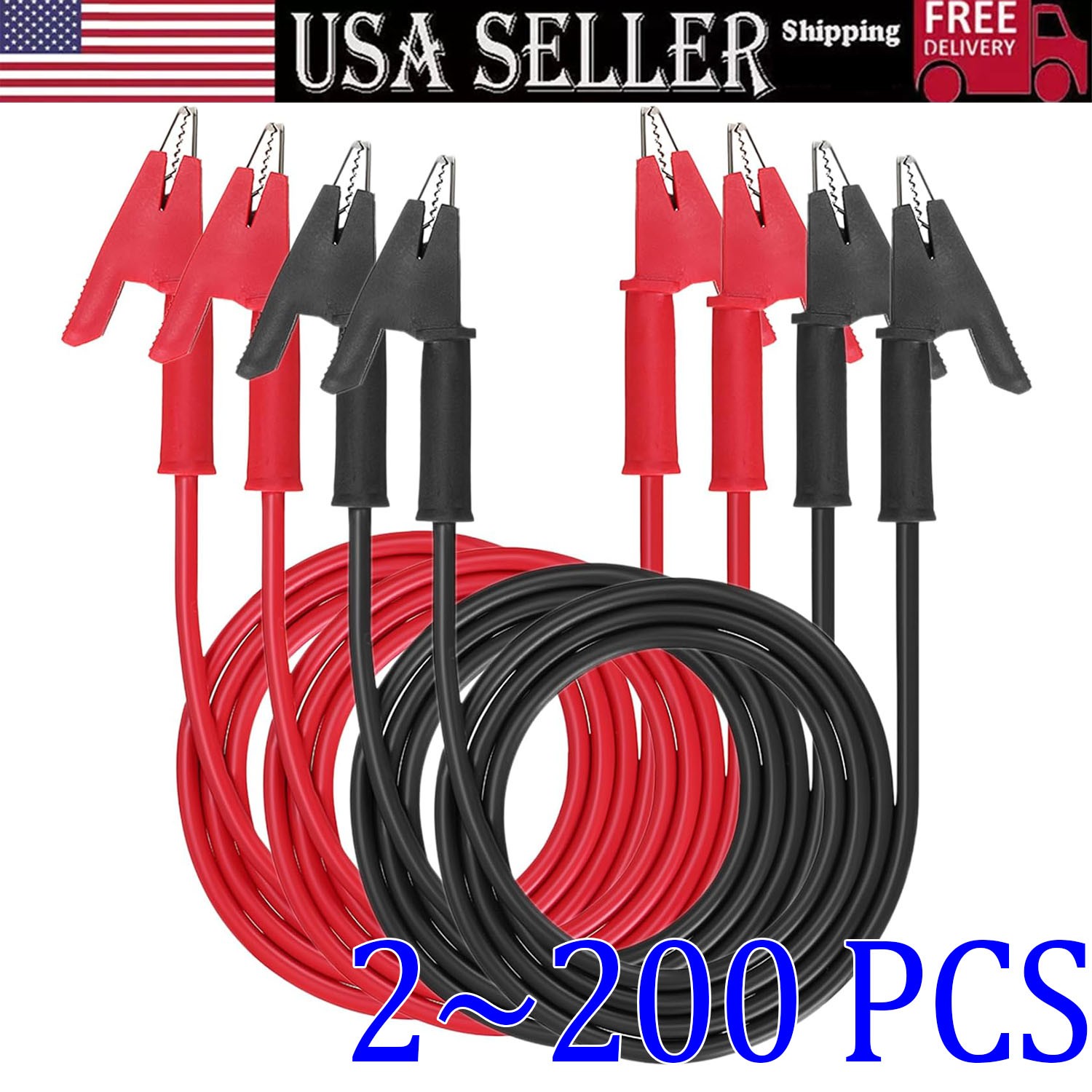 Alligator Clips Electrical Multimeter Test Leads 1500V/15A Jumper Wires Set Lot$45.36View on eBay
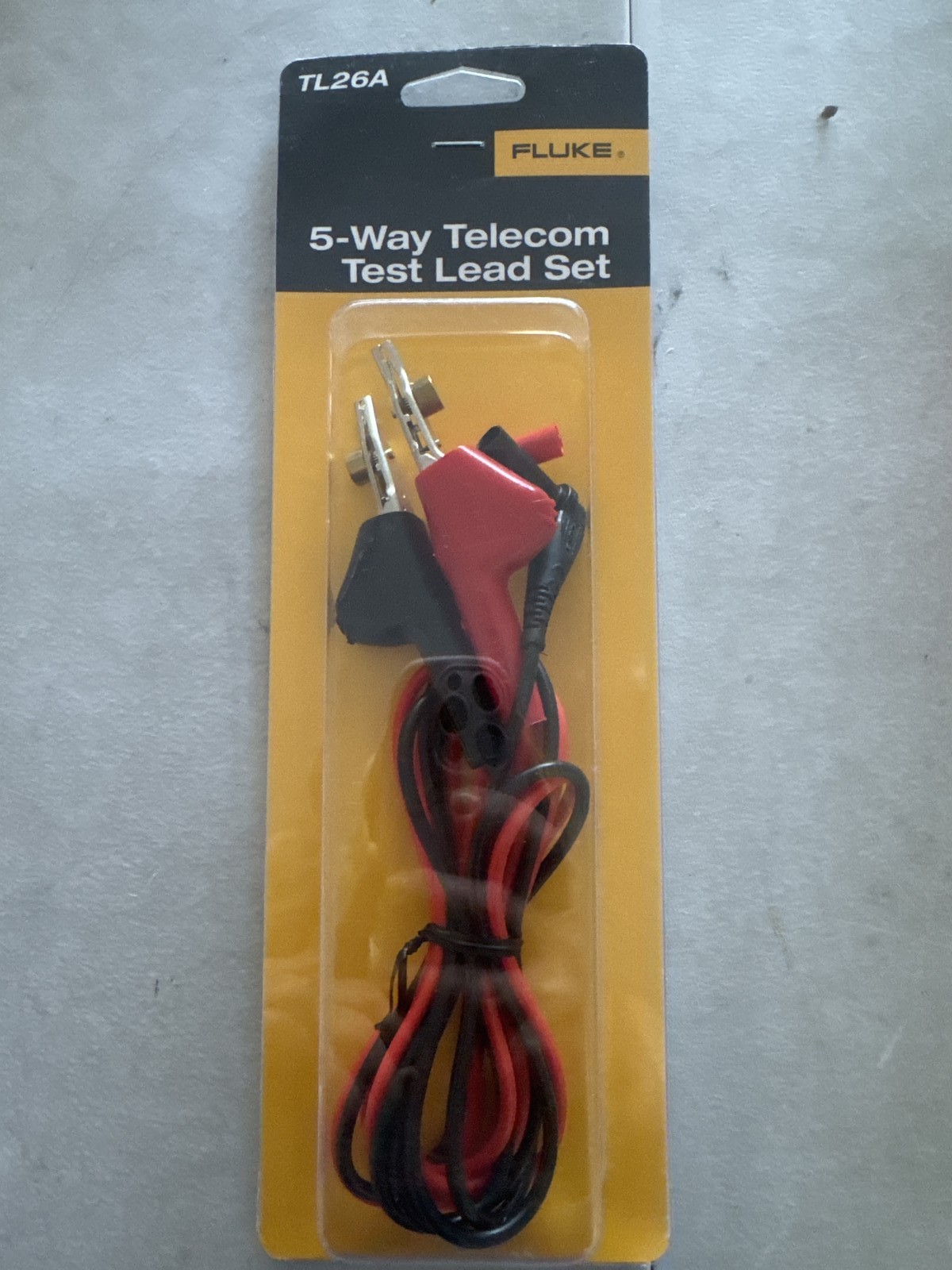 Fluke 5-Way Telecom Test Lead Set TL26A - Open Box$67.50View on eBay
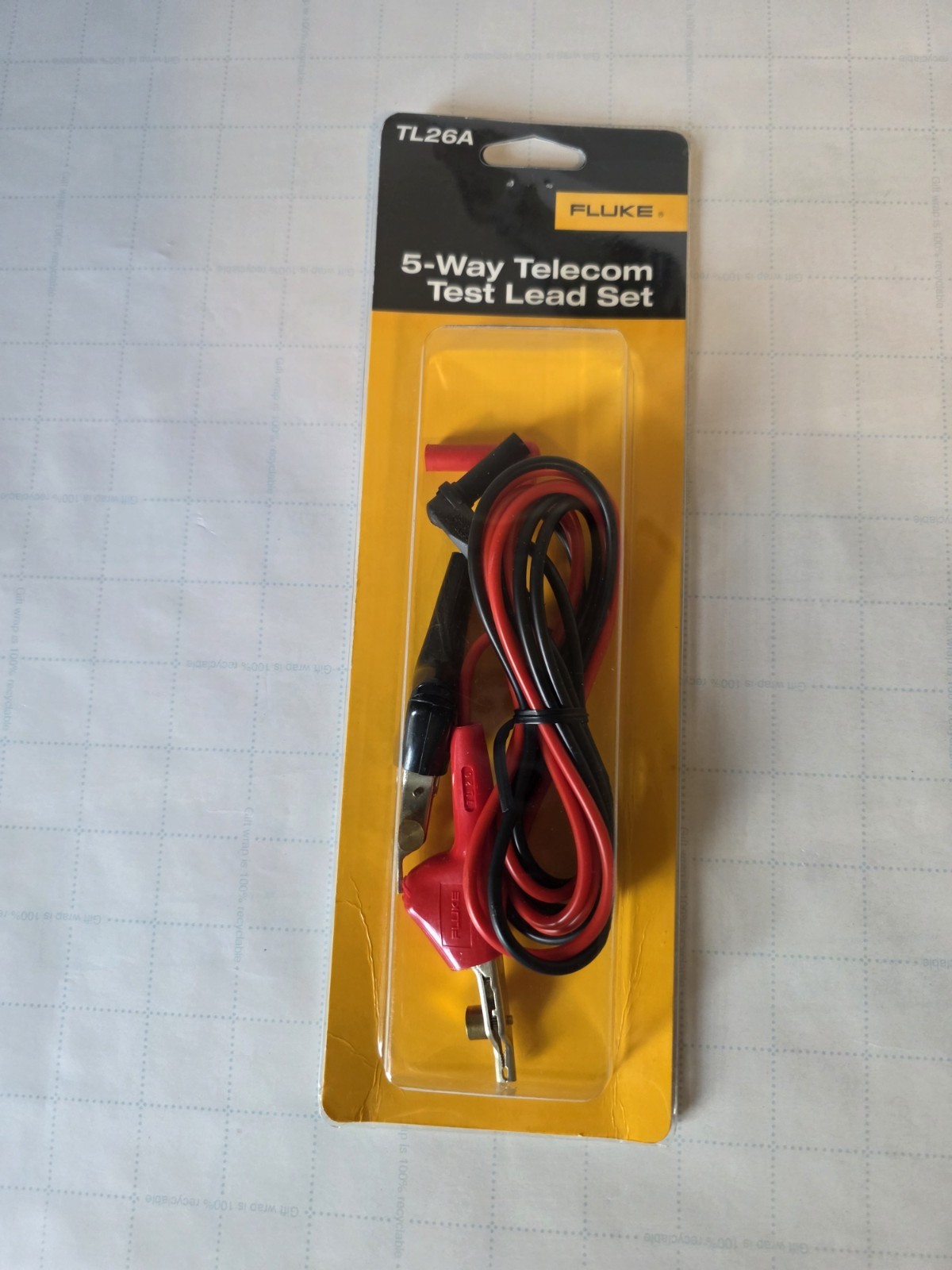 Fluke 5-Way Telecom Test Lead Set TL26A$80.00View on eBay
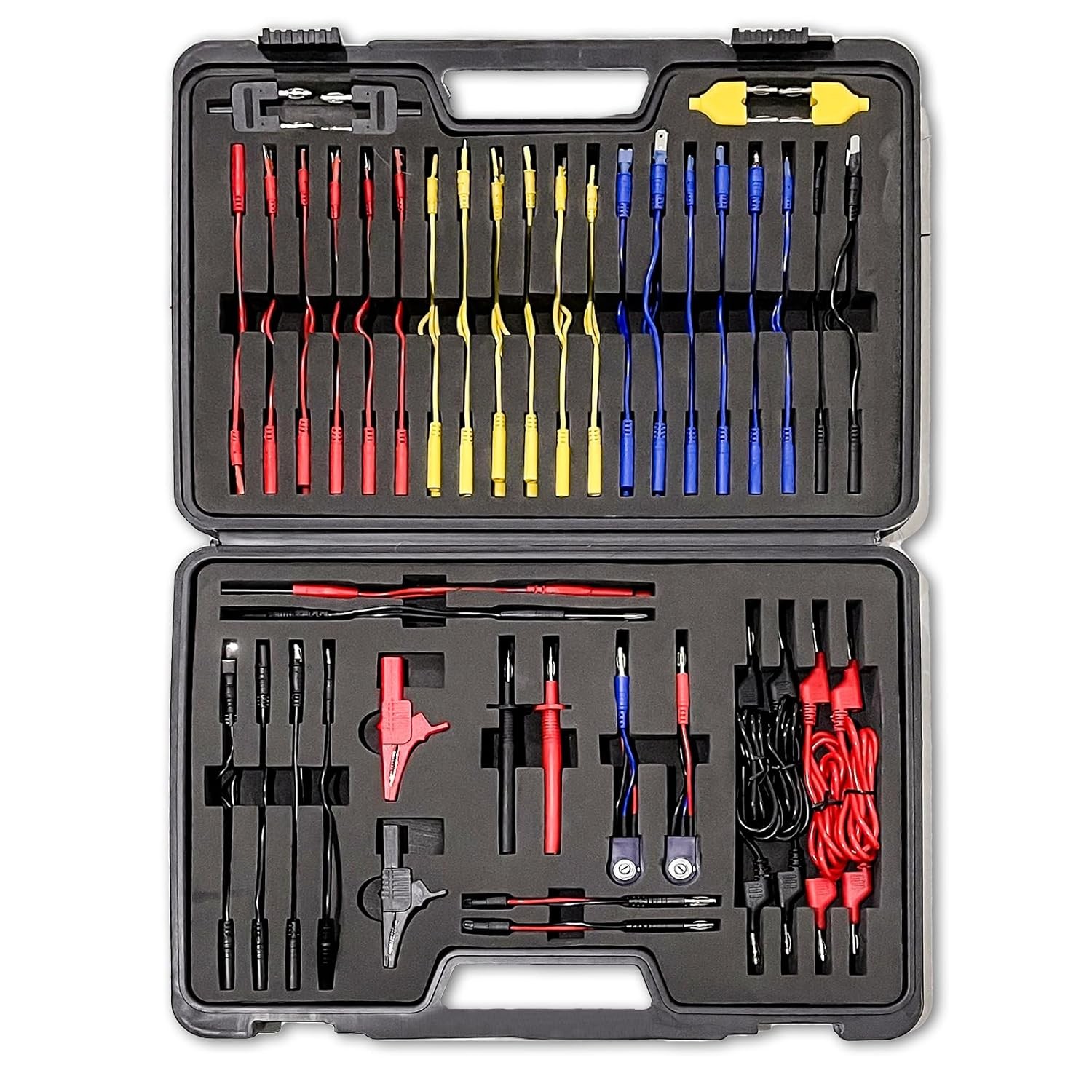 Automotive Test Lead Kit 92 Pieces Electrical Testers Auto Diagnostic Tools Set$99.99View on eBay
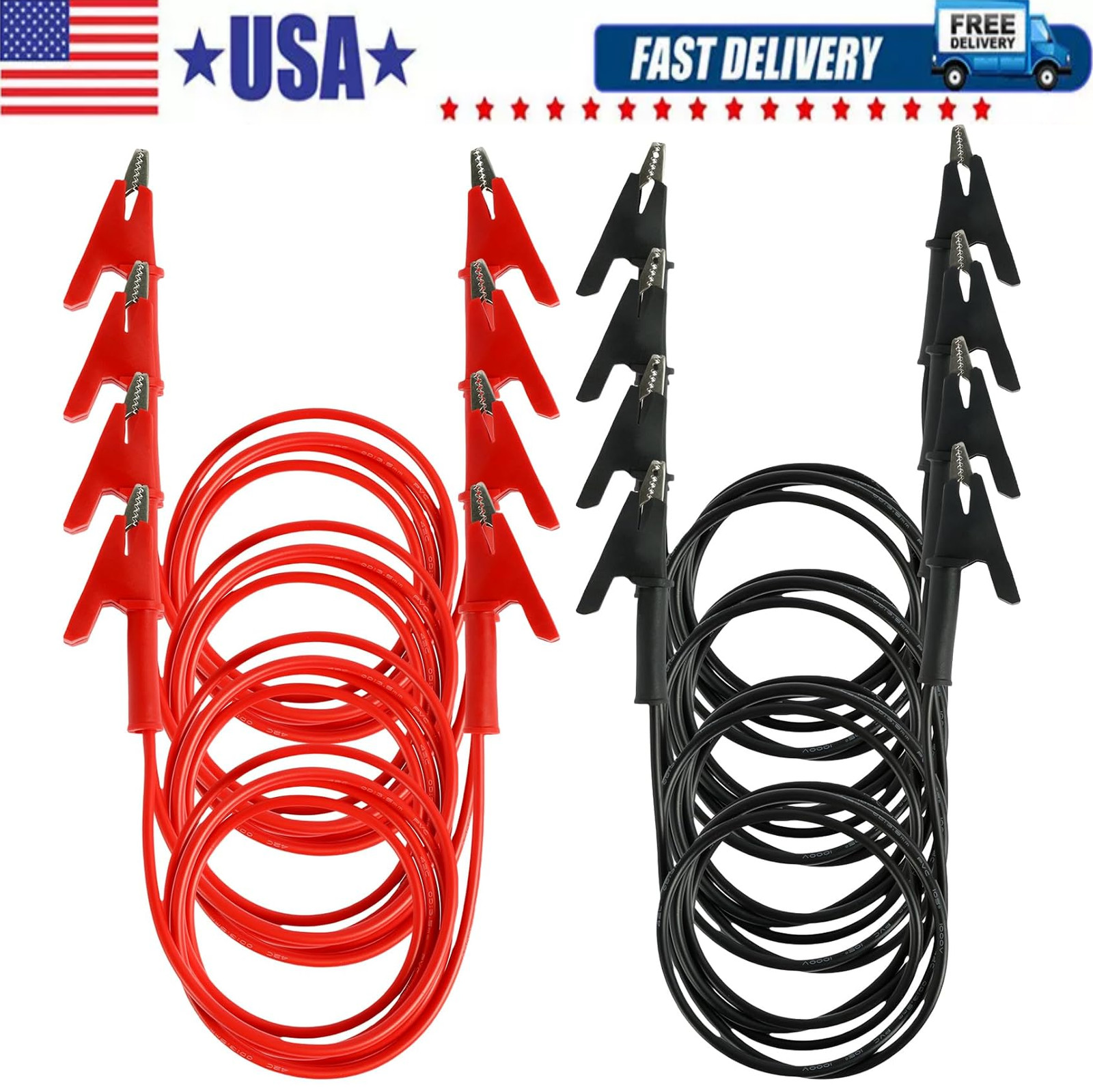 Alligator Clips Electrical Multimeter Test Leads 1500V/15A Jumper Wires Set LOT$631.99Last checked Nov 16, 2026View on eBay
Highlights
- Safety ratings follow IEC 61010 CAT II/III/IV tiers; CAT III 1000V leads are mandatory for panel and distribution-board work, CAT II covers appliance and outlet testing.
- Conductor current capacity is limited by wire gauge and probe tips: 10A leads use thinner wire, 20A leads use heavier gauge and rated probe tips; exceed the lead rating and tips overheat.
- Silicone insulation stays flexible from -50°C to +200°C, resists soldering splatter and cold-crack; PVC leads stiffen in cold and can melt against hot components.
- Fluke TL224 SureGrip and similar modular leads use 4mm shrouded banana plugs; shrouded connectors prevent accidental contact with live metal and fit most quality DMMs.
Best use cases
- Best fit: household electrical and appliance diagnosis — pick CAT II 1000V rated silicone leads with 10A capacity and standard 4mm banana plugs; skip CAT IV-rated specialty leads and extra-long lengths you do not need.
- Best fit: industrial panel and distribution-board work — choose CAT III 1000V (or CAT IV 600V) leads rated 20A with 2mm slim tips and fully insulated alligator clips; PVC leads and unrated clip sets are wrong-fit and unsafe here.
- Best fit: automotive and low-voltage bench electronics — select flexible silicone leads with 2mm fine tips and interchangeable alligator clips, 10A rating is sufficient; skip heavy 20A CAT III sets that are stiff and overkill.
- Wrong fit: soldering or high-temperature environments with PVC-insulated leads, or any lead set without a printed CAT rating — do not buy regardless of price.
Buying tips
- Match the CAT rating to your worst-case environment: CAT II for outlets and appliances, CAT III for panels and feeders, CAT IV for service entrances; never use a lower CAT lead on a higher-CAT meter.
- Confirm the current rating meets your meter's highest current range: 10A leads for most handheld DMMs, 20A leads if you regularly measure high-current circuits; undersized leads heat and fail.
- Choose silicone insulation for flexibility in cold weather and heat resistance near hot components; PVC only for light indoor bench use.
- Verify plug geometry: standard 4mm shrouded banana plugs fit most DMMs; check that the lead's plug collar diameter and length insert fully into your meter's jacks.
Specs
| Safety Rating | CAT II / III / IV (IEC 61010) |
|---|---|
| Current Capacity | 10 A vs 20 A rated leads |
| Insulation Material | Silicone vs PVC |
| Connector Type | 4 mm shrouded banana plugs |
Related searches
What to check before buying
- Measure your meter's jack spacing and plug type — most DMMs use 4mm shrouded banana jacks, but some compact meters use 2mm or non-standard jacks.
- Confirm the lead length you need: 1m for bench work, 1.5–2m for reaching panels; overly long leads add resistance and tangling.
- Check probe tip reach for your target terminals — 2mm slim tips for recessed screws and automotive connectors, 4mm standard tips for general use.
- Verify the CAT safety rating printed on the lead matches or exceeds the environment you will test in; unmarked leads are not safety-rated.
FAQ
Data sources: eBay / Amazon listings and product attribute feeds. Updated Nov 28, 2026.
Some links on this page are affiliate links. If you buy after clicking one, we may earn a commission at no extra cost to you. This does not change which products appear here or their order. Affiliate disclosure.