
Photos from current listings. Actual item, color, and included accessories may vary.
Test Probe Kit Buying Guide
A test probe kit bundles the probes, leads, clips, and tips that connect your instrument to the circuit under test. The core trade-off is between bandwidth and compensation accuracy for scopes versus insulation rating and contact quality for multimeters and bench supplies. Buy a kit rated for your instrument's bandwidth and CAT safety level; skip generic kits with no compensation adjustment or unmarked insulation.
Median $17.99
Key takeaways
- Oscilloscope probe kits are defined by bandwidth (100 MHz is the common entry tier) and 1X/10X switchability; 10X mode raises input impedance to 10 MΩ and reduces circuit loading.
- A 10X probe must be compensated to the scope's input capacitance via the trimmer on the probe body or BNC connector, or square waves show overshoot and rounded corners.
- Multimeter and bench test-lead kits are rated by CAT safety category (CAT II, III, IV) and voltage; silicone insulation stays flexible in cold and resists soldering-iron contact better than PVC.
At a glance
- Category
- Test Leads, Probes, Fixtures & Accessories
- Last updated
- Nov 28, 2026
Current offers
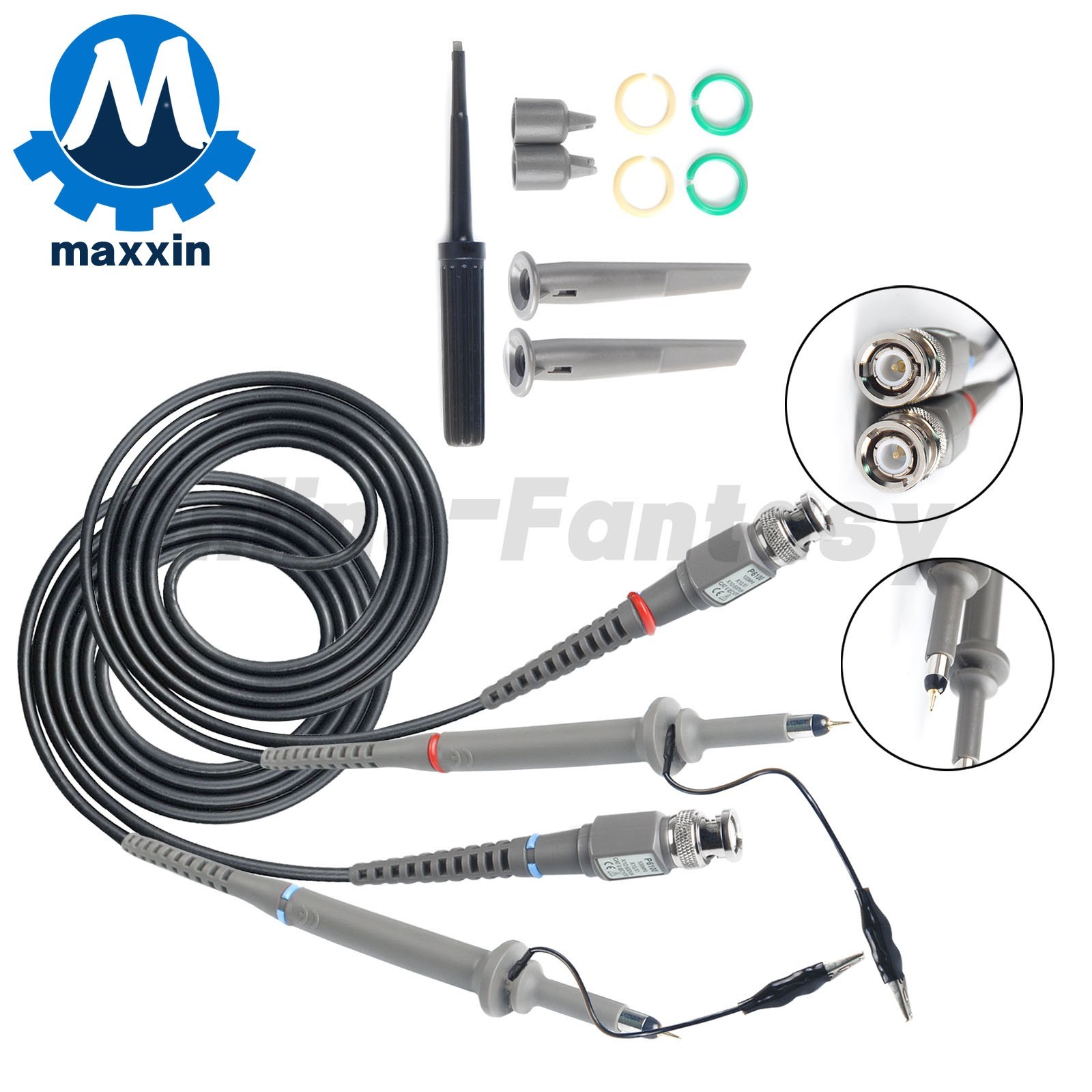 2X100MHz Oscilloscope Scope analyzer Clip Probe test leads kit for HP Tektronix$11.89Last checked Nov 27, 2026View on eBay
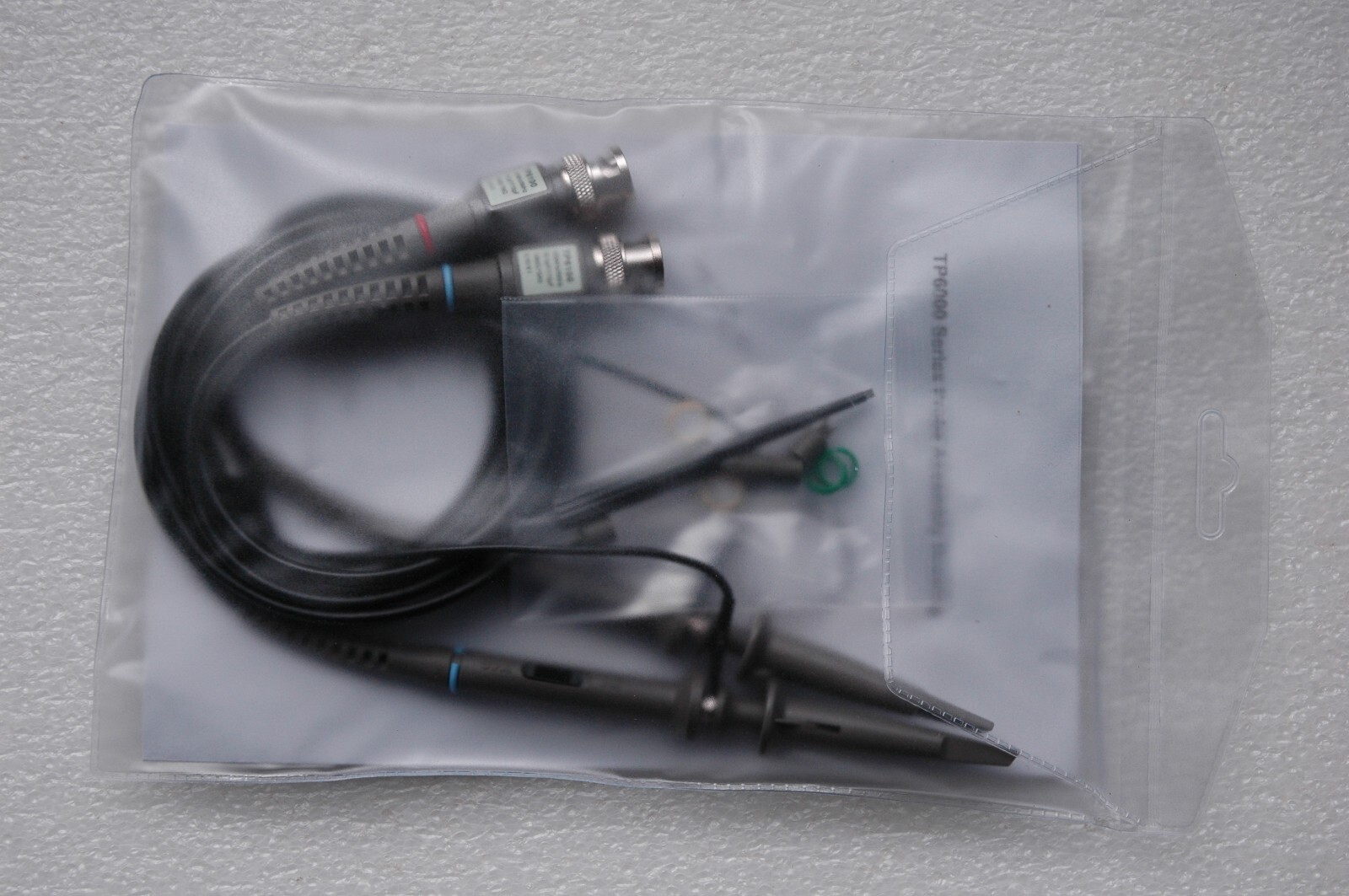 2x 100MHz Oscilloscope Scope analyzer Clip Probe test leads kit for HP Tektronix$17.99Last checked Nov 27, 2026View on eBay
- 2x 100MHz Oscilloscope Scope analyzer Clip Probe test leads kit for HP Tektronix$17.99View on eBay
Highlights
- Oscilloscope probe kits are defined by bandwidth (100 MHz is the common entry tier) and 1X/10X switchability; 10X mode raises input impedance to 10 MΩ and reduces circuit loading.
- A 10X probe must be compensated to the scope's input capacitance via the trimmer on the probe body or BNC connector, or square waves show overshoot and rounded corners.
- Multimeter and bench test-lead kits are rated by CAT safety category (CAT II, III, IV) and voltage; silicone insulation stays flexible in cold and resists soldering-iron contact better than PVC.
- Universal oscilloscope accessory kits include color-coded BNC leads, retractable hook tips, alligator clips, and ground leads; the hook-tip and ground-clip quality determines reliable hands-free probing.
Best use cases
- For general electronics and microcontroller debugging on a 100 MHz-class scope, buy the switched 1X/10X kit with compensation trimmer and hook tips; skip fixed 1X-only probes that load the circuit.
- For mains-powered or industrial measurement, buy a CAT III or CAT IV-rated multimeter lead kit with finger guards and shrouded plugs; skip unbranded leads with no voltage or category marking.
- For probing fine-pitch SMD boards, choose a kit with fine-tip or pogo-pin probes and short ground spring; skip bulky alligator-only kits that short adjacent pins.
- For audio, power-supply, or low-frequency work under 20 MHz, a basic 100 MHz probe kit is already overkill; do not pay for higher-bandwidth probes your instrument cannot use.
Buying tips
- Match probe bandwidth to scope bandwidth: a 100 MHz probe on a 100 MHz scope is adequate, but on a 200 MHz scope it degrades the system rise time; choose probe bandwidth at least equal to the scope's.
- Verify the probe's compensation range covers your scope's input capacitance (commonly 10-35 pF); a trimmer that cannot reach your scope's value leaves pulses distorted.
- For multimeter leads, check the CAT rating and voltage printed on the probe and lead; CAT III 1000 V leads have larger creepage distances and finger barriers than CAT II 600 V leads.
- Prefer silicone-insulated leads and probe bodies with replaceable tips; PVC stiffens in cold and cracks, while replacement tips and ground clips extend kit life.
Specs
| Probe Bandwidth | 100 MHz / 200 MHz / 500 MHz |
|---|---|
| Attenuation | Switchable 1X / 10X |
| Safety Category | CAT II 600 V to CAT IV 600 V |
| Connector Type | BNC / 4 mm shrouded banana |
Related searches
What to check before buying
- Measure your scope's input capacitance and bandwidth from the datasheet or front panel before buying probes; the compensation range and probe bandwidth must cover both.
- Confirm your instrument's connector type: BNC for scopes, 4 mm shrouded banana for multimeters, and check whether the kit includes the matching leads or only probes.
- Check the probe tip and clip sizes against your board pitch; fine-pitch SMD work needs sub-2 mm tips, while through-hole and panel wiring suits standard hook tips.
- For any mains or high-voltage work, verify the kit's CAT category and voltage rating exceed your measurement environment, and that plugs are shrouded.
FAQ
Data sources: eBay / Amazon listings and product attribute feeds. Updated Nov 28, 2026.
Some links on this page are affiliate links. If you buy after clicking one, we may earn a commission at no extra cost to you. This does not change which products appear here or their order. Affiliate disclosure.