Deciding between a rotary evaporator and a recirculating chiller can feel like comparing two different workstations, because they serve different stages of the same lab workflow. The real question is whether your next bottleneck is removing solvent from samples or delivering stable temperature-controlled fluid to equipment you already run. For lab heating, cooling, and vacuum work, the evaporator and chiller take different routes, and the right pick depends on the operation you need to support today.
Quick Verdict
The Taishi 2L rotary evaporator is a solvent-removal system built around reduced pressure; the Uimoso 6L recirculating chiller is a precision temperature-control hub. They are not interchangeable. At $516.99 versus $668.99, the evaporator is the lower-priced unit, but the deciding factor is workflow, not cost alone. If solvent concentration and recovery are the priority, start with the evaporator. If you need precise temperature-controlled circulation for reactions, sample storage, or external instruments, the chiller should be your first pick.
Side-by-Side Comparison
| Consideration | 2L Rotary Evaporator | Uimoso 6L Recirculating Chiller |
| Listed price | $516.99 | $668.99 |
| Core role | Solvent evaporation under reduced pressure | Circulating temperature control |
| Key specs | 1L evaporation flask, 1L collecting bottle, stainless steel bracket | 23°F to 212°F range, ±0.01°C display accuracy, 304 stainless steel tank |
Where Each Product Wins
The Taishi evaporator wins when the goal is to concentrate a solution, recover solvent, or dry samples under vacuum. The configuration includes a 1L evaporation flask, a 1L collecting bottle, high-temperature-resistant glass, and a stainless steel bracket. Manual lifting keeps the raising and lowering of the flask assembly direct and mechanical.
The Uimoso chiller wins when you need a dependable supply of temperature-controlled fluid. Its internal circulation loop stabilizes the tank, while the external loop feeds temperature-controlled fluid to other lab equipment. With a 304 stainless steel water tank and temperature readout accuracy of ±0.01°C, it is suited to work that demands tight control.
Product Notes
2L Rotary Evaporator Lab Connect to Vacuum Pump Chiller Manual Lifting Rotovap
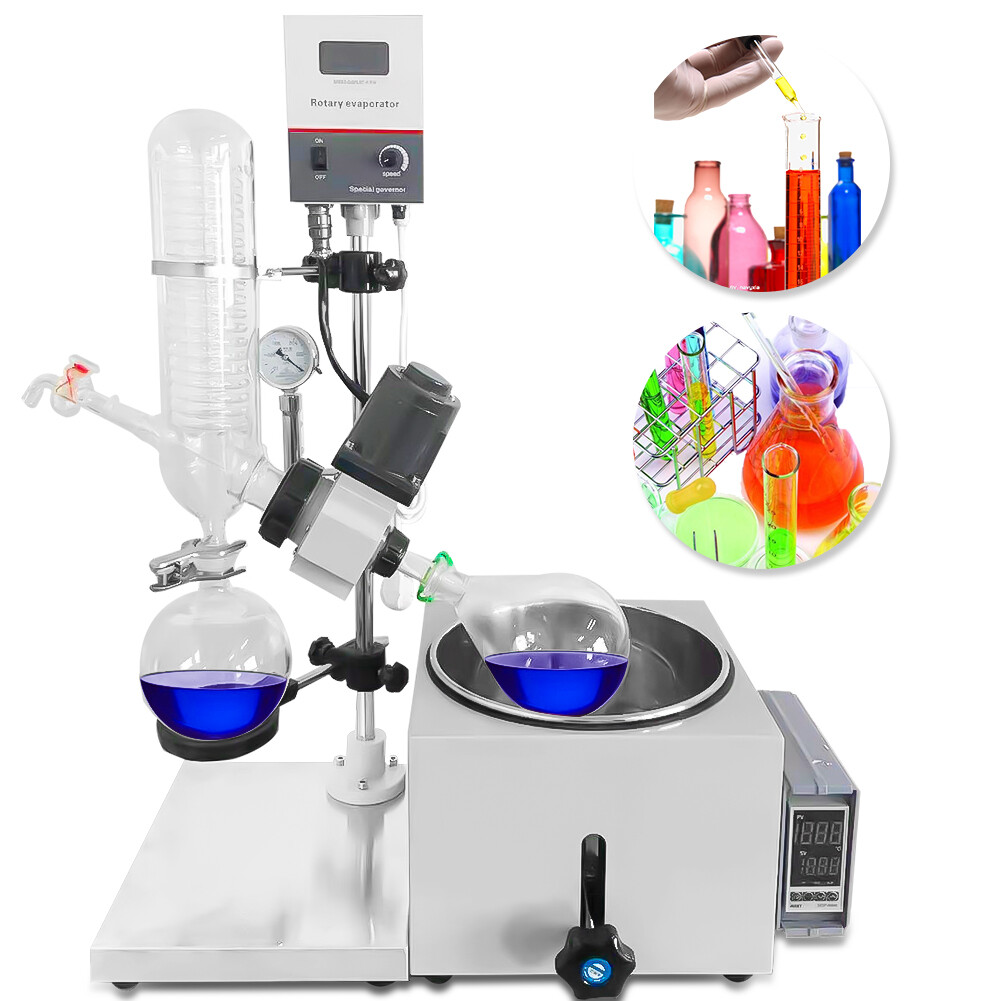
With a 1L evaporation flask, a 1L collecting bottle, and high-temperature-resistant glass, the Taishi rotary evaporator is set up for small-scale solvent work. The stainless steel bracket provides a rigid frame, and manual lifting gives hands-on control over the flask assembly. The product name states that it connects to a vacuum pump and chiller, which means it is meant to live in a broader evaporation setup rather than run as a fully self-contained unit. The 64.37 lb gross weight is the main constraint to plan around; you will want a stable cart or permanent position before preparing samples. The Taishi evaporator is a straightforward pick if your lab needs the core evaporation vessel assembly.
Uimoso 6L Laboratory Recirculating Chiller with Temperature Range 23°F-212°F
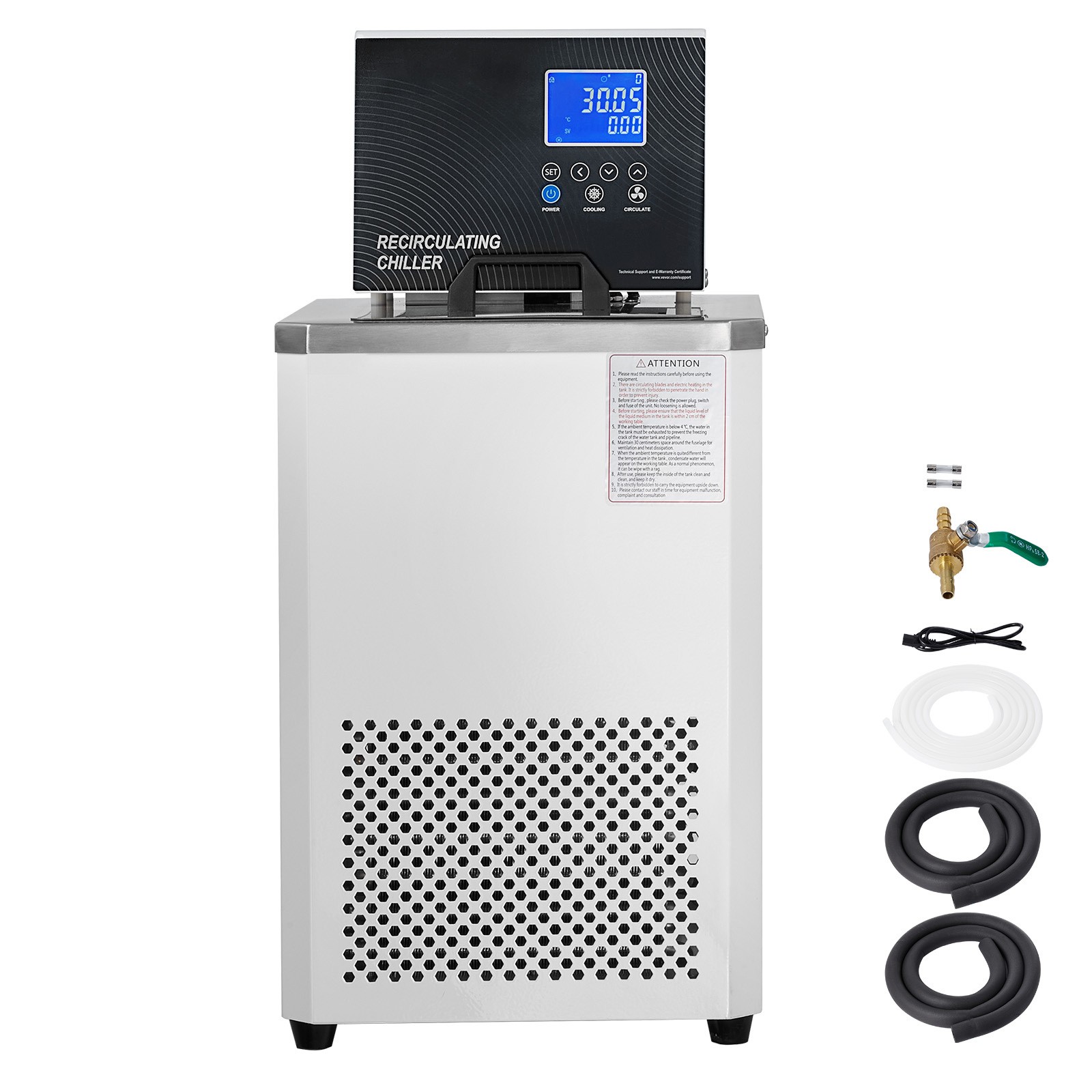
The Uimoso chiller offers a wide operating range, from 23°F (-5°C) to 212°F (100°C), so the same unit can cool samples and heat chemical processes. The dual circulation system is the key feature: the internal loop maintains the tank temperature, and the external loop can send temperature-controlled fluid to other lab instruments. The 304 stainless steel countertop tank and ±0.01°C display accuracy support fine temperature adjustments. At 54.5 lbs with dimensions of 12.6 x 15.6 x 26.2 inches, it takes up a dedicated footprint on a countertop. The 1000W US rated power draw is also worth accounting for in your lab's electrical plan.
Final Choice by Use Case
Choose the Taishi 2L Rotary Evaporator if your immediate work is concentrating and recovering solvents and you are ready to connect it to a vacuum source and a chiller. Choose the Uimoso 6L Recirculating Chiller if your lab needs a temperature-controlled fluid source for reactions, sample storage, or external equipment. If you plan to build out one station, the two are natural partners for a lab heating, cooling, and vacuum setup: the evaporator is meant to connect to a vacuum pump and chiller, and the chiller supplies controlled temperature to external devices.