Calibration equipment standards tend to split into two practical camps: physical masses for weight checks and electronic references for electrical measurements. The 17-piece stainless steel calibration weight set sits in the first camp, while the AD584 resistance standard board sits in the second. One is designed for scale work with physical masses; the other is designed for calibrating measuring instruments, electronic production, teaching experiments, and automatic test systems. Choosing between them starts with the instrument being calibrated.
Quick verdict
The physical weight set is the easier choice when your routine is scale-focused and built around checking digital balances. The AD584 reference board is the more direct fit when you are calibrating electrical test equipment and want a compact PCB reference. The listed prices are $17.99 for the weight set and $13.72 for the reference board, so the price gap is not the main story; the type of measurement is.
Quick comparison
| Feature | 17Pcs Calibration Weight Set | AD584 Resistance Standard Board |
| Price | $17.99 | $13.72 |
| Form | Physical weights kit | PCB reference board |
| Coverage / Size | 17 weights from 10mg to 100g | 5 x 3 cm board |
| What you get | Weights, storage box, tweezers | Green PCB reference board |
| Best matched to | Digital balance and precision scales | Electrical calibration and test work |
Where each product wins
- Weight set: wins for scale-focused calibration with its gram and milligram range.
- AD584 board: wins for electrical calibration and test-system work with its compact PCB design.
- Weight set: wins for portability because the kit is designed to be compact and easy to store or transport.
- AD584 board: wins for bench footprint with a small PCB format.
Product notes
17Pcs Calibration Weight Set 10mg-100g Stainless Steel Scale Weights Kit
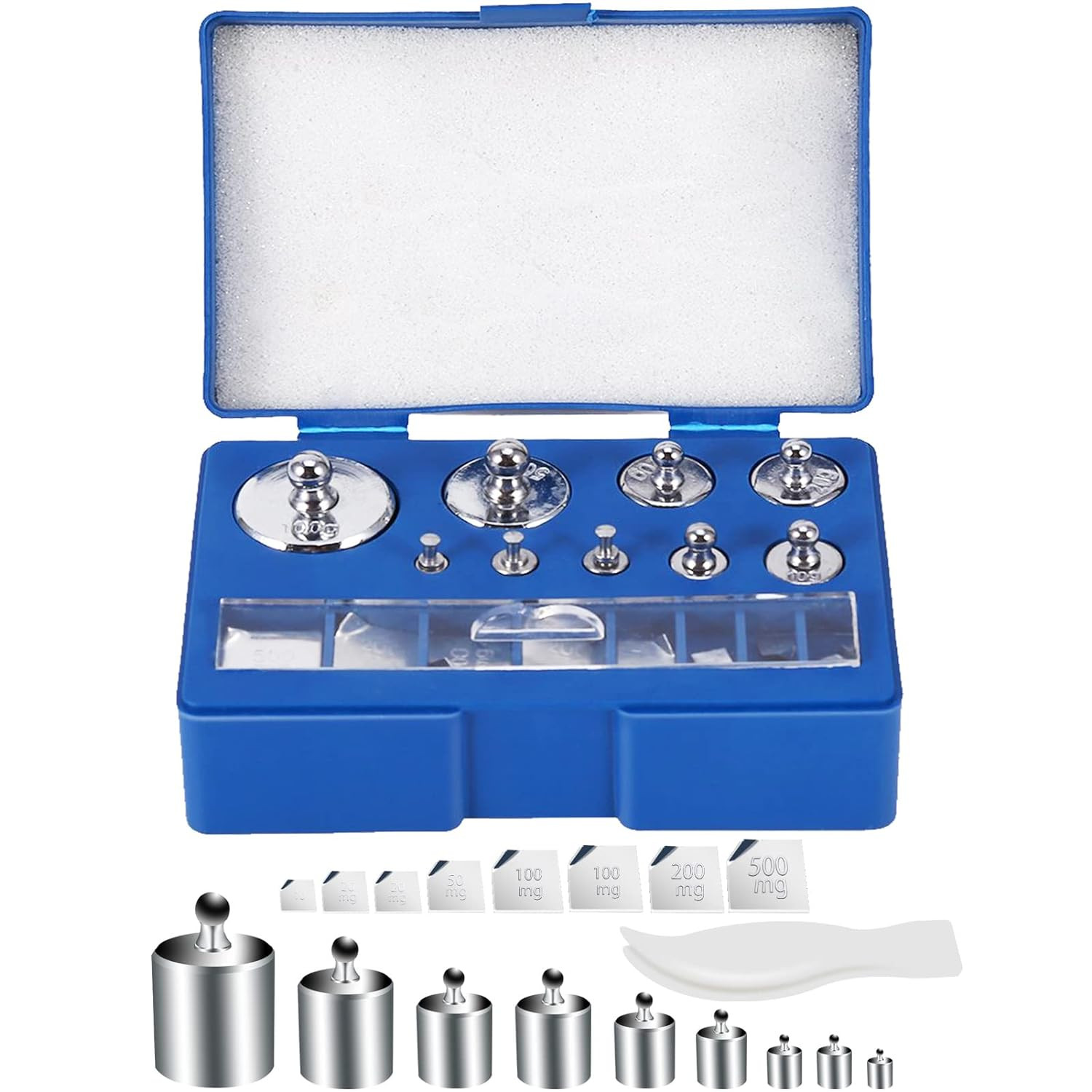
The weight set is the pick when your calibration work revolves around physical masses and compatible digital scales. It bundles the pieces needed for gram and milligram checks, plus a storage box and tweezers that make repeated handling practical. The coated metal build with anti-oxidation surface coating is aimed at frequent use, and the compact design keeps the kit easy to store or transport. The practical limits are equally clear: this is a mass-based kit for scale work, not an electronic reference for multimeter circuits. You will still need to handle the smaller weights carefully, especially at the lighter end of the range. For anyone servicing scales in a lab or commercial setting, the set offers a complete daily starting point.
Sophisticated Design of AD584 Resistance Standard Calibration Test Equipment
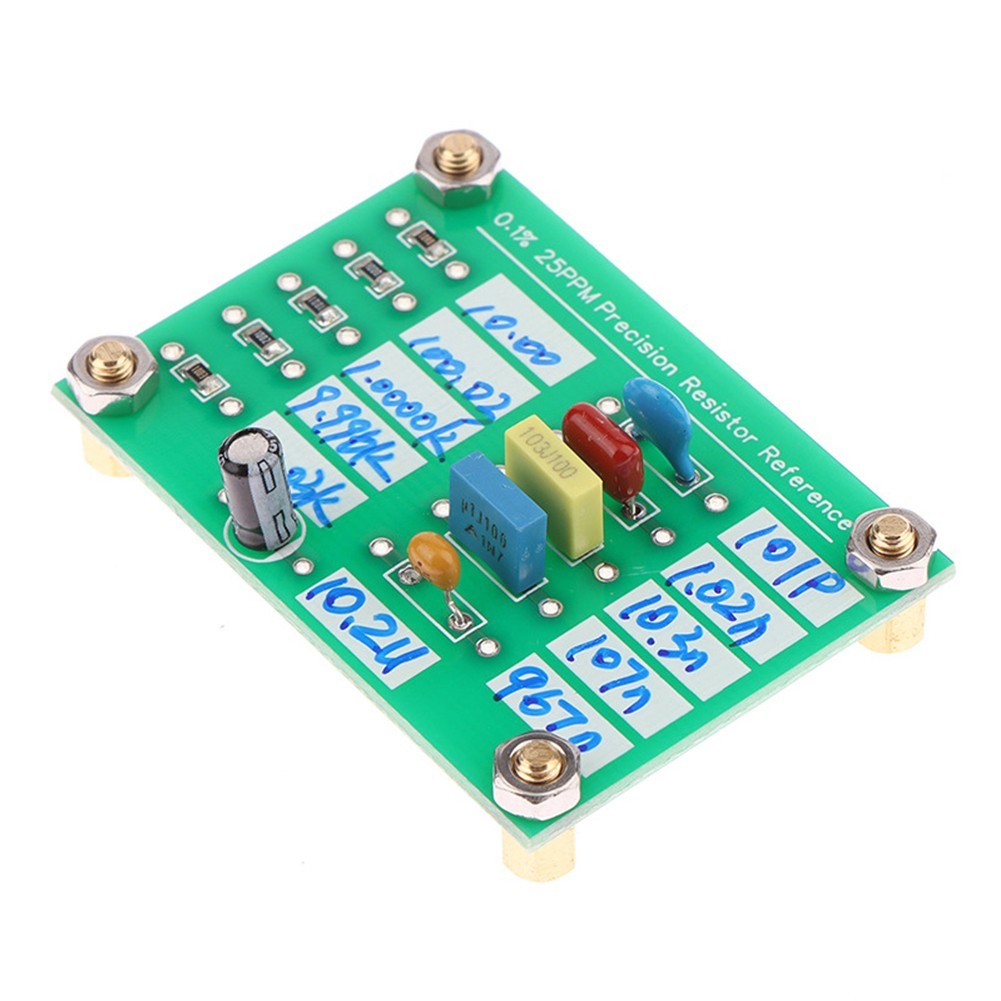
The AD584 board takes a different route: instead of masses, you get a compact PCB reference made of green board material that is resistant to high temperature. It is designed for resistance and capacitance calibration, and the operating idea is straightforward-align the positive and negative poles with the corresponding capacitors to obtain a reading. That makes it useful for calibrating measuring instruments, supporting electronic production, teaching experiments, and automatic test systems. The trade-off is in the workflow: you are working with an electronic reference rather than physical weights, and each reading depends on aligning the board's positive and negative poles with the capacitors in your setup. That makes it a manual alignment task rather than a set-it-and-forget-it kit. If your bench is wired for electrical calibration, the board is the more direct fit; its small 5 x 3 cm size leaves plenty of room around it.
Final choice by use case
If your job is scale verification, the physical calibration weight set is the appropriate standard because it gives you the gram and milligram masses and the handling tools for scale checks. If you are calibrating a multimeter or supporting electronic production, teaching experiments, or automatic test systems, the AD584 reference board is the appropriate standard because it is a compact PCB reference for resistance and capacitance readings. Match the mass-based kit to weighing tasks and the electronic board to electrical measurements; both belong under the calibration equipment standards umbrella.