Choosing a multimeter electrical tester usually comes down to how much diagnostic capability you need and how much you want to spend. The two meters here sit at opposite ends of that trade-off. The ANENG 683 is a touch-screen digital multimeter with USB charging and a built-in flashlight, priced at USD 54.99. The Digital Multimeter LCD Voltmeter Ammeter Ohmmeter Volt AC DC Tester Lead Meter is a basic handheld unit priced at USD 8.95. The right pick depends on the kind of work you plan to do.
Quick verdict
The ANENG 683 is the stronger all-around tool for anyone who regularly troubleshoots electrical circuits. The Digital Multimeter LCD tester is the sensible low-cost choice for occasional checks of voltage, continuity, and resistance. If you want one meter that makes complex readings easy to see and operate, go with the ANENG. If your budget is the first thing you think about and your tests are simple, the basic LCD tester is enough.
Comparison table
| Point of comparison | ANENG 683 | Digital Multimeter LCD |
|---|---|---|
| Price | USD 54.99 | USD 8.95 |
| Display | VA color touch screen | 3-digit digital LCD |
| Standout extras | 6000 counts, NCV detection, built-in flashlight | Handheld lead-style form factor |
| Shared features | Auto-ranging, backlight, data hold, auto power off, low-battery indication | Auto-ranging, backlight, data hold, auto power off, low-battery indication |
Where each product wins
- ANENG 683: wins when you want a more complete diagnostic instrument. Its True RMS measurement capability and USB charging make it the better fit for involved electrical work.
- Digital Multimeter LCD: wins on price and simplicity. It gives you the essential test functions for much less than the ANENG, and the straightforward digital readout keeps the operation clear.
Product notes
ANENG 683
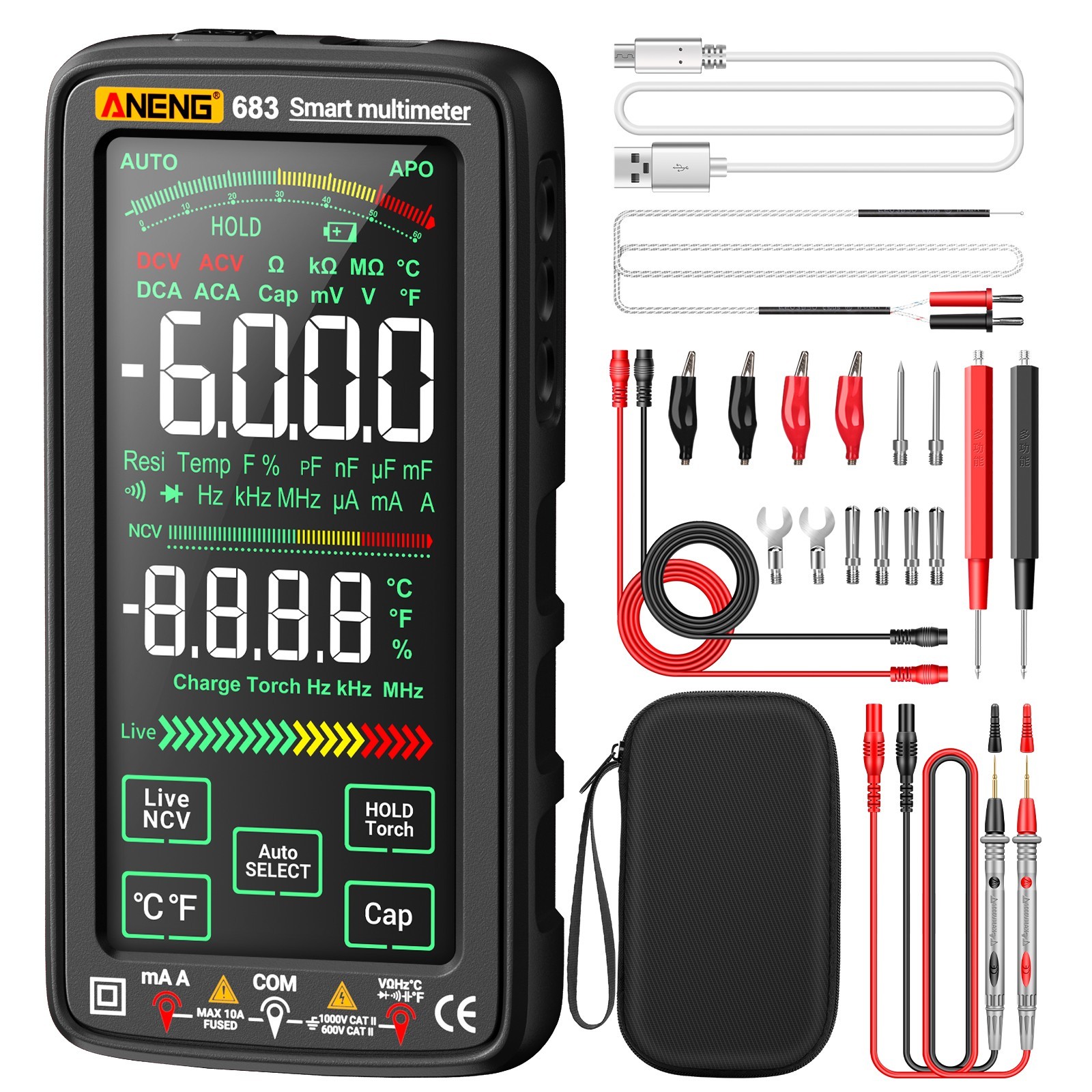
The ANENG 683 is the more feature-rich meter in this head-to-head. It uses a 6000-count True RMS design, a VA color touch screen, and auto-ranging to select the proper measurement range automatically. It also has a built-in flashlight, live-wire detection, and USB rechargeable power. The measurement ranges let it handle AC voltage up to 750 V, DC voltage up to 1000 V, current up to 10 A, and capacitance up to 100 mF, which gives you a wide operating envelope for residential and hobbyist troubleshooting. Where it asks for a compromise is price: at USD 54.99, it costs substantially more than the basic LCD tester, and that investment makes sense if you plan to use the extra convenience and measurement capability.
Digital Multimeter LCD tester
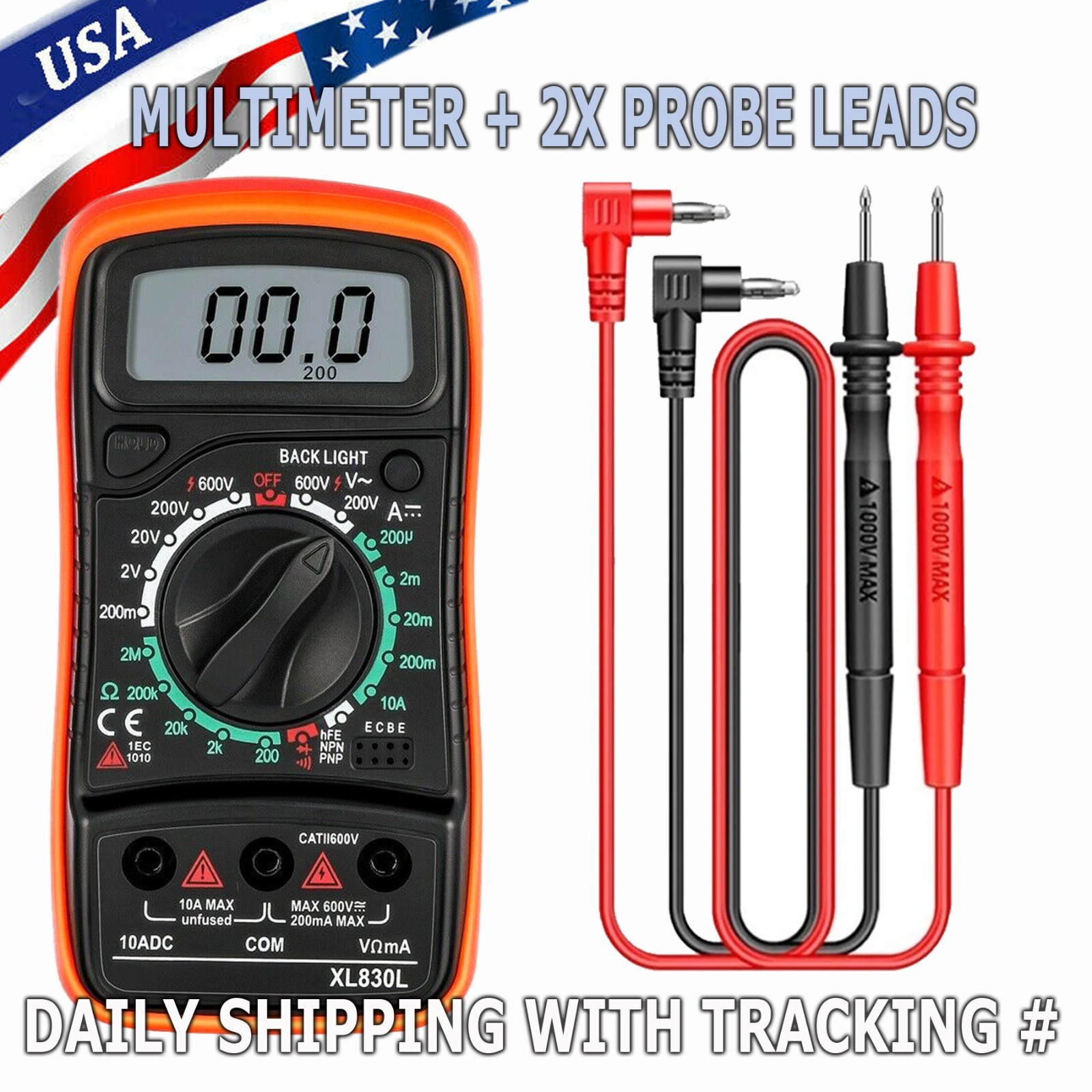
The Digital Multimeter LCD tester is the easy-to-afford alternative. It is a handheld lead-style meter that covers AC/DC voltage, AC/DC current, resistance, capacitance, continuity, diode testing, and duty-cycle measurement. It uses a 3-digit LCD with a maximum reading of 1999, and it includes auto-ranging, data hold, auto power off, backlight, and low-battery indication. The operating temperature range of 0-40°C and the measuring resistance range up to 2000 kΩ make it a practical companion for everyday checks. The obvious limitation is the interface: it stays with a conventional digital LCD rather than a color touchscreen, so what you gain in affordability you trade in display sophistication.
Final choice by use case
- For regular electrical troubleshooting and a more complete meter: Choose the ANENG 683. The added measurement capability and convenience make it worth the higher price.
- For occasional checks and lower spending: Choose the Digital Multimeter LCD. At USD 8.95, it covers the core electrical tests and keeps the process simple.