If you're choosing among multimeters electrical testers, the first fork in the road is control style: do you want a smart, convenience-focused instrument that guides you through measurements, or a straightforward meter that spends its budget on measurement modes? The ANENG 683 and the VEVOR Digital Multimeter are both 6000-count options, but they take different routes.
Quick verdict
Choose the ANENG 683 if you want a modern, convenience-oriented meter. Choose the VEVOR if you want a more traditional tester. Both are True RMS meters with NCV detection, so the difference comes down to how you prefer to work.
| Feature | ANENG 683 | VEVOR 6000-Count TRMS |
|---|---|---|
| Listed price | USD 54.99 | USD 29.90 |
| Display | VA color touch screen | Backlit LCD |
| Count | 6000 counts | 6000 counts |
| True RMS / TRMS | Yes | Yes |
| NCV detection | Yes | Yes |
Where the ANENG 683 wins
The ANENG 683 wins on interface convenience. Auto-ranging means you don't have to guess at the correct scale, and the built-in flashlight helps when you're working in dim panels. USB rechargeable power is a nice everyday convenience, since you can top up the meter instead of swapping batteries. It also measures AC voltage up to 750V, DC voltage up to 1000V, current up to 10A, and capacitance up to 100mF, which covers a wide range of residential electrical checks.
Where the VEVOR wins
The VEVOR wins on measurement breadth. Along with voltage, current, resistance, and capacitance, it adds frequency, temperature, diode, continuity, and duty cycle testing. It also includes live/neutral wire identification, data hold, max/min recording, and an analog bar graph, making it a versatile troubleshooting tool.
Product notes
ANENG 683
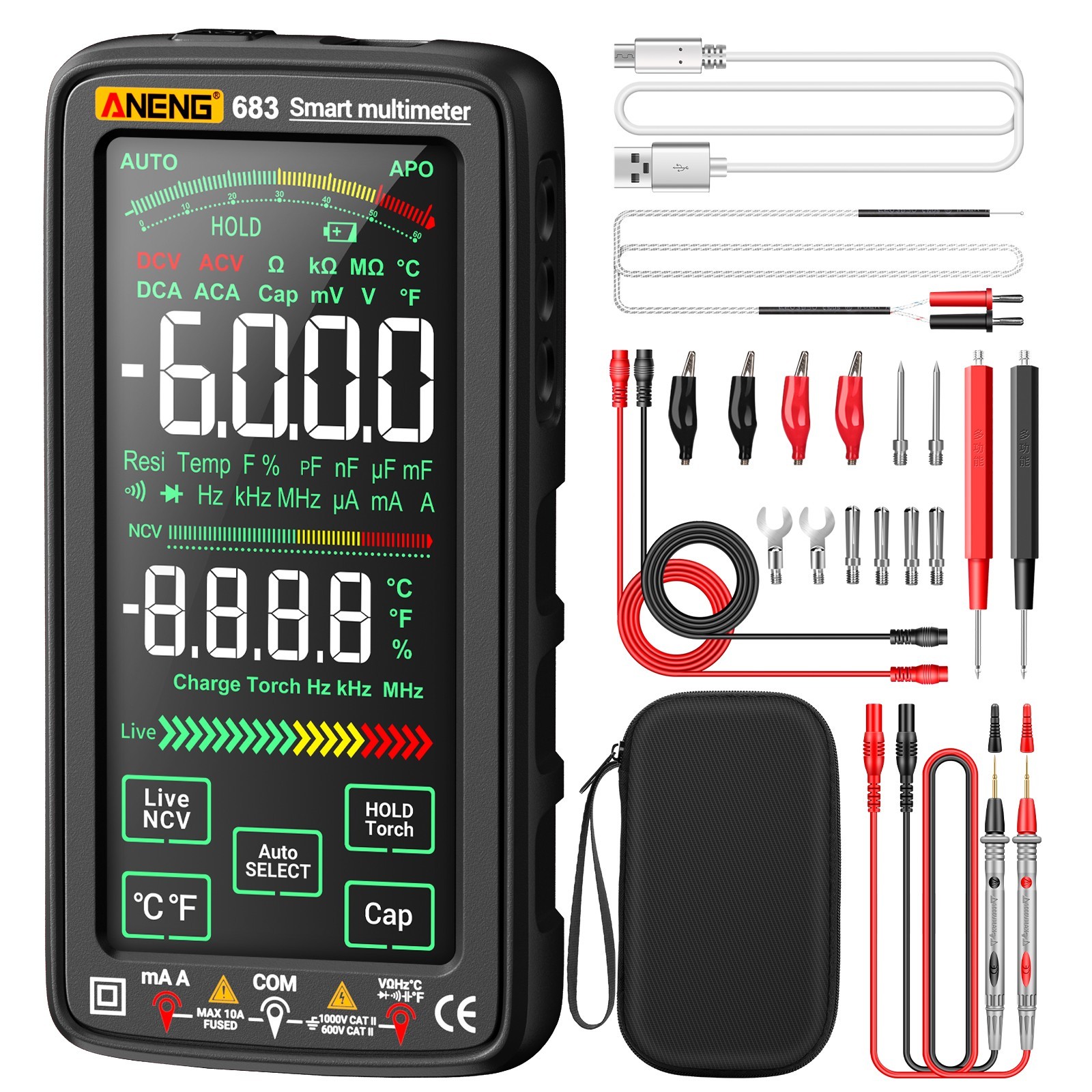
The ANENG 683's strongest case is the combination of auto-ranging, a built-in flashlight, and USB rechargeable power in one package. That makes it a convenient choice for regular testing, and the measurement range extends to 750V AC, 1000V DC, 10A current, and 100mF capacitance, so it can handle typical household tasks. The smart control layout gives it a more modern feel than a basic tester. The limitation is the price: it is the more expensive of the two, and the convenience features are what push the cost up. If you don't need those extras, the lower-cost VEVOR will cover a lot of the same ground.
VEVOR Digital Multimeter
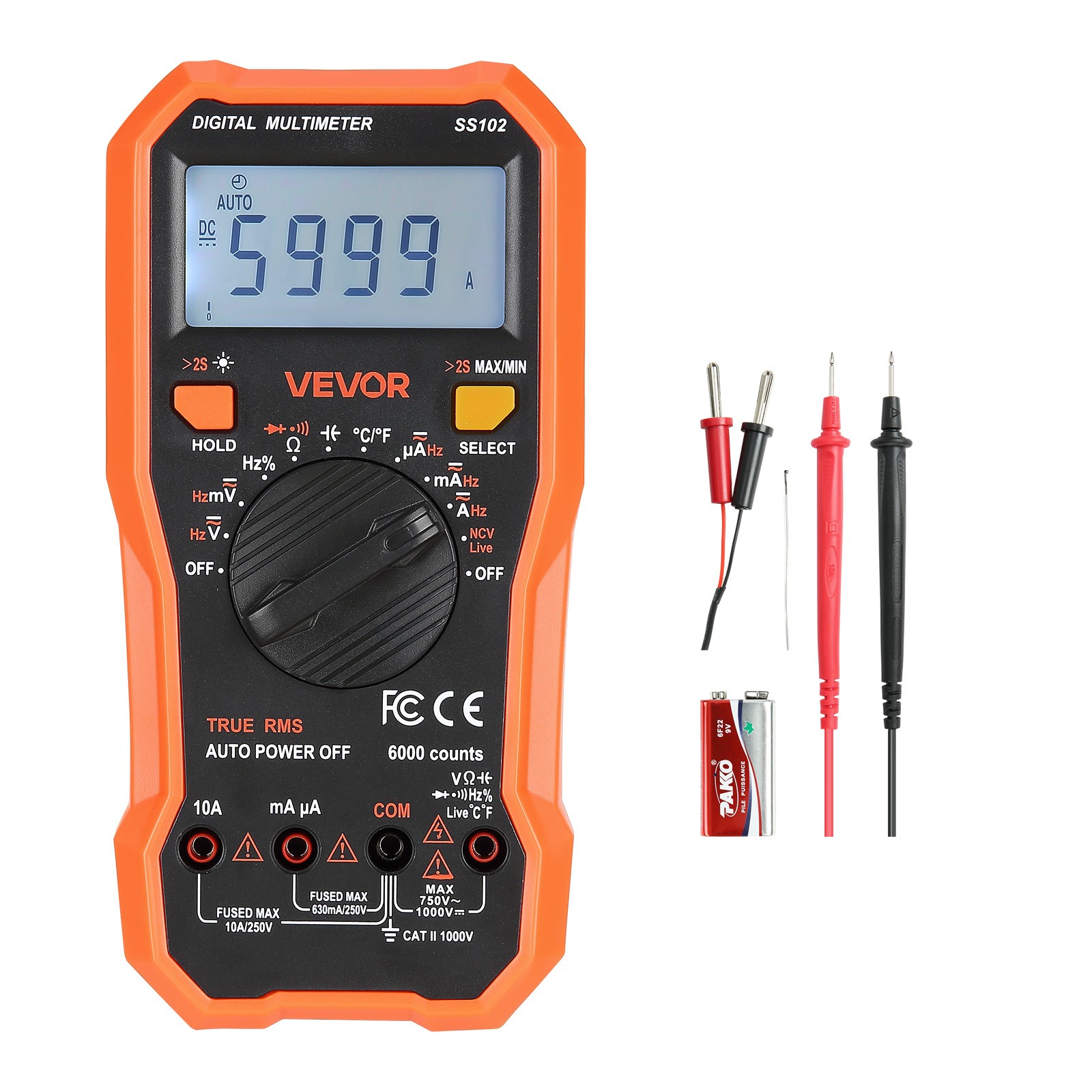
The VEVOR Digital Multimeter is the practical pick when you want a wide set of measurement modes in a portable body. It covers voltage, current, resistance, capacitance, frequency, temperature, diode, continuity, and duty cycle testing, so it suits a range of projects. Data hold and max/min recording let you lock readings and track changes, while live/neutral wire identification and an analog bar graph add useful feedback in the field. The trade-off is the interface: it uses a backlit LCD, while the ANENG specifically includes a touch screen. If you're comfortable with a more traditional display, the VEVOR is easy to recommend.
Final choice by use case
For a portable all-around tester, the VEVOR is the logical choice. For a convenience-first meter with smart controls, the ANENG 683 is the one to take home. Both are solid meters, so your decision comes down to whether you value interface extras more than a wide range of measurement modes.