Choosing between these two multimeters and electrical testers starts with the job you want to do. If you need the actual voltage, current, or resistance on a circuit, a full digital multimeter such as the AstroAI 2000-Count gives you numbers on a backlit LCD. If you just need to know whether AC voltage is present and you don't want to touch bare wires, the XF Non-Contact Voltage Tester with dual-range detection is the quicker, safer-feeling tool. At $13.99 and $12.99 respectively, only a dollar separates the two, so the real deciding factor is how you work.
Quick Verdict
Buy the AstroAI Multimeter if you plan to troubleshoot outlets, fuses, batteries, and automotive circuits where you need DC and AC voltage, current, and resistance readings. Buy the XF Non-Contact Voltage Tester if your main concern is fast live-wire detection and you want a probe-style tester with a built-in flashlight.
Comparison
| Feature | AstroAI Multimeter (USD 13.99) | XF Voltage Tester (USD 12.99) |
|---|---|---|
| Core job | Full digital multimeter for voltage, current, resistance, and continuity | Non-contact AC voltage detection with dual sensitivity ranges |
| Measurement type | DC and AC voltage plus current and resistance | AC voltage only, with 12-1000V and 48-1000V ranges |
| Display | Backlit LCD with 2000 counts | Digital display with color-coded high/low indicators |
| Extras | Fused overload protection and silicone cover | LED flashlight and audible buzzer with proximity beeping |
| Best for | Detailed circuit checks and troubleshooting | Quick live-wire checks in tight or dim spots |
Where Each Product Wins
The AstroAI Multimeter wins when you need more than a yes/no answer. It measures DC and AC voltage, current, resistance, and continuity, and its backlit display keeps readings readable in poor light. The protective silicone cover and fused overload protection make the 2000-count meter a better fit for hands-on troubleshooting.
The XF Voltage Tester wins for speed and simplicity. Its dual-range sensitivity lets you match the detection range to the wiring, and the LED flashlight plus rising beep helps you pinpoint live AC in tight spots. For $12.99, it gives you a dedicated non-contact option that feels less intrusive than dragging out a full meter.
Product Notes
AstroAI Multimeter Tester 2000 Counts Digital
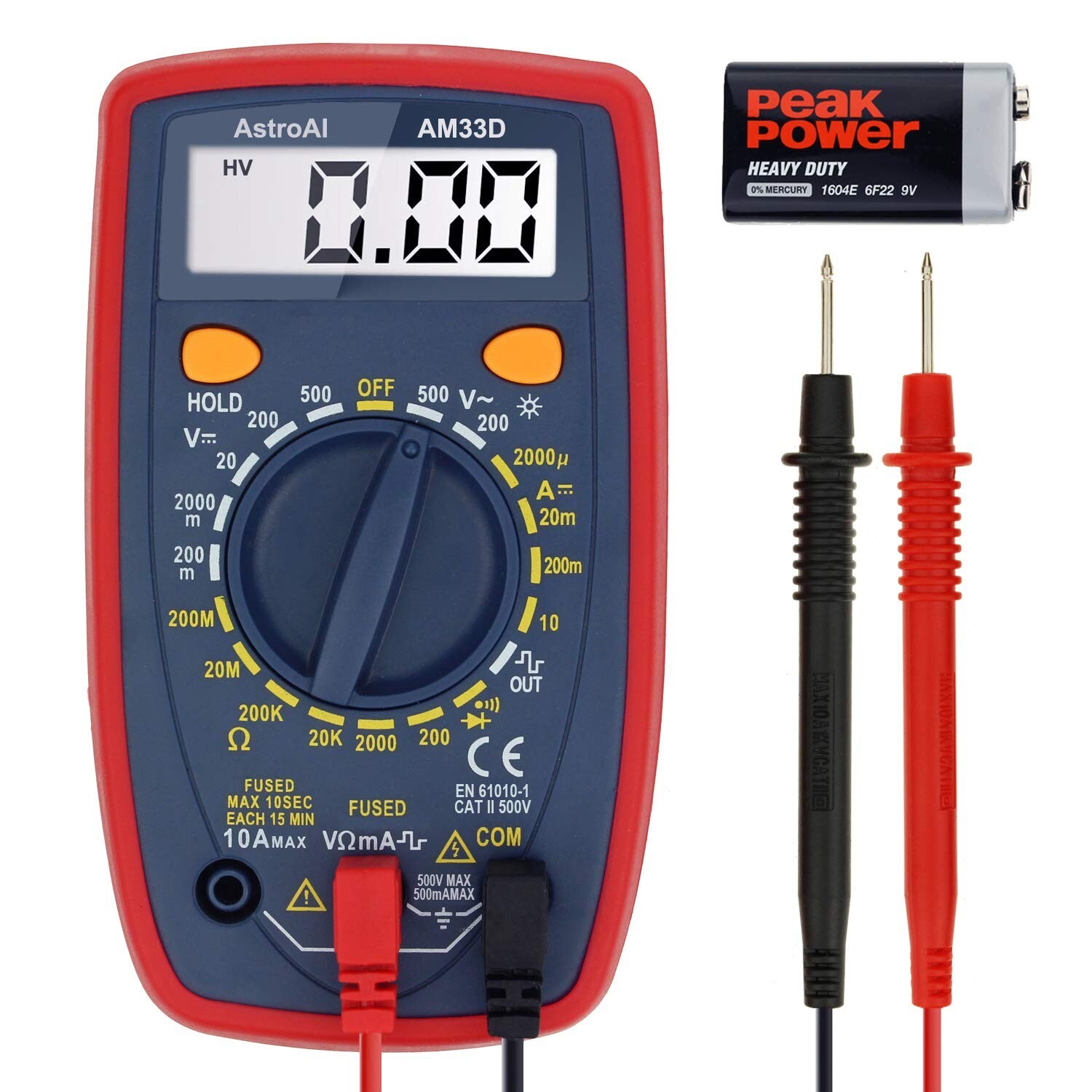
With 2000 counts and a backlit LCD, this handheld multimeter is built for measuring rather than just detecting. It handles AC and DC voltage, current, resistance, and continuity, so it can be the first tool you reach for when checking an outlet, fuse, or car battery. The silicone cover and double ceramic fuse add a layer of protection for everyday bench and field use. Choose this meter when you want actual numbers instead of a simple live-or-not answer. Its limitation is the price: it costs a dollar more than the XF, and you are paying for measurement functions you may not use if you only need a live-wire check.
XF Non-Contact Voltage Tester
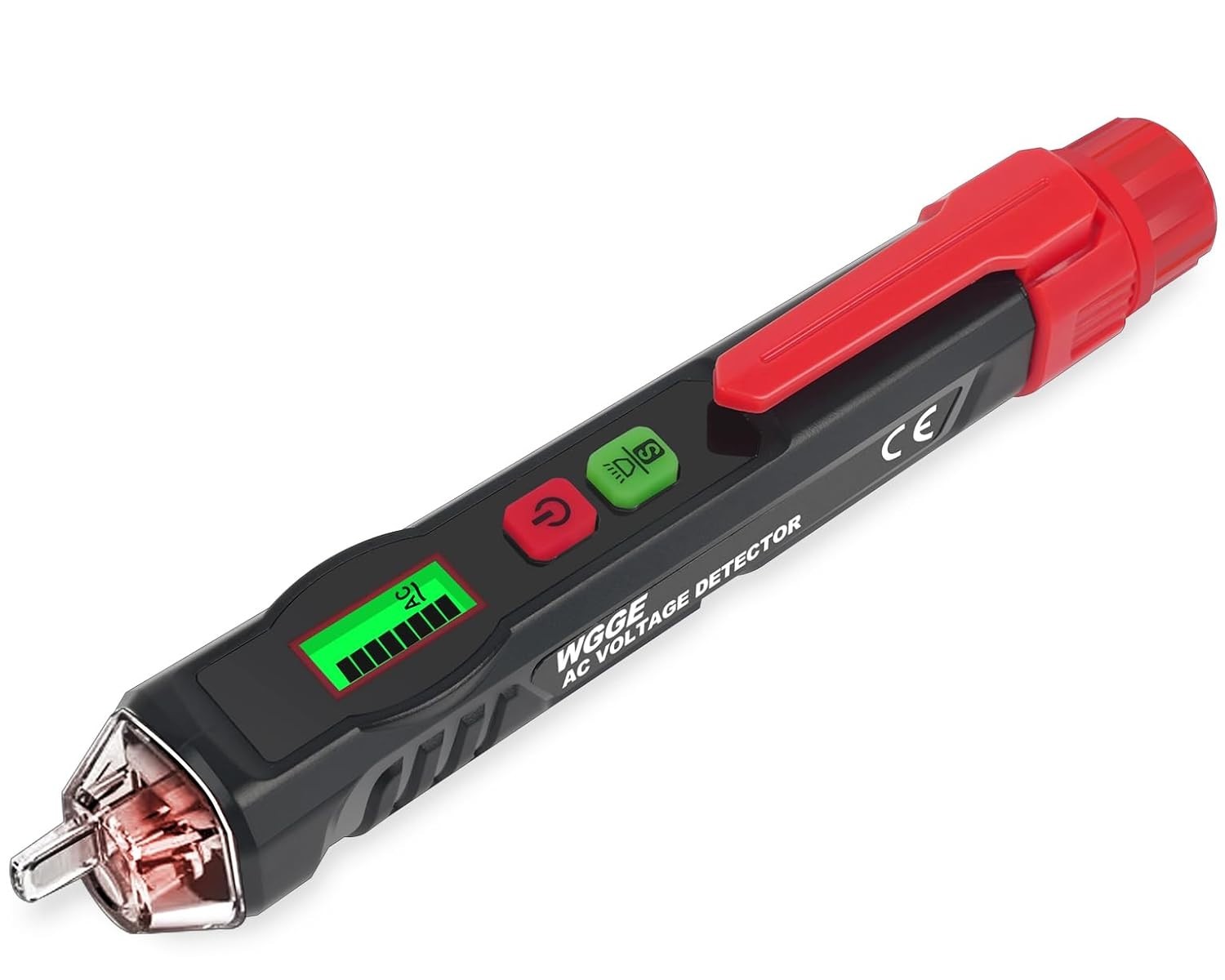
Designed for a single job-finding AC voltage without touching the conductor-this tester uses two sensitivity ranges, 12-1000V and 48-1000V, so you can match the range to the kind of wiring you are checking. The LED flashlight and color-coded red/green feedback make it easier to work in dim or hard-to-reach areas. Its beeping speeds up as you get closer to the source, which helps you zero in on where the voltage is. Choose it when you need a quick, low-friction way to confirm live wires before you work. The catch: it measures AC voltage only. It won't tell you DC voltage, current draw, or resistance, so for battery or automotive circuit diagnostics, you would still need a full multimeter.
Final Choice by Use Case
For detailed electrical work, the AstroAI Multimeter Tester 2000 Counts is the more complete choice at $13.99. Its backlit 2000-count display, fused overload protection, and ability to measure current and resistance make it a true workhorse.
For fast live-wire checks, the XF Non-Contact Voltage Tester at $12.99 is the simpler, more convenient pick. The dual-range detection, flashlight, and non-contact probe let you confirm live AC quickly without breaking out a full meter.
If you want to cover both ends of the spectrum, the two tools pair well together: use the XF for initial safety checks and the AstroAI for the actual measurements.