For anyone shopping multimeters electrical testers, the decision usually narrows to one tension: do you want a focused, protective meter for everyday checks and car work, or a broader multi-function tester for varied electronics projects? Both options here are handheld, digital testers sold as new, so the real difference is what each one emphasizes.
Quick verdict
The two testers are about $5 apart in list price. Pick the Digital LCD Multimeter if you want a more convenient measurement experience with a longer list of available functions. Pick the AstroAI if you prefer protective extras for home and car checks.
At a glance
| Feature | AstroAI 2000-Count | Digital LCD Multimeter |
|---|---|---|
| Price | $13.99 | $8.95 |
| Display | Backlit 3 ½-digit LCD (1999 count) | Backlit 3-digit LCD (max 1999) |
| Protection | Double ceramic fuse, silicone cover | HRC fuse, shunt resistor |
| Sampling speed | 2 times/second | 3 times/second |
Where each product wins
The AstroAI takes the protective-build side of this matchup. It is aimed at common household and car checks, so it suits straightforward troubleshooting around outlets, fuses, batteries, and charging systems.
The Digital LCD Multimeter takes the feature-breadth side. It includes a long row of conveniences and a broader set of measurement functions, with capacitance, diode test, and duty cycle among them.
Product notes
AstroAI Multimeter Tester
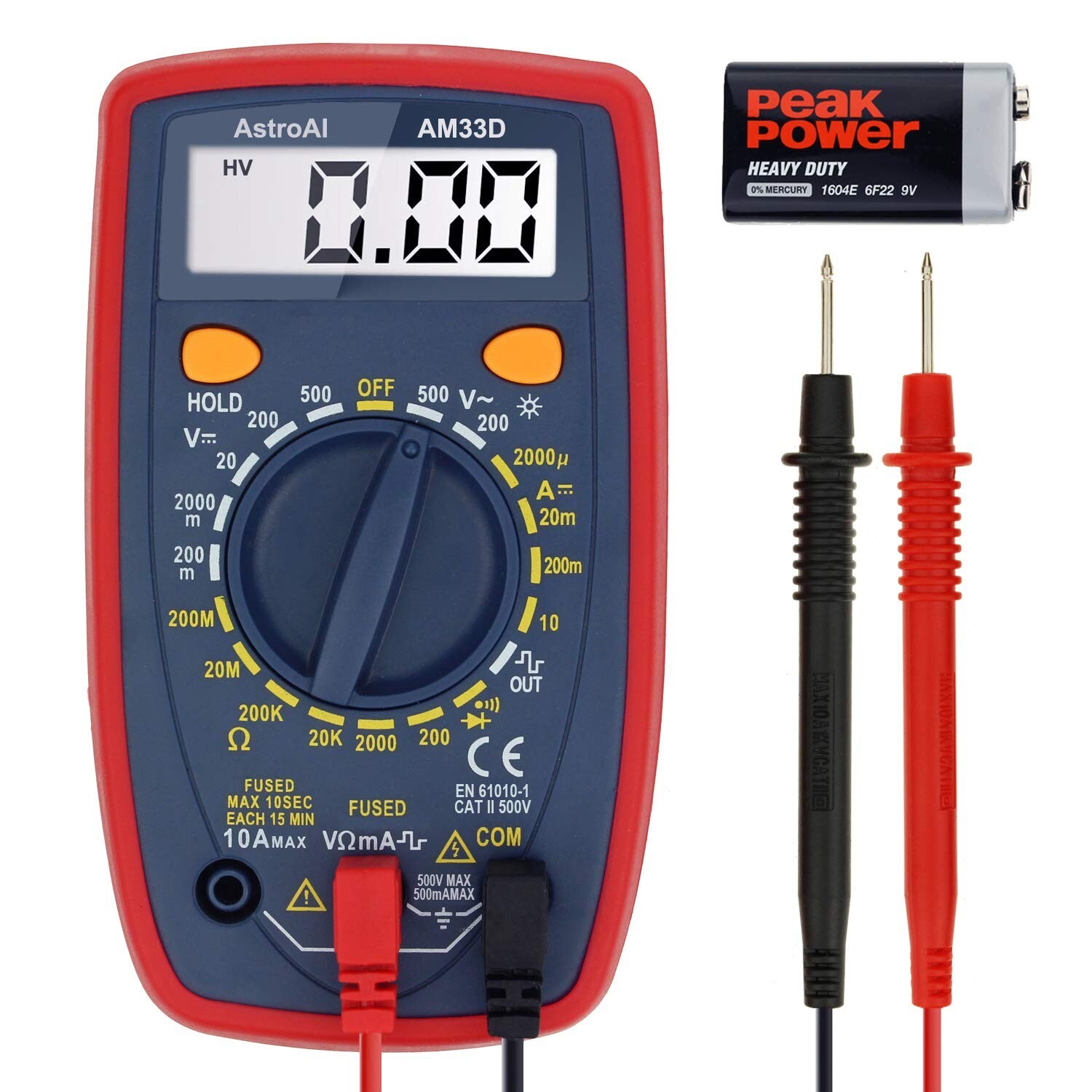
The AstroAI is a straightforward handheld choice for basic electrical checks. It has a 2000-count label, silicone cover, and double ceramic fuse, so it is an easy pick for home and automotive use. If you mainly probe outlets, fuses, or a car's charging system, this is the meter to keep nearby. The limitation is the sampling rate: at 2 times per second, readings update a bit more slowly than the other meter's 3. The feature set is focused on AC/DC voltage, continuity, and live-wire testing.
Digital LCD Multimeter
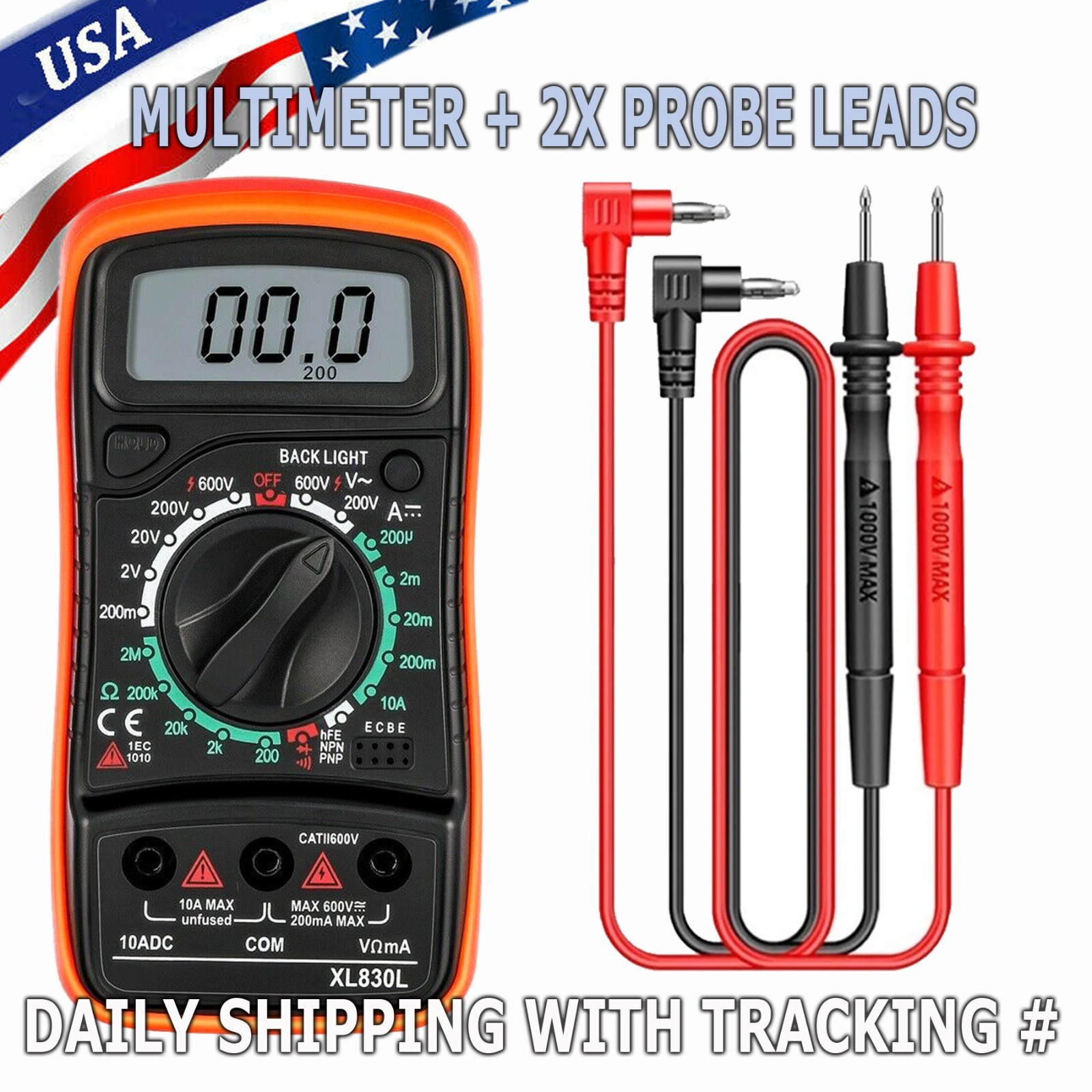
The Digital LCD Multimeter is the broader tool on paper. It includes auto-ranging, data hold, battery door access, auto power off, low battery indication, and a backlit display, so everyday measurements are less fiddly. The function set goes beyond the basics: capacitance, diode test, duty cycle, AC/DC current, AC/DC voltage, resistance, and audible continuity are all there. That makes it a good match for mixed household and hobby circuits. The trade-off is the display: it's a 3-digit LCD with a 1999 maximum, while the AstroAI is a 3 ½-digit display with the same 1999 count.
Final choice by use case
Choose the AstroAI Multimeter for home and car checks when the protective extras and the focused function set are what you want.
Choose the Digital LCD Multimeter for mixed bench and hobby work when convenience features and function breadth matter more.
For quick continuity and voltage checks, either meter works; the right pick depends on the trade-offs above.