When you need to verify that your instrument is still accurate, a calibration standard gives you a known reference to compare against. But the term covers a lot of ground: electrical outputs, mass values, and material conductivity all need different standards. The four products below show how wide that range can be, from a pocket-size reference board at just over $12 to a complete stainless steel weight set at nearly $665. Matching the standard to the instrument you actually use is the key decision.
Quick Take
- If you calibrate several types of electrical instruments, the Frequency Devices Calibration Checker gives you one bench unit for volts, current, frequency, resistance, and capacitance.
- If you work mainly with AD584 multimeters and want a simple PCB reference, the AD584 reference board is the least expensive listed entry.
- If your instruments are balances and scales, the Adam Equipment M1 OIML weight set is a mass standard in a 1g-2kg range with handling accessories.
- If you measure conductivity in materials, the Olympus conductivity standard provides three fixed %IACS/EW values.
Price Comparison
The listed prices below show how different calibration standards can be. The weight set is at the top of the range, the small reference board is at the bottom, and the electrical calibrator and conductivity standard sit in between.
| Product | Listed Price | Relative Listed Price Bar |
|---|---|---|
| Is your Test Equipment Accurate? Check it with our Calibration Checker | USD 99.95 | |
| Sophisticated Design of AD584 Resistance Standard Calibration Test Equipment | USD 12.98 | |
| Adam Equipment M1 1g - 2kg Stainless Steel Calibration OIML Weight Set | USD 664.99 | |
| Olympus Conductivity Standard Calibration 30.45% 39.65% 59.06% Nondestructive | USD 332.00 |
Decision Matrix
- Electrical bench reference for multiple instruments: Frequency Devices Test Equipment Calibrator
- Simple AD584 reference board: AD584 Resistance Standard Calibration Test Equipment
- Mass calibration for compact balances: Adam Equipment M1 Stainless Steel Calibration OIML Weight Set
- Material conductivity verification: Olympus Conductivity Standard Calibration
Product Notes
Is your Test Equipment Accurate? Check it with our Calibration Checker
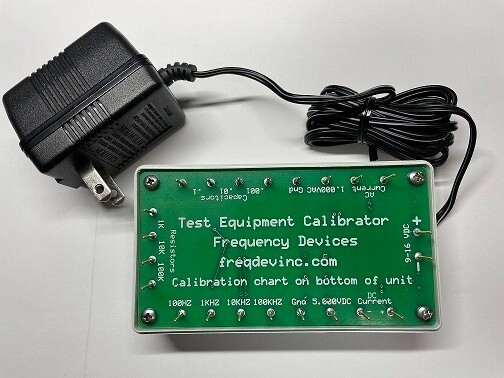
The Frequency Devices Calibration Checker is the broadest bench-level electrical reference in this set. It provides 5.000 DC volts (±0.01%), 1.000 AC volts RMS, a 1.000 mA DC current source, a 1.000 mA AC current source, frequency outputs from 100 Hz to 100 kHz, resistance values from 1 kΩ to 100 kΩ, and capacitance values from 0.001 µF to 0.1 µF. If your work involves checking handheld meters across several functions, this single unit can serve as a comparison point for many of them. It is listed as new and made in the United States. The main limitation is that it is an electrical calibrator rather than a mass or conductivity standard, so it will not address weighing-scale or material-conductivity calibration needs.
Sophisticated Design of AD584 Resistance Standard Calibration Test Equipment
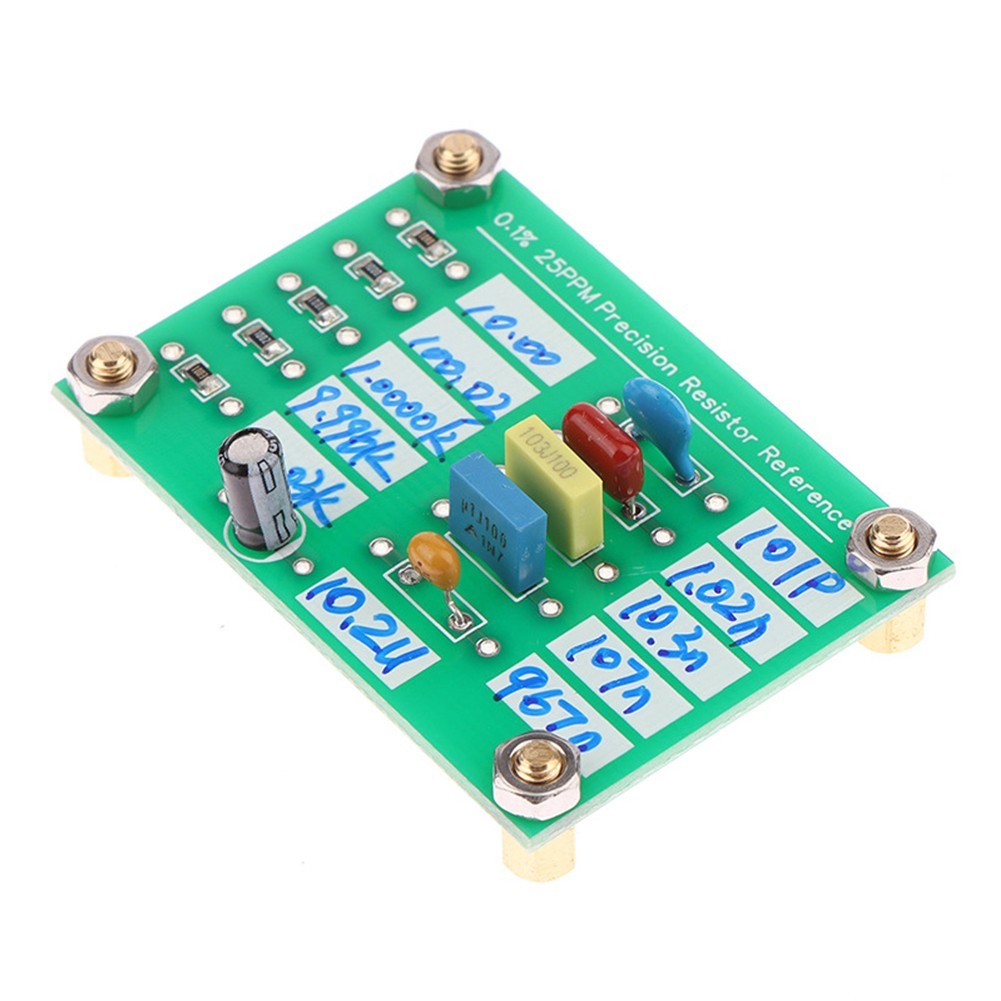
The AD584 reference board gives you the least expensive listed entry point in this group. It is a green PCB board designed for the calibration of AD584 multimeters and other measuring instruments. The operating idea is simple: align the positive and negative poles with the corresponding capacitors and read the calibration values on the meter. The board is made of PCB material and is intended for measuring-instrument calibration, electronic production, teaching experiments, and automatic test systems. It is made in China. Its limitation is the reverse of the Frequency Devices unit: it is a narrow reference for resistance and capacitance work, not a broad electrical calibrator, and the main target application is the AD584 family.
Adam Equipment M1 1g - 2kg Stainless Steel Calibration OIML Weight Set
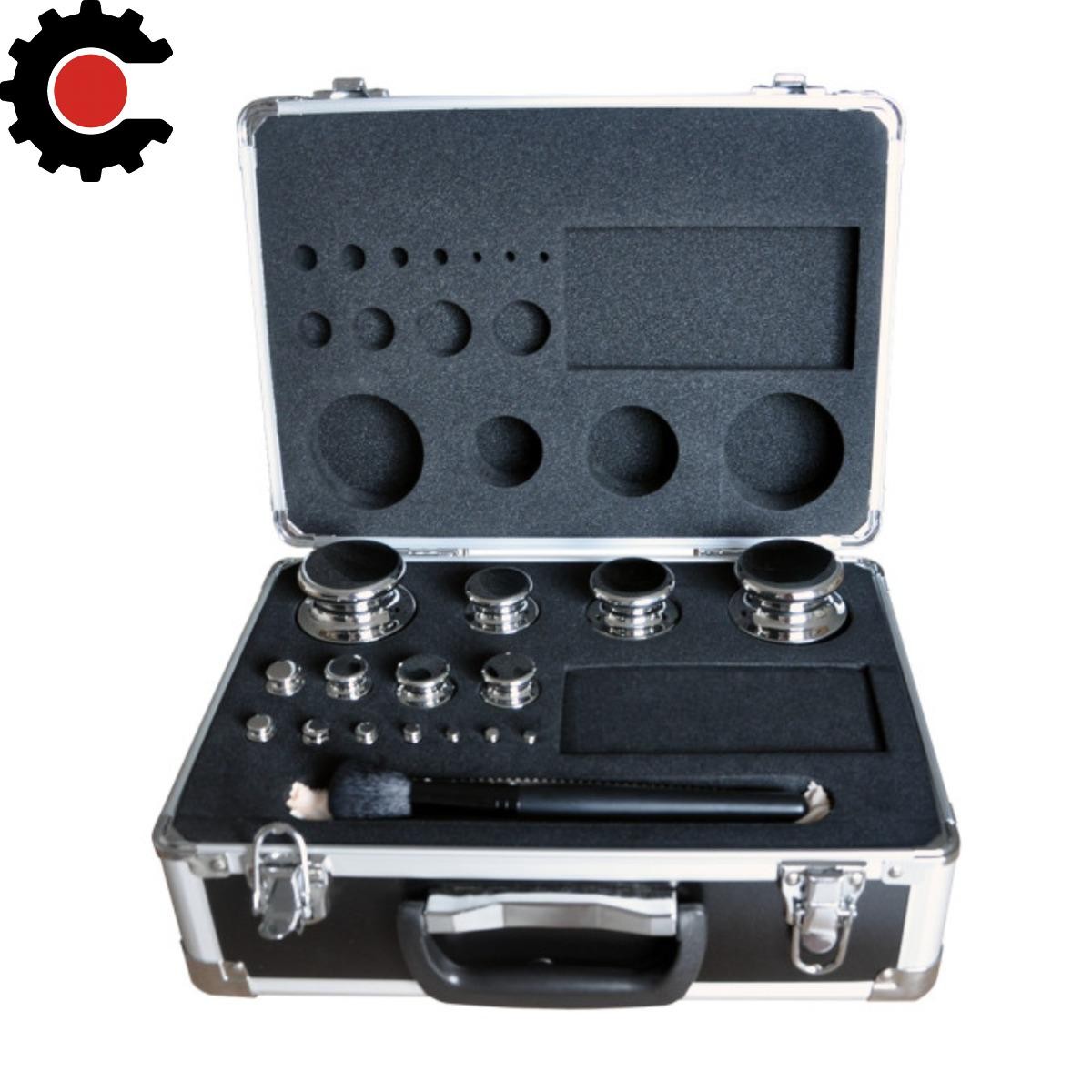
This Adam Equipment set is the highest-priced listed item in the comparison. It consists of stainless steel calibration weights from 1g to 2kg in an OIML M1 weight class, and the set includes accessories for handling and storage. The intended use is calibrating compact balances and bench scales, where physical mass standards are required. It is listed as new. If your daily work revolves around weighing instruments, this is the only product here that directly supports that task. The limitation is its single-purpose nature: it does nothing for voltage, current, frequency, resistance, capacitance, or conductivity. It is also the largest up-front listed price in the group, so it makes sense mainly when mass calibration is a recurring need.
Olympus Conductivity Standard Calibration 30.45% 39.65% 59.06% Nondestructive
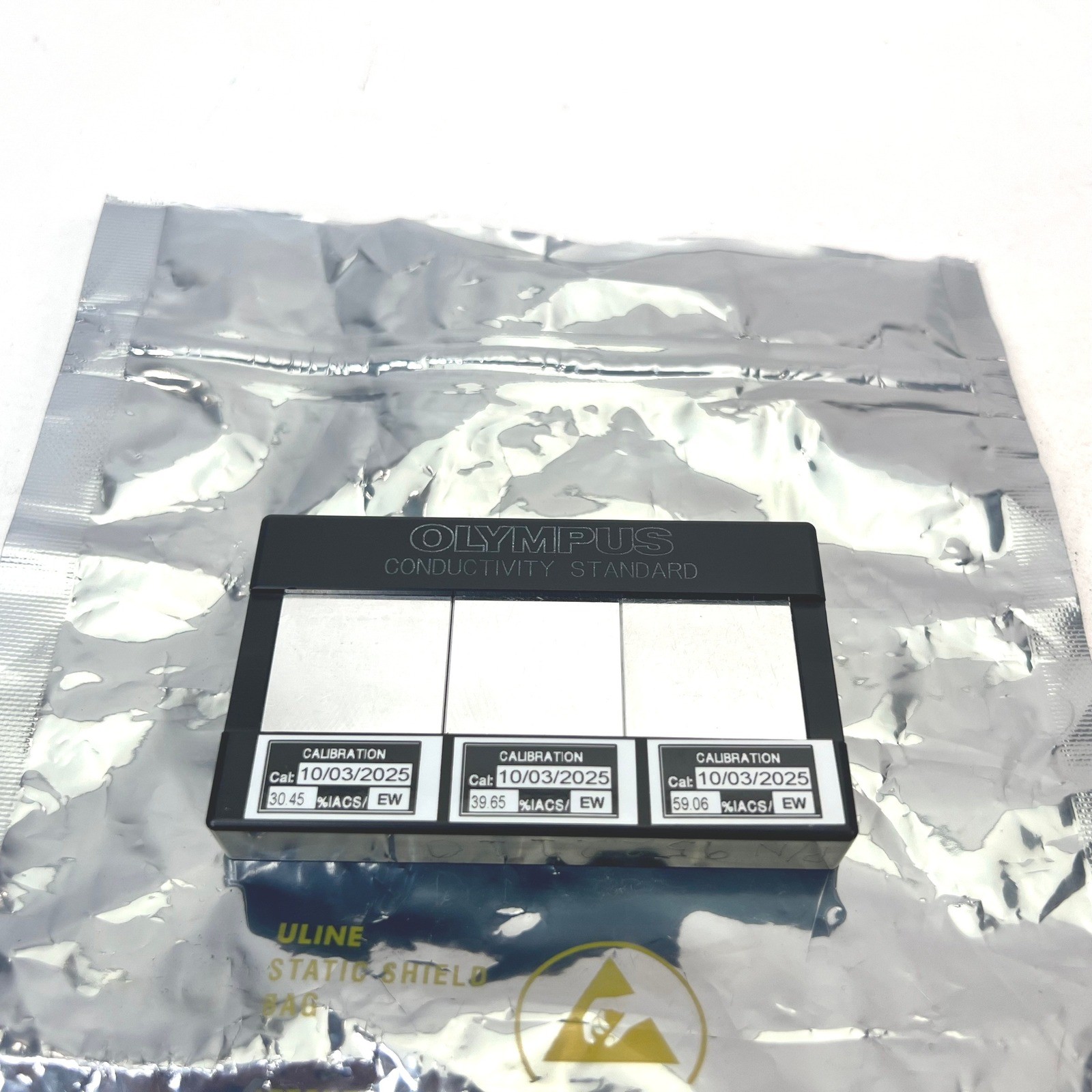
The Olympus conductivity standard calibration unit is for material conductivity work. It includes three individual conductivity standards with values of 30.45, 39.65, and 59.06 %IACS/EW. This makes it useful for verifying conductivity instruments used in nondestructive testing, manufacturing quality control, or research and development. The unit is listed as used, and it carries an Olympus brand name. Its strength is that it gives you three concrete reference values in one unit. The limitation is equally clear: those three fixed values are the whole scope, so it is not a general electrical standard or a mass standard. If your application needs only those conductivity points, this is a focused match; if you need a wider range of values, this unit covers only what is listed.
Final Recommendation by Use Case
- If you need a single bench reference to check voltmeters, current meters, frequency counters, resistance meters, and capacitance meters, the Frequency Devices Test Equipment Calibrator is the most versatile match.
- If the lowest listed price is your priority and you specifically calibrate an AD584 multimeter, the AD584 reference board is the straightforward choice.
- If your instruments are balances and scales, the Adam Equipment M1 Stainless Steel Calibration OIML Weight Set is the mass standard designed for that task.
- If your work centers on conductivity measurement of materials, the Olympus Conductivity Standard Calibration gives you three concrete reference values, albeit in used condition.