When you're wiring an outlet, checking a car circuit, or just confirming a switch is off before you touch it, the tool you need depends on the question you're asking. Do you want a measured voltage reading, or do you just need to know if a conductor is live? That's the split between these two electrical testers: a digital multimeter with test leads and a non-contact AC voltage tester.
Quick verdict
The Digital Multimeter is the choice when your work calls for actual voltage, current, or resistance values. The AC Voltage Tester is the choice when you need a fast, safe indication that a wire or outlet has power. If you need numbers, go multimeter; if you need a quick check, go tester. The price gap is modest, but the functional gap is significant.
Comparison
| Product | Price | Price bar | Best for |
|---|---|---|---|
| Digital Multimeter | $6.99 | Numeric AC/DC voltage checks | |
| AC Voltage Tester | $12.99 | Quick voltage presence checks |
Where each wins
The Digital Multimeter wins when you need to know exactly what a circuit is doing. It measures both AC and DC voltage and also functions as an ammeter and ohmmeter, so it covers a wider range of troubleshooting tasks. The AC Voltage Tester wins when you need to make a fast judgment about whether a wire is live, especially in situations where you'd rather not touch the wires. In short, one gives you information, the other gives you confirmation.
Product notes
Digital Multimeter LCD Voltmeter Ammeter Ohmmeter Volt AC DC Tester Leads Meter

The Digital Multimeter is a handheld meter with a 1999-count LCD that gives you a numeric readout. Data Hold locks the last measurement, which helps when you're working in a tight spot. The included test leads allow direct contact measurements on wires and terminals, and the shunt resistor and HRC fuse provide input protection. Its CAT III rating suits household and workshop distribution circuits. It comes as a two-pack, so you have a spare or can keep one in your toolbox and one in the car. The limitation: you have to connect the probes to get a reading, so it won't tell you from a distance whether a conductor is live.
AC Voltage Tester/Non-Contact Voltage Tester with Dual Range AC 12V-1000V
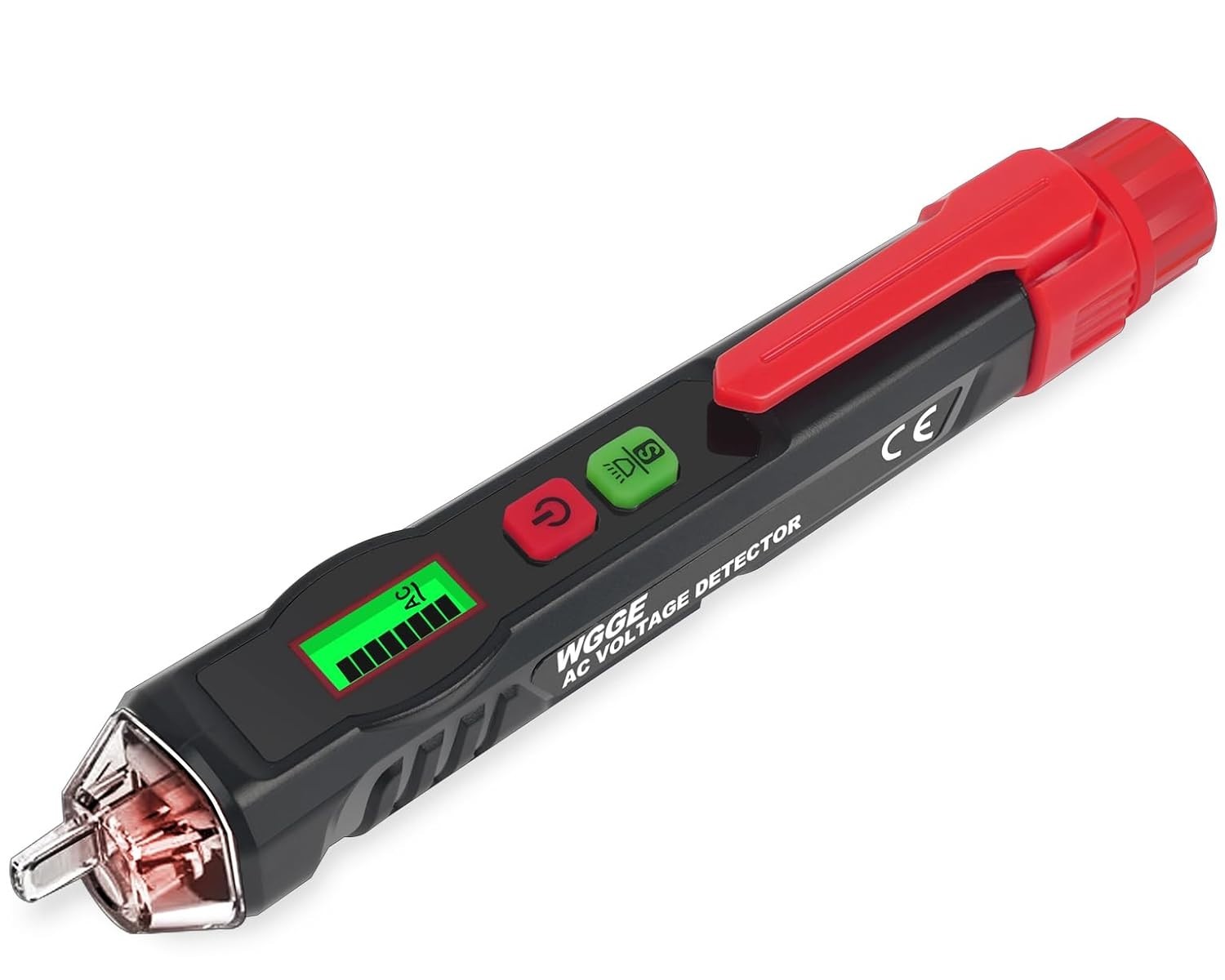
The AC Voltage Tester lets you check for live AC voltage without touching bare conductors. Its dual-range switch covers low (12-1000V) and high (48-1000V) sensitivity levels, and the red light and audible buzzer confirm the presence of voltage. The beep rate increases as you approach the source, making it easier to locate the exact live wire. The color-coded feedback shows red for live and green for neutral, which makes it easy to tell wires apart. A built-in LED flashlight helps in dim panels, and the automatic shut-off keeps the device from running down. The limitation: it only detects AC voltage, not DC, and it gives you a go/no-go indication rather than a precise voltage number. At 5 inches long, it's compact enough for a pocket.
Final choice by use case
If you're troubleshooting an automotive electrical issue, building a project, or checking household wiring and need measured values of voltage, current, or resistance, the Digital Multimeter is the right tool. If you're doing a quick safety check before working on a circuit and want to confirm whether a wire is energized, the AC Voltage Tester is the more efficient pick.