When you're shopping for an oscilloscope and signal spectrum analyzer in the $150 to $225 range, the decision usually comes down to raw performance versus a software-connected compact setup. The FNIRSI DPOS350P is a self-contained 4-in-1 instrument with a large screen and very fast signal capture. The Digilent Analog Discovery 2 connects to a computer and relies on software to be your display. The right pick depends on where and how you like to measure signals.
Quick verdict
If you need to capture high-speed signals and want a self-contained bench instrument, the FNIRSI DPOS350P is the stronger pick; its built-in display and fast acquisition make it a complete bench station. If you'd rather keep your test setup small and work from a laptop with the included software, the Digilent Analog Discovery 2 is the more affordable choice.
Comparison at a glance
| Feature | FNIRSI DPOS350P | Digilent Analog Discovery 2 |
|---|---|---|
| Price | USD 225.00 | USD 150.00 |
| Bandwidth | 350 MHz | 30 MHz |
| Real-time sampling | 1 GSa/s | 100 MSa/s |
| Display | 7-inch 1024x600 | USB-connected to PC |
| Included extras | Signal generator and spectrum analyzer | WaveForms 2015 software |
| Resolution | 8-bit to 16-bit high-res mode | 14-bit digital oscilloscope resolution |
Where each product wins
Choose the FNIRSI DPOS350P if your projects involve fast edges or timing measurements, because its faster signal capture and wider measurement capabilities can show you details the Digilent cannot resolve. Its large screen keeps you working without a laptop, and the 4-in-1 design puts several tools on one bench.
Choose the Digilent Analog Discovery 2 if you prefer a software-connected workflow and don't want to tie up bench space with a large standalone screen. Its software environment turns a laptop into the display, and the lower price makes it easier to start measuring right away.
Product notes
FNIRSI DPOS350P 4IN1 Digital Oscilloscope
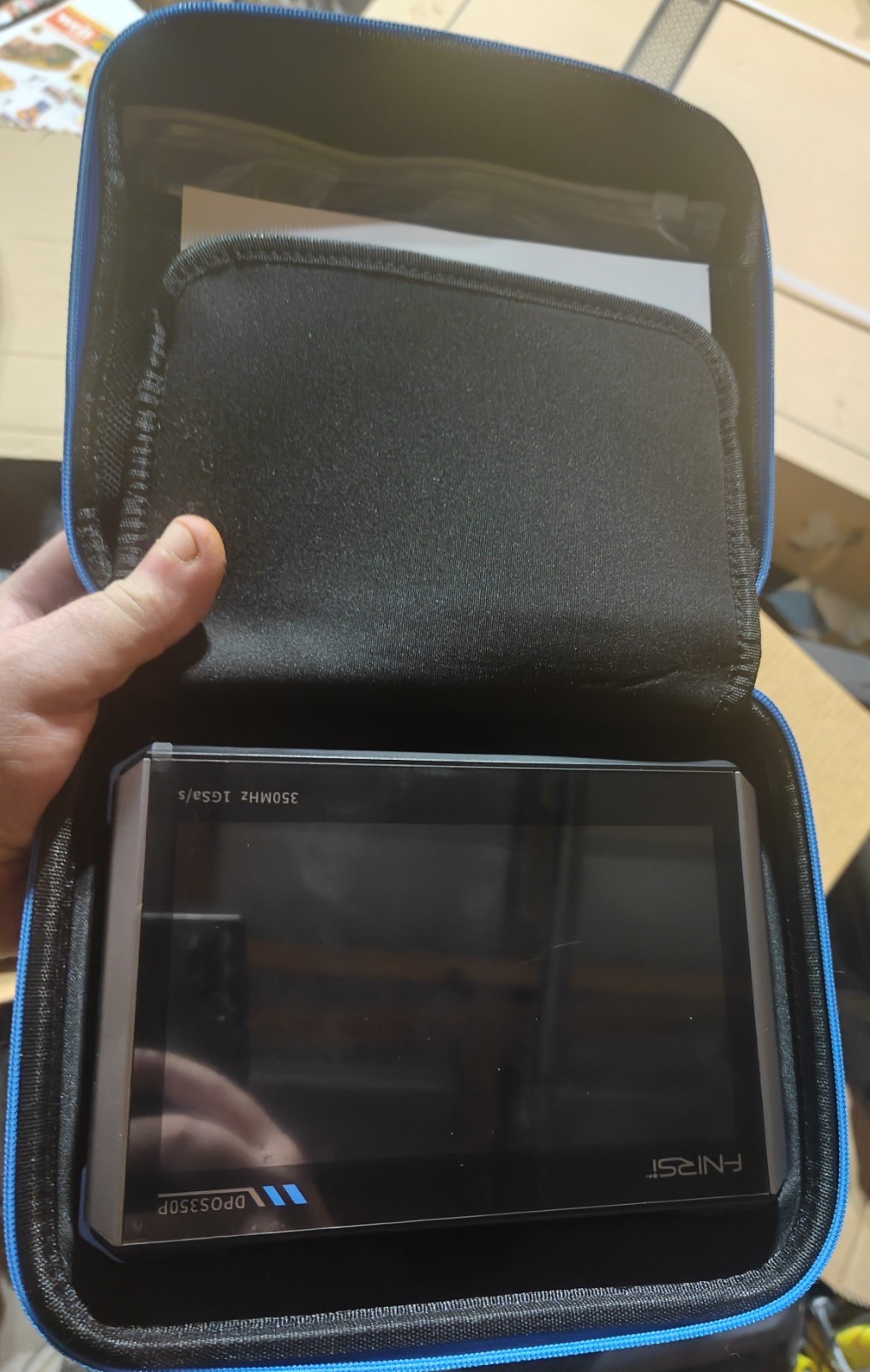
The DPOS350P is the more capable instrument on paper, with a 350 MHz bandwidth, 1 GSa/s real-time sampling, and a 1 ns rise time. The 7-inch 1024x600 display is large enough to view several waveforms at once, and the 50,000 wfm/s capture rate makes it a good fit for hunting intermittent glitches. On top of oscilloscope functions, it includes a signal generator and a spectrum analyzer, so you can test filters and inspect frequency content without adding another box to your bench. The catch is the higher price compared with the USB option; that premium makes sense if you actually need the extra speed and integrated functions, but it's a lot of capacity for simple low-frequency work.
Digilent Analog Discovery 2 USB Digital Oscilloscope
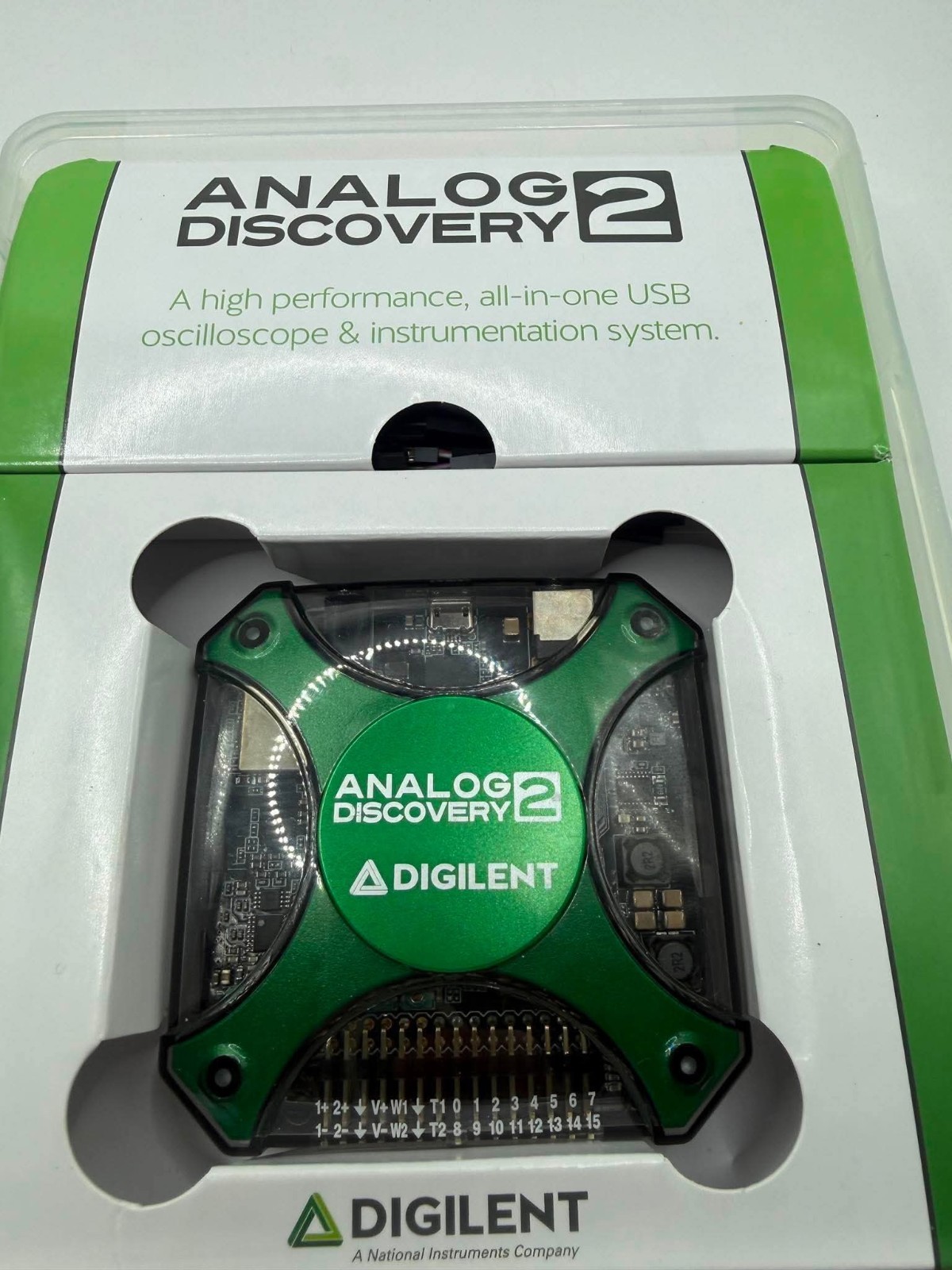
The Analog Discovery 2 takes a different approach: it connects over USB and uses WaveForms 2015 software to turn your PC into a test instrument. Its 14-bit resolution is useful when you need fine signal detail, and the 100 MSa/s real-time sampling rate is enough for many audio, sensor, and control signals. The 30 MHz bandwidth is a clear step down from the FNIRSI, so very fast digital edges will be outside its comfort zone. But for a compact, USB-connected setup that doesn't occupy bench space, this is the more practical of the two when you want a lighter footprint and a lower price.
Final choice by use case
By use case, the decision is clear. If you're debugging high-speed digital circuits or measuring rise times, the FNIRSI DPOS350P is the one to get. If your work is mostly audio, sensors, or control signals and you want a laptop-based test setup, the Digilent Analog Discovery 2 is the better fit.