In the lab heating, cooling, and vacuum world, two temperature-control tools often compete for bench space: a forced-air convection drying oven and a 6L recirculating chiller. They solve different problems, so the right choice depends on the kind of thermal work your lab does most. This head-to-head weighs the Lab Industrial Digital Forced Air Convection Drying Oven against the Laboratory Chiller Circulator to help you decide.
Quick Verdict
If your main need is efficient, even drying of lab equipment and materials, the forced-air drying oven is the straightforward pick. If you need both cooling and heating with fine temperature control, the recirculating chiller is the more versatile system.
At a Glance
| Feature | Lab Industrial Drying Oven | Laboratory Chiller Circulator |
|---|---|---|
| Price | USD 416.63 | USD 740.34 |
| Price indicator | ||
| Condition | New | New |
| Primary function | Forced-air convection drying | Recirculating heating/cooling |
| Rated power | 1000W | 1000W (US) |
| Dimensions | 47 × 66 × 53 cm (D×W×H); interior 35 × 35 × 35 cm | 12.6 × 15.6 × 26.2 in (L×W×H) |
Where Each Product Wins
- The drying oven wins when the job is straightforward drying and you want a chamber that distributes heat evenly across a batch.
- The chiller wins when you need both cooling and heating with tight accuracy and the ability to circulate to external equipment.
Product Notes
Lab Industrial Digital Forced Air Convection Drying Oven
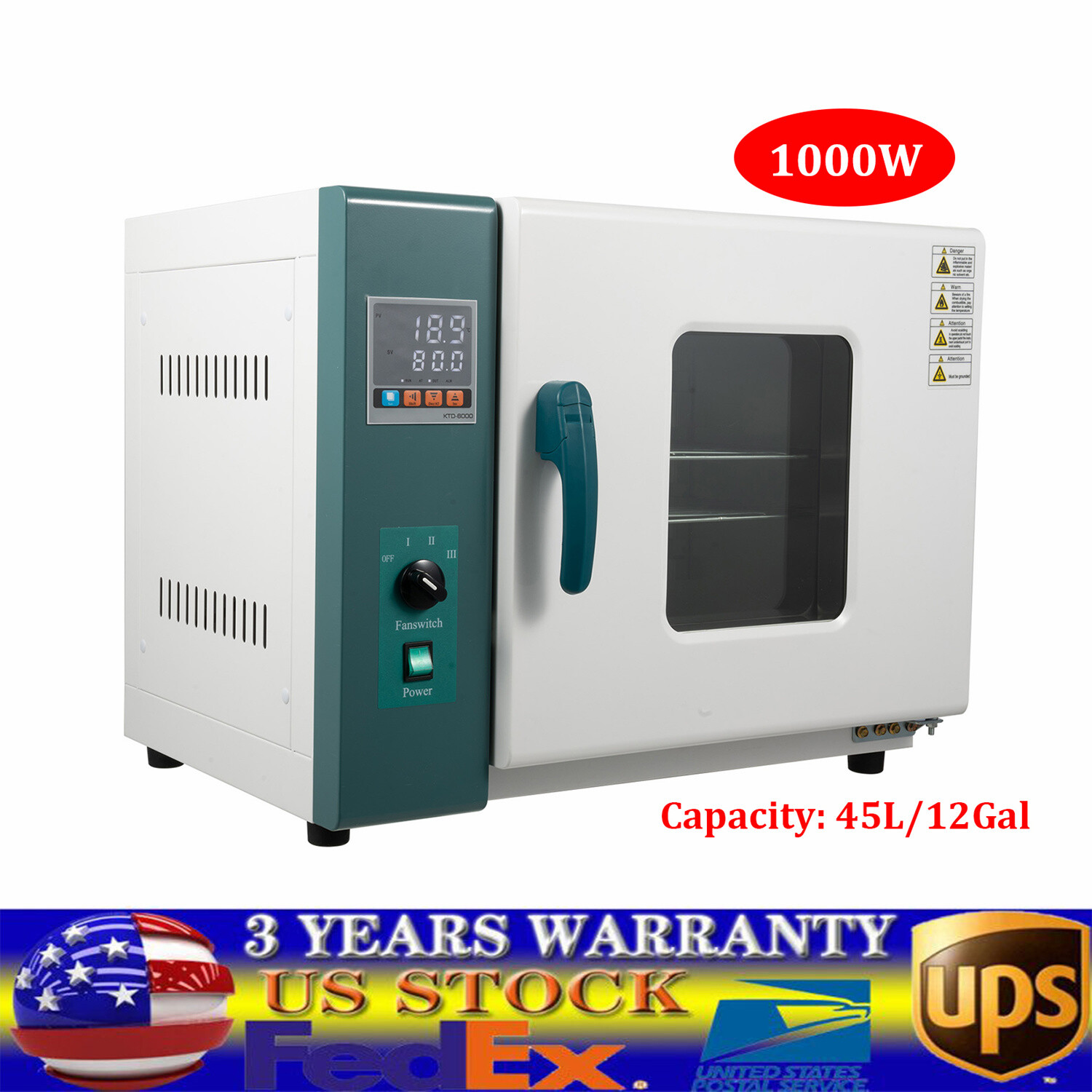
This 1000W forced-air convection drying oven is designed to handle a cluttered batch of lab materials or instruments that need to be dried after cleaning or preparation. Its interior measures 35 × 35 × 35 cm, giving you a usable cube for beakers, trays, or metal parts. The forced-air circulation moves heated air around the chamber to reduce uneven spots, which helps produce consistent drying results. The oven's listed external dimensions of 47 × 66 × 53 cm help you plan bench space. The description points to uniform heating as a core benefit, and the relative humidity limit below 90% suggests it is meant for drying moisture-laden items. For labs that run a steady volume of drying, this is a dedicated tool. The trade-off is that it handles drying only; if you later need to chill samples or run precise low-temperature reactions, you would need a separate chiller.
Laboratory Chiller Circulator 6L
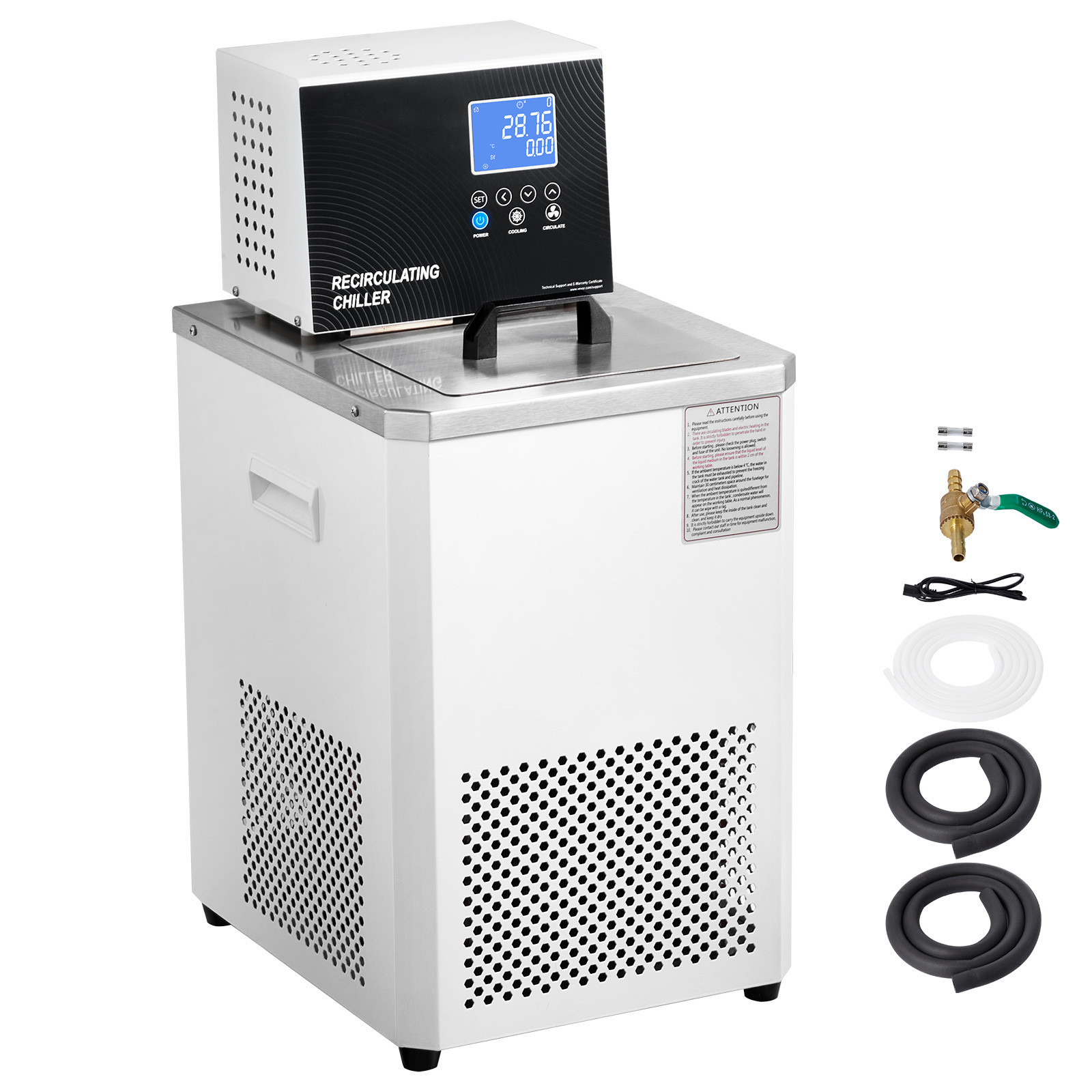
The Uimoso Laboratory Chiller Circulator is built around a dual circulation system: an internal mode keeps temperatures uniform for small-scale experiments and sample preservation, while an external mode connects to larger instruments for more flexibility. It covers a constant temperature range from 23°F to 212°F, so you can use it for chilling biological samples or heating chemical synthesis reactions. The 304 stainless steel countertop tank resists corrosion and is easy to clean. The 0.01°C adjustment accuracy gives you fine control over sensitive work, which is especially important when holding a reaction at a precise setpoint. The unit draws 1000W and weighs 54.5 lbs, so it is a substantial piece of benchtop equipment. Its dimensions of 12.6 × 15.6 × 26.2 inches confirm that you need a sturdy, clear surface. The external circulation mode lets you pump temperature-controlled fluid to a separate vessel, making it adaptable beyond the built-in tank. This is the more versatile tool if your process requires both cooling and heating in one recirculating system.
Final Choice by Use Case
Choose the Lab Industrial Digital Forced Air Convection Drying Oven if your lab work centers on drying instruments, glassware, or materials with even heat; its price is USD 416.63.
Choose the Laboratory Chiller Circulator if you need precise temperature control for both cooling and heating, with external circulation for larger experiments; its price is USD 740.34.