When you're working in dimensional metrology machine inspection, verifying surface roughness is just as important as checking dimensions. A digital gauge gives you numbers, but sometimes you need a quick visual and tactile reference to compare a machined surface against known standards. The Industrial Surface Roughness Tester with 30 Specimens for Machinery Tools offers exactly that at USD 72.28.
Industrial Surface Roughness Tester with 30 Specimens for Machinery Tools
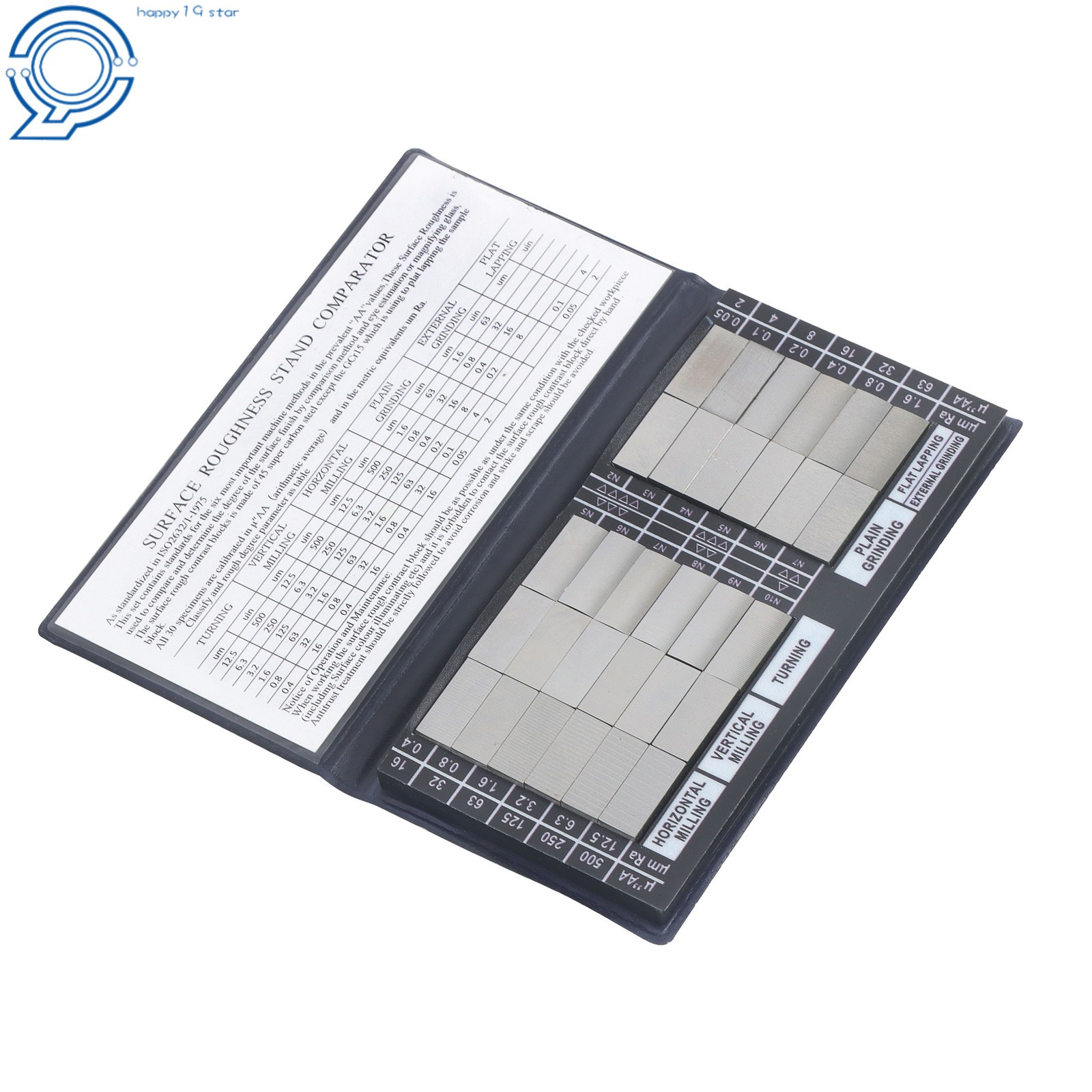
This comparator comes with 30 roughness specimens and covers six processing methods: horizontal milling, vertical milling, turning, plain grinding, flat lapping, and external grinding. It's a good fit if you want a single reference set for common shop finishes. The limitation is that it works by visual and tactile comparison, so you don't get a numerical roughness value. It comes in new condition with a one-year warranty and is made in the United States.
Quick verdict
For shops that need a fast, hands-on way to differentiate surface finishes, this comparator is a straightforward choice. It does not output numerical Ra values, but it helps you match a part to a reference sample across common machining processes.
Who it suits
It suits machinists, CNC operators, and quality inspectors who work with milled, turned, or ground surfaces. It is also appropriate for training environments where people need to learn what different finishes look and feel like.
What stands out
The main advantage is the 30-specimen set, giving you a wide spread of roughness levels to compare against. Because the set includes surfaces from horizontal milling, vertical milling, turning, plain grinding, flat lapping, and external grinding, you can match parts produced by different processes without needing a separate reference for each.
Meaningful trade-offs
The trade-off is that this is a comparator, not a digital roughness tester, so you rely on your eye and touch to find the closest match. The set includes 30 specimens, which covers many common finishes, but it is a fixed selection. At USD 72.28, you're paying for a reference tool that supports visual inspection rather than a digital measuring instrument.
Bottom line
If you need a straightforward way to compare surface roughness in everyday machine inspection, this 30-specimen comparator covers the most common machining methods. It won't replace a digital profilometer, but it gives you a practical, hands-on reference for your workbench.