Quick Verdict
When you're outfitting a lab heating, cooling, and vacuum station, the real decision isn't which machine is better overall. It's whether your work needs dry hot air or a precisely controlled liquid temperature. A drying oven moves heated air around items to evaporate moisture, while a chiller circulator moves temperature-controlled liquid through a tank or external devices. They both manage temperature, but they handle very different materials. The forced-air drying oven is a straightforward tool for heating and drying objects, while the recirculating chiller handles both cooling and heating through a liquid loop. Let your daily workflow be the tiebreaker.
Comparison
| Product | Listed Price | Key Specs | Best Fit |
|---|---|---|---|
| Lab Industrial Digital Forced Air Convection Drying Oven Laboratory 1000W USLE | $395.80 | 110V, 1000W, ±1°C temperature fluctuation, 35×35×35cm interior | Drying glassware, samples, and instruments with even hot air |
| Laboratory Chiller Circulator 6L Lab Recirculating Chiller 23°F-212°F | $740.34 | 6L recirculating chiller, 23°F to 212°F, 0.01°C display accuracy, 304 stainless steel tank | Precise cooling and heating of liquid loops for reactions and preservation |
Where Each Product Wins
The drying oven wins when your lab needs consistent dry heat for routine drying and heat conditioning. Its forced-air convection gives you a practical way to process multiple items at once. It focuses on one job: dry heat.
The chiller circulator wins when you need both cooling and heating in one unit and the flexibility to connect liquid flow to external equipment. The 0.01°C display accuracy adds confidence when a reaction or sample needs tight temperature tracking.
Product Notes
Lab Industrial Digital Forced Air Convection Drying Oven Laboratory 1000W USLE
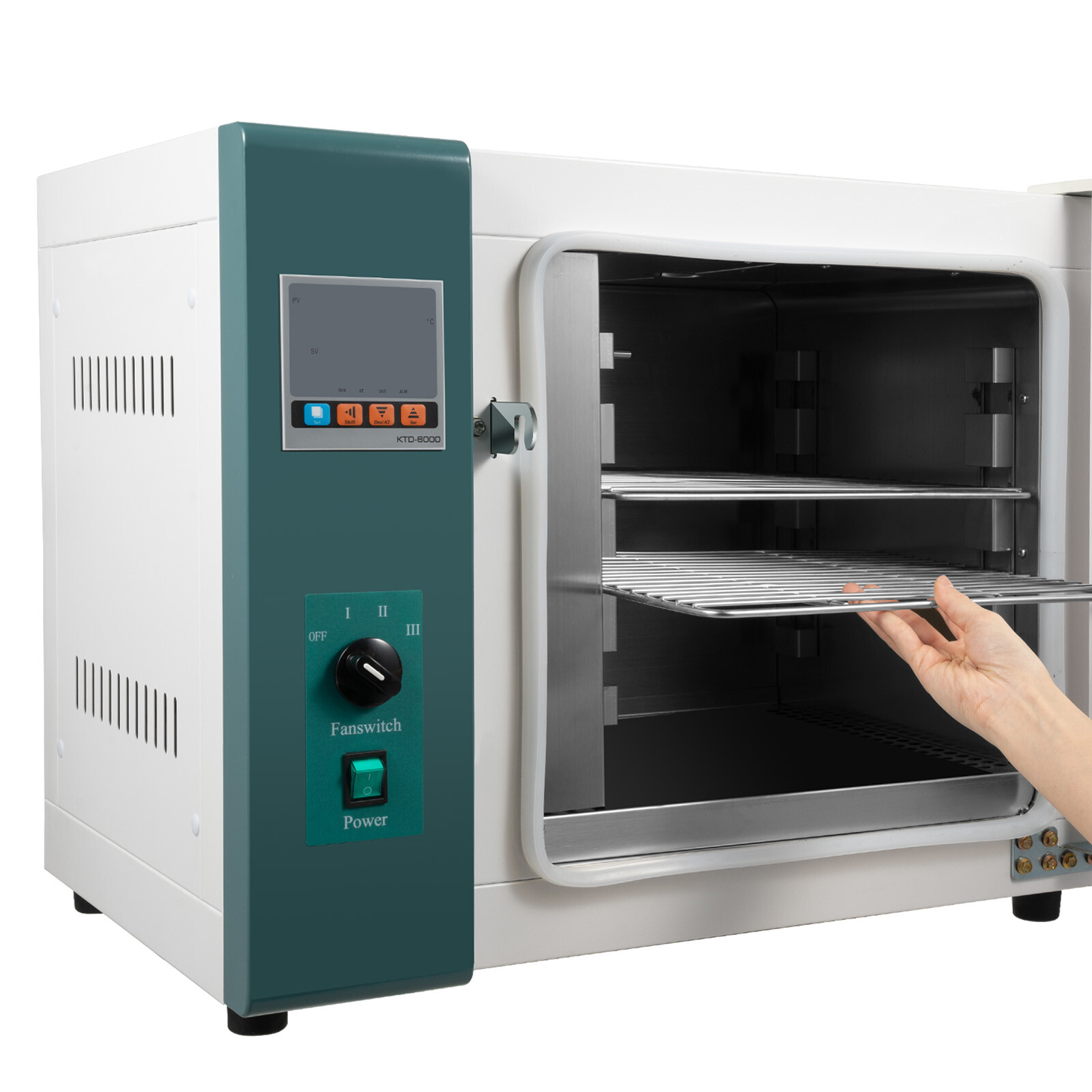
For labs that mainly dry instruments and materials, this forced-air convection oven supplies 1000W of heated airflow with a listed temperature fluctuation of ±1°C. The interior measures 35×35×35cm, and the unit's overall footprint is 47×66×53cm, which takes up a noticeable amount of bench space. It runs on 110V power. Its listed price of $395.80 makes it the less expensive option here. The listed description highlights even, precise drying and a large usable space for messy or bulky loads. It also emphasizes drying and heating rather than liquid temperature control, so it is best treated as a dry-heat tool rather than an all-in-one temperature station.
Laboratory Chiller Circulator 6L Lab Recirculating Chiller 23°F-212°F
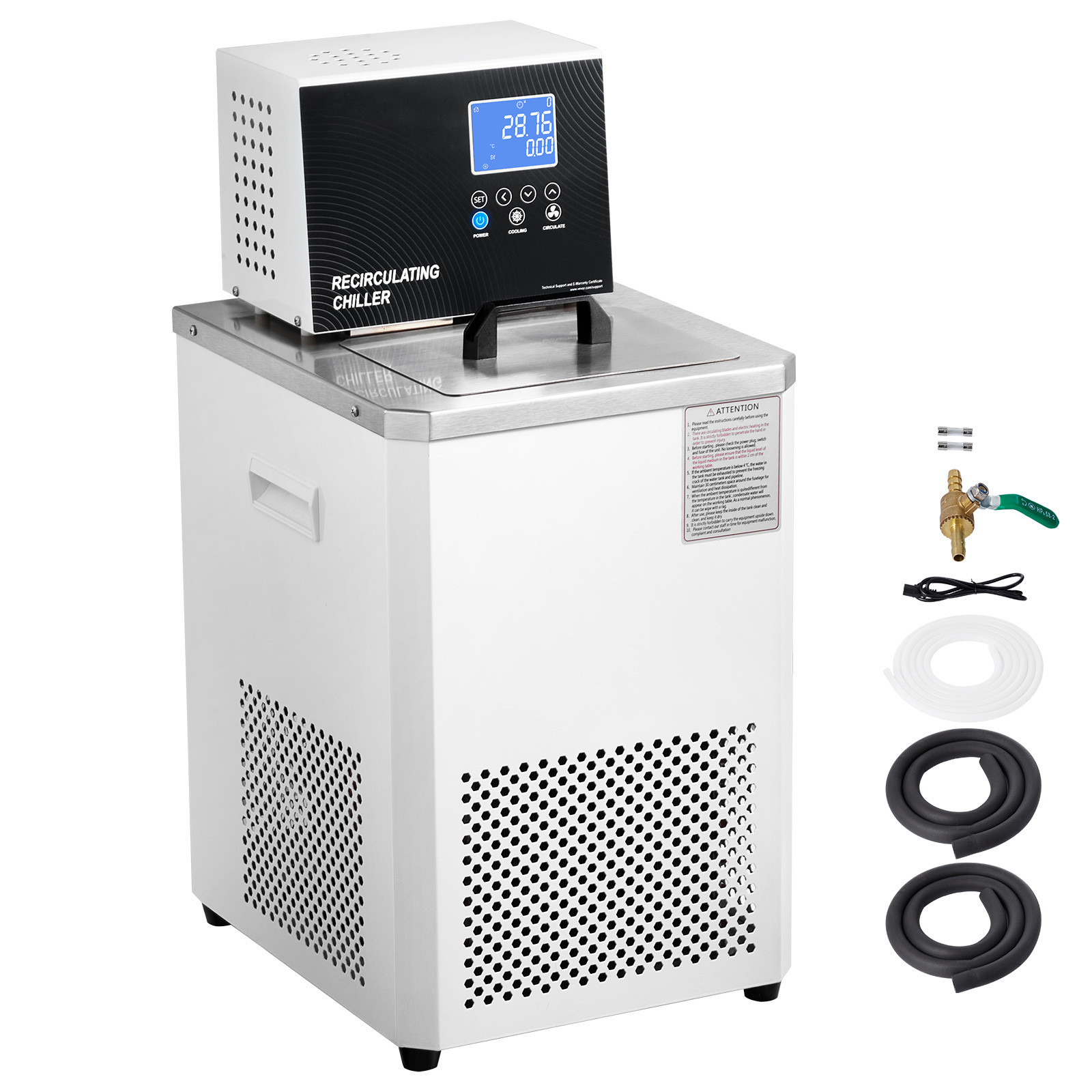
The Laboratory Chiller Circulator 6L is the temperature-control heavyweight in this pairing. Its internal and external circulation modes let you maintain uniform temperature within the tank or supply temperature-controlled liquid to external equipment, and its listed range of 23°F to 212°F covers both cooling and heating. The tank is made of 304 stainless steel. Its listed price of $740.34 is the higher investment here, but it buys a much broader set of thermal capabilities. The limitation is fit: this is a circulator, not a drying oven, so if your daily routine is passing hot air over glassware and instruments, you'd be paying for liquid-loop functionality you won't use. The unit is also heavy at 54.5 lbs, so plan bench space and lifting.
Final Choice by Use Case
Pick the Lab Industrial Digital Forced Air Convection Drying Oven if your priority is reliable dry heat for glassware, tools, and samples. Pick the Laboratory Chiller Circulator if your experiments, sample preservation, or connected equipment depend on a temperature-controlled liquid loop. For labs that need both, the chiller's circulation flexibility gives it an edge in a shared bench, while the oven remains the focused solution for straightforward drying work.