Choosing between two new lab balances usually comes down to one decision: do you need milligram-level accuracy, or do you need a scale that can handle samples across a wide capacity range? The Prime Scales PS-203 analytical balance and the DentisLAB multi-range lab scale sit at different points on that spectrum, and their listed prices reflect that.
Quick Verdict
If your work requires very high precision and a stable weighing environment, the Prime Scales PS-203 is the clear choice. If you need a lower-cost scale that can handle a wide range of sample sizes, the DentisLAB is the practical pick. The Prime model offers finer readability; the DentisLAB offers a much wider capacity range at a substantially lower listed price. Your decision comes down to the tolerance you need and the size of the samples you weigh.
Listed Price and Feature Comparison
| Feature | Prime Scales PS-203 | DentisLAB Multi-Range |
| Listed Price | USD 389.99 | USD 62.99 |
| Price Bar | | |
| Readability | 0.001 g (1 mg) | 0.01 g |
| Capacity | 200 g | 600 g / 1000 g / 3000 g |
| Key Extras | Glass draft shield, stainless steel pan, tare/zero functions | Counting function, skinning function, auto-shutdown, removable pan |
How to Decide
If your work is mostly analytical, with small samples and a need for tight readability, the higher-priced model is the better match. If you weigh a variety of materials in larger quantities, the lower-priced scale offers a broader capacity window for a lower initial investment. Consider the sample sizes you handle and the smallest change that matters in your results. Think about the highest capacity you will realistically need, and choose a scale that stays within that range.
Where Each Scale Wins
- The Prime Scales PS-203 wins on precision: higher resolution and a design that supports accurate readings.
- The DentisLAB wins on range and price: higher capacity options, plus a much lower listed price.
Product Notes
Prime Scales PS-203 Analytical Balance
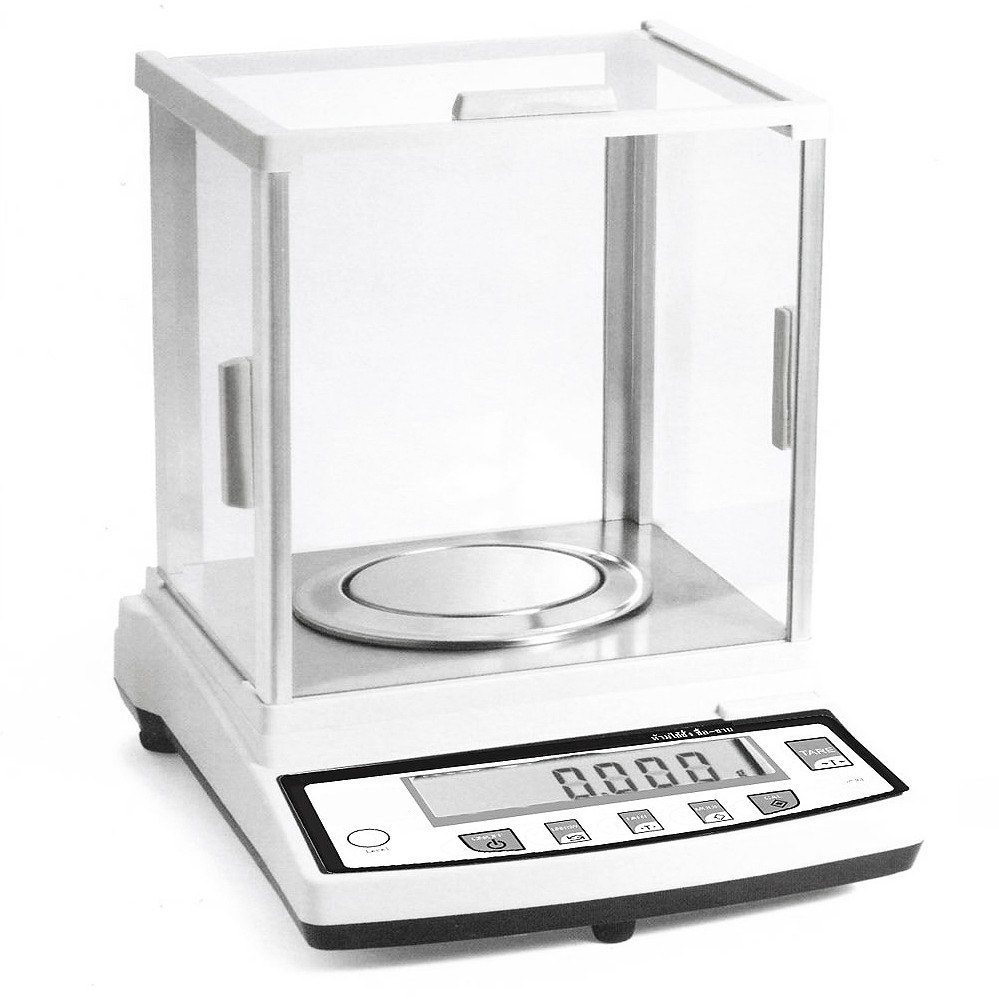
This balance provides 0.001 g readability and a glass draft shield, so you can weigh small samples without as much worry about air currents. The stainless steel pan and tare/zero functions support routine analytical work. The high-contrast LCD display, multiple weighing units, fast stabilization time, and adjustable leveling feet make it easy to read and set up. The capacity is 200 g, which means anything heavier will not fit this scale. It is the higher-priced option in this comparison. If your process depends on milligram-level readings and a stable weighing environment, this is the scale to use.
DentisLAB Multi-Range Lab Scale
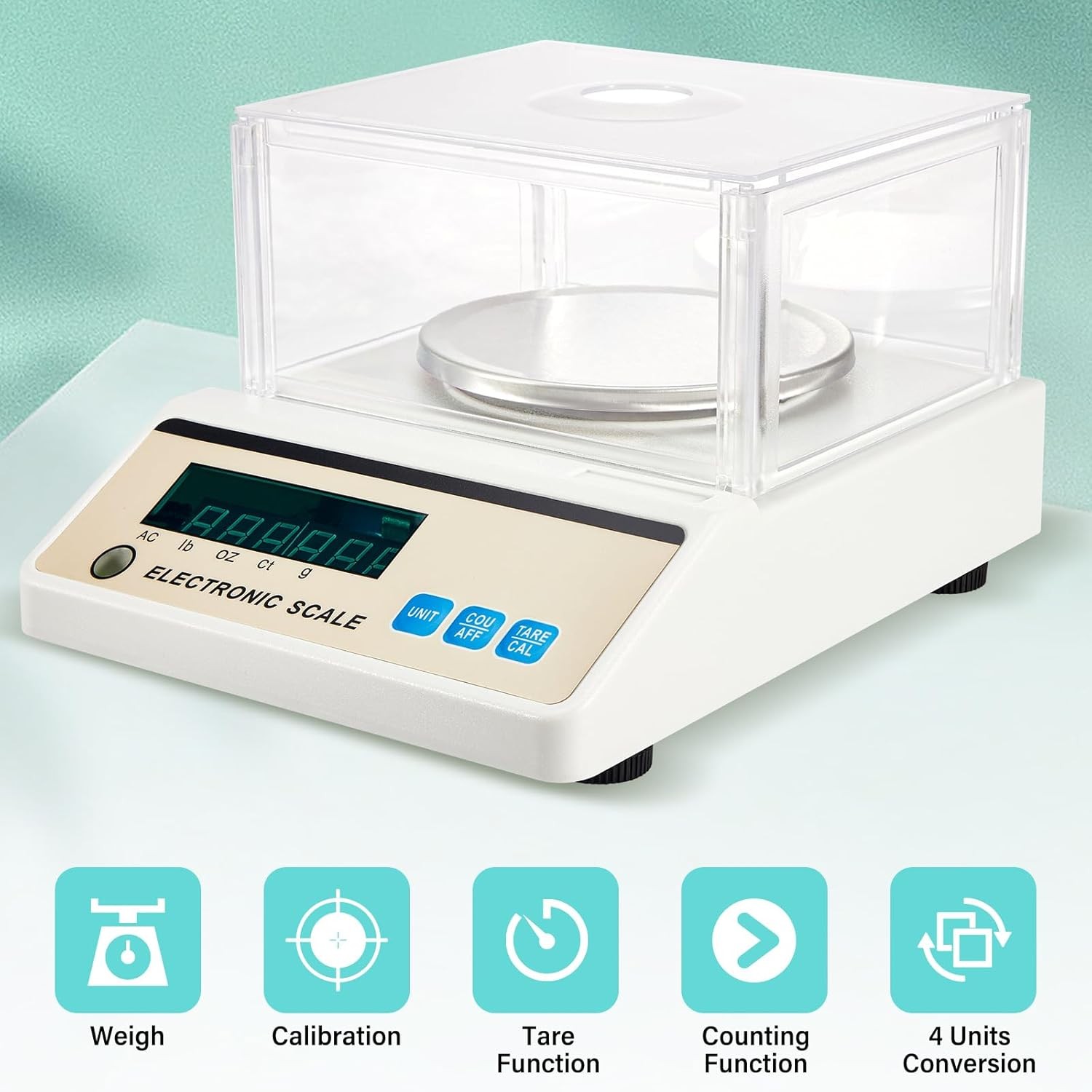
The three capacity options in the title-600 g, 1000 g, and 3000 g-let this scale handle a wider range of sample sizes than the PS-203. It also includes counting and skinning functions, auto-shutdown, and a removable pan. The readability is 0.01 g with an error range of ±0.03 g, so it won't measure as finely as the PS-203. It runs on 2 AAA batteries (not included) and uses 500 g or 1000 g calibration weights. For routine lab and teaching work, these specifications provide enough accuracy for many everyday tasks. The scale is the lower-priced choice in this head-to-head.
Final Choice by Use Case
Choose the Prime Scales PS-203 for analytical chemistry, pharmaceutical compounding, or quality control where milligram-level precision matters. Choose the DentisLAB for routine lab weighing, teaching, or applications that need larger capacity options without the same resolution. Each scale serves a different weighing profile, so your answer depends on whether precision or range is the priority.