When you're shopping for multimeters electrical testers, you'll find two very different tools competing for your attention. One is a dedicated voltage tester that quickly tells you whether a wire is live. The other is a full digital multimeter that measures voltage, current, resistance, and more. Which one should you buy? The answer depends on whether you need a fast safety check or a broad set of electrical readings.
Quick Verdict
If your work is mostly about checking whether outlets, switches, and cables are energized before you touch them, the AC Voltage Tester/Non-Contact Voltage Tester with Dual Range AC 12V-1000V is the focused, convenient choice. If you want a single tool that measures AC and DC voltage, current, resistance, continuity, and diodes, the Digital Multimeter LCD Voltmeter Ammeter Ohmmeter Volt AC DC Tester Lead Meter is the more versatile pick.
Price and Feature Comparison
| Product | Price | Best For | Standout Feature |
|---|---|---|---|
| AC Voltage Tester/Non-Contact Voltage Tester with Dual Range AC 12V-1000V | USD 12.99 | Quick live-wire checks | Dual-range detection with built-in flashlight |
| Digital Multimeter LCD Voltmeter Ammeter Ohmmeter Volt AC DC Tester Lead Meter | USD 8.95 | Measuring voltage, current, resistance, and continuity | Auto-ranging display with backlight |
Where Each Product Wins
The AC Voltage Tester wins for speed, safety, and convenience. It lets you check for live AC voltage without direct wire contact, and its dual-range sensitivity supports both low and high voltage detection. The built-in flashlight and automatic shut-off make it a practical tool for working in dim locations.
The Digital Multimeter wins for versatility. It covers far more measurement functions than a simple tester. For troubleshooting circuits, checking outlets, or working on electronics, the multimeter gives you concrete numbers instead of a go/no-go signal.
Product Notes
AC Voltage Tester/Non-Contact Voltage Tester with Dual Range AC 12V-1000V
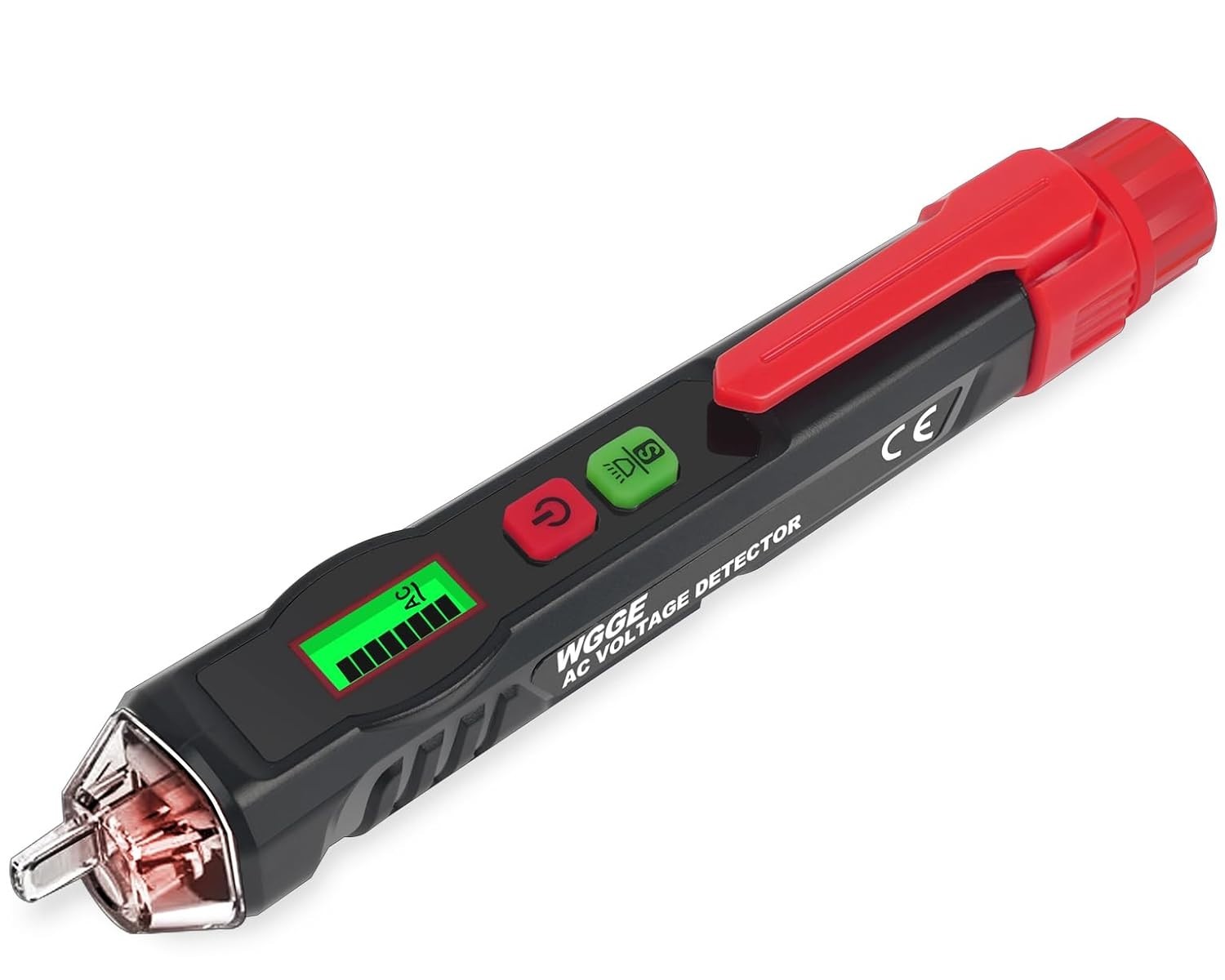
This dedicated tester is built around one job: detecting AC voltage. You can switch between a low 12-1000V range and a high 48-1000V range, and the non-contact probe lets you inspect outlets, wires, and terminals without direct contact. A red light indicates high voltage, green indicates low voltage, and the beeping gets faster as you approach a live source. The integrated LED flashlight helps in dark spaces, and the automatic shut-off preserves battery life when you forget to turn it off. The main trade-off is that this is a detection tool, not a measuring tool: you get a visual and audible signal, not a numerical voltage reading. If your task is simply confirming that a circuit is live or dead, this tester gets the job done quickly.
Digital Multimeter LCD Voltmeter Ammeter Ohmmeter Volt AC DC Tester Lead Meter
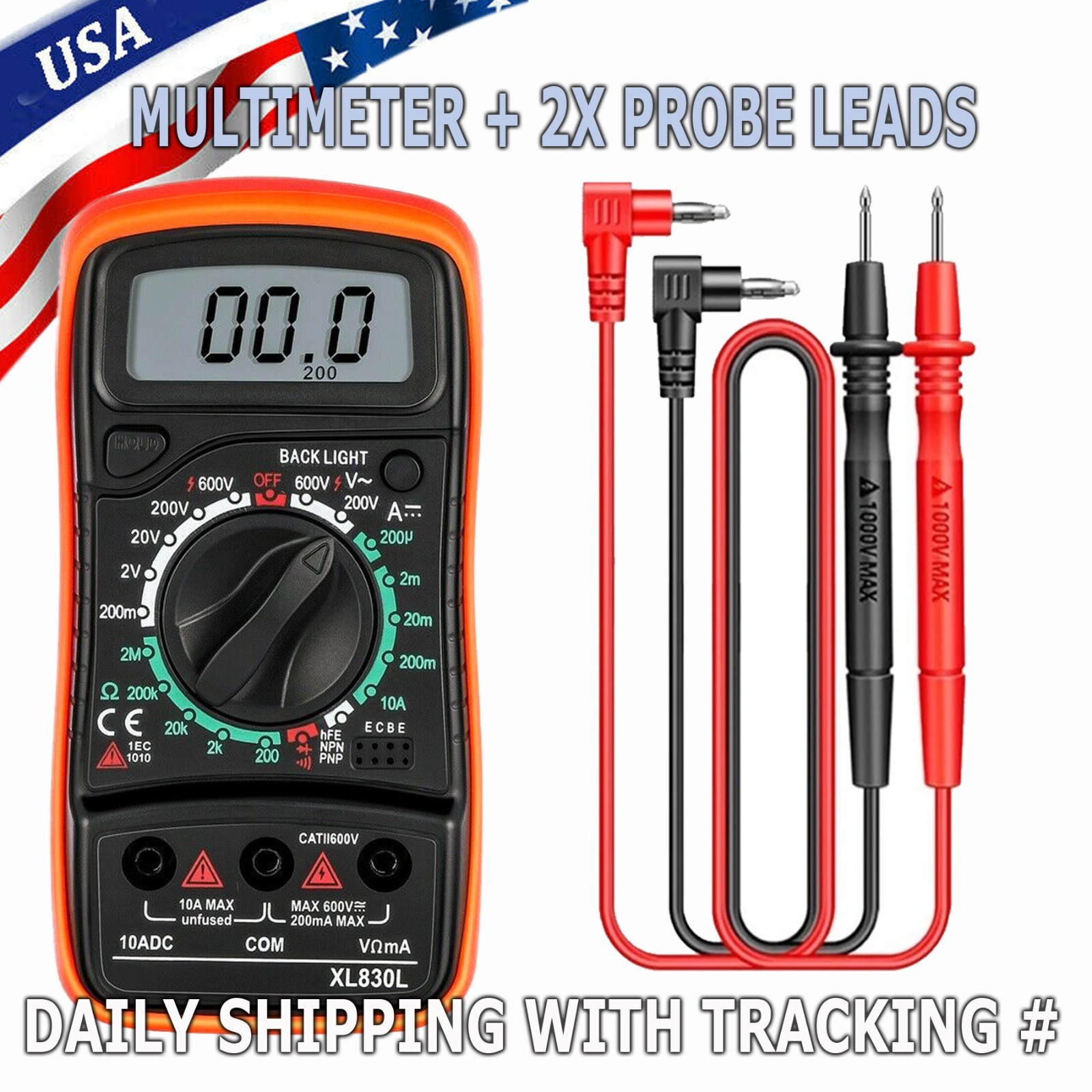
For measurements, this digital multimeter packs a lot of capability into a compact body. It handles AC and DC voltage, AC and DC current, resistance, capacitance, continuity, and diode testing, with auto-ranging that adjusts the reading scale automatically. The backlit display makes it easier to read in dim conditions, and data hold lets you freeze a reading after the probes are removed. The test leads require direct contact with the circuit, so it is better suited for hands-on measurements than for quick safety sweeps. But for diagnosing why an outlet isn't working, checking battery voltage, or measuring resistance in a component, this meter gives you precise numbers for just $8.95.
Final Choice by Use Case
Choose the AC Voltage Tester when your priority is a fast, safe check before working on wiring. Its dual-range settings and built-in flashlight are ideal for confirming that power is off or tracing live wires.
Choose the Digital Multimeter when you need to know not just whether voltage exists, but what the readings are. If you're measuring batteries, testing fuses, checking continuity, or working on low-voltage electronics, the multimeter's extra functions make it the better everyday tool.