When you're working in spectroscopy analysis and detection, the instrument you choose depends on what you're trying to see. The Ocean Optics USB2000+ Spectrometer and the Thermo RadEye PRD both belong in a broad detection toolbox, but they answer different questions. One measures the wavelengths of light; the other senses radiation. This head-to-head helps you decide which fits your work.
Quick Verdict
If your job involves measuring light across the ultraviolet, visible, and near-infrared ranges, the Ocean Optics USB2000+ is the more useful tool for the money. It includes working software and covers a wide spectral span. If you need to detect gamma and photon radiation in the field, the Thermo RadEye PRD is the purpose-built choice for personal radiation monitoring.
Comparison Table
| Product | List Price | Relative Price | Best For |
|---|---|---|---|
| Ocean Optics USB2000+ Spectrometer | USD 418.00 | Optical wavelength analysis | |
| Thermo RadEye PRD | USD 995.00 | Gamma and photon detection |
The two instruments sit $577 apart. The spectrometer is the more affordable entry point, while the radiation detector is priced for a different class of work.
Where Each Product Wins
Where the Ocean Optics USB2000+ Wins
- Measures light from 340nm through the near-infrared at 1034nm.
- Uses a 2048-pixel CCD detector.
- Includes official free software.
- Listed at USD 418.00.
Where the Thermo RadEye PRD Wins
- Detects gamma and photon radiation with high sensitivity.
- Tracks count rate and accumulated dose.
- Comes with independent calibration, identified as 2026.
- All menus are unlocked and a 1-year guarantee is included.
Product Notes
Ocean Optics USB2000+ Spectrometer
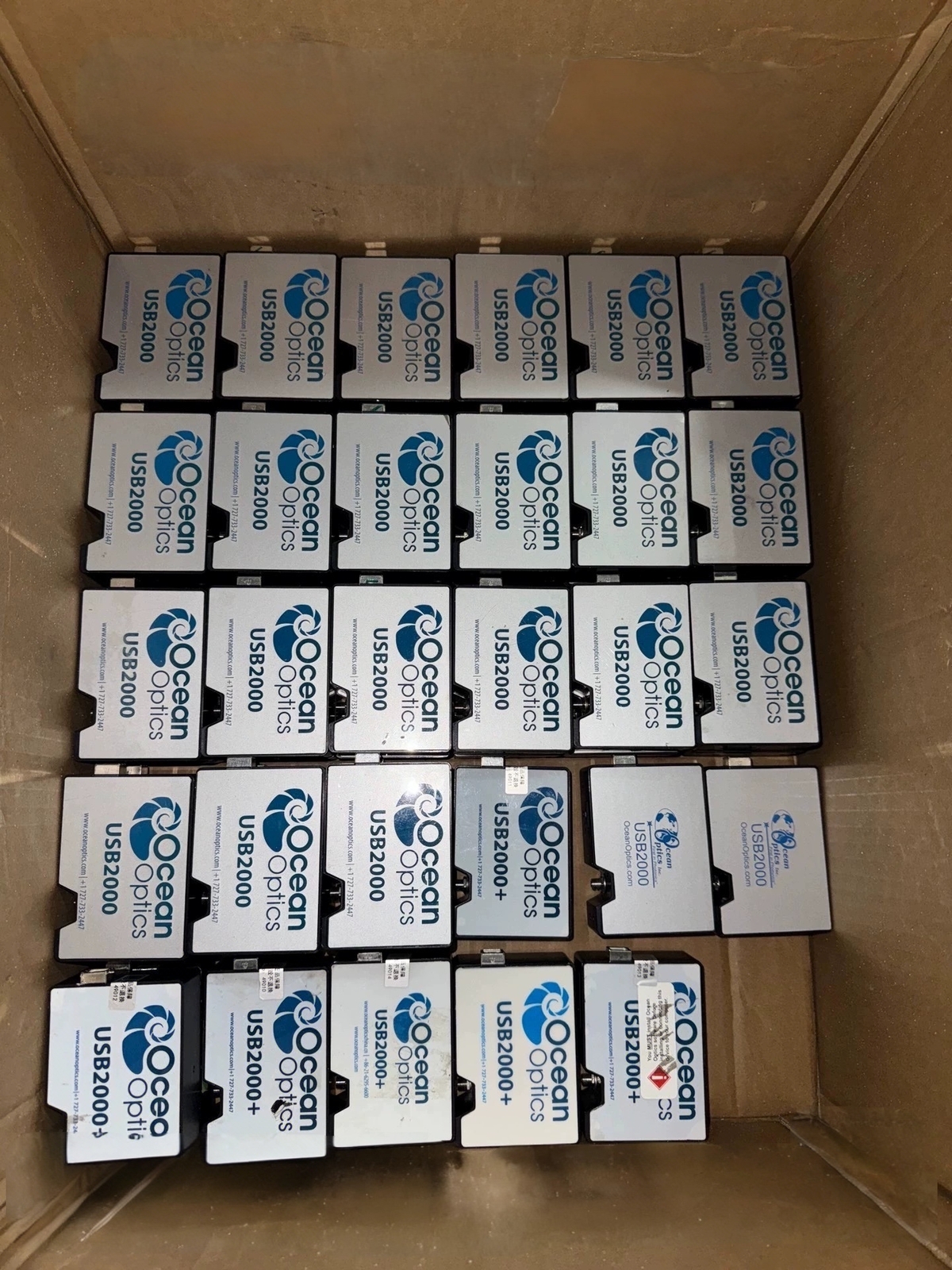
This tested miniature fiber spectrometer offers a practical path into optical spectroscopy without a huge investment. Its 340-1034nm range covers ultraviolet, visible, and part of the near-infrared, which suits tasks like checking light sources, analyzing spectral lines, or measuring color and emission. The official included software is free, fully functional, and permanently valid, so you can start taking spectra soon after setup. The unit is almost brand new with intact functions, and the wavelength is re-calibrated before shipment with deviation under 0.3nm. On the downside, this is a used instrument, so you're purchasing a tested, recalibrated unit rather than a brand-new one. Also, the range stops at 1034nm, so it won't handle deep-infrared work.
Thermo RadEye PRD
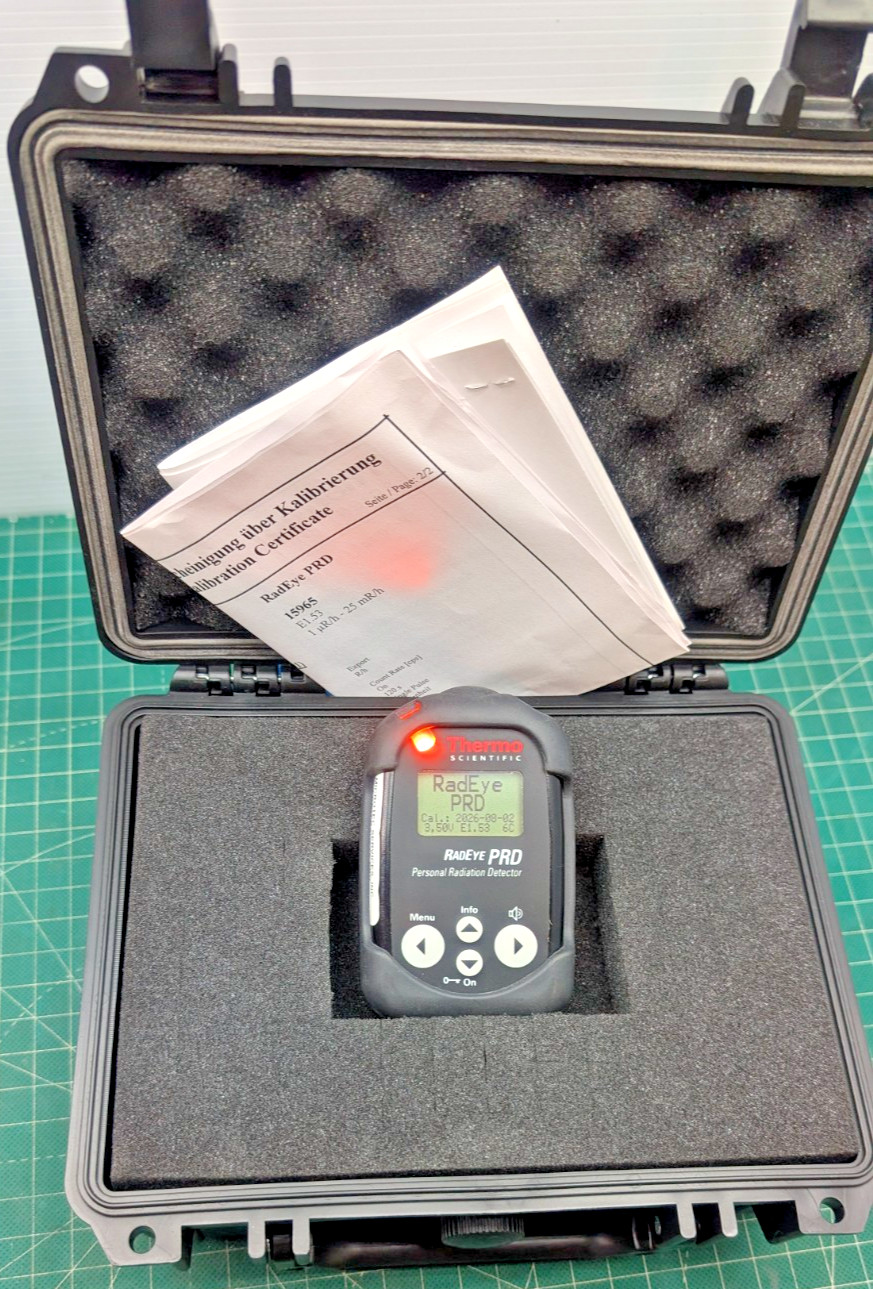
The Thermo RadEye PRD is a compact personal radiation detector built for one job: alerting you to gamma and photon radiation. It handles source detection, count rate monitoring, dose rate measurement, and accumulated dose tracking, making it a solid companion for anyone working around radioactive material. This refurbished unit comes with all menus unlocked and is calibrated by an independent provider, and it is identified as a 2026 calibration. It's configured in R-based units, with an option to switch to Sv-based units before shipment. The 1-year guarantee adds peace of mind. The trade-off is the price: at USD 995.00, it costs more than the spectrometer, and it doesn't perform optical wavelength analysis. If your work is purely about light spectra, this isn't the tool.
Final Choice by Use Case
- Choose the Ocean Optics USB2000+ if you need to analyze light across UV, visible, and near-infrared wavelengths and want a ready-to-use spectrometer at a lower price.
- Choose the Thermo RadEye PRD if your work involves radiation source detection and you need a portable monitor.
- For budget-conscious optical work, the Ocean Optics spectrometer is the practical pick.
- For radiation work, the RadEye is the dedicated tool.