Choosing a USB spectrometer for spectroscopy analysis and detection usually comes down to wavelength coverage, instrument condition, and what you are willing to spend. The Ocean Optics USB2000+ and the ThunderOptics Mini USB Spectrometer sit at opposite ends of that decision: a wider-range instrument at $418 and a portable visible-range unit at $199.
Quick Verdict
If your projects call for a wider spectral window, the Ocean Optics USB2000+ is the more capable choice, but it demands a higher budget. If you want a portable visible-range spectrometer for less, the ThunderOptics Mini USB Spectrometer is the simpler pick for education, demonstrations, and hobby work.
At a Glance
| Product | Price | Wavelength Range | Condition |
|---|---|---|---|
| Ocean Optics USB2000+ | USD 418.00 | 340-1034 nm | Used |
| ThunderOptics Mini USB Spectrometer | USD 199.00 | 350-850+ nm | New |
Where Each Product Wins
- Ocean Optics USB2000+ wins for wider spectral coverage. The fiber input and broader spectral reach make it a better fit when you need measurements beyond the visible spectrum.
- ThunderOptics Mini USB Spectrometer wins for a lower entry price. It is a French-made aluminum unit, so it can be easier to justify when budget is a priority.
Product Notes
Ocean Optics USB2000+ Spectrometer
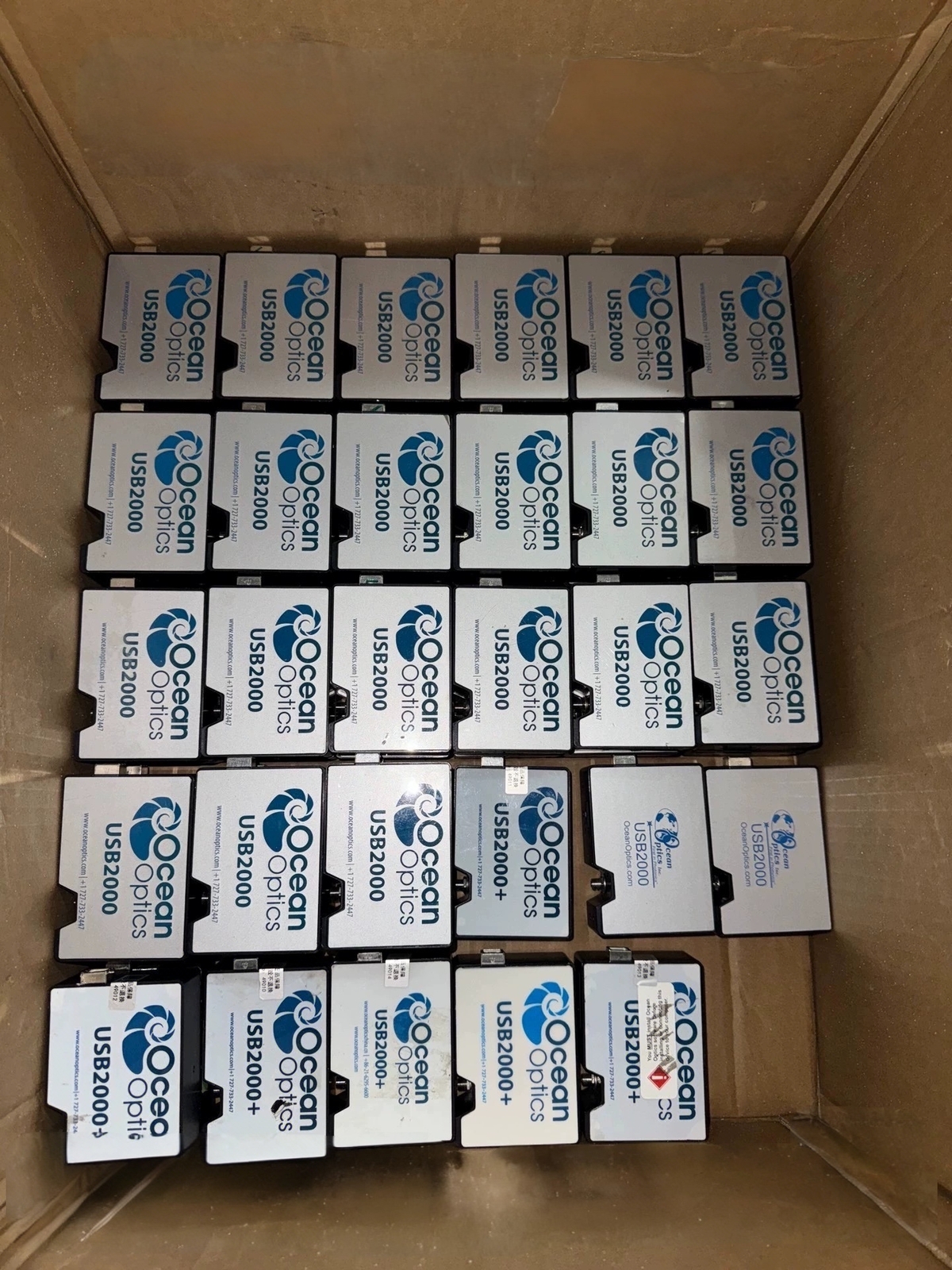
The Ocean Optics USB2000+ makes sense when you need a compact fiber spectrometer that can see beyond the visible range. Its 340-1034 nm window opens up UV and near-infrared work, and the 2048-pixel Sony ILX511B CCD gives it a solid foundation for spectral illuminance measurements. The unit is recalibrated before shipment, with wavelength deviation under 0.3 nm, and the official software is free and permanently valid. The catch is condition and price: it is a used unit, and it asks noticeably more from your budget than the ThunderOptics alternative. If your measurements stay in the visible range, you are paying for wavelength coverage you may never use.
ThunderOptics Mini USB Spectrometer
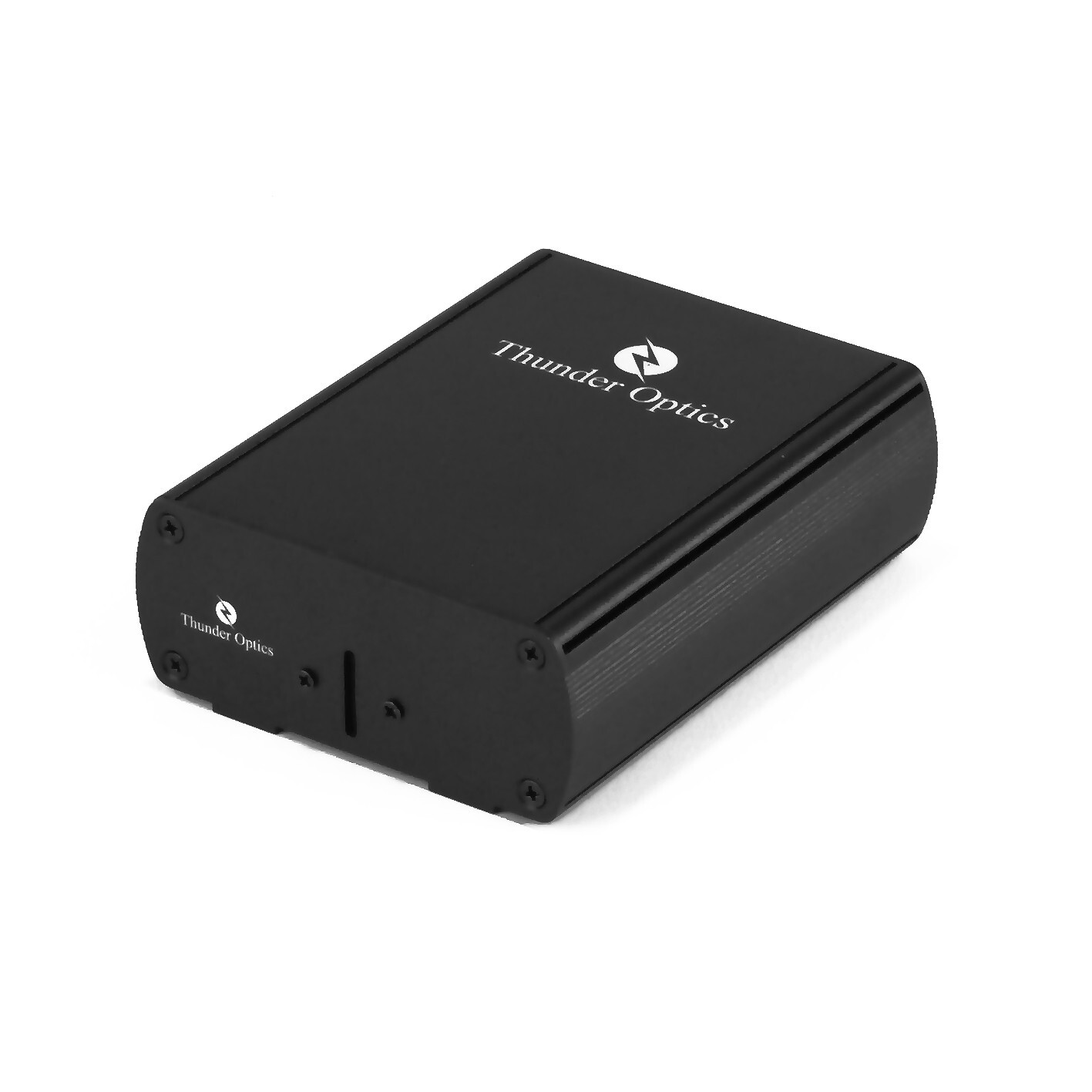
The ThunderOptics Mini USB Spectrometer suits buyers who want a new instrument at a friendlier price. The aluminum body and 350 nm to beyond 850 nm range cover the visible spectrum and into the near-infrared edge, which is plenty for demonstrations and emission tube work. It is an easier recommendation when the instrument will be used by students, hobbyists, or anyone who prefers a clean new unit over a used one. The main limitation is the ±2 nm wavelength accuracy; for high-precision UV or wavelength-critical measurements, that may not be tight enough. It also does not cover the same UV starting point as the Ocean Optics unit, so the Ocean Optics unit remains the better choice when extended coverage matters.
Final Choice by Use Case
- Choose the Ocean Optics USB2000+ if: you need extended spectral coverage, want a fiber-input spectrometer, and are comfortable with a recalibrated unit.
- Choose the ThunderOptics Mini USB Spectrometer if: you want a lower-priced visible-range spectrometer for teaching, demonstrations, or hobby projects, and ±2 nm accuracy is acceptable for your measurements.