When you're comparing multimeters and electrical testers, two compact tools often end up in the same cart: a voltage test pen and an automotive circuit tester. Both are small enough to keep in a drawer, but they solve different problems. The voltage pen is built for broad AC/DC detection, while the automotive probe is focused on DC circuits in vehicles. This head-to-head helps you match the tool to your actual work.
Quick Verdict
If your projects center on household wiring and general AC/DC checks, the Voltage Electric Tester Volt Detector Test Pen AC DC Non-Contact Sensor 12-1000V is the one to keep on your bench. If you spend more time under the hood, the 5-90V DC Digital Circuit Tester Automotive Test Light Car Electrical Probe Tool is the more focused tool for the job.
Comparison Table
| Product | Listed Price | Key Details |
|---|---|---|
| Voltage Electric Tester Volt Detector Test Pen AC DC Non-Contact Sensor 12-1000V | $4.29 | Non-contact sensor, AC/DC 12-1000V, blue-ray digital display |
| 5-90V DC Digital Circuit Tester Automotive Test Light Car Electrical Probe Tool | $4.90 | DC digital display, battery powered, extra probe and large clamp |
Where Each Product Wins
The voltage pen wins when you need a broad range of AC/DC detection and want to check for live circuits without making direct contact. The automotive probe wins when you're working on a car, truck, SUV, or boat and need a clear polarity reading in a tight space.
Product Notes
Voltage Electric Tester Pen

For a compact pen-style tool, the pen packs a surprising number of checks into one body. It can distinguish the null line and find broken points, which is handy when you're tracing a dead outlet. The blue-ray digital display stays readable in dim spots, and the self-check function gives you confidence before you touch a terminal. The insulating ABS shell and CR-V screwdriver bit are practical for light electrical work. The catch is its specialization: it's a pen-style detector, not a full multimeter, and it won't replace a dedicated automotive probe for live circuit testing in a car.
5-90V DC Digital Circuit Tester
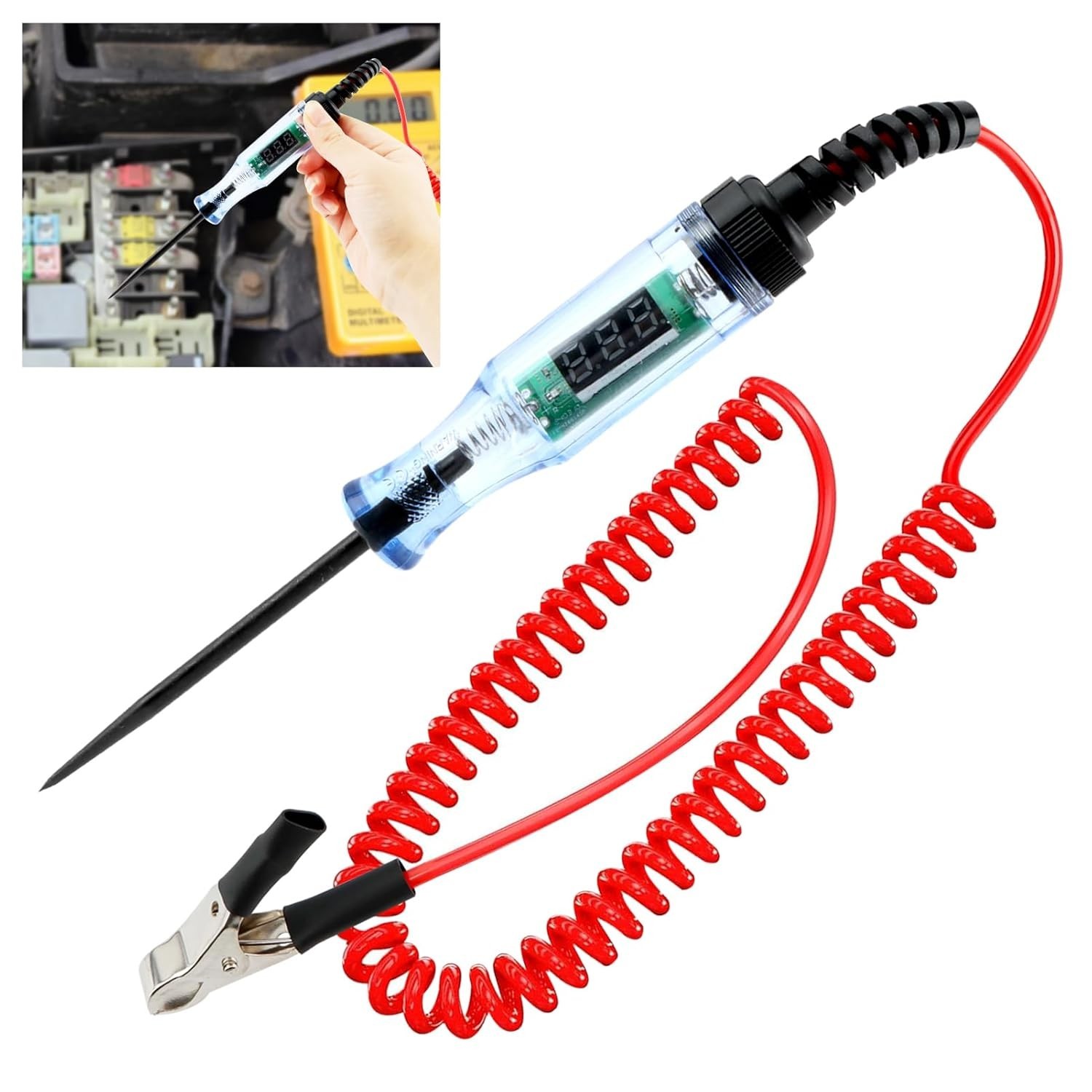
The probe is designed for vehicle electrical work from the start. Its digital display flips between red for positive and green for negative, so you can check polarity at a glance while probing wires. The package includes an extra probe and a large clamp, which helps when you're working around a cramped engine bay or testing a trailer connector. It's battery powered and slim, so it stores easily in a glovebox or tool roll. The obvious limitation is its focus on DC automotive circuits; if you also need to check household AC outlets or high-voltage lines, this isn't the tool for that job. Pair it with a general voltage pen if your work spans both car and home.
Final Choice by Use Case
If most of your work is around the house-outlets, switches, extension cords-the Voltage Electric Tester is the versatile, lower-cost option to start with. If you're troubleshooting batteries, alternators, or wiring in cars, trucks, SUVs, or boats, the 5-90V DC Digital Circuit Tester is the more focused tool. With just over 60 cents between them, the best move is to match the detector to your most common job.