
Photos from current listings. Actual item, color, and included accessories may vary.
Essential Oil Distillation Equipment Buying Guide
Essential oil distillation equipment for home use centers on borosilicate glassware kits that separate volatile oils from botanical material via steam or hydrodistillation. The primary trade-off is between small 500ml kits with alcohol lamps for occasional batches and larger 1000–2000ml kits with electric heating mantles or plates for sustained runs. The clear decision rule: choose 3.3 borosilicate glass with standard 24/40 ground joints and a matched heat source; skip any kit using soda-lime glass or non-standard joints, which crack under thermal cycling and cannot be expanded.
Median $113.99
Key takeaways
- 3.3 borosilicate glass (coefficient of expansion ~3.3 × 10⁻⁶/°C) resists thermal shock up to ~165°C, while soda-lime glass cracks above ~80°C differential.
- Standard 24/40 taper joints ensure interchangeable condensers, flasks, and receivers across kits and replacement parts; non-standard joints lock you into one vendor.
- 500ml kits suit 50–150g botanical charges; 1000ml handles 200–400g; 2000ml processes 500–800g per run without foaming over.
At a glance
- Category
- Lab Heating, Cooling & Vacuum Equipment
- Last updated
- Nov 28, 2026
Current offers
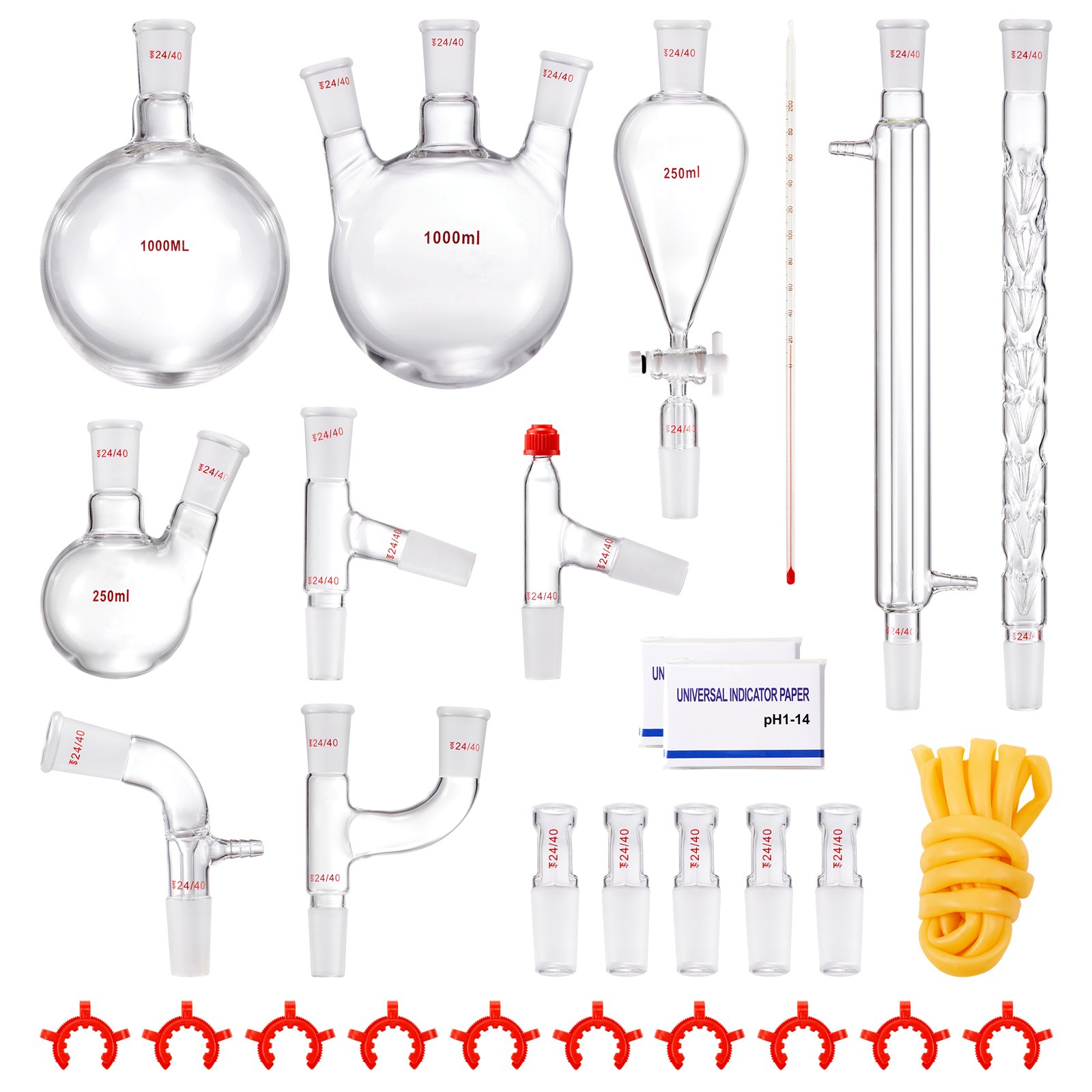 Lab Distillation Kit, 3.3 Boro Lab Glassware Kit With 24, 40 Joint, 1000ml Essential Oil Apparatus Kit, 29 Pcs Set Of Equipment$93.99View on Mallflare
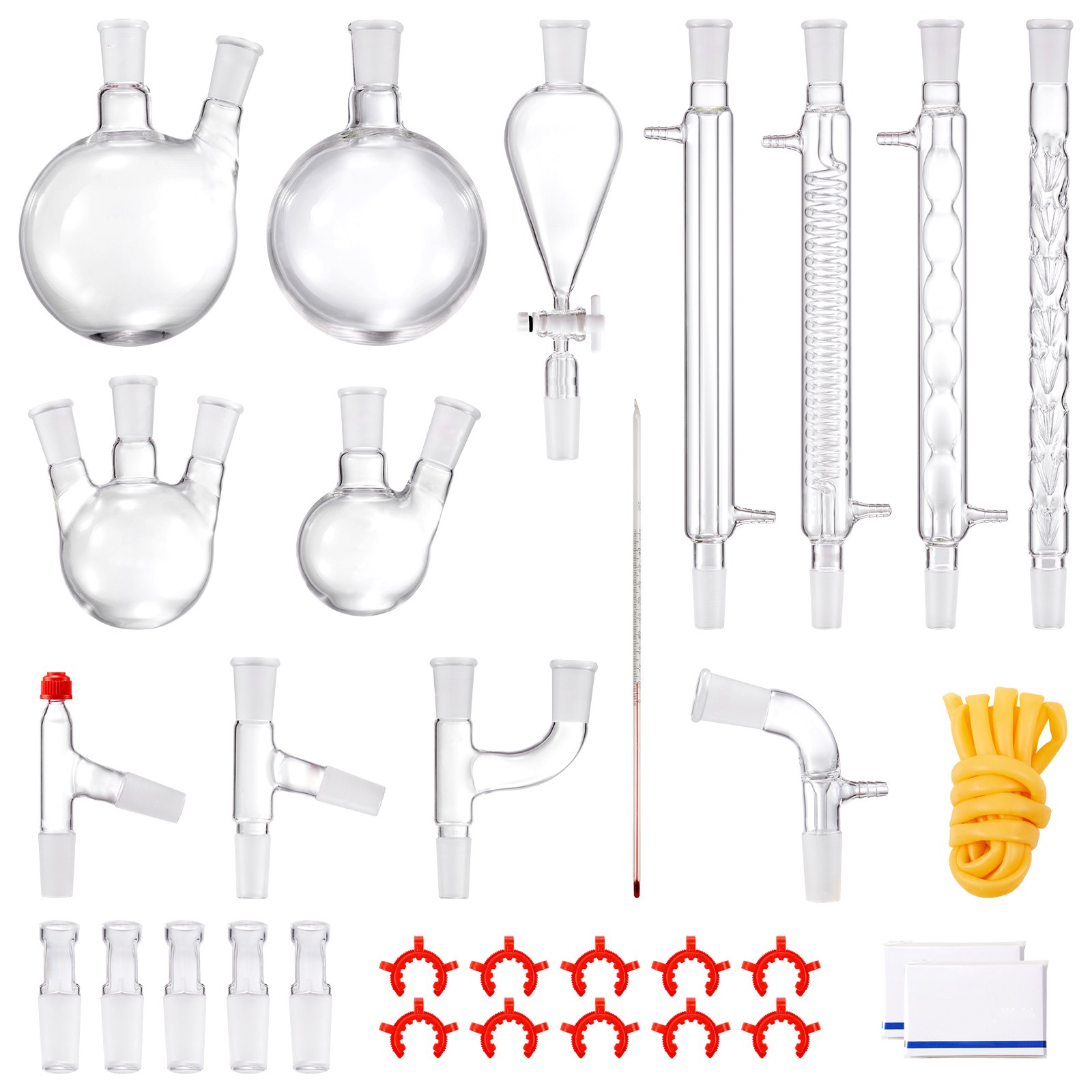 Lab Distillation Kit, 3.3 Boro Lab Glassware Kit With 24, 40 Joint, 1000ml Essential Oil Apparatus Kit, 32 Pcs Set Of Equipment$133.99View on Mallflare
Highlights
- 3.3 borosilicate glass (coefficient of expansion ~3.3 × 10⁻⁶/°C) resists thermal shock up to ~165°C, while soda-lime glass cracks above ~80°C differential.
- Standard 24/40 taper joints ensure interchangeable condensers, flasks, and receivers across kits and replacement parts; non-standard joints lock you into one vendor.
- 500ml kits suit 50–150g botanical charges; 1000ml handles 200–400g; 2000ml processes 500–800g per run without foaming over.
- 1000W heating plates or mantles reach 300–450°C surface temperature for rapid boils, while alcohol lamps deliver only ~200–300W equivalent and uneven heat.
Best use cases
- Best fit: occasional home distillers running 50–150g lavender or citrus peel per session — pick a 500ml kit with alcohol lamp and ceramic mesh for low entry cost.
- Best fit: regular producers doing weekly 200–400g batches — choose a 1000ml kit with 1000W heating plate for stable, repeatable temperature control.
- Best fit: high-volume home or small-batch sellers processing 500–800g per run — select a 2000ml kit with 1000W plate; skip 500ml kits, which require 4–6 runs for the same yield.
- Wrong fit: anyone distilling flammable solvents or high-temperature reactions — these kits lack explosion-proof wiring and grounded heating; use dedicated lab equipment.
Buying tips
- Match flask capacity to botanical charge: 500ml for 50–150g, 1000ml for 200–400g, 2000ml for 500–800g; overfilling above 2/3 capacity causes foaming and oil loss.
- Insist on 3.3 borosilicate and 24/40 joints — these are the universal standards; 24/40 accepts 24/40 stoppers, thermometers, and vacuum adapters from any supplier.
- Pair heating power to volume: 1000W plates are appropriate for 1000–2000ml flasks; 500ml kits run fine on alcohol lamps or 500W plates, but 2000ml on an alcohol lamp will not sustain a boil.
- Count pieces against your workflow: 28–33 piece kits include stands, clamps, and multiple flasks; a 28-piece kit may omit a separatory funnel or thermometer you need for oil collection.
Specs
| Glass Type | 3.3 borosilicate (thermal shock ~165°C) |
|---|---|
| Joint Standard | 24/40 ground glass taper |
| Flask Capacity | 500ml / 1000ml / 2000ml |
| Heat Source | Alcohol lamp vs 1000W plate/mantle |
Related searches
What to check before buying
- Measure benchtop space: 2000ml kits with stands and condensers require at least 30 × 20 inches of clear, heat-resistant surface.
- Confirm electrical supply: 1000W heating plates draw ~8.3A at 120V; ensure a dedicated 15A circuit and no daisy-chained power strips.
- Check ventilation: distillation produces volatile organic vapors; run under a fume hood or in a room with cross-ventilation and no open flame near alcohol lamps.
- Verify glassware arrives with joint clips and keck clips — without them, 24/40 joints separate under vacuum or thermal expansion, causing leaks and breakage.
FAQ
Data sources: eBay / Amazon listings and product attribute feeds. Updated Nov 28, 2026.
Some links on this page are affiliate links. If you buy after clicking one, we may earn a commission at no extra cost to you. This does not change which products appear here or their order. Affiliate disclosure.