
Photos from current listings. Actual item, color, and included accessories may vary.
Amp Clamp Multimeter Buying Guide
An amp clamp multimeter combines a hinged current transformer jaw with standard DMM functions to measure AC/DC current without breaking the circuit. The decisive trade-off is jaw size and measurement architecture: large-jaw true-RMS models with dedicated DC Hall-effect sensing handle thick conductors and non-sinusoidal loads, while slim AC-only budget clamps suit residential branch circuits only. Buy a true-RMS clamp rated for the conductor diameter and current type you actually service, and skip any clamp whose jaw cannot fully enclose your largest cable.
Median $14.91
Key takeaways
- True RMS (root-mean-square) circuitry is mandatory for accurate readings on variable-frequency drives, dimmers, and switch-mode supplies; averaging clamps misread distorted waveforms by double-digit percentages.
- DC current measurement requires a Hall-effect sensor in the jaw, not a simple AC current transformer; many inexpensive clamps are AC-only despite 'clamp meter' labeling.
- Jaw opening diameter sets the maximum conductor size: 1-inch jaws clear 4/0 AWG cable, while 2-inch jaws are needed for multiple parallel feeders and busbars.
At a glance
- Category
- Multimeters & Electrical Testers
- Last updated
- Nov 28, 2026
Current offers
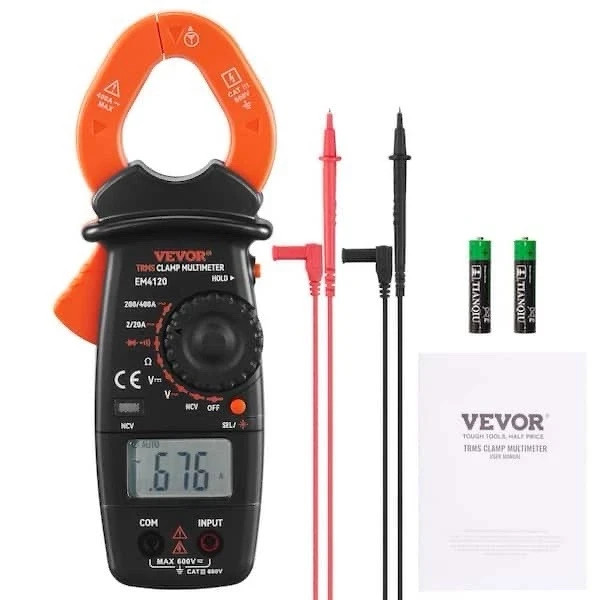 400 Amp Digital Clamp Meter DC/AC Multimeter True RMS Auto Ranging 2000 Max Read$4.99View on eBay
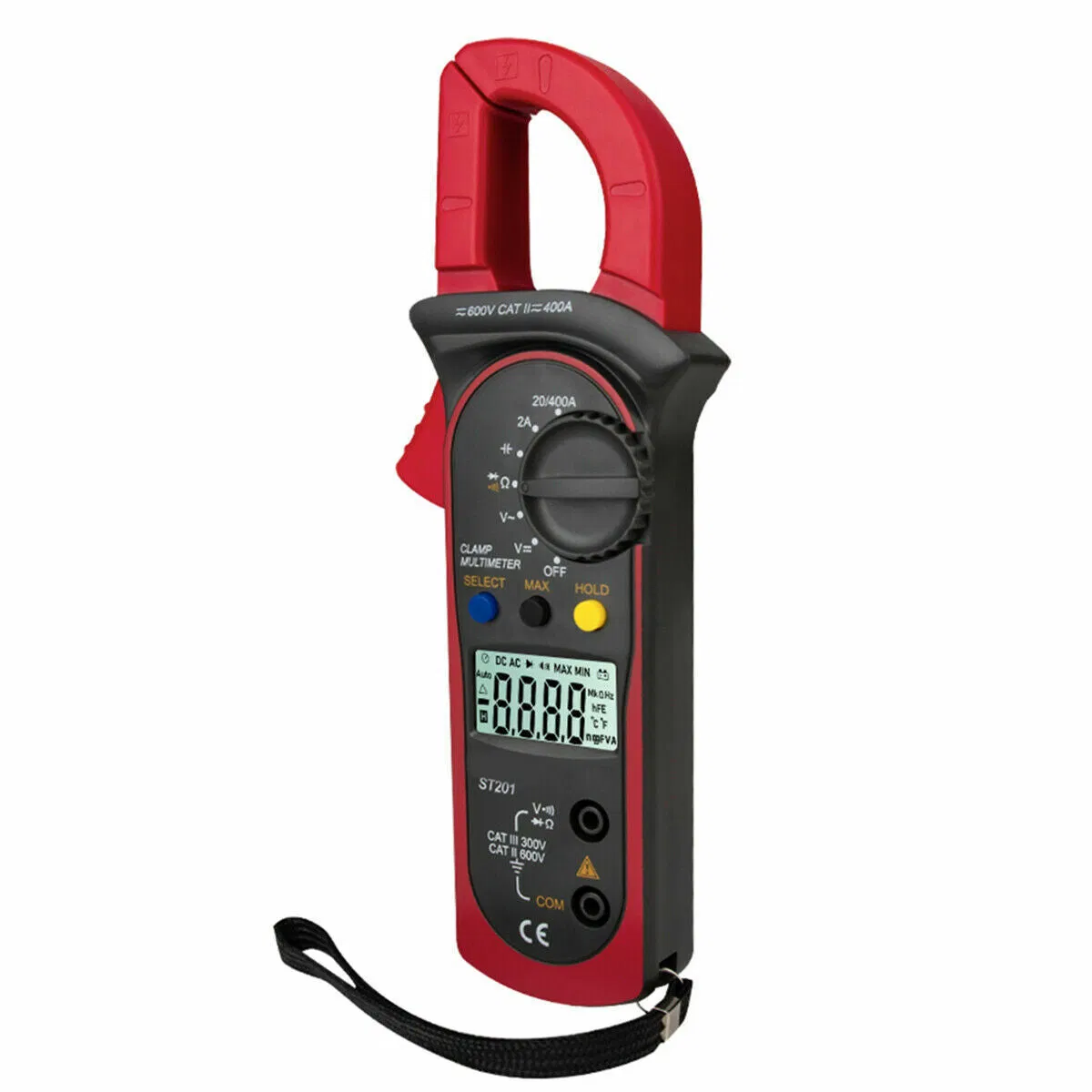 Digital Multimeter Tester AC DC Volt Ohm Amp Clamp Meter Auto Range LCD Handheld$29.99View on Mallflare
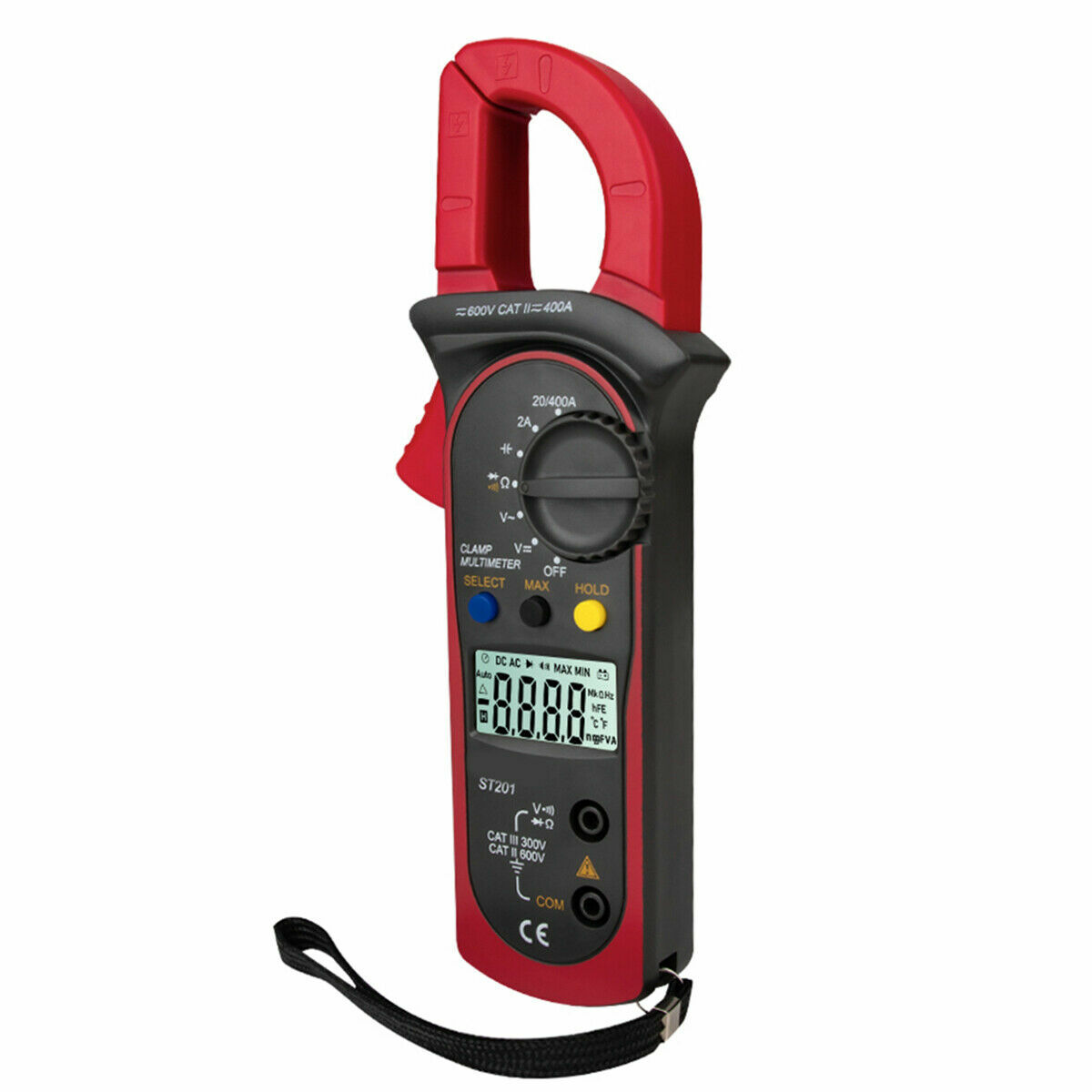 Digital Multimeter Tester AC DC Volt Ohm Amp Clamp Meter Auto Range LCD Handheld$13.87View on eBay
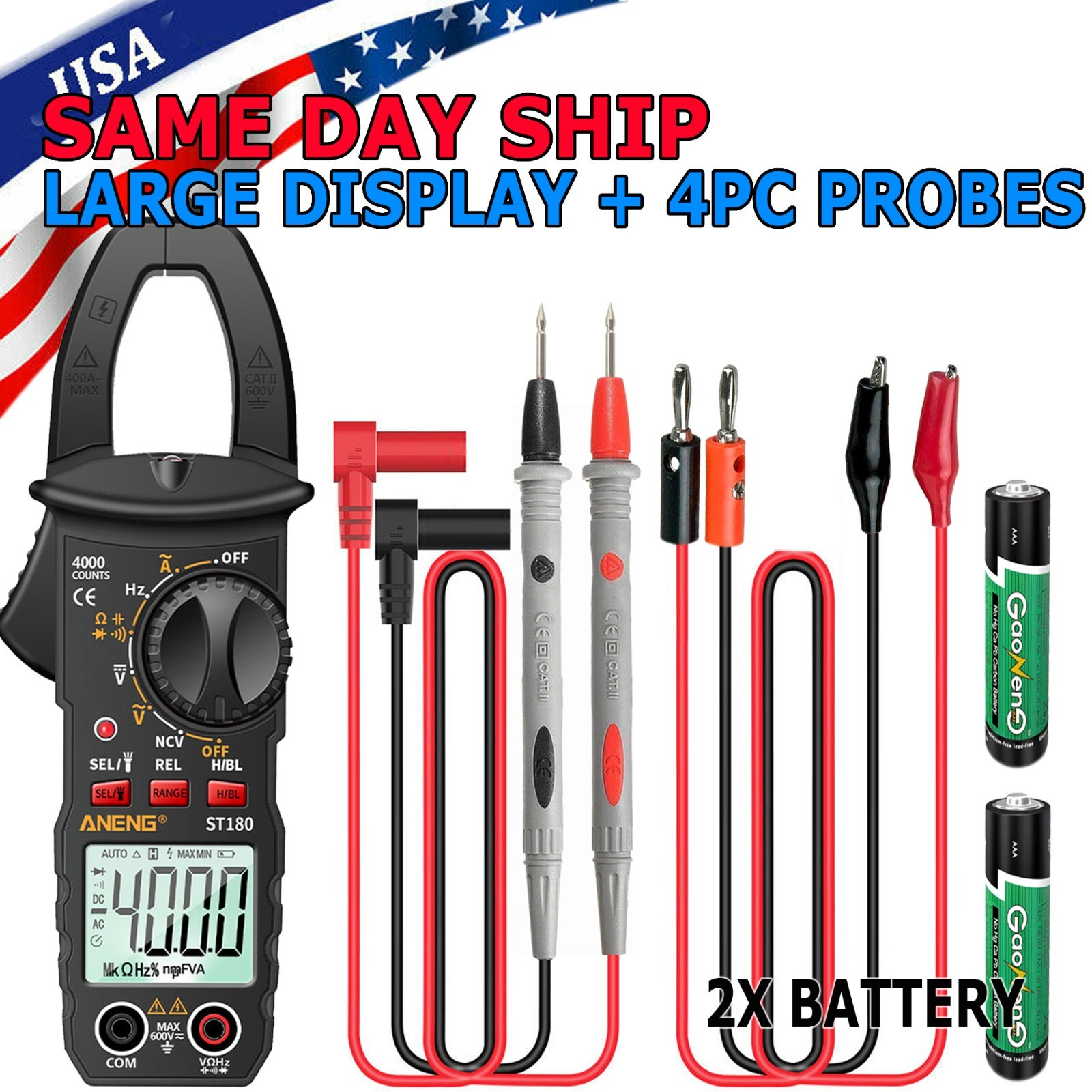 Digital Multimeter Tester AC DC Voltage RMS Amps Clamp Meter Auto Range Handheld$15.95Last checked Nov 27, 2026View on eBay
Highlights
- True RMS (root-mean-square) circuitry is mandatory for accurate readings on variable-frequency drives, dimmers, and switch-mode supplies; averaging clamps misread distorted waveforms by double-digit percentages.
- DC current measurement requires a Hall-effect sensor in the jaw, not a simple AC current transformer; many inexpensive clamps are AC-only despite 'clamp meter' labeling.
- Jaw opening diameter sets the maximum conductor size: 1-inch jaws clear 4/0 AWG cable, while 2-inch jaws are needed for multiple parallel feeders and busbars.
- CAT III 600V (or CAT IV 300V) safety ratings with fused current inputs are the minimum for panelboard and service-entrance work; CAT II-only clamps belong on appliance cords.
Best use cases
- Residential branch-circuit troubleshooting: pick a 400A AC clamp with 1-inch jaws and true RMS; skip DC-capable models since household wiring carries no DC current.
- HVAC and variable-frequency drive diagnostics: choose a true-RMS AC/DC clamp with 600A+ range and 1.2-inch jaws to capture distorted inverter waveforms on compressor feeds.
- Automotive and solar DC load testing: select a Hall-effect DC clamp rated to 400A with 1-inch jaws; skip AC-only transformer clamps which read zero on DC.
- Industrial panel and service-entrance work: require CAT III 600V or CAT IV 300V clamp with 2-inch jaws and fused inputs; skip CAT II appliance-grade clamps entirely.
Buying tips
- Confirm the clamp measures DC amps via Hall effect, not just AC; AC-only clamps are transformer-based and will not register battery, solar, or automotive DC current.
- Match jaw opening to your largest conductor: 1-inch jaws fit 4/0 AWG, 2-inch jaws fit parallel feeders; a jaw that cannot close fully gives erroneous readings.
- Choose true RMS for any work involving VFDs, LEDs, or electronic loads; averaging (non-RMS) clamps are acceptable only for resistive heating and incandescent circuits.
- Verify CAT safety rating matches your environment: CAT III 600V minimum for distribution panels, CAT IV 300V for service entrances; CAT II is limited to portable appliances.
Specs
| Current Sensing | Hall-effect DC + AC vs AC-only CT |
|---|---|
| RMS Architecture | True RMS vs averaging |
| Jaw Opening | 1 in (4/0 AWG) to 2 in (busbar) |
| Safety Category | CAT III 600V / CAT IV 300V minimum |
Related searches
What to check before buying
- Measure the outside diameter of your largest cable or busbar and confirm the jaw opening exceeds it by at least 10 percent for a fully closed magnetic circuit.
- Check the clamp's jaw depth (throat) for reaching conductors inside crowded panelboards; deep-reach jaws clear stacked breakers.
- Confirm the test leads and fused current inputs are included and rated to the same CAT level as the clamp body.
- Verify the display is backlit and the jaw has a work light if you will measure inside dark panels or engine bays.
FAQ
Data sources: eBay / Amazon listings and product attribute feeds. Updated Nov 28, 2026.
Some links on this page are affiliate links. If you buy after clicking one, we may earn a commission at no extra cost to you. This does not change which products appear here or their order. Affiliate disclosure.