
Photos from current listings. Actual item, color, and included accessories may vary.
Aneng Digital Multimeter Buying Guide
Aneng digital multimeters are budget-friendly handheld testers that span basic 2000-count models to true-RMS 6000-count units with rechargeable touchscreen interfaces. The primary trade-off is between low cost and safety/accuracy: cheaper models often lack true RMS, proper CAT ratings, and fused input protection. The decision rule is simple: buy an Aneng only if it explicitly lists true RMS, a CAT III 600V (or better) safety rating, and a 6000-count display—skip models that omit these, as they are hobby-grade compromises.
Median $25.80
Key takeaways
- True RMS conversion is the key accuracy differentiator; non-RMS Aneng models miscalculate AC voltage and current on non-sinusoidal loads like inverters and dimmers.
- Display count determines resolution: 6000-count models resolve 0.1mV vs 1mV on 2000-count units, and 6000-count is the minimum tier for serious electronics work.
- Safety rating matters most: CAT III 600V units have adequate input transient protection for household distribution panels; CAT II-only models are limited to appliance-level testing.
At a glance
- Category
- Multimeters & Electrical Testers
- Last updated
- Nov 28, 2026
Current offers
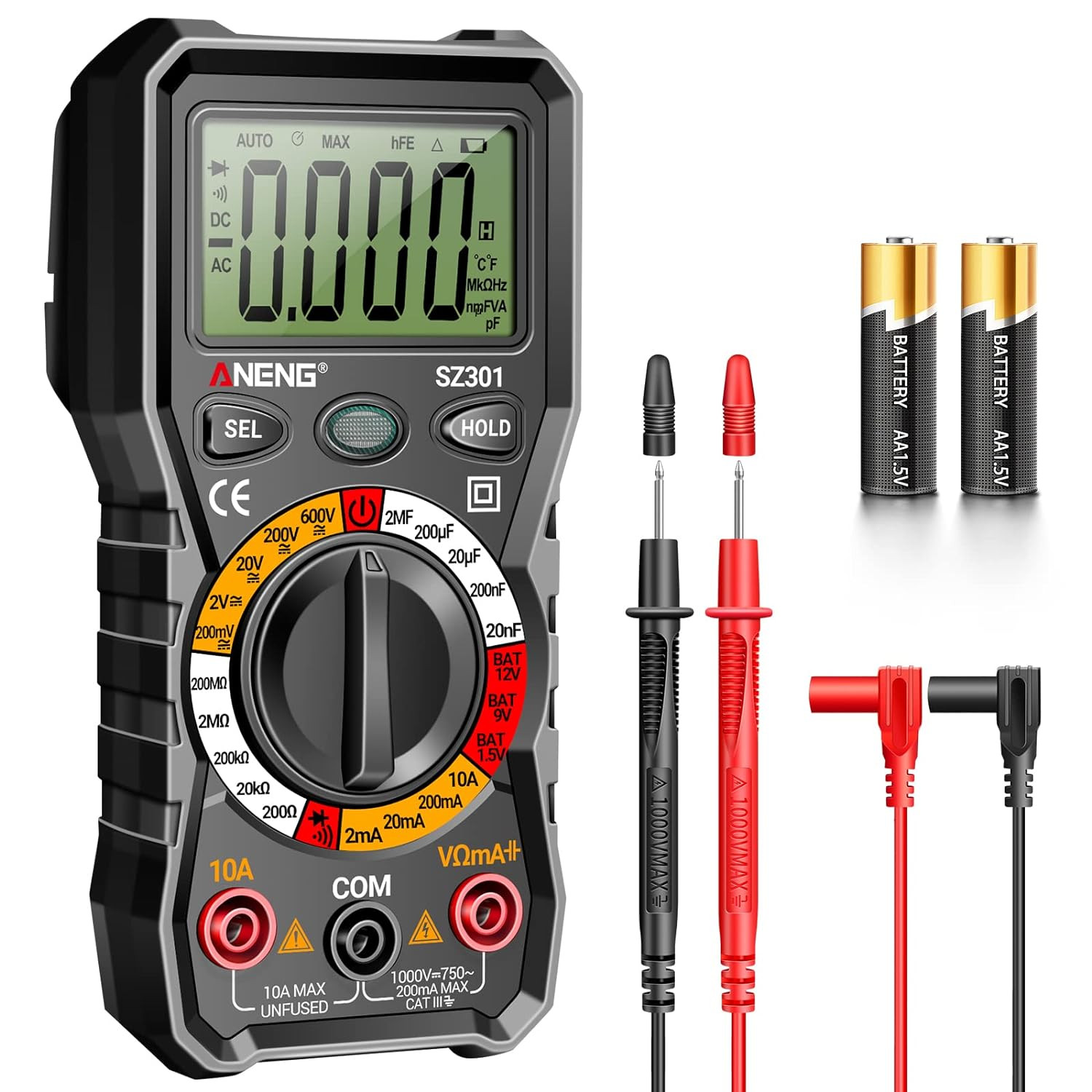 ANENG Digital Multimeter with Case,Dc AC Voltmeter,Ohm Volt Amp Meter,Measures V$15.85View on eBay
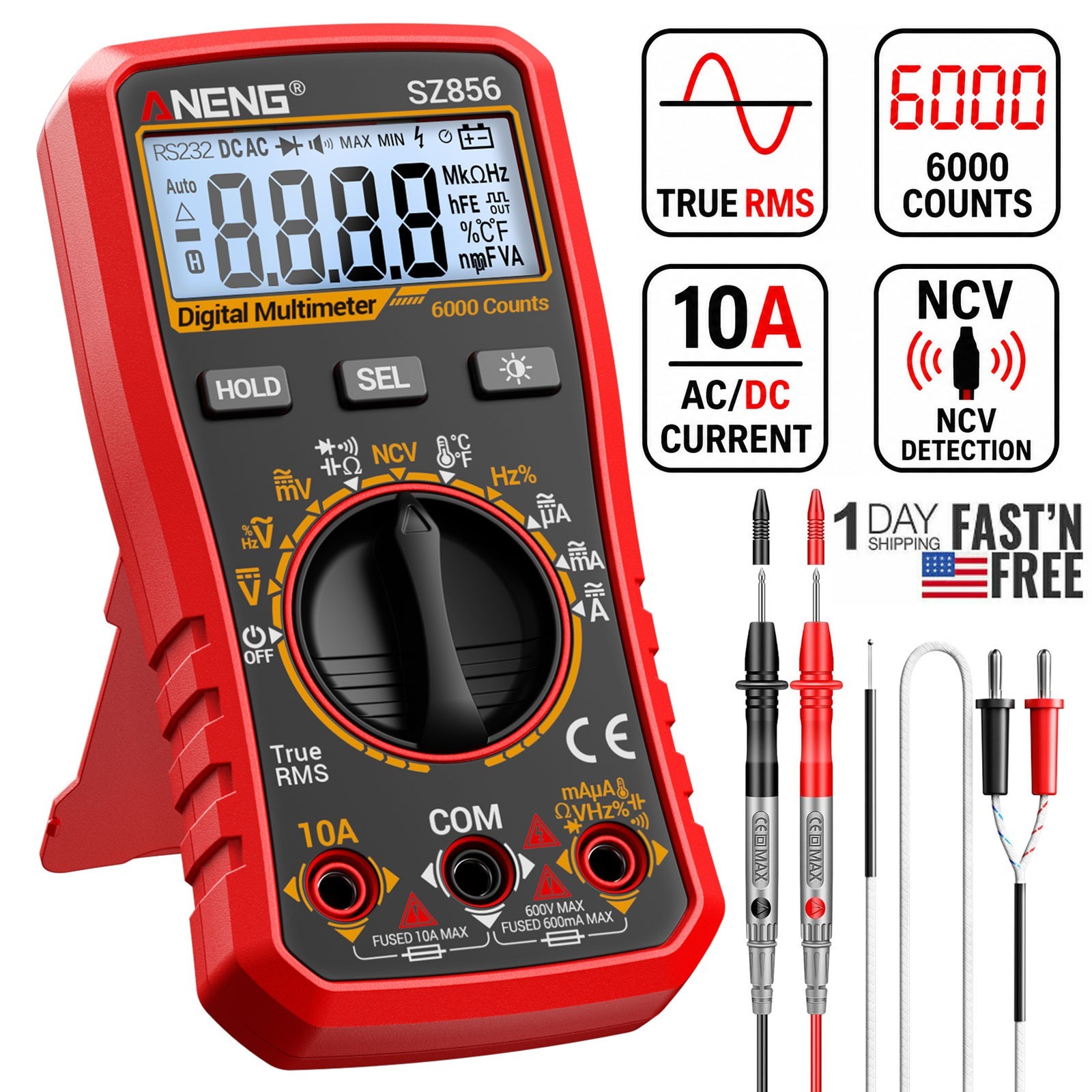 ANENG True RMS Digital Multimeter Auto Range 6000 Counts AC DC Electric Tester$25.80Last checked Nov 27, 2026View on eBay
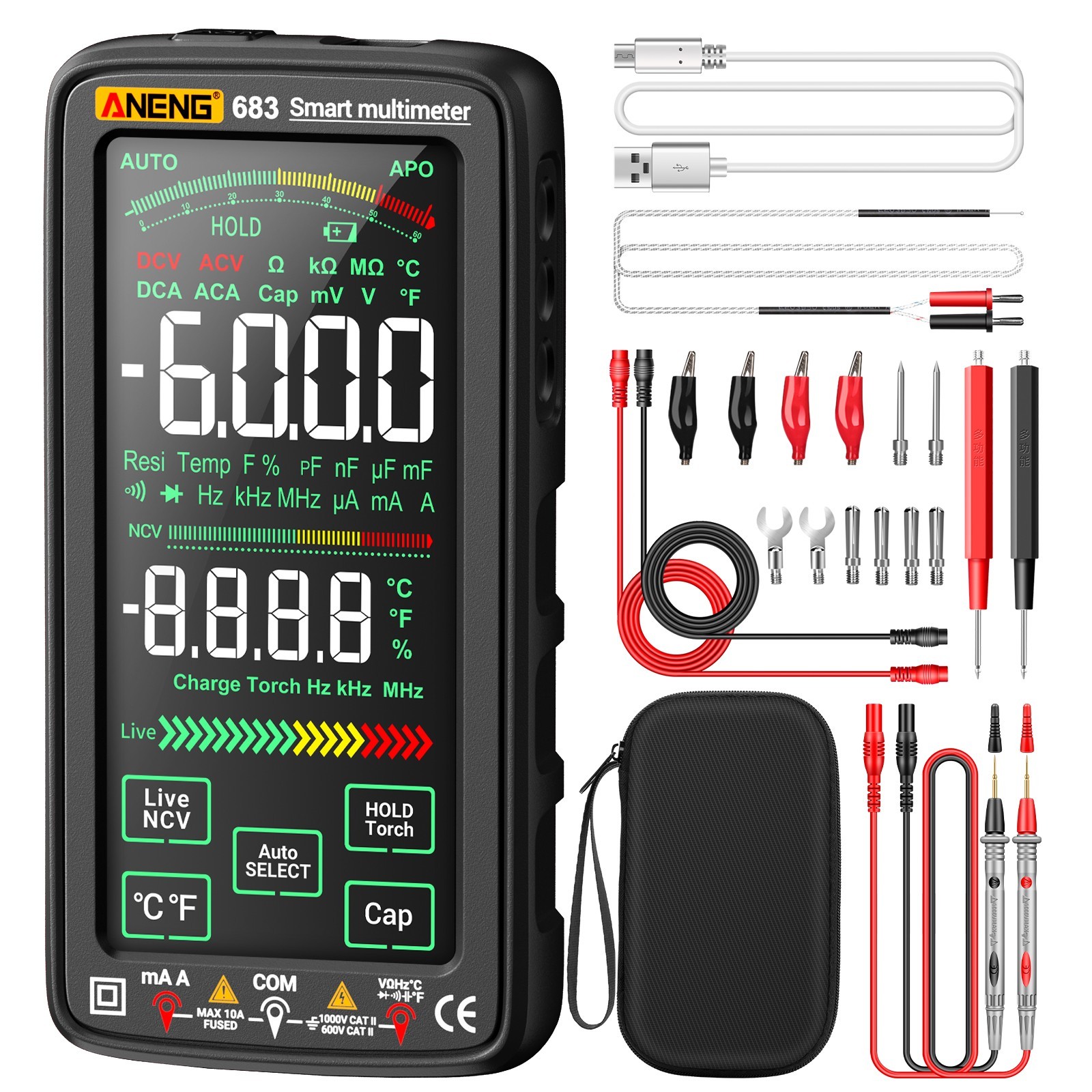 ANENG 683 Digital Multimeter True RMS 6000 Counts Touch Screen Rechargeable US$54.99View on eBay
Highlights
- True RMS conversion is the key accuracy differentiator; non-RMS Aneng models miscalculate AC voltage and current on non-sinusoidal loads like inverters and dimmers.
- Display count determines resolution: 6000-count models resolve 0.1mV vs 1mV on 2000-count units, and 6000-count is the minimum tier for serious electronics work.
- Safety rating matters most: CAT III 600V units have adequate input transient protection for household distribution panels; CAT II-only models are limited to appliance-level testing.
- Power architecture splits Aneng's line: most run on 9V or AAA batteries, while touchscreen models like the 683 use a rechargeable lithium cell via USB-C, adding convenience but a non-user-replaceable wear item.
Best use cases
- Best fit: household wiring and outlet testing—pick a CAT III 600V true-RMS 6000-count model with fused inputs; skip autoranging-only basic units that lack a CAT III rating.
- Best fit: bench electronics and Arduino work—choose a 6000-count true-RMS unit with 0.1mV DC resolution and a continuity beeper; skip 2000-count models that cannot resolve small signal changes.
- Best fit: HVAC and automotive troubleshooting—select a model with a clamp accessory or temperature probe input and true RMS for variable-frequency drives; skip touchscreen-only units that are hard to operate with gloves.
- Wrong fit: professional electricians working on 3-phase or high-energy panels—Aneng's CAT III ceiling and unproven transient survival make it a backup meter, not a primary safety instrument.
Buying tips
- Demand true RMS and a 6000-count display as the minimum accuracy tier; a 2000-count non-RMS Aneng is a continuity checker, not a measurement instrument.
- Check the CAT safety rating on the meter face: CAT III 600V is the floor for household wiring; CAT II 600V restricts you to appliance cords and outlets.
- Prefer models with a fused 10A input and silicon test leads rated for the meter's CAT level; unfused inputs and PVC leads are the weakest link in cheap meters.
- For rechargeable touchscreen models, confirm USB-C charging and a user-replaceable cell if long service life matters; sealed lithium packs become e-waste when they age.
Specs
| Measurement Accuracy | True RMS vs average-sensing |
|---|---|
| Display Count | 2000-count vs 6000-count |
| Safety Rating | CAT II 600V vs CAT III 600V |
| Power Source | 9V/AAA battery vs USB-C rechargeable |
Related searches
What to check before buying
- Confirm your measurement ceiling: 600V CAT III covers residential panels; above that you need a CAT IV meter, which Aneng does not offer.
- Verify lead compatibility: standard 4mm shrouded banana jacks accept most aftermarket probes and clamp adapters; unusual jack spacing limits accessory upgrades.
- Check the display and controls for glove-friendly physical buttons if you work in HVAC or automotive settings; capacitive touchscreens fail with gloves.
- Confirm battery type and availability (9V, AAA, or USB-C rechargeable) and whether the meter has auto-power-off to preserve cell life between jobs.
FAQ
Data sources: eBay / Amazon listings and product attribute feeds. Updated Nov 28, 2026.
Some links on this page are affiliate links. If you buy after clicking one, we may earn a commission at no extra cost to you. This does not change which products appear here or their order. Affiliate disclosure.