
Photos from current listings. Actual item, color, and included accessories may vary.
Auto Ranging Multimeter Buying Guide
An auto-ranging multimeter eliminates manual range selection, trading a rotary dial for microprocessor-controlled measurement scaling—but the real decision hinges on count resolution, True RMS architecture, and input protection. Choose a True RMS meter with at least 6000 counts and CAT III 600V rating for mains and electronics work; skip 2000-count non-TRMS models unless you only probe low-voltage DC circuits.
Median $34.29 · Pre-owned listings
Key takeaways
- Count resolution defines precision: 2000-count meters resolve 1mV on the 2V range, while 6000-count models resolve 0.1mV and display 4 significant digits.
- True RMS (TRMS) conversion is mandatory for accurate AC readings on non-sinusoidal loads like switch-mode supplies, dimmers, and VFDs; averaging meters under-read by 10–30%.
- CAT safety rating reflects transient protection: CAT III 600V handles fixed-installation mains, CAT II 300V covers appliance outlets, and CAT IV 600V is required at service entrances.
At a glance
- Category
- Multimeters & Electrical Testers
- Last updated
- Nov 28, 2026
Current offers
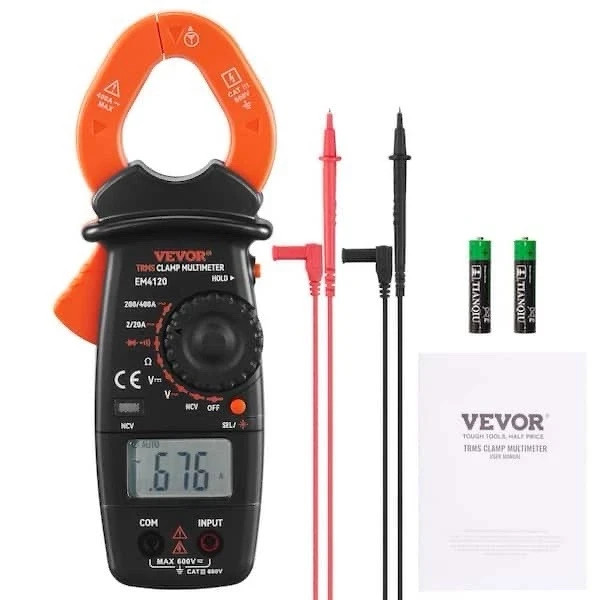 400 Amp Digital Clamp Meter DC/AC Multimeter True RMS Auto Ranging 2000 Max Read$4.99View on eBay
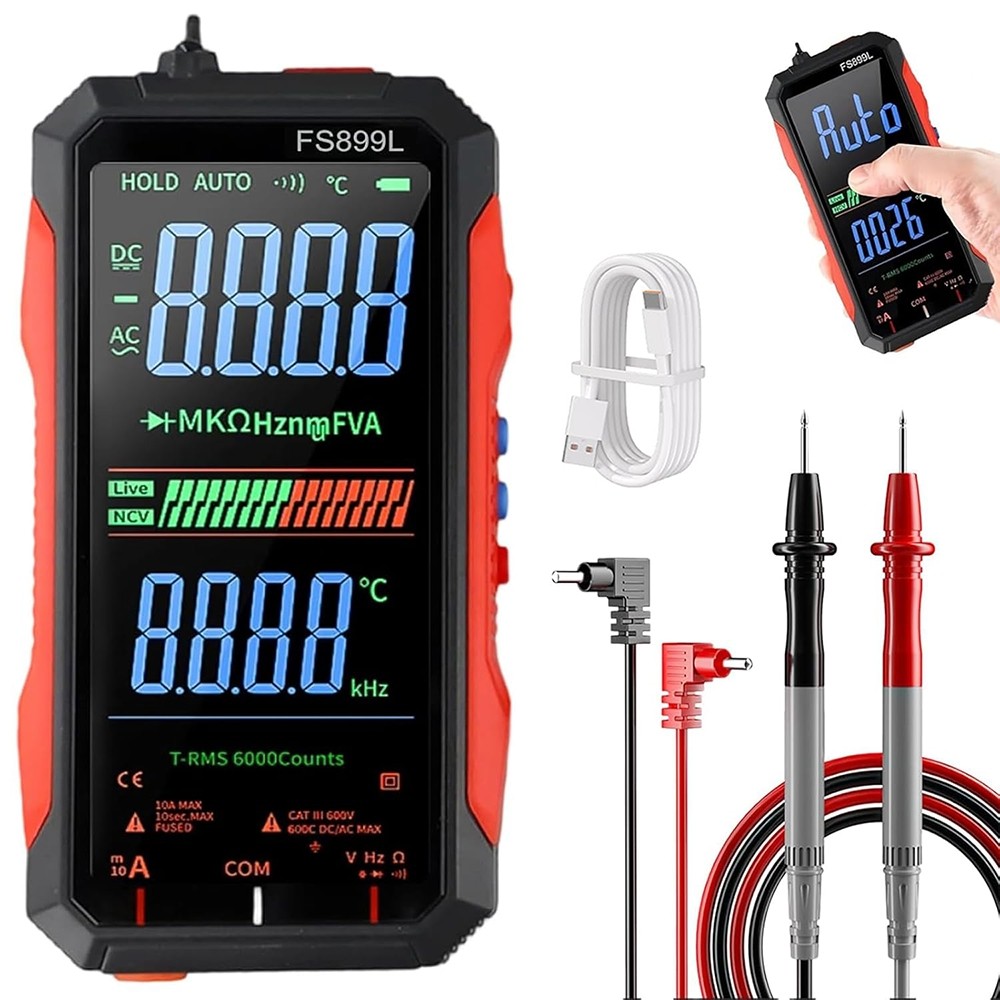 6000 Counts Digital Multimeter Tester Auto-Ranging TRMS Voltmeter Colour Display$28.59Last checked Nov 27, 2026View on eBay
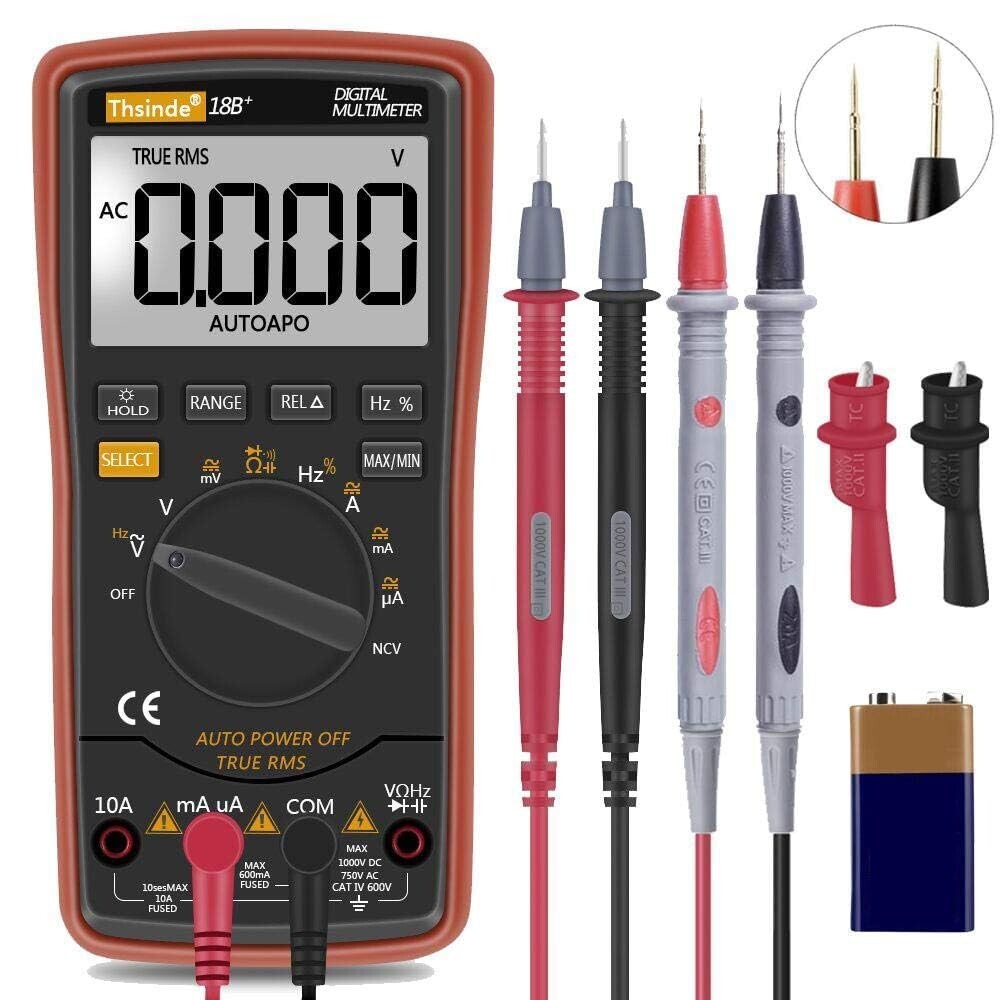 Auto Ranging Digital Multimeter TRMS 6000 with Battery Alligator Clips Test Lead$39.99Last checked Nov 28, 2026View on eBay
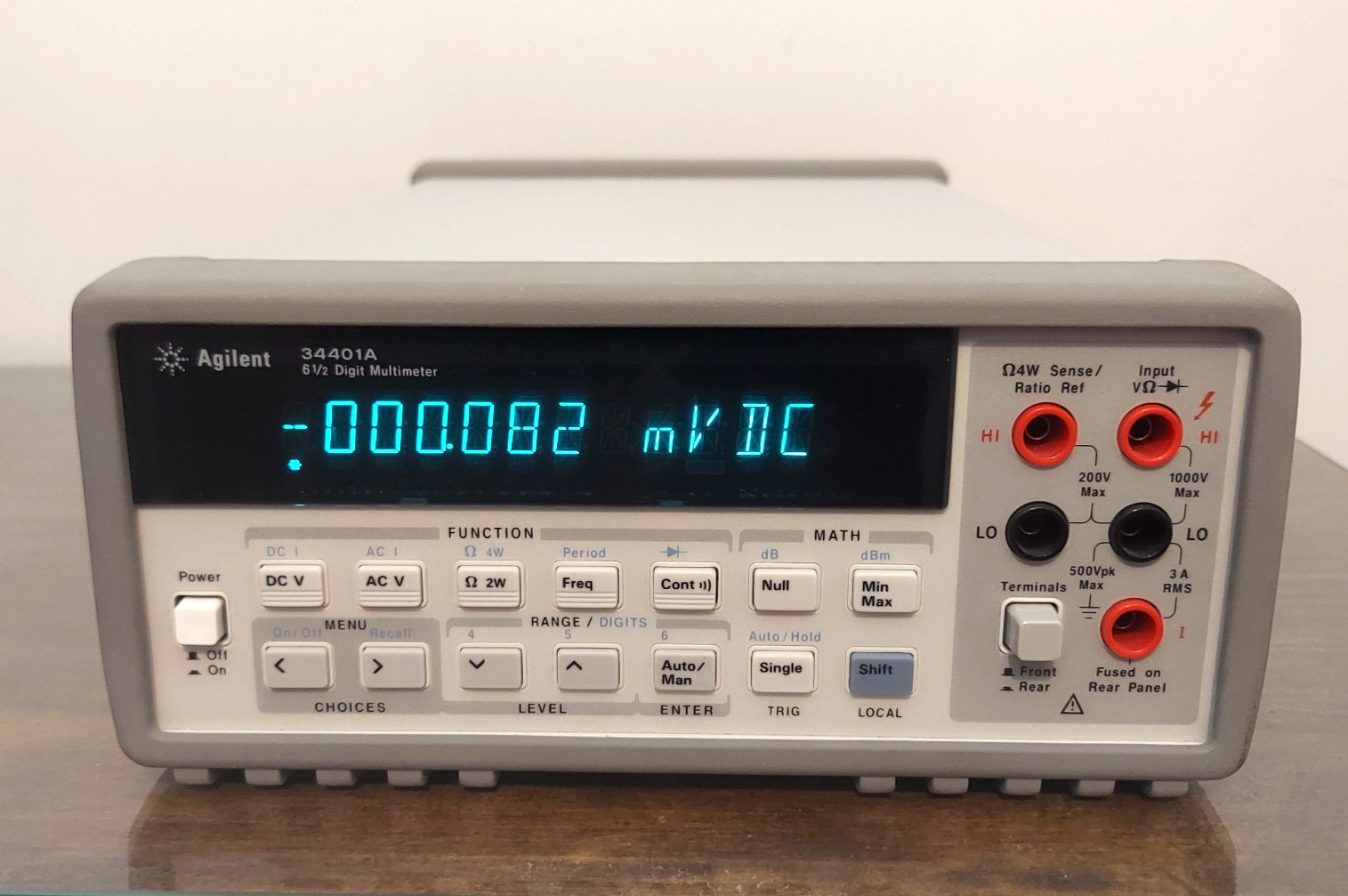 Agilent 34401A Autoranging Digital Multimeter 6½ Digit - Tested$419.99Used · Last checked Nov 21, 2026View on eBay
Highlights
- Count resolution defines precision: 2000-count meters resolve 1mV on the 2V range, while 6000-count models resolve 0.1mV and display 4 significant digits.
- True RMS (TRMS) conversion is mandatory for accurate AC readings on non-sinusoidal loads like switch-mode supplies, dimmers, and VFDs; averaging meters under-read by 10–30%.
- CAT safety rating reflects transient protection: CAT III 600V handles fixed-installation mains, CAT II 300V covers appliance outlets, and CAT IV 600V is required at service entrances.
- Auto-ranging speed varies by firmware: quality meters settle in under 1 second per range step, while budget units can lag 2–3 seconds and misread fluctuating signals.
Best use cases
- Whole-home electrical troubleshooting: pick a 6000-count TRMS meter rated CAT III 600V with a clamp accessory for load currents; skip 2000-count CAT II meters that lack transient headroom.
- Bench electronics and Arduino/PCB work: choose a 6000-count TRMS unit with 0.1mV DC resolution and a continuity beeper under 50Ω; skip clamp-first designs with 1V minimum resolution.
- Automotive 12V/24V diagnostics: select a meter with DC clamp capability (400A range) and min/max recording; skip high-voltage CAT IV meters that add cost without automotive-specific functions.
- HVAC and motor testing: require TRMS plus a clamp jaw for inrush current; a basic auto-ranging handheld without a clamp cannot measure compressor or blower load current.
Buying tips
- Match count to task: 2000 counts suits basic outlet and battery checks; 6000 counts is the practical floor for electronics; 20000+ counts is needed for 4.5-digit lab work.
- Demand True RMS explicitly—if the listing does not state TRMS, assume averaging conversion and expect inaccurate AC readings on distorted waveforms.
- Verify CAT rating on the meter face, not just the listing: CAT III 600V is the minimum for panelboard work; CAT II 300V is only safe for cord-connected appliances.
- Check DC voltage accuracy spec (±0.5% + 2 digits is typical for 6000-count; ±1% indicates a lower-grade ADC) and confirm the meter includes a 10A fused current input.
Specs
| Display Counts | 2000 / 6000 / 20000 counts |
|---|---|
| AC Conversion | True RMS vs averaging |
| Safety Category | CAT II 300V / CAT III 600V |
| DC Accuracy | ±0.5% + 2 digits (6000-count) |
Related searches
What to check before buying
- Confirm your panel or circuit voltage does not exceed the meter's CAT rating—CAT III 600V covers 120/240V residential panels; CAT II 300V does not.
- Verify test lead safety: leads must be rated CAT III 600V or higher and have finger guards; generic unfused leads negate the meter's protection.
- Check whether you need a clamp jaw: a clamp meter measures current without breaking the circuit, while a standard multimeter requires series insertion and a 10A fuse.
- Confirm display readability: 6000-count meters with backlit LCD and bar graph are practical for dim panels; basic 3.5-digit LCDs lack bar-graph trend response.
FAQ
Data sources: eBay / Amazon listings and product attribute feeds. Updated Nov 28, 2026.
Some links on this page are affiliate links. If you buy after clicking one, we may earn a commission at no extra cost to you. This does not change which products appear here or their order. Affiliate disclosure.