
Photos from current listings. Actual item, color, and included accessories may vary.
Clamp Amp Meter Buying Guide
A clamp amp meter is a current-measuring tester that encircles a conductor to read amperage without breaking the circuit, typically combining a split-core jaw with a digital multimeter for voltage, resistance, and continuity. The core trade-off is measurement architecture: Hall-effect sensors enable DC and AC current but cost more and drift with temperature, while AC-only current transformers are cheaper and rock-stable but blind to DC. Buy a true-RMS Hall-effect clamp if you work on DC systems or non-linear loads; choose an AC-only transformer clamp only for basic branch-circuit or motor-load checks.
Median $14.91
Key takeaways
- Jaw sensor type decides capability: Hall-effect reads DC and AC amps, while current-transformer jaws read AC only — the single biggest spec separating tiers.
- True-RMS (root-mean-square) conversion is required for accurate readings on VFDs, switch-mode supplies, and LED drivers; average-sensing meters misread distorted waveforms.
- Clamp jaw aperture (commonly 1.0–2.0 in) sets the maximum conductor or bundle diameter; larger jaws reach around thick battery cables and service mains.
At a glance
- Category
- Multimeters & Electrical Testers
- Last updated
- Nov 28, 2026
Current offers
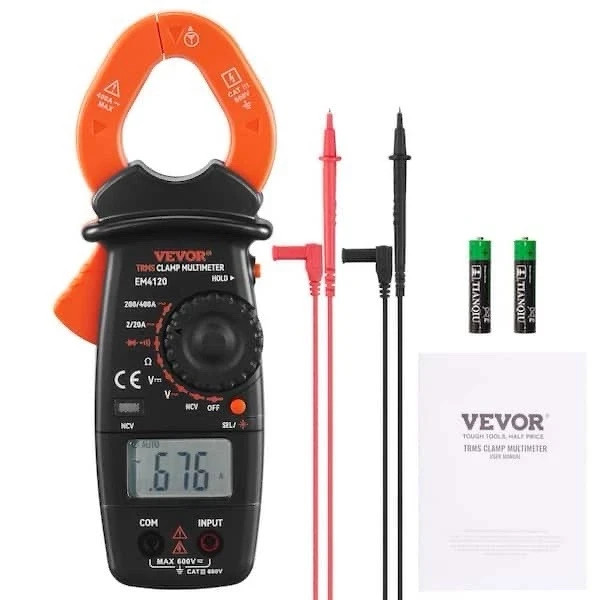 400 Amp Digital Clamp Meter DC/AC Multimeter True RMS Auto Ranging 2000 Max Read$4.99View on eBay
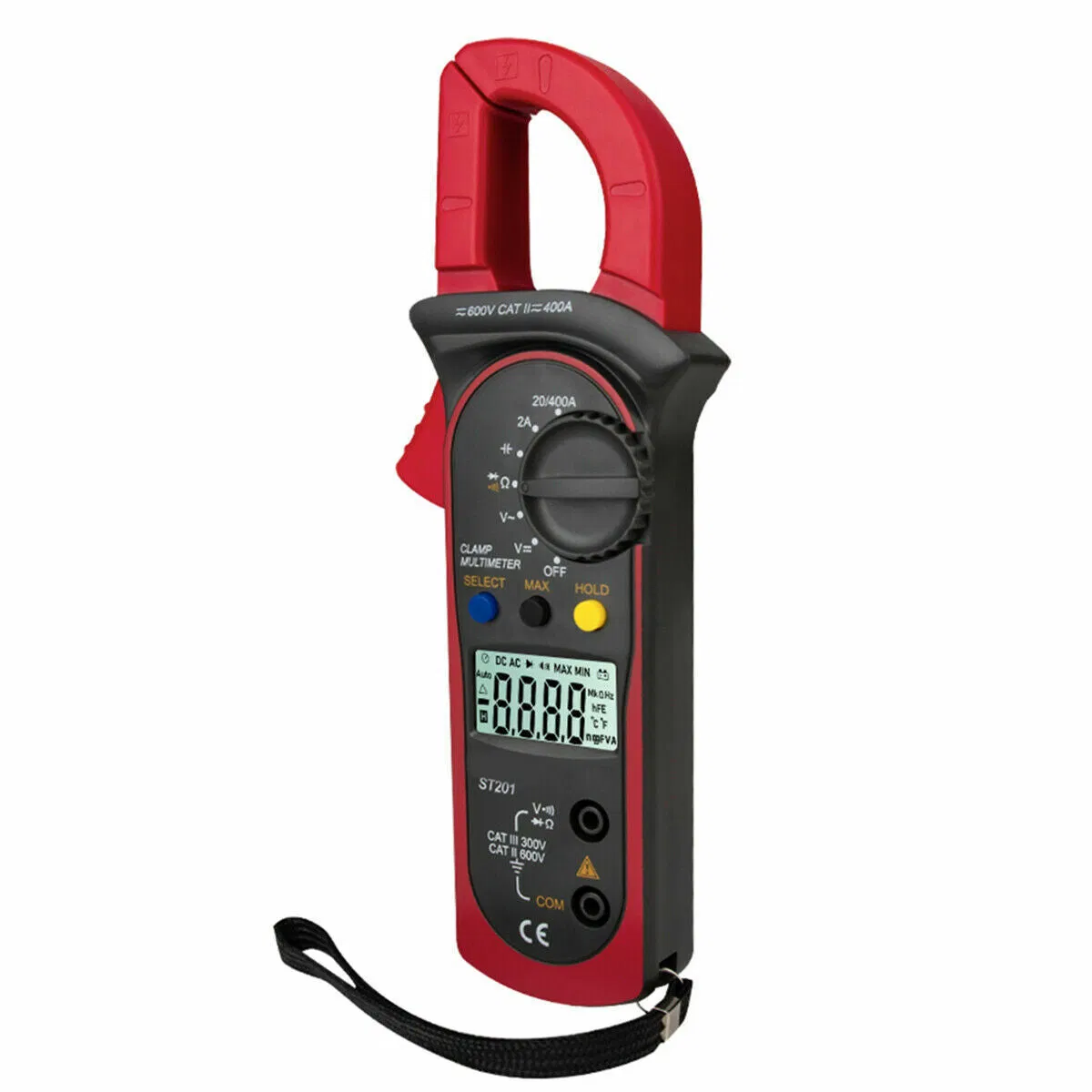 Digital Multimeter Tester AC DC Volt Ohm Amp Clamp Meter Auto Range LCD Handheld$29.99View on Mallflare
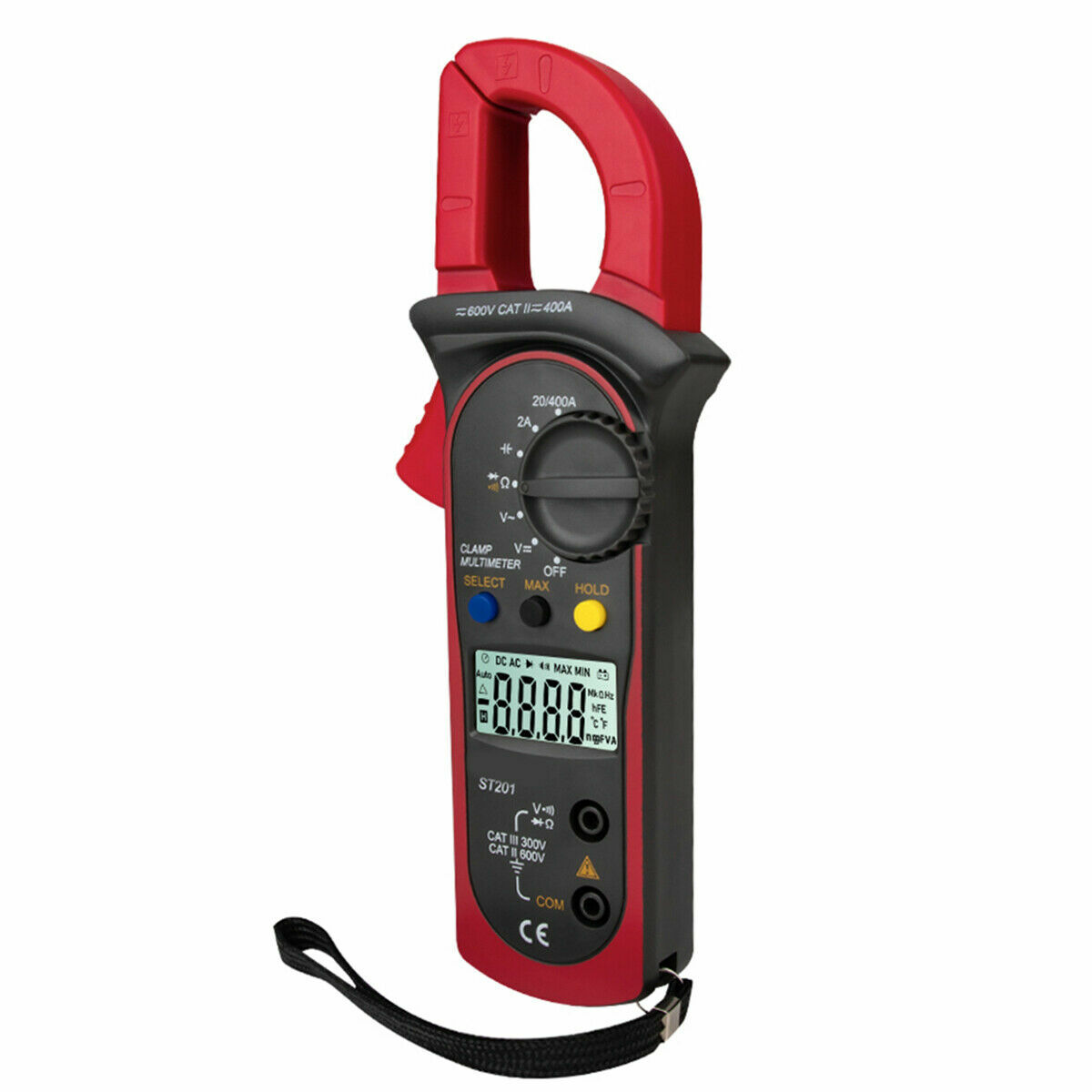 Digital Multimeter Tester AC DC Volt Ohm Amp Clamp Meter Auto Range LCD Handheld$13.87View on eBay
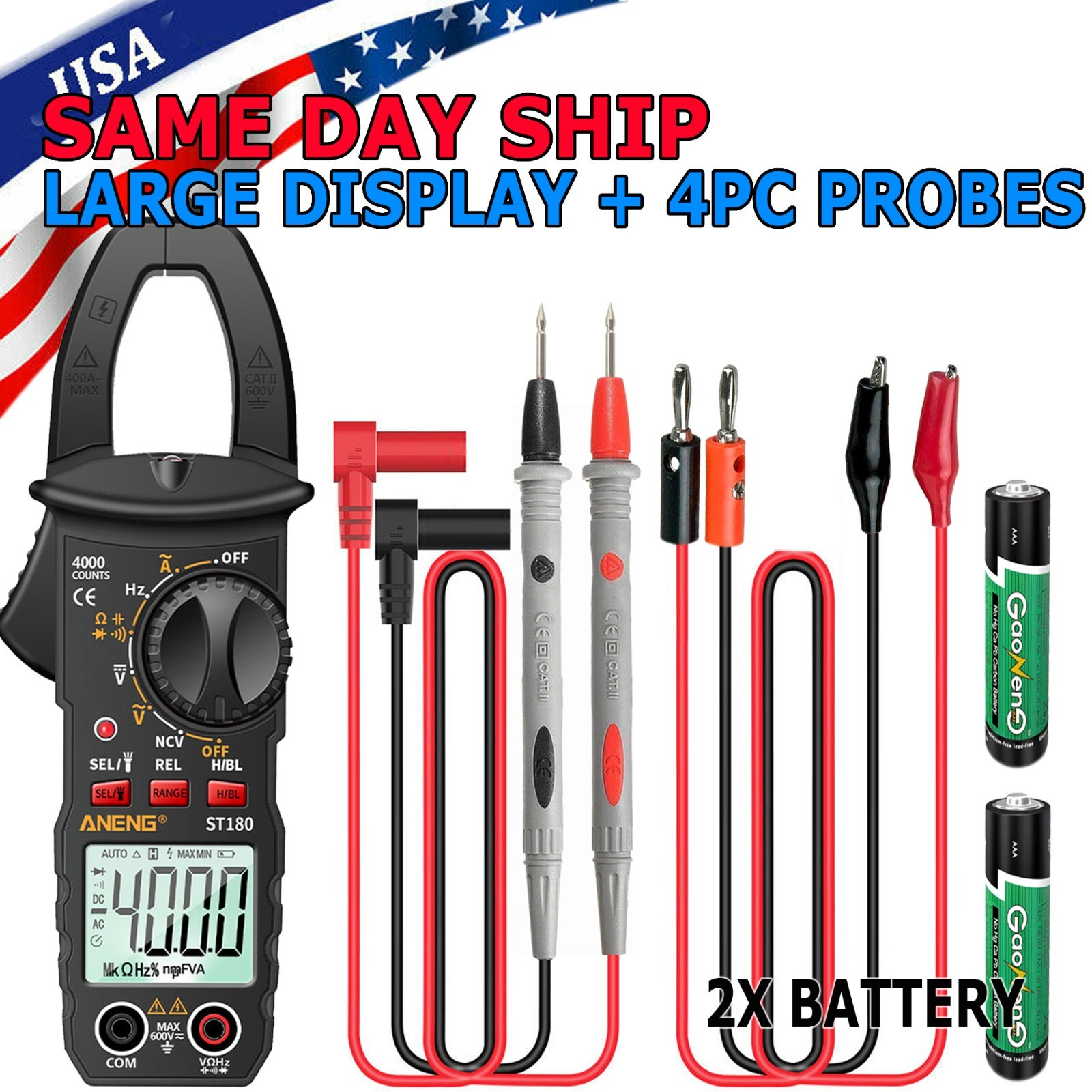 Digital Multimeter Tester AC DC Voltage RMS Amps Clamp Meter Auto Range Handheld$15.95Last checked Nov 27, 2026View on eBay
Highlights
- Jaw sensor type decides capability: Hall-effect reads DC and AC amps, while current-transformer jaws read AC only — the single biggest spec separating tiers.
- True-RMS (root-mean-square) conversion is required for accurate readings on VFDs, switch-mode supplies, and LED drivers; average-sensing meters misread distorted waveforms.
- Clamp jaw aperture (commonly 1.0–2.0 in) sets the maximum conductor or bundle diameter; larger jaws reach around thick battery cables and service mains.
- Auto-ranging and 2000-count vs 6000-count displays define resolution; 6000-count meters resolve milliamps and finer voltage steps than 2000-count units.
Best use cases
- Automotive and DC solar diagnostics: pick a Hall-effect DC/AC clamp with true RMS and a 400A or higher range; skip AC-only transformer clamps that read zero on DC.
- Residential branch-circuit and motor-load checking: an AC-only clamp with true RMS and a 1.2 in jaw is sufficient and cheaper; skip DC-rated models if you never touch batteries or solar.
- Electronics bench and low-current work: choose a clamp with a dedicated low-amp range or a companion multimeter lead set; skip high-amp-only clamps that bottom out above 1A.
Buying tips
- Match the amp range to the circuit: 400A covers most residential feeders and automotive cables; 600A–1000A is needed for service entrance and large motor loads.
- Choose true RMS whenever loads are non-linear (VFDs, LED drivers, inverters); average-sensing meters can under-read by 10–30% on distorted waveforms.
- Check jaw aperture against your thickest conductor bundle — a 1.2 in jaw clears most 4/0 cable, while 2.0 in jaws handle multiple parallel runs.
- Prefer Hall-effect jaws for any DC work (automotive, solar, battery banks); AC-only current-transformer clamps are fine for pure AC branch circuits.
Specs
| Sensor Type | Hall-effect (AC/DC) vs CT (AC only) |
|---|---|
| Current Range | 400A / 600A / 1000A max |
| Display Counts | 2000-count vs 6000-count |
| Jaw Aperture | 1.0–2.0 in (25–50 mm) |
Related searches
What to check before buying
- Measure your largest conductor or cable bundle diameter and confirm the clamp jaw aperture exceeds it.
- Confirm the meter's safety rating (CAT III 600V minimum for panel work) matches the electrical environment you will test.
- Verify the DC amp range covers your battery or solar system's maximum current, not just the AC range.
- Check whether test leads, a carrying case, and a temperature probe are included, since many clamp meters ship bare.
FAQ
Data sources: eBay / Amazon listings and product attribute feeds. Updated Nov 28, 2026.
Some links on this page are affiliate links. If you buy after clicking one, we may earn a commission at no extra cost to you. This does not change which products appear here or their order. Affiliate disclosure.