
Photos from current listings. Actual item, color, and included accessories may vary.
DC Clamp Amp Meter Buying Guide
A DC clamp amp meter measures current by sensing the magnetic field around a conductor, so its core value is Hall-effect or fluxgate sensing that reads DC amps without breaking the circuit. The defining trade-off is sensor type and jaw quality: Hall-effect sensors drift with temperature and need zeroing, while AC-only current transformers cannot read DC at all. Choose a true-RMS Hall-effect clamp rated for your peak DC current with a separate zero button; skip AC-only transformer clamps and any meter without DC zeroing.
Median $14.91
Key takeaways
- DC current requires a Hall-effect or fluxgate sensor; AC-only current-transformer clamps physically cannot measure DC and will read near zero on battery and solar DC lines.
- Jaw size determines conductor fit: 1-inch jaws accept most 4/0 AWG cable and 500 MCM lugs, while 2-inch jaws clear dual battery cables and starter feeds.
- Hall-effect sensors drift with temperature and residual magnetism, so a dedicated DC zero/relative button is mandatory for repeatable low-amp readings under 10 A.
At a glance
- Category
- Multimeters & Electrical Testers
- Last updated
- Nov 28, 2026
Current offers
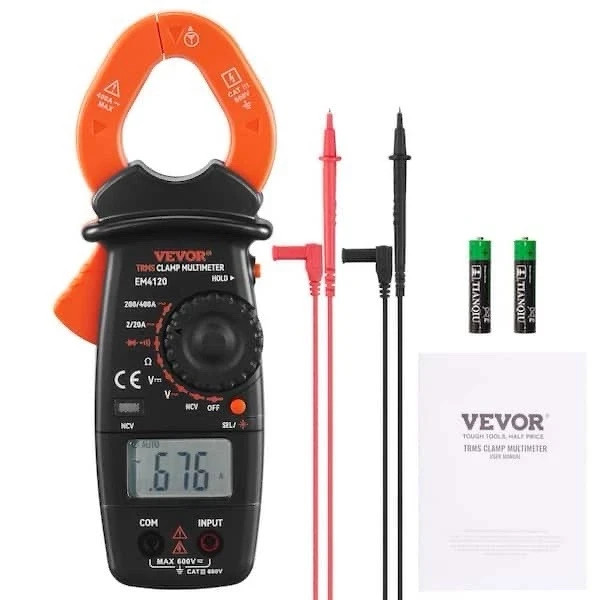 400 Amp Digital Clamp Meter DC/AC Multimeter True RMS Auto Ranging 2000 Max Read$4.99View on eBay
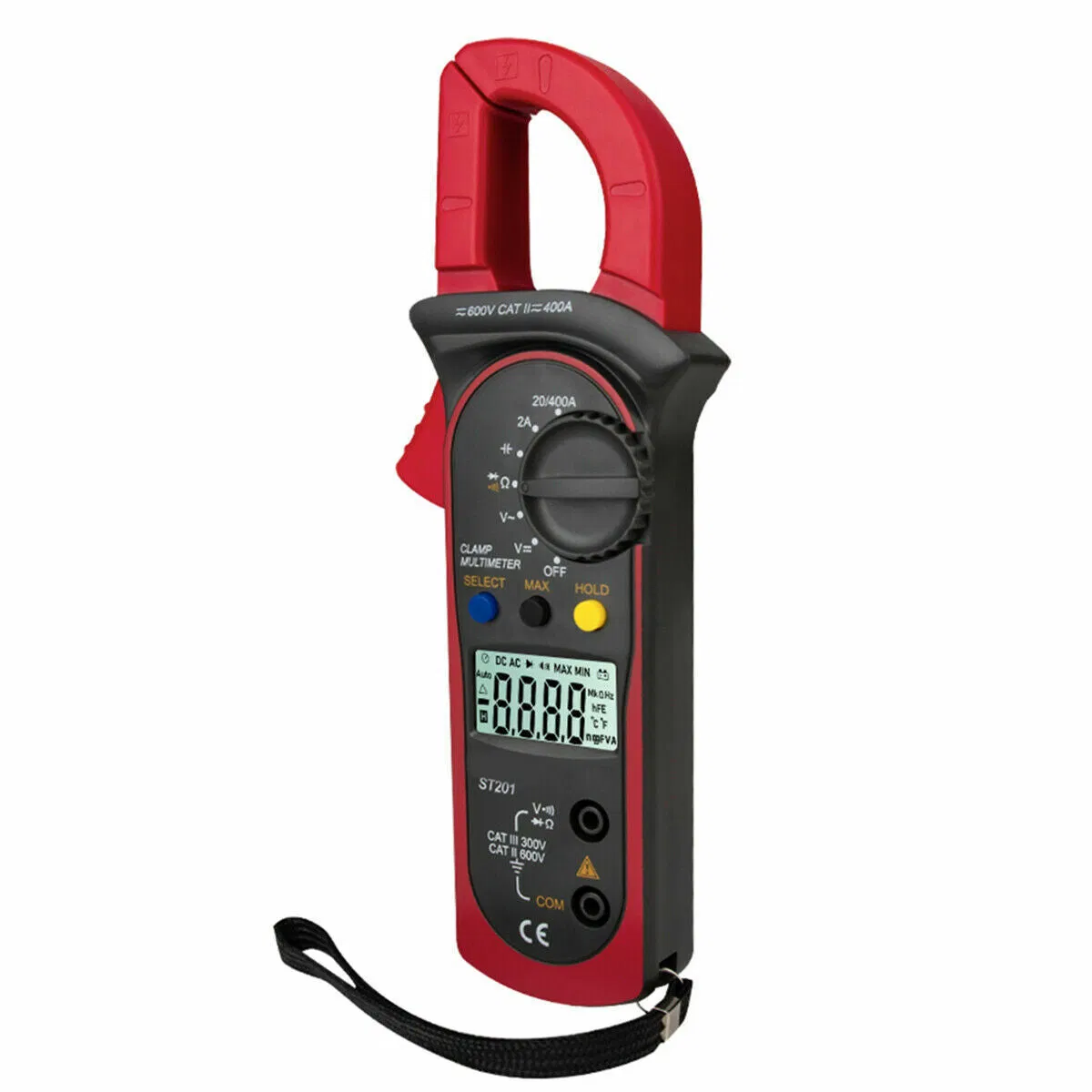 Digital Multimeter Tester AC DC Volt Ohm Amp Clamp Meter Auto Range LCD Handheld$29.99View on Mallflare
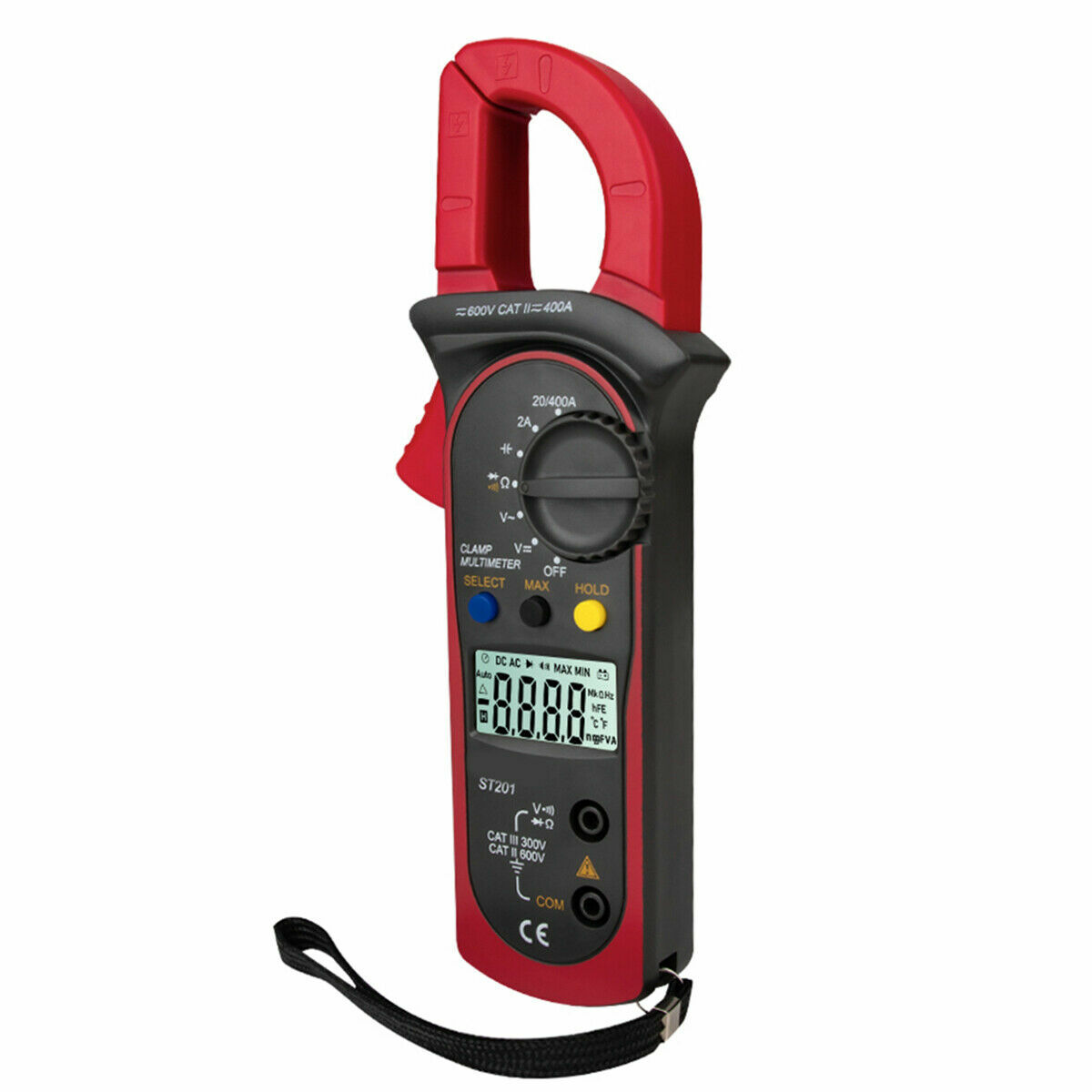 Digital Multimeter Tester AC DC Volt Ohm Amp Clamp Meter Auto Range LCD Handheld$13.87View on eBay
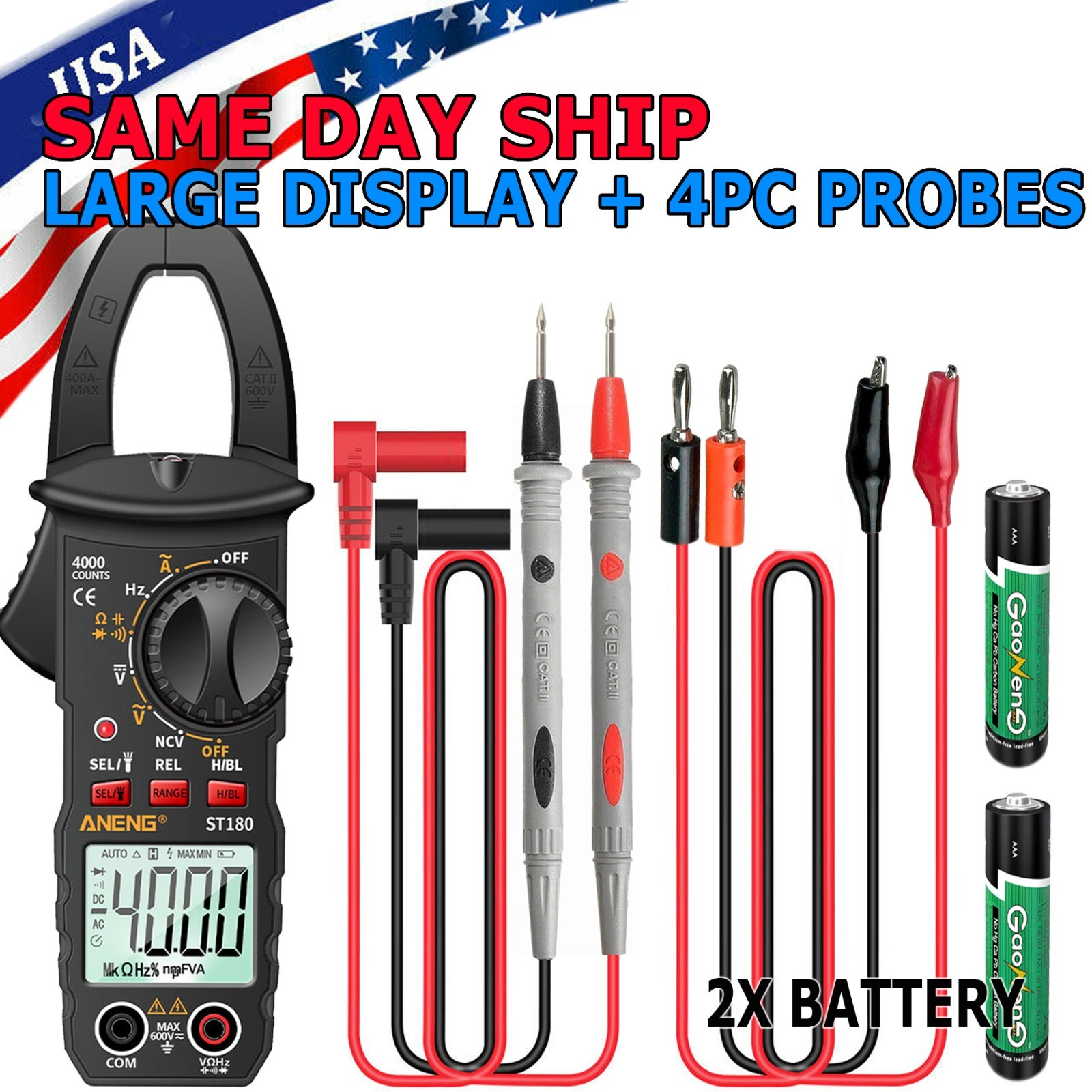 Digital Multimeter Tester AC DC Voltage RMS Amps Clamp Meter Auto Range Handheld$15.95Last checked Nov 27, 2026View on eBay
Highlights
- DC current requires a Hall-effect or fluxgate sensor; AC-only current-transformer clamps physically cannot measure DC and will read near zero on battery and solar DC lines.
- Jaw size determines conductor fit: 1-inch jaws accept most 4/0 AWG cable and 500 MCM lugs, while 2-inch jaws clear dual battery cables and starter feeds.
- Hall-effect sensors drift with temperature and residual magnetism, so a dedicated DC zero/relative button is mandatory for repeatable low-amp readings under 10 A.
- True RMS (AC+DC) accuracy matters on inverters and variable-frequency drives; average-sensing meters under-read distorted waveforms by 10–40%.
Best use cases
- Automotive parasitic draw testing: pick a clamp with 1 mA DC resolution and a zero button; skip AC-only or 10 A minimum-range clamps that cannot resolve 30–50 mA sleep current.
- Solar and battery-bank commissioning: choose a 600 A DC-rated true-RMS clamp with 1-inch jaws; skip 400 A entry clamps if parallel strings or 48 V inverters push peak current above 400 A.
- Marine and RV 12/24 V diagnostics: select a clamp rated IP40 or better with a backlit display and min/max recording; skip unsealed open-jaw designs that corrode in bilge or engine-bay humidity.
- Industrial motor and VFD troubleshooting: use a true-RMS clamp with AC+DC coupling and 1000 A range; skip budget meters with 1.5% basic accuracy that mask 5–10% drive imbalance.
Buying tips
- Match DC current range to peak load with 20–30% headroom: a 200 A starter surge on a 400 A clamp sits at half scale and stays accurate, while a 600 A clamp loses low-amp resolution.
- Demand true RMS with AC+DC coupling for inverters and VFDs; average-sensing meters misread non-sinusoidal current by 10–40% and give false pass results.
- Check DC resolution before buying: 1 mA resolution is required for parasitic draw under 100 mA, while 0.1 A resolution is fine for 50 A+ charging and load tests.
- Prefer clamps with a physical zero/relative button and a jaw that fully closes flat; residual gap of 0.5 mm introduces 5–15% DC error at low currents.
Specs
| Sensor Type | Hall-effect DC vs CT AC-only |
|---|---|
| DC Current Range | 200 A / 400 A / 600 A / 1000 A |
| DC Resolution | 1 mA to 0.1 A depending on range |
| Jaw Opening | 1 in (25 mm) vs 2 in (50 mm) |
Related searches
What to check before buying
- Measure your largest conductor diameter including insulation: 1-inch (25 mm) jaws cover most 4/0 AWG battery cable, but dual cables and lugs need 2-inch (50 mm) jaws.
- Confirm the DC range covers your peak surge, not just continuous load: starter inrush can hit 3–5× running current for 200–600 ms.
- Verify the meter's safety rating matches your environment: CAT III 600 V minimum for fixed solar and panel work, CAT II 300 V acceptable only for low-voltage automotive circuits.
- Check display and power: backlit LCD for engine bays and crawl spaces, plus auto-power-off and a low-battery indicator so a dead meter does not read as zero amps.
FAQ
Data sources: eBay / Amazon listings and product attribute feeds. Updated Nov 28, 2026.
Some links on this page are affiliate links. If you buy after clicking one, we may earn a commission at no extra cost to you. This does not change which products appear here or their order. Affiliate disclosure.