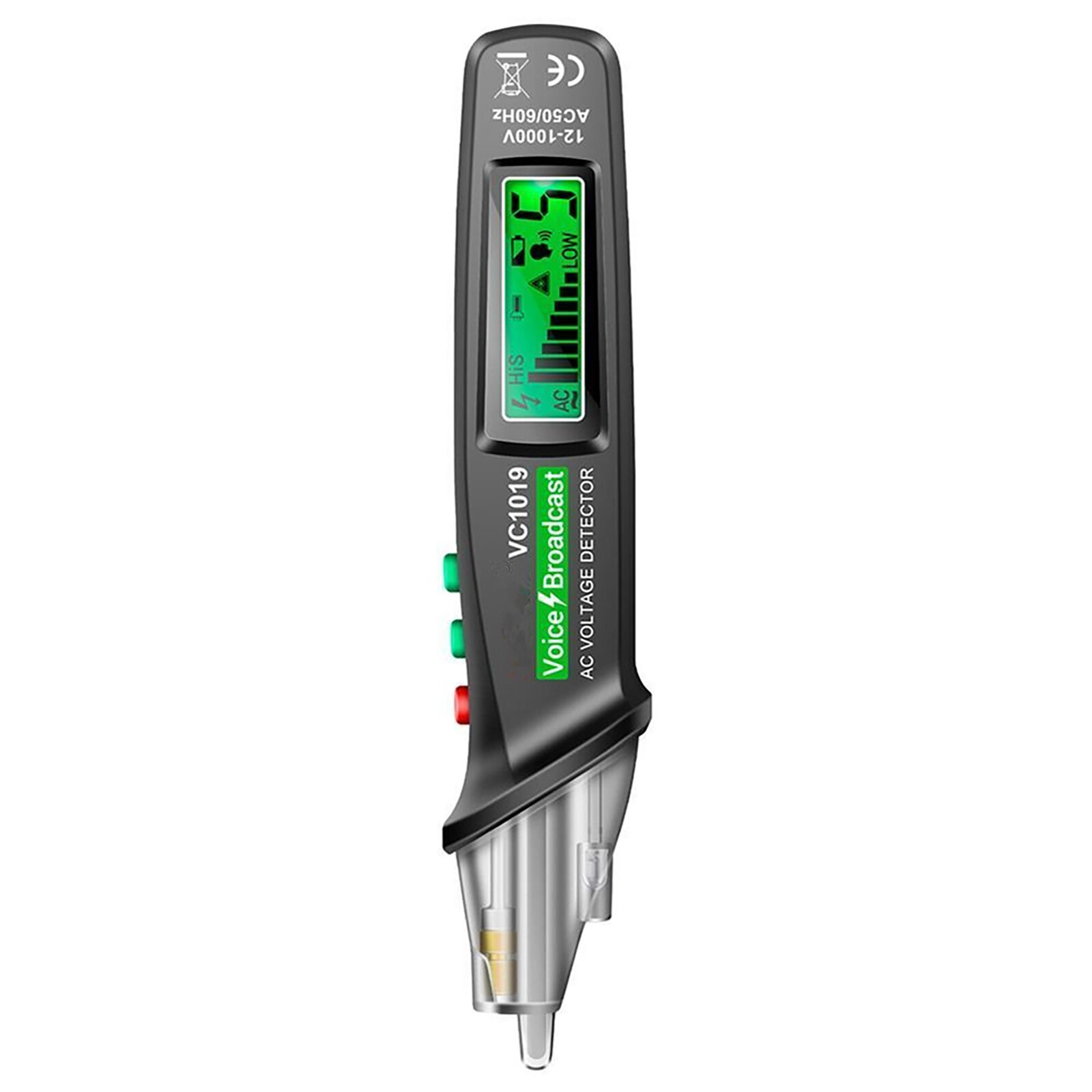

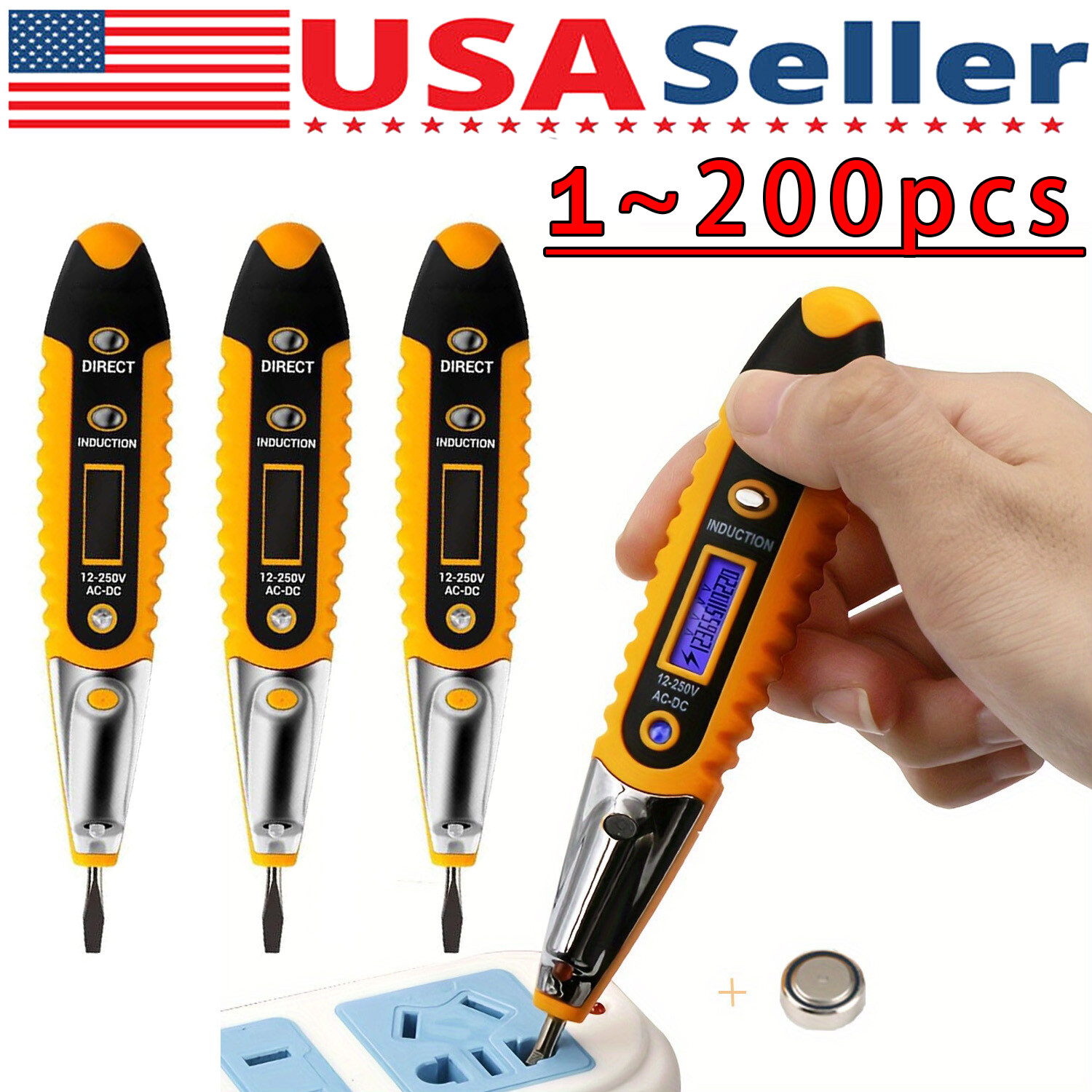
Photos from current listings. Actual item, color, and included accessories may vary.
Electric Detector Pen Buying Guide
An electric detector pen is a non-contact voltage tester that senses the electric field around live AC wiring without touching conductors, typically covering 12–1000V. The core trade-off is between basic always-on buzzers and auto-ranging pens with adjustable sensitivity and CAT safety ratings; a pen that only flashes without a CAT III/IV rating and a self-test function is a compromise, not a durable tool.
Median $91.94
Key takeaways
- True non-contact pens detect AC only via capacitive coupling; DC voltage detection requires a separate contact mode or a different tester architecture.
- CAT III 1000V / CAT IV 600V ratings indicate surge-tested insulation and are the baseline for any pen used on distribution panels or outdoor feeders.
- Adjustable two-level sensitivity lets a pen distinguish a live wire in a bundled cable from a false positive caused by adjacent energized conductors.
At a glance
- Category
- Multimeters & Electrical Testers
- Last updated
- Nov 28, 2026
Current offers
Highlights
- True non-contact pens detect AC only via capacitive coupling; DC voltage detection requires a separate contact mode or a different tester architecture.
- CAT III 1000V / CAT IV 600V ratings indicate surge-tested insulation and are the baseline for any pen used on distribution panels or outdoor feeders.
- Adjustable two-level sensitivity lets a pen distinguish a live wire in a bundled cable from a false positive caused by adjacent energized conductors.
- Auto power-off and a built-in self-test button are the two features that separate a reliable daily-carry pen from a disposable giveaway unit.
Best use cases
- Best fit: an auto-ranging pen with adjustable sensitivity and CAT III 1000V rating for electricians tracing breakers and verifying dead circuits before work. Skip basic single-range pens for panel work.
- Best fit: a compact always-on pen with a bright LED and audible beeper for homeowners checking outlets, switches, and lamp sockets. Skip high-end adjustable models if you only need outlet verification.
- Best fit: a pen with a low-voltage range down to 12V for HVAC, thermostat, and doorbell wiring. Skip pens that only start at 90V or 100V, as they miss low-voltage control circuits.
Buying tips
- Match the voltage range to your work: a 12–1000V pen covers automotive-adjacent low voltage through residential and light commercial AC; a 90–1000V pen is AC-mains only.
- Prioritize a CAT III 1000V / CAT IV 600V rating over extra features; the rating reflects the transient suppression that protects you near service panels.
- Choose adjustable sensitivity if you trace wires in bundles or conduit; fixed-sensitivity pens give ambiguous readings near parallel conductors.
- Confirm the pen has a self-test function and a known-good verification method (outlet or proving unit) before each use; a pen that cannot be proven live is not a safety tool.
Specs
| Voltage Range | 12-1000V AC (low-voltage capable) |
|---|---|
| Safety Rating | CAT III 1000V / CAT IV 600V |
| Sensitivity | Adjustable two-level vs fixed |
| Power Source | AAA or LR44, auto power-off |
Related searches
What to check before buying
- Verify the pen's stated voltage range includes the lowest voltage you will test; 12V coverage is required for thermostat, doorbell, and low-voltage landscape wiring.
- Confirm the CAT safety rating matches your environment: CAT III 1000V minimum for panel and feeder work, CAT II 300V acceptable only for cord-and-plug appliances.
- Check the pen's tip geometry and body length fit your hand and any pouch; long slim tips reach recessed terminals, short stubby tips do not.
- Ensure the pen uses standard batteries (AAA or LR44) available locally and has auto power-off to avoid dead batteries between jobs.
FAQ
Data sources: eBay / Amazon listings and product attribute feeds. Updated Nov 28, 2026.
Some links on this page are affiliate links. If you buy after clicking one, we may earn a commission at no extra cost to you. This does not change which products appear here or their order. Affiliate disclosure.