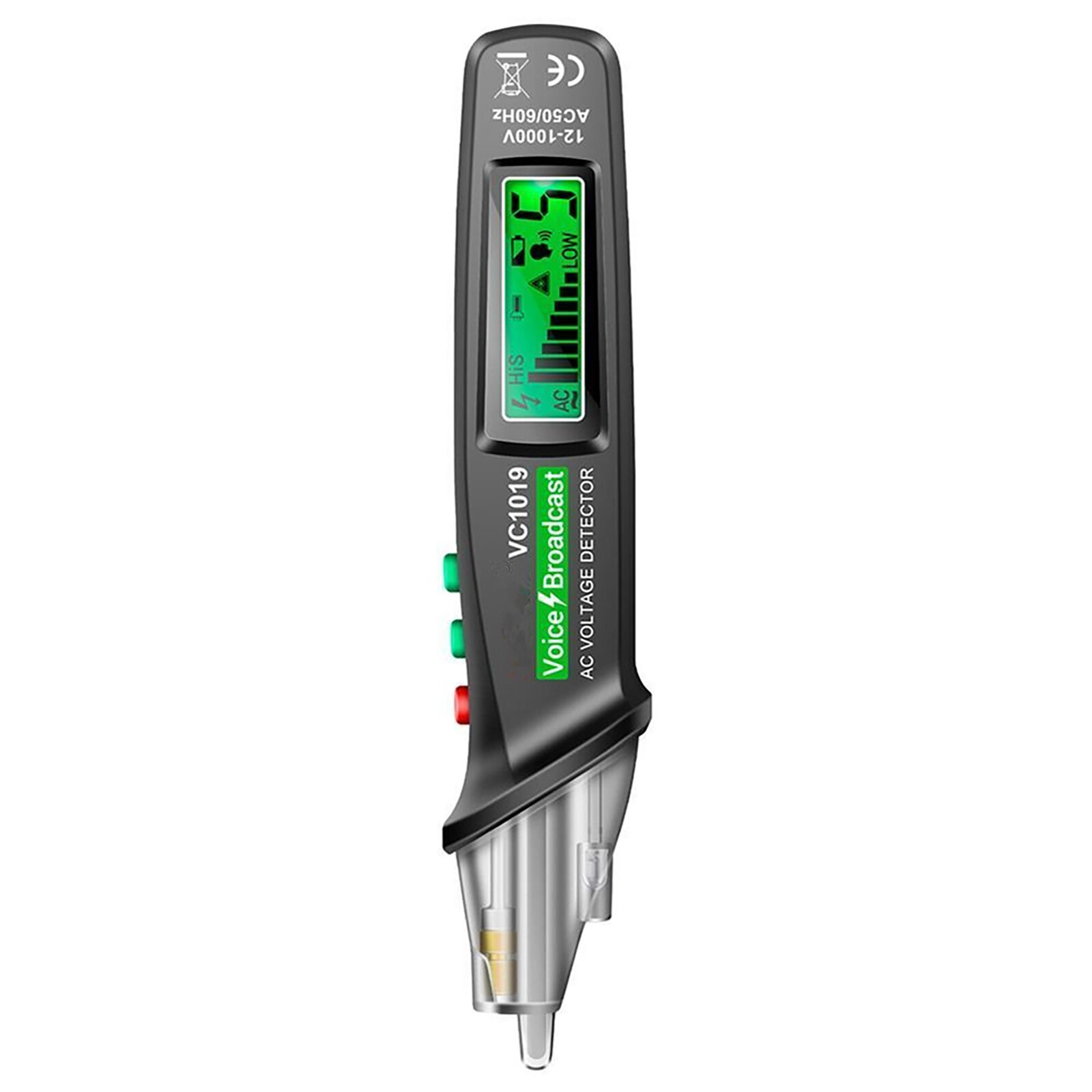

Photos from current listings. Actual item, color, and included accessories may vary.
Electric Tester Pen Buying Guide
An electric tester pen is a non-contact voltage detector that senses AC (and sometimes DC) fields through insulation to warn of live wiring before you touch it. The critical trade-off is sensitivity versus false positives: broad-range pens trigger on phantom voltage from adjacent cables, while narrowly calibrated CAT-III/IV pens are safer but demand correct usage. Buy a pen rated for your voltage ceiling with adjustable sensitivity and a CAT safety rating; skip unrated single-range pens for anything beyond basic outlet checks.
Median $91.94
Key takeaways
- Voltage range: Most pens cover 12-1000V AC; DC detection is usually separate and only on dual-mode models.
- Safety rating: CAT II handles household outlets; CAT III is required for distribution panels and fixed wiring.
- Sensitivity control: Adjustable two-level sensitivity reduces false alerts when tracing bundles or working near grounded metal.
At a glance
- Category
- Multimeters & Electrical Testers
- Last updated
- Nov 28, 2026
Current offers
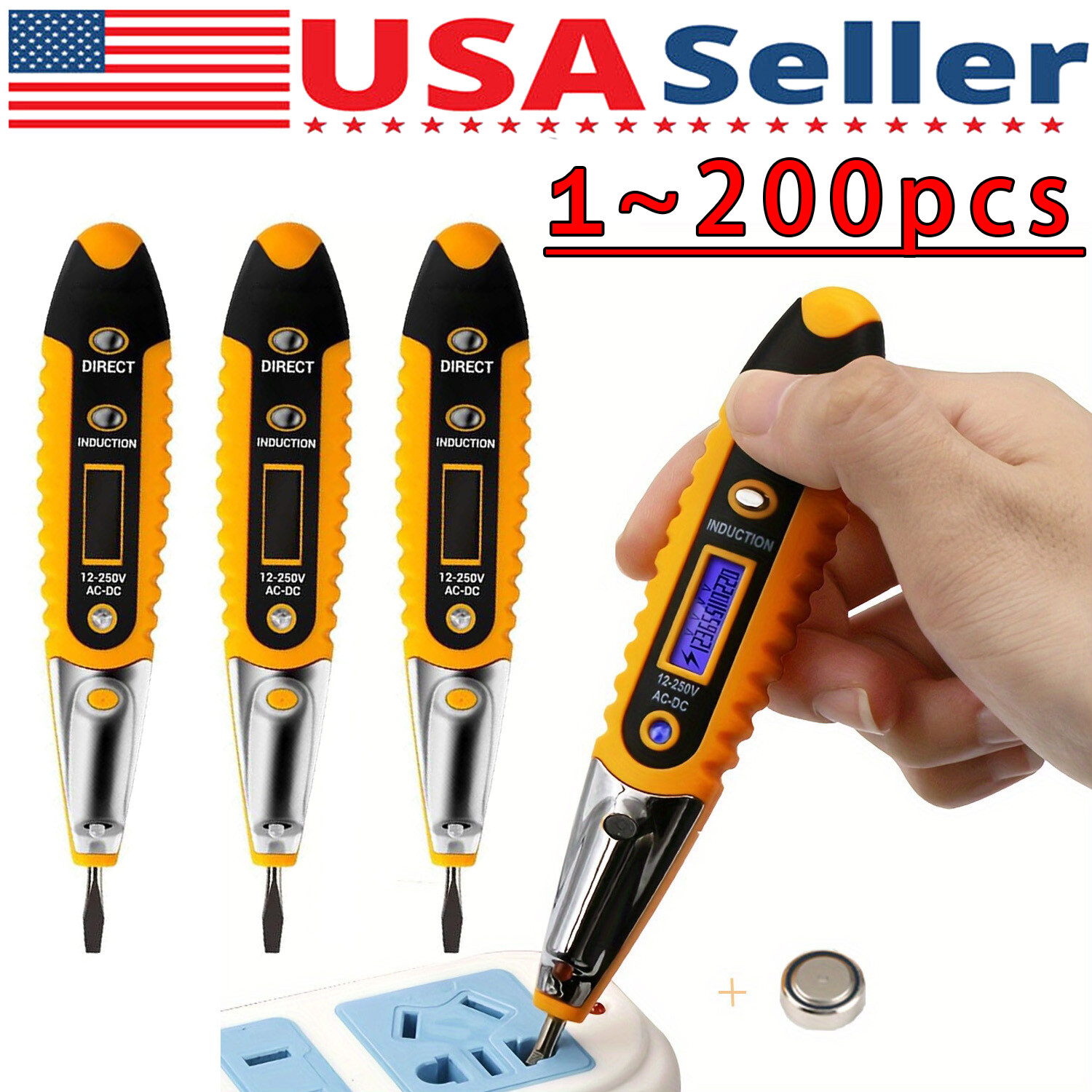
Highlights
- Voltage range: Most pens cover 12-1000V AC; DC detection is usually separate and only on dual-mode models.
- Safety rating: CAT II handles household outlets; CAT III is required for distribution panels and fixed wiring.
- Sensitivity control: Adjustable two-level sensitivity reduces false alerts when tracing bundles or working near grounded metal.
- Alert type: Audible beeper plus flashing LED is standard; a sensitivity knob or button separates usable pens from toys.
Best use cases
- Best fit: Homeowners checking outlets, switches, and lamp sockets before minor repairs—pick a 12-1000V AC pen with CAT II and audible alert.
- Best fit: Electricians working in panels or tracing circuits—choose a CAT III/IV pen with adjustable sensitivity and a bright LED.
- Wrong fit: Diagnosing low-voltage DC automotive wiring—skip AC-only pens and use a dedicated DC voltage tester or multimeter.
- Wrong fit: Confirming a circuit is de-energized for lockout/tagout—never rely on a pen alone; use a properly rated multimeter or two-pole tester.
Buying tips
- Match the CAT rating to the environment: CAT II for portable appliances and outlets, CAT III for panelboards and feeders.
- Choose a pen with adjustable sensitivity so you can narrow the field when multiple cables run together.
- Check that the pen has a self-test function and a low-battery indicator; a silent failure is the main safety risk.
- For DC checks, verify the pen explicitly lists DC voltage detection—many 12-1000V pens are AC-only.
Specs
| Voltage Range | 12-1000V AC (DC on dual-mode) |
|---|---|
| Safety Category | CAT II / CAT III / CAT IV |
| Detection Type | Non-contact AC / dual AC-DC |
| Alert Type | Audible beep + LED flash |
Related searches
What to check before buying
- Confirm the pen's rated voltage range covers your highest expected voltage with margin (e.g., 1000V for 240V systems).
- Verify the CAT safety rating matches the panel or circuit category you will test.
- Ensure the pen uses a standard battery type (AAA or coin cell) you can source locally.
- Check the tip size fits your outlet slots and terminal blocks without forcing.
FAQ
Data sources: eBay / Amazon listings and product attribute feeds. Updated Nov 28, 2026.
Some links on this page are affiliate links. If you buy after clicking one, we may earn a commission at no extra cost to you. This does not change which products appear here or their order. Affiliate disclosure.