
Photos from current listings. Actual item, color, and included accessories may vary.
Electric Voltage Tester Buying Guide
An electric voltage tester is a safety instrument that detects live AC/DC conductors or verifies outlet wiring, ranging from non-contact pens to solenoid test lights and GFCI outlet testers. The core trade-off is between true CAT-rated safety circuitry and uncertified novelty pens that may not alert on hazardous voltage. Choose a tester with a declared CAT III/IV rating and correct voltage range for your environment; skip unrated units for mains or industrial work.
Median $13.58
Key takeaways
- Non-contact pens sense capacitive AC fields from 12–1000V but cannot verify DC polarity or load capacity; solenoid test lights draw current to confirm 6/12/24V DC circuits.
- CAT III 1000V and CAT IV 600V ratings define transient-overvoltage survival; an unrated pen offers no guaranteed protection against switching surges on mains panels.
- Outlet testers with GFCI trip buttons inject a small leakage current to verify protection at the receptacle, a function non-contact pens cannot perform.
At a glance
- Category
- Multimeters & Electrical Testers
- Last updated
- Nov 28, 2026
Current offers
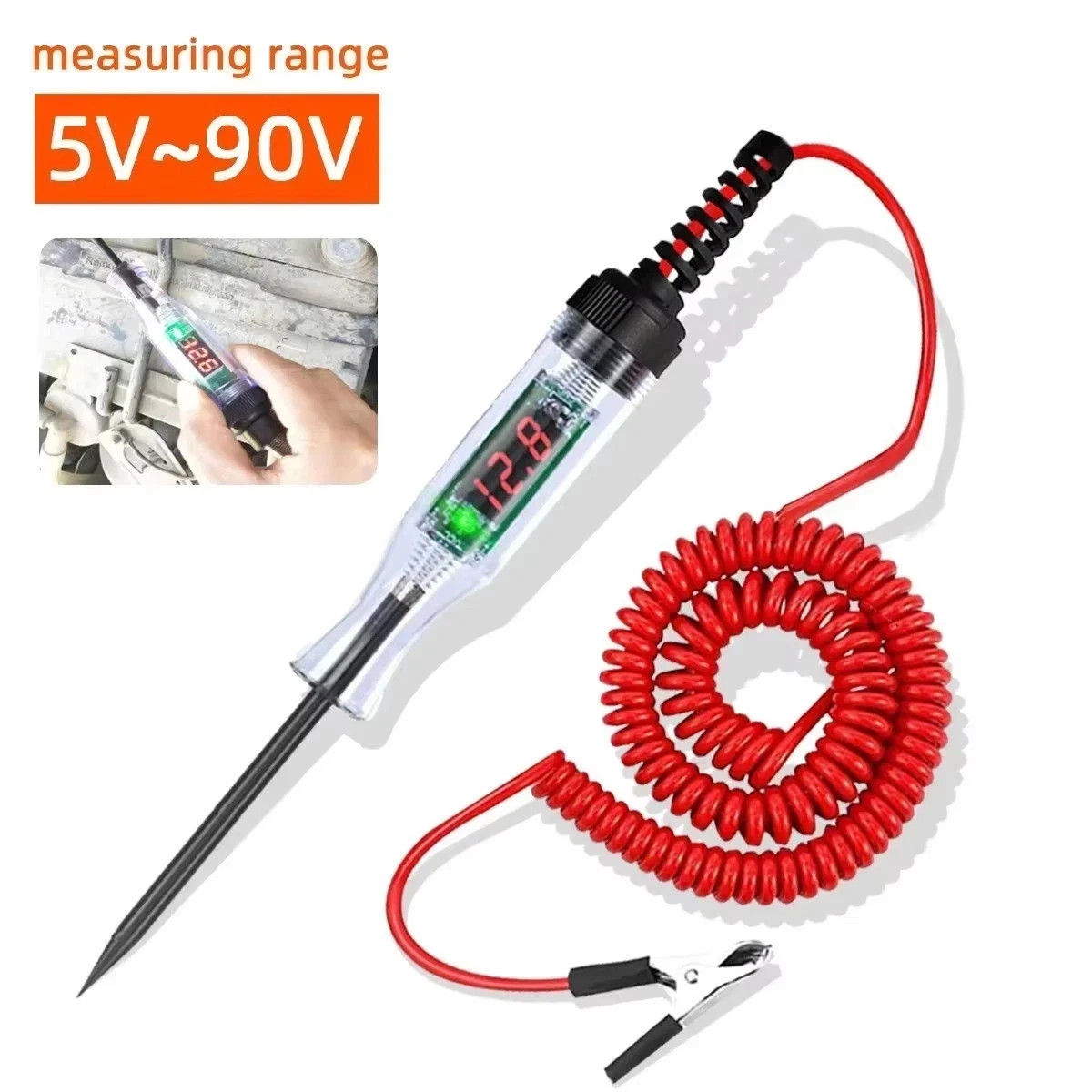 Digital Electric Voltage Circuit Tester Automotive Test Light Car Truck 6V12V24V$4.99View on eBay
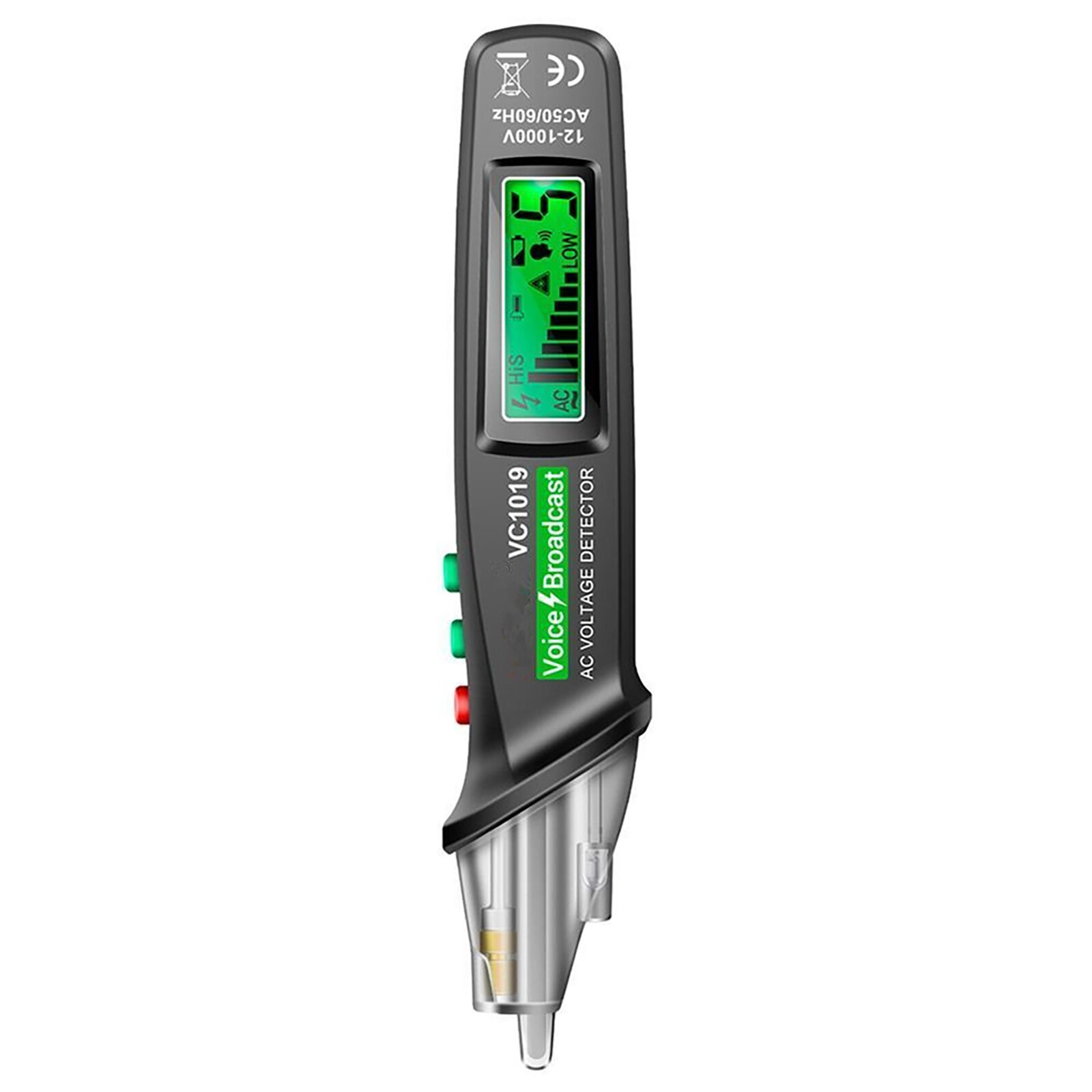 12V-1000V Positioning Voltage Tester Electric Wire Detector Test Pen Tool Kit$13.58View on eBay
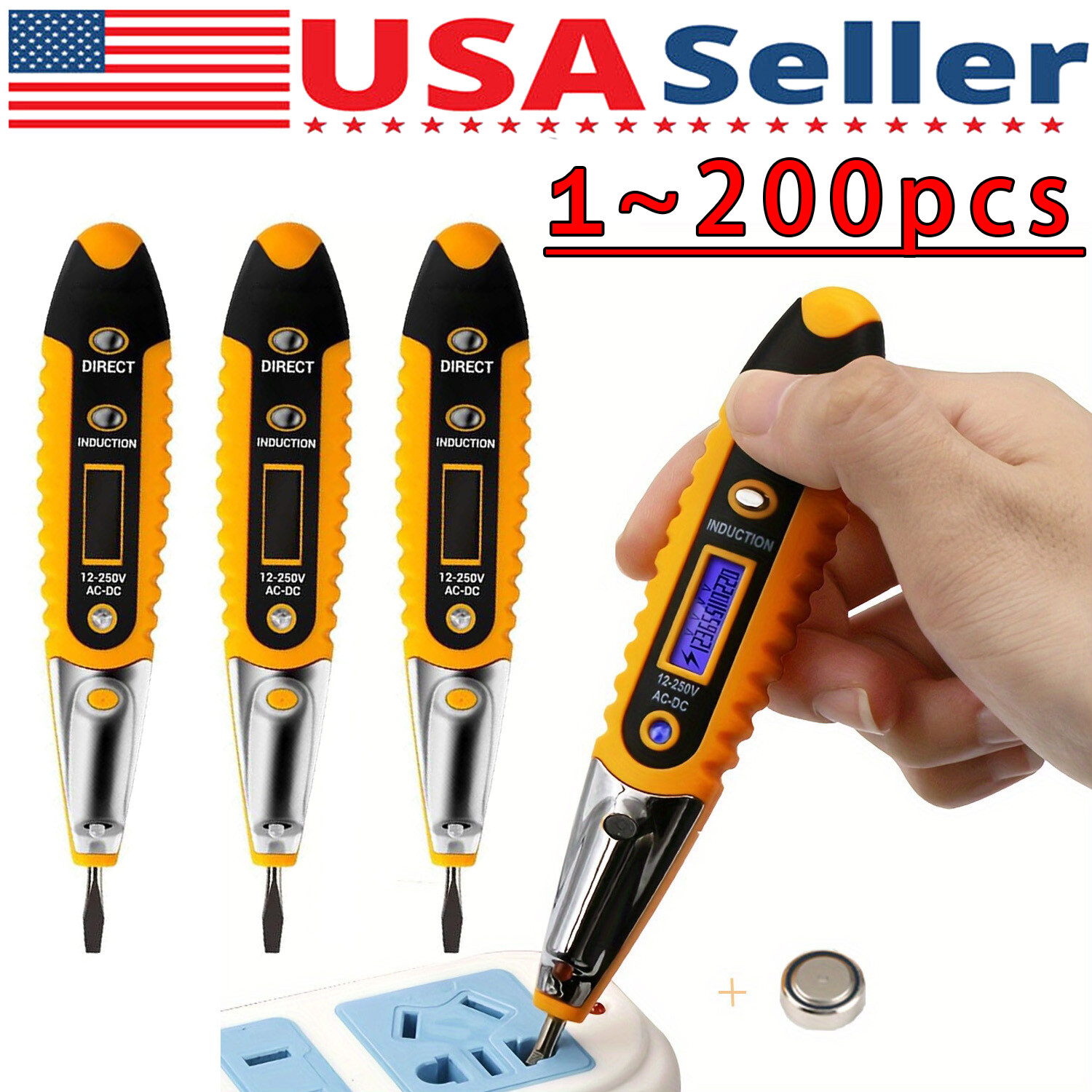 Voltage Electric Tester Volt Detector Test Pen AC DC Non-Contact Sensor 12-1000V$170.29Last checked Nov 27, 2026View on eBay
Highlights
- Non-contact pens sense capacitive AC fields from 12–1000V but cannot verify DC polarity or load capacity; solenoid test lights draw current to confirm 6/12/24V DC circuits.
- CAT III 1000V and CAT IV 600V ratings define transient-overvoltage survival; an unrated pen offers no guaranteed protection against switching surges on mains panels.
- Outlet testers with GFCI trip buttons inject a small leakage current to verify protection at the receptacle, a function non-contact pens cannot perform.
- Dual-range AC/DC pens cover 12–1000V for automotive and household use; 6/12/24V test lights are DC-only and unsuitable for 120/230V AC outlets.
Best use cases
- Best fit: non-contact 12–1000V AC/DC pen for quick wire identification, breaker mapping, and automotive 12/24V checks where no load test is needed.
- Best fit: solenoid test light for automotive 6/12/24V circuits because it loads the circuit to reveal weak grounds and parasitic draws a capacitive pen misses.
- Best fit: outlet tester with GFCI trip for home receptacles to confirm wiring polarity and protective-device function before upstream work.
- Wrong fit: using a non-contact pen as the sole verifier before touching mains terminals—pair it with a CAT-rated multimeter or solenoid tester for dead-circuit confirmation.
Buying tips
- Match voltage range to the system: 12–1000V pens cover automotive through mains, while 6/12/24V test lights are DC-only and will not indicate 120V AC.
- Demand a declared CAT III 1000V or CAT IV 600V rating for panel or feeder work; unrated pens lack specified transient withstand and arc-flash margin.
- Choose a pen with adjustable sensitivity if you must discriminate live conductors inside bundled cable; fixed-threshold pens false-trigger on adjacent wires.
- For outlet testing, pick a model with a GFCI test button and a clear wiring-fault legend; a plain voltage pen cannot verify ground or neutral integrity.
Specs
| Tester Type | Non-contact pen / solenoid / outlet |
|---|---|
| Voltage Range | 6-24V DC / 12-1000V AC-DC |
| Safety Rating | CAT III 1000V / CAT IV 600V |
| GFCI Test | Yes (outlet models) / No (pens) |
Related searches
What to check before buying
- Confirm the receptacle or circuit voltage (120/230V AC, 12/24V DC) matches the tester's declared range before first use.
- Verify the tester's CAT rating meets or exceeds the installation category of the panel or feeder you will probe.
- Test the unit on a known live circuit before each session; a silent pen on a known-live source means replace or recalibrate.
- For outlet testers, confirm the plug type matches your region's receptacle standard (NEMA 5-15, Schuko, BS 1363).
FAQ
Data sources: eBay / Amazon listings and product attribute feeds. Updated Nov 28, 2026.
Some links on this page are affiliate links. If you buy after clicking one, we may earn a commission at no extra cost to you. This does not change which products appear here or their order. Affiliate disclosure.