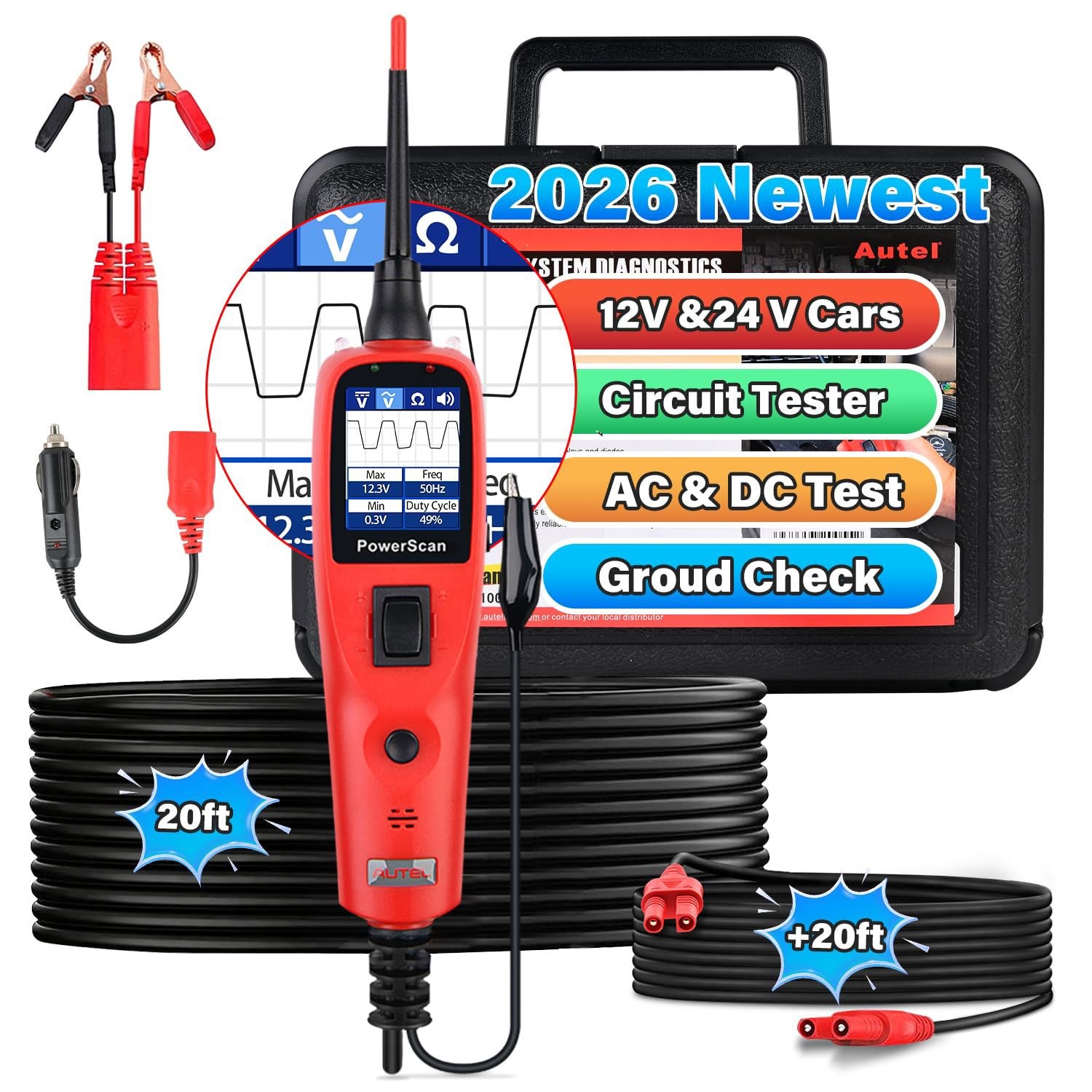

Photos from current listings. Actual item, color, and included accessories may vary.
Electrical Probe Tester Buying Guide
An electrical probe tester (often called a power probe or circuit tester) injects voltage and ground into automotive and low-voltage circuits to trace faults, test components, and verify continuity. The primary trade-off is between basic voltage-only testers and powered probes with built-in circuit protection, display, and long cable reach. Buy a powered probe with reverse-polarity and overload protection for diagnostic work; a simple voltage tester is only acceptable for quick 12V presence checks.
Key takeaways
- Powered probes supply battery voltage and ground through the tip, letting you activate relays, motors, and bulbs without jumpers; basic testers only sense voltage.
- Automotive-rated probes cover 8-35 DCV or 12/24V systems; 12V-only units will not safely test 24V truck circuits.
- Circuit protection (resettable fuse or breaker) and reverse-polarity protection prevent harness damage when probing sensitive ECM-driven circuits.
At a glance
- Category
- Multimeters & Electrical Testers
- Last updated
- Nov 28, 2026
Current offers
Highlights
- Powered probes supply battery voltage and ground through the tip, letting you activate relays, motors, and bulbs without jumpers; basic testers only sense voltage.
- Automotive-rated probes cover 8-35 DCV or 12/24V systems; 12V-only units will not safely test 24V truck circuits.
- Circuit protection (resettable fuse or breaker) and reverse-polarity protection prevent harness damage when probing sensitive ECM-driven circuits.
- Cable length matters: 4 m reach handles engine bays; 6 m or dual-cable 2-in-1 kits reach trailers, rear harnesses, and lifted vehicles.
Best use cases
- Best fit: buy a 12/24V powered probe with TFT display and 6 m cable for mixed fleet work and trailer diagnostics; skip 12V-only voltage testers.
- Best fit: choose a 4 m cable 8-35 DCV power probe for engine-bay and under-dash work where long leads tangle; skip extra-length kits unless you service trailers.
- Best fit: pick a 2-in-1 kit with extension cable for one-person testing of rear lights, fuel pumps, and ABS sensors; a basic continuity tester is the wrong tool.
- Wrong fit: do not use an automotive probe on household AC mains or high-voltage EV traction circuits; use a CAT III/IV rated multimeter instead.
Buying tips
- Match voltage range to your fleet: 8-35 DCV covers 12V and 24V systems; a 12V-only tester is unsafe on 24V trucks.
- Demand a resettable fuse or circuit breaker and reverse-polarity protection; unprotected probes can destroy ECM driver circuits.
- Choose cable length by task: 4 m for engine bays, 6 m or 2-in-1 extension kits for trailers, rear harnesses, and long wheelbases.
- Prefer ABS or rugged polymer shells with clearly marked probe tips; thin PVC housings crack in cold shops and drop-prone use.
Specs
| Voltage Range | 8-35 DCV (12V/24V systems) |
|---|---|
| Probe Type | Powered circuit tester vs voltage-only |
| Cable Length | 4 m standard / 6 m extended |
| Protection | Resettable fuse + reverse polarity |
Related searches
What to check before buying
- Confirm your vehicle system voltage (12V or 24V) and that the tester's DCV range covers it with margin.
- Measure the distance from battery to the furthest circuit you test; add 1-2 m for routing to choose 4 m vs 6 m cable.
- Verify the probe includes both positive and negative clip leads and a resettable protection device.
- Check tip compatibility with your harness connectors (standard 4 mm probe vs back-probe pins) before buying.
FAQ
Data sources: eBay / Amazon listings and product attribute feeds. Updated Nov 28, 2026.
Some links on this page are affiliate links. If you buy after clicking one, we may earn a commission at no extra cost to you. This does not change which products appear here or their order. Affiliate disclosure.