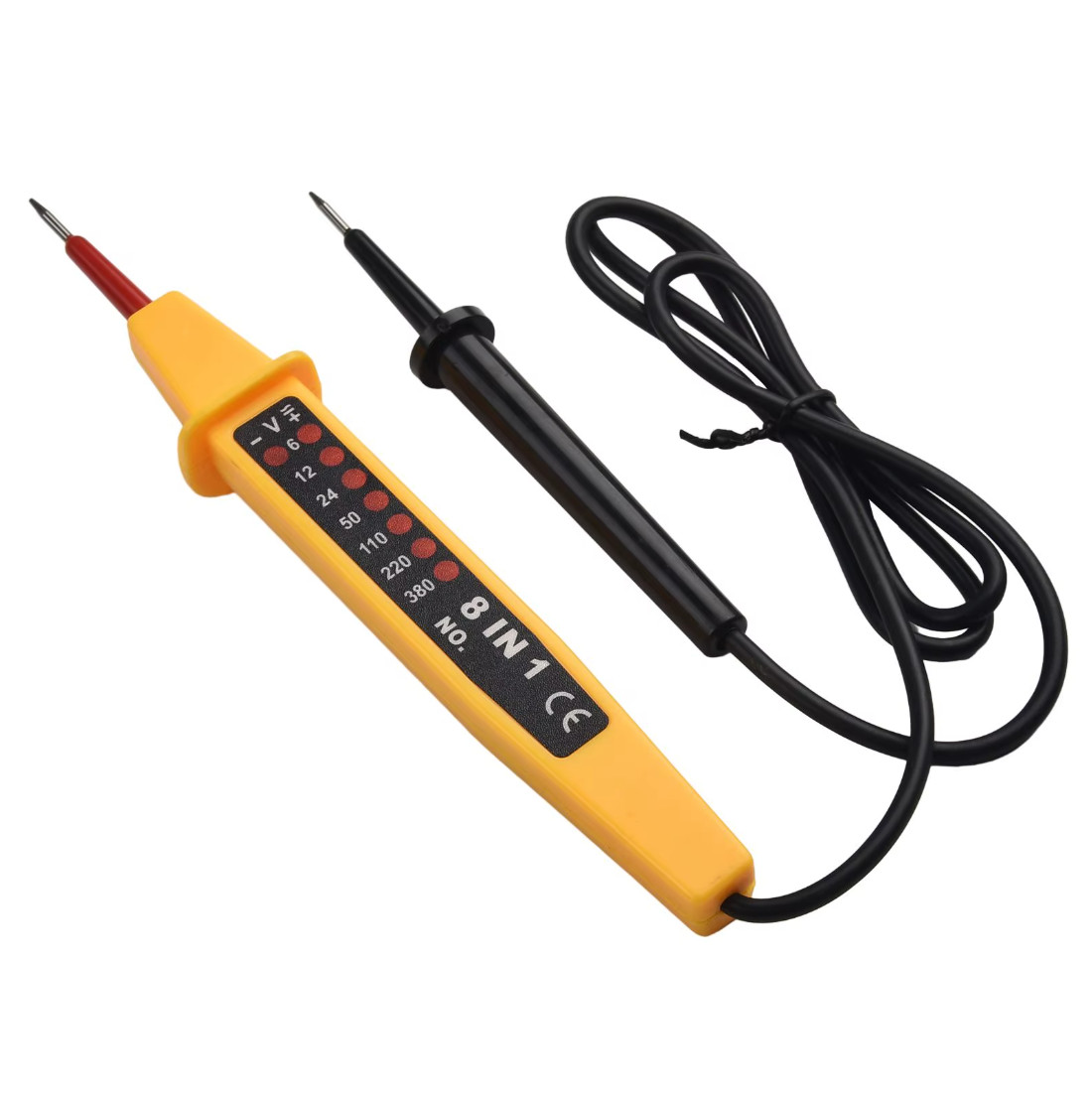

Photos from current listings. Actual item, color, and included accessories may vary.
Electrical Tester Buying Guide
Electrical testers span non-contact voltage pens, outlet/GFCI testers, digital multimeters, and automotive power-probe circuit testers, each defined by its safety rating and measurement architecture. The key trade-off is CAT safety rating and true-RMS accuracy versus basic continuity-only checking, and the decision rule is simple: match the tester's CAT rating and voltage range to the circuit's live fault energy, not to the lowest price.
Median $34.99
Key takeaways
- CAT III 600V or CAT IV 600V ratings are mandatory for panelboard and service-entry work; CAT II 300V units are only safe for appliance-level testing.
- True-RMS sensing is required for accurate AC readings on variable-frequency drives, dimmers, and modern HVAC inverters where averaging meters read 10-30% low.
- Non-contact voltage pens detect 50-1000V AC via capacitive coupling but cannot confirm absence of voltage alone; a solenoid or multimeter load test is the definitive check.
At a glance
- Category
- Multimeters & Electrical Testers
- Last updated
- Nov 28, 2026
Current offers
Highlights
- CAT III 600V or CAT IV 600V ratings are mandatory for panelboard and service-entry work; CAT II 300V units are only safe for appliance-level testing.
- True-RMS sensing is required for accurate AC readings on variable-frequency drives, dimmers, and modern HVAC inverters where averaging meters read 10-30% low.
- Non-contact voltage pens detect 50-1000V AC via capacitive coupling but cannot confirm absence of voltage alone; a solenoid or multimeter load test is the definitive check.
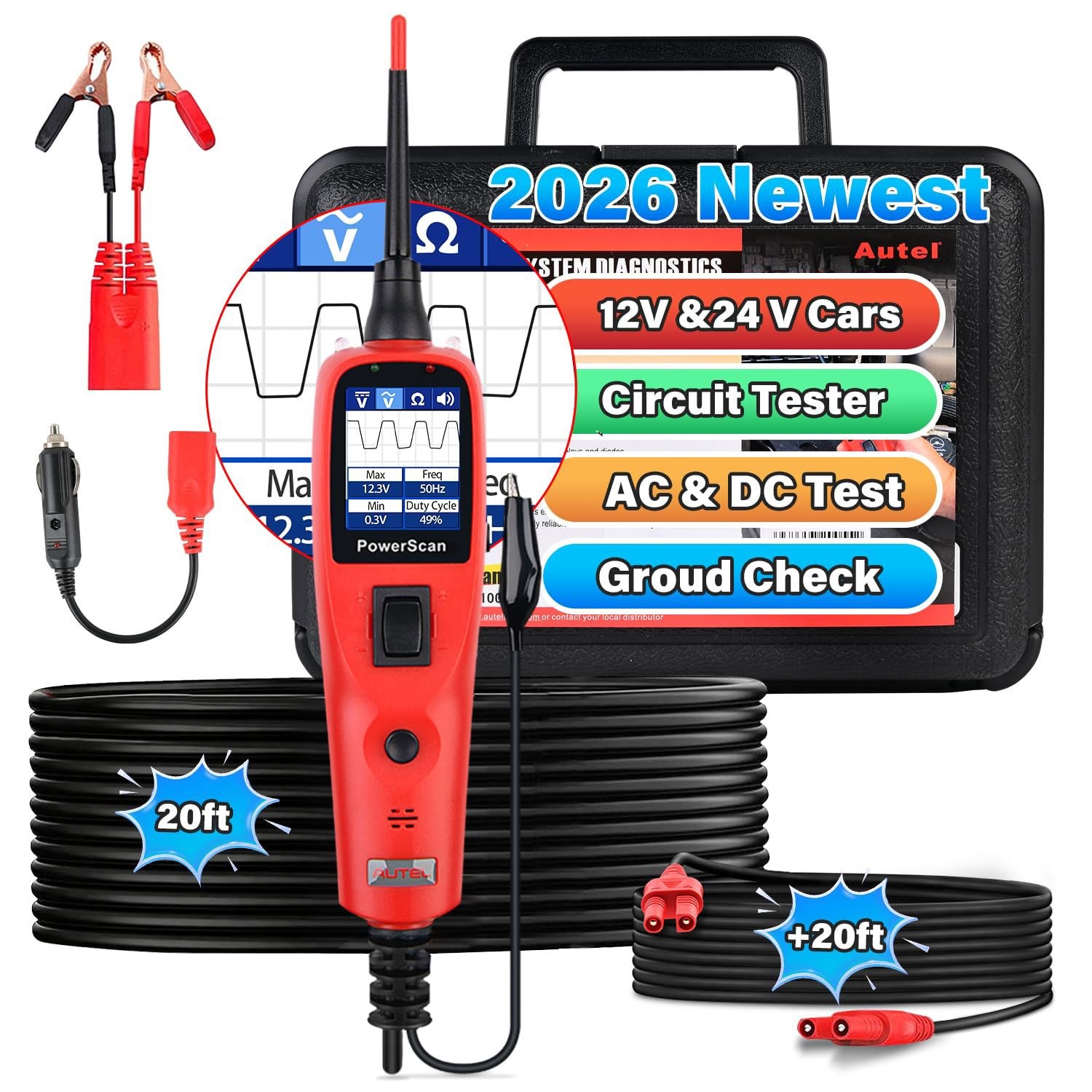
- Automotive power probes output 12V/24V and read 8-35V DC with 4-6m cables; household outlet testers use three-LED or GFCI trip logic for 120V receptacles only.
Best use cases
- For home receptacle and GFCI checks, pick a three-prong outlet tester with GFCI trip button; skip automotive power probes, which cannot test 120V receptacles safely.
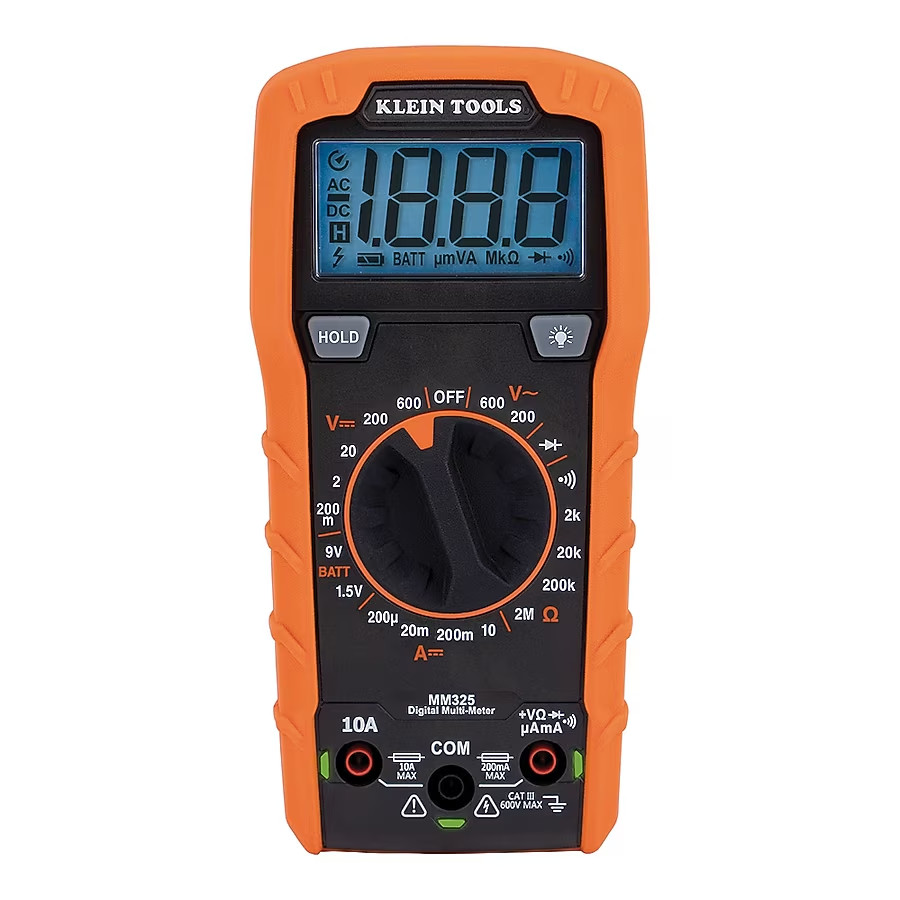
- For panelboard, HVAC, and industrial diagnostics, choose a CAT III 600V true-RMS multimeter with 10A current range; skip CAT II pens and basic continuity testers.
- For 12V/24V automotive parasitic-draw and relay testing, pick a power probe with 8-35V DC range and 4m+ cable; skip household outlet testers and non-contact pens.
- For quick live-wire presence checks before cutting, carry a CAT IV 1000V non-contact pen as a secondary indicator, never as the sole verification tool.
Buying tips
- Match CAT rating to location: CAT III 600V minimum for distribution boards, CAT IV 600V for service entrances; CAT II 300V is appliance-only.
- Choose true-RMS for any AC measurement on VFDs, dimmers, or inverter HVAC; averaging meters misread non-sinusoidal waveforms by 10-30%.
- For automotive probes, confirm 8-35V DC range and at least 4m cable; 12V-only probes fail on 24V truck systems and long-reach engine bays.
- Verify the outlet tester's GFCI trip function and three-LED wiring chart; basic two-LED testers cannot identify open ground versus reversed polarity.
Specs
| Safety Rating | CAT II 300V to CAT IV 600V |
|---|---|
| AC Sensing | True-RMS vs averaging |
| Voltage Range | 8-35V DC auto / 50-1000V AC pen |
| Tester Type | Outlet / multimeter / power probe |
Related searches
What to check before buying
- Confirm the circuit's maximum voltage and CAT category before selecting a tester; a CAT II unit in a CAT III panel is a safety hazard.
- Measure receptacle spacing and test-lead length: standard 4mm banana jacks fit most multimeters, but deep outlets need slim probes.
- Check plug standard: North American outlet testers use NEMA 5-15; UK/EU buyers need Type G or Schuko testers respectively.
- For automotive use, verify 12V/24V system voltage and fuse-tap compatibility; power probes need a good chassis ground and 10A+ circuit access.
FAQ
Data sources: eBay / Amazon listings and product attribute feeds. Updated Nov 28, 2026.
Some links on this page are affiliate links. If you buy after clicking one, we may earn a commission at no extra cost to you. This does not change which products appear here or their order. Affiliate disclosure.