
Photos from current listings. Actual item, color, and included accessories may vary.
Multimeter Voltage Tester Buying Guide
A multimeter voltage tester combines a digital multimeter and non-contact voltage (NCV) detection to verify live AC/DC circuits, continuity, and outlet wiring. The key trade-off is safety and accuracy (CAT III/IV rating, true-RMS) versus cost and feature depth; cheap models often lack proper fusing and input protection. Decision rule: buy a CAT III-rated true-RMS meter with a 10A fused current input; skip any meter without a CAT safety rating or with a non-fused 10A port.
Median $34.99
Key takeaways
- True-RMS vs average-sensing: TRMS meters correctly read distorted waveforms from inverters, dimmers, and VFDs; average-sensing meters can be off by 10-30% on non-sinusoidal AC.
- CAT safety rating: CAT III 600V minimum for residential panel/outlet work; CAT IV 600V for service entrance/meter base; CAT II 300V is only safe for appliance-level testing.
- Count resolution: 4000-count displays resolve 0.1V AC and 0.1Ω; 6000-count adds 0.01V and 0.01Ω; 20000+ count meters are needed for precise low-voltage or component work.
At a glance
- Category
- Multimeters & Electrical Testers
- Last updated
- Nov 28, 2026
Current offers
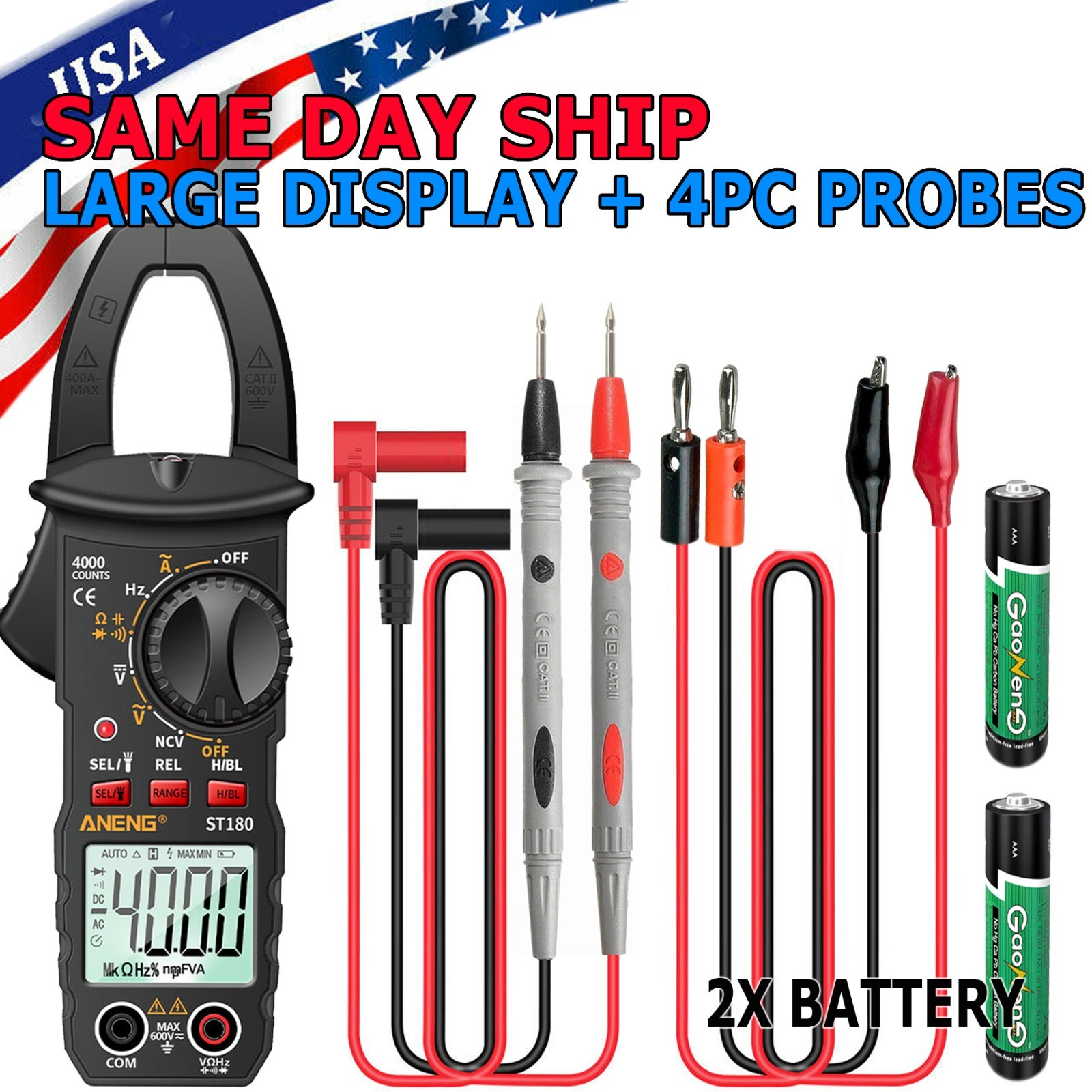 Digital Multimeter Tester AC DC Voltage RMS Amps Clamp Meter Auto Range Handheld$15.95Last checked Nov 27, 2026View on eBay
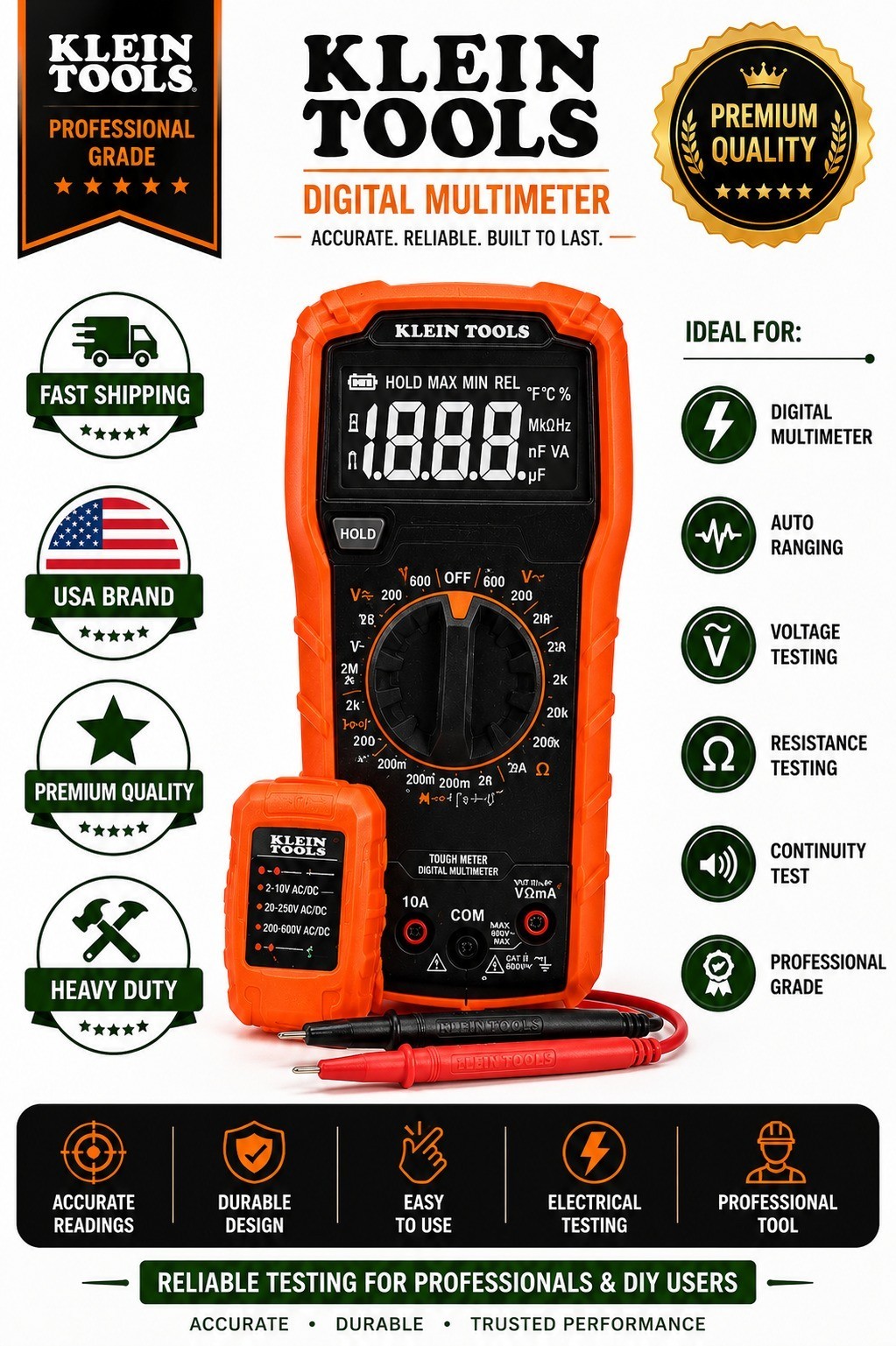 Klein Tools 69149P Digital Multimeter Voltage Tester Outlet Test Kit New$34.99View on eBay
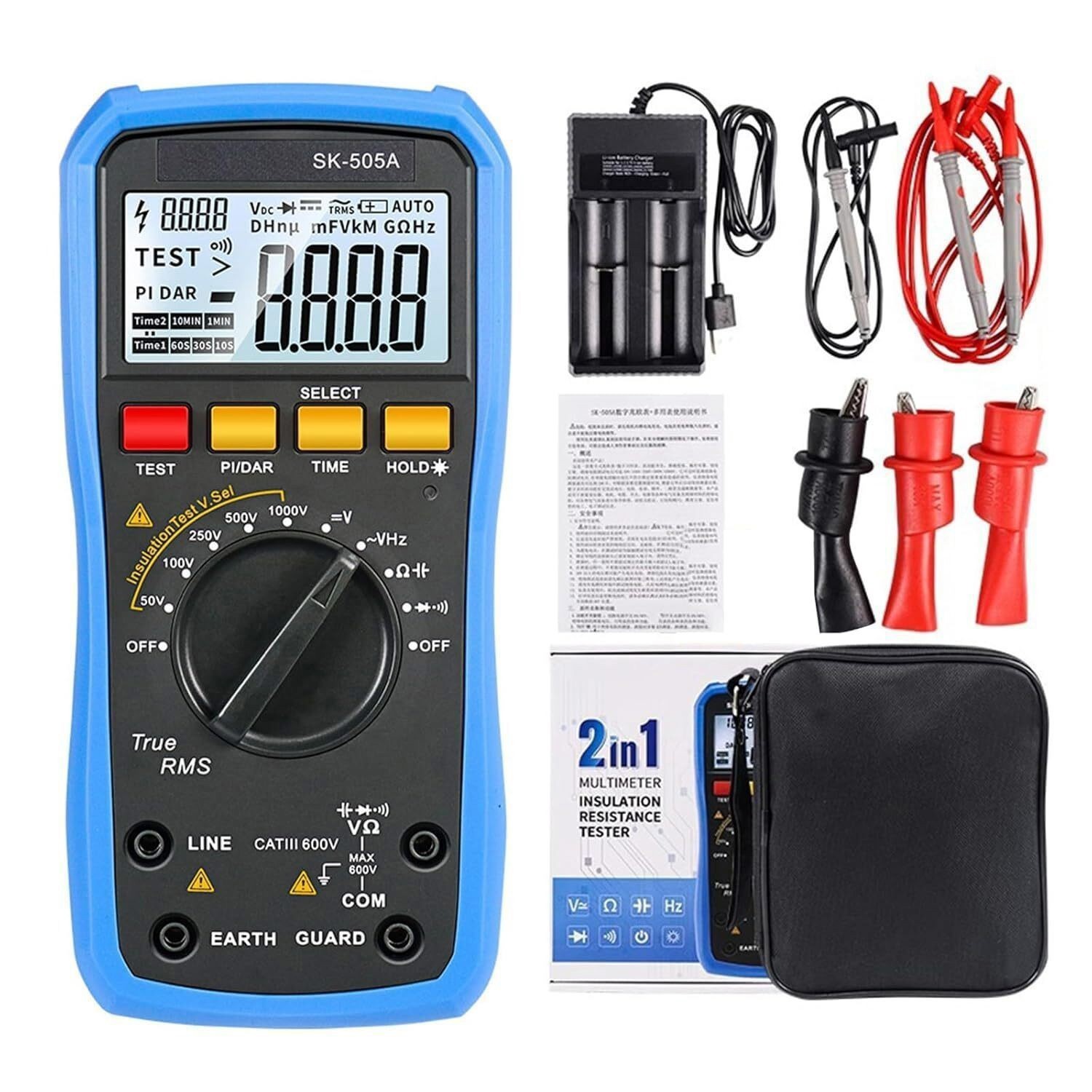 Digital Megohmmeter Insulation Tester 2500V + Multimeter AC DC Voltage Capacitan$56.00View on eBay
Highlights
- True-RMS vs average-sensing: TRMS meters correctly read distorted waveforms from inverters, dimmers, and VFDs; average-sensing meters can be off by 10-30% on non-sinusoidal AC.
- CAT safety rating: CAT III 600V minimum for residential panel/outlet work; CAT IV 600V for service entrance/meter base; CAT II 300V is only safe for appliance-level testing.
- Count resolution: 4000-count displays resolve 0.1V AC and 0.1Ω; 6000-count adds 0.01V and 0.01Ω; 20000+ count meters are needed for precise low-voltage or component work.
- NCV sensitivity tiers: basic NCV beeps near live wires; adjustable-sensitivity NCV distinguishes hot vs. neutral and reduces false positives in bundled cable.
Best use cases
- Home outlet/switch testing: pick a CAT III 600V true-RMS meter with NCV and a dedicated outlet test kit (like the Klein 69149P) — skip CAT II-only or unfused meters.
- Automotive/DC diagnostics: choose a meter with 10A DC current, min/max recording, and 1ms peak capture; skip TRMS-only AC-focused models with low current resolution.
- HVAC/industrial troubleshooting: select a CAT III 600V TRMS meter with temperature and LoZ (low-impedance) mode; skip basic 2000-count meters that ghost-read on long runs.
- Insulation testing: use a dedicated megohmmeter (250V/500V/1000V/2500V) — a standard multimeter cannot measure insulation resistance above its 40MΩ range.
Buying tips
- Verify the CAT rating printed on the meter face, not just the manual: CAT III 600V requires 8mm creepage and 10A HRC fuses; CAT II is not acceptable for panel work.
- Choose true-RMS if you work on inverters, dimmers, or VFDs; average-sensing is fine for basic 60Hz sine-wave outlets but will misread modified sine wave.
- Match count to task: 4000-count for general electrical; 6000-count for electronics; 20000+ count for lab/calibration work where 0.05% DC accuracy matters.
- Ensure the 10A current input is fused and that the meter has a separate mA/µA port; unfused 10A ports are a fire hazard on high-energy circuits.
Specs
| Safety Rating | CAT II 300V to CAT IV 600V |
|---|---|
| AC Measurement | True-RMS vs average-sensing |
| Display Count | 2000 / 4000 / 6000 / 20000+ |
| Current Input | Fused 10A + separate mA/µA |
Related searches
What to check before buying
- Confirm your breaker panel voltage (120V/240V split-phase in North America, 230V single-phase elsewhere) and buy a meter rated at least 600V AC/DC.
- Measure your hand span and choose a meter with a 1.5–2.0 in (38–50 mm) body width for one-hand grip; oversized clamp meters are awkward in tight panels.
- Check test lead length: 24–48 in (60–120 cm) leads reach most residential panels; 60 in+ leads are needed for HVAC rooftop work.
- Verify probe tip diameter (2 mm standard, 4 mm for banana jacks) matches your outlet/terminal needs; 2 mm tips fit standard 120V receptacles.
FAQ
Data sources: eBay / Amazon listings and product attribute feeds. Updated Nov 28, 2026.
Some links on this page are affiliate links. If you buy after clicking one, we may earn a commission at no extra cost to you. This does not change which products appear here or their order. Affiliate disclosure.