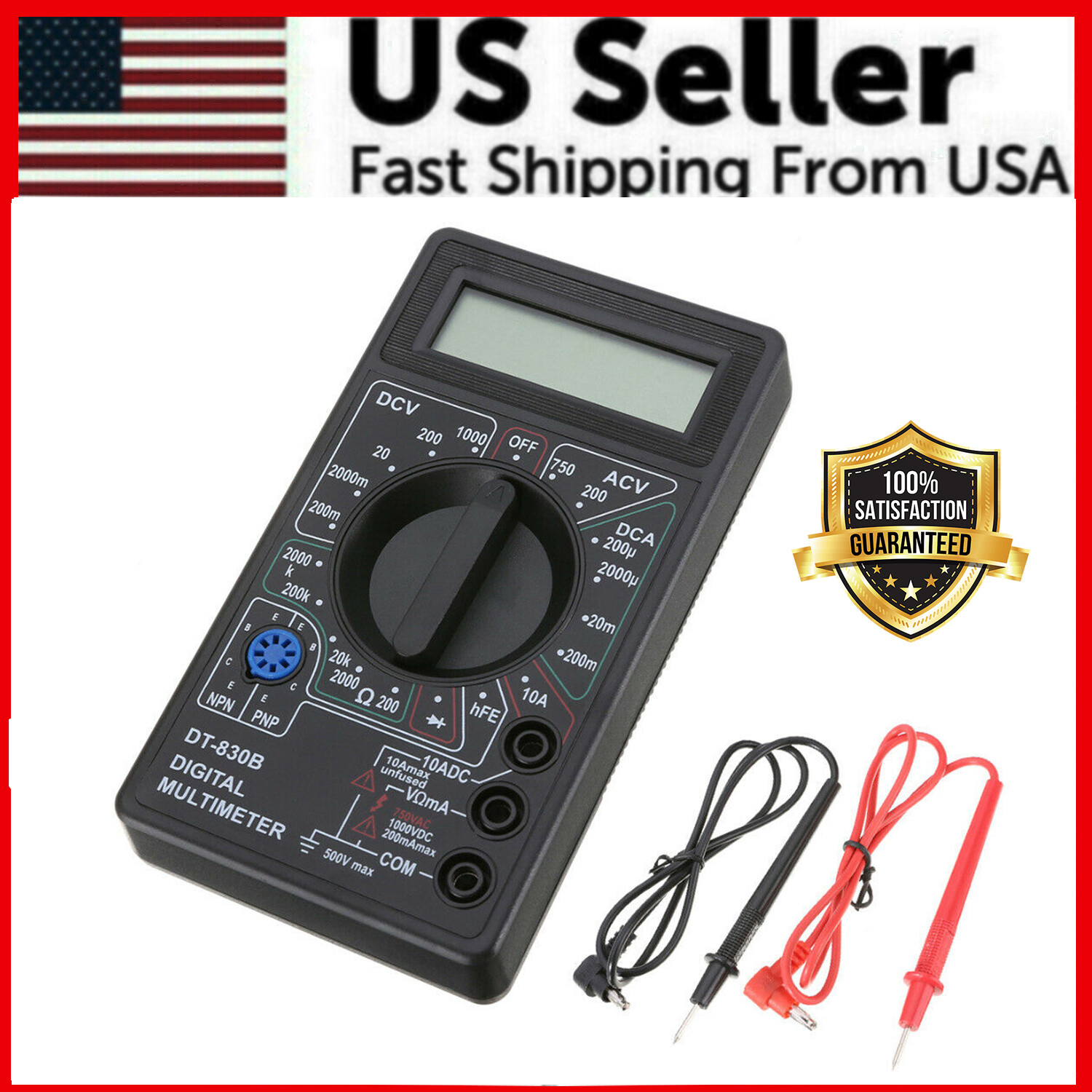

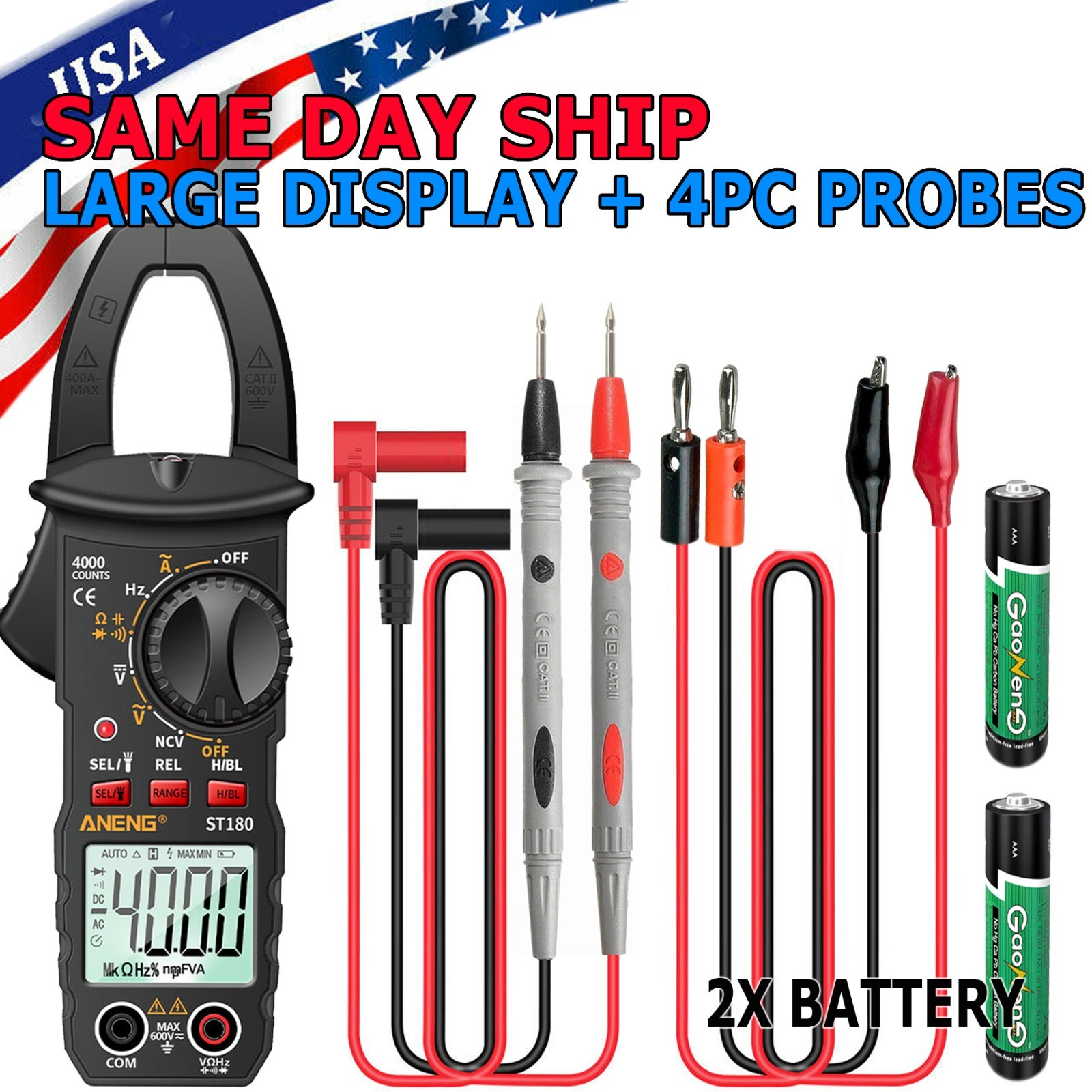
Photos from current listings. Actual item, color, and included accessories may vary.
Voltage Meter Tester Buying Guide
A voltage meter tester spans handheld digital multimeters, clamp meters, and fixed smart power meters that measure AC/DC voltage and often current, resistance, and continuity. The core trade-off is measurement architecture and safety rating: auto-ranging True-RMS units with fused inputs and CAT III/IV protection versus cheap manual-ranging meters with unverified input impedance and no transient protection. Buy a True-RMS auto-ranging meter rated CAT III 600V or better for mains work; skip unrated budget meters for anything beyond low-voltage diagnostics.
Median $12.45
Key takeaways
- Auto-ranging meters select the correct measurement range electronically, eliminating dial errors; manual-ranging models require you to pick the range and can be damaged by over-range input.
- True-RMS (root-mean-square) measurement is essential for accurate AC readings on non-sinusoidal loads like dimmers, VFDs, and switch-mode supplies; averaging meters read 10-30% low on those waveforms.
- CAT safety ratings define transient withstand: CAT II for household outlets, CAT III for distribution panels and fixed wiring, CAT IV for service entrance; a CAT III 600V rating is the practical minimum for panel work.
At a glance
- Category
- Multimeters & Electrical Testers
- Last updated
- Nov 28, 2026
Current offers
Highlights
- Auto-ranging meters select the correct measurement range electronically, eliminating dial errors; manual-ranging models require you to pick the range and can be damaged by over-range input.
- True-RMS (root-mean-square) measurement is essential for accurate AC readings on non-sinusoidal loads like dimmers, VFDs, and switch-mode supplies; averaging meters read 10-30% low on those waveforms.
- CAT safety ratings define transient withstand: CAT II for household outlets, CAT III for distribution panels and fixed wiring, CAT IV for service entrance; a CAT III 600V rating is the practical minimum for panel work.
- Clamp meters measure AC (and some DC) current inductively without breaking the circuit, while inline multimeters use a fused series connection; smart CT-clamp power meters split into WiFi three-phase monitors for whole-home or subpanel logging.
Best use cases
- Household outlet and appliance diagnostics: pick a True-RMS auto-ranging handheld multimeter with CAT III 600V rating, 10A fused current input, and continuity buzzer; skip unrated pen-style testers.
- HVAC, motor, and pump current checks: choose a clamp meter with AC current ranges to 400A+ and True-RMS AC voltage; skip inline-only multimeters that require breaking the circuit for current.
- Whole-home or three-phase energy monitoring: select a WiFi CT-clamp power meter with bi-directional measurement and leakage sensing; skip handheld meters for permanent logging.
- Low-voltage electronics and battery testing: a basic auto-ranging multimeter with DC voltage, resistance, diode, and capacitance ranges suffices; a CAT IV panel meter is unnecessary overkill.
Buying tips
- Match the CAT rating to the panel: CAT III 600V minimum for distribution boards, CAT IV 600V for service entrance; the CAT number and voltage must be printed on the meter face.
- Check input impedance: 10 MΩ is standard for general electronics; low-impedance (LoZ) modes help reject ghost voltage on mains wiring but are not for sensitive circuits.
- Verify current measurement path: inline meters need a fused 10A input and separate mA/µA jack; clamp meters should specify AC amp range and jaw opening size for your conductor diameter.
- For smart power meters, confirm CT clamp count and phase configuration (single-phase vs three-phase), WiFi protocol (2.4 GHz only on most Tuya modules), and bi-directional support for solar backfeed.
Specs
| Measurement Type | True-RMS vs averaging |
|---|---|
| Safety Rating | CAT II / III / IV (600V-1000V) |
| Ranging | Auto-ranging vs manual |
| Current Method | Clamp inductive vs inline fused |
Related searches
What to check before buying
- Confirm your panel or outlet voltage and phase: single-phase 120/230V vs three-phase 208/400V determines whether a handheld meter or three-phase CT meter is required.
- Measure conductor diameter before buying a clamp meter; jaw openings typically range 1 inch to 2 inches and must clear the cable insulation.
- For fixed smart meters, verify a 2.4 GHz WiFi network exists at the panel location and that the CT clamp window fits your service conductors.
- Check probe and lead safety: silicone-insulated leads rated CAT III/IV and shrouded banana plugs are required for mains work; bare or thin PVC leads are low-voltage only.
FAQ
Data sources: eBay / Amazon listings and product attribute feeds. Updated Nov 28, 2026.
Some links on this page are affiliate links. If you buy after clicking one, we may earn a commission at no extra cost to you. This does not change which products appear here or their order. Affiliate disclosure.