
Photos from current listings. Actual item, color, and included accessories may vary.
Voltage Tester Buying Guide
Voltage testers split into non-contact pens (safety-first AC presence checks), receptacle/outlet testers (wiring and GFCI verification), and full multimeters (quantitative AC/DC measurement). The core trade-off is measurement speed and safety isolation versus quantitative accuracy and load testing. Buy a CAT-rated non-contact pen for quick AC presence checks; step up to a TRMS multimeter when you need volts, ohms, and continuity numbers.
Median $13.58
Key takeaways
- Non-contact pens sense capacitive AC field from 12-1000V or 90-1000V; dual-range models (12-1000V) detect low-voltage thermostat/landscape wiring that 90V-only pens miss.
- CAT safety ratings (CAT II 300V, CAT III 600V, CAT IV 1000V) define transient withstand; receptacle and panel work demands at least CAT III 600V on the meter's input rating.
- True RMS (TRMS) multimeters accurately read distorted waveforms from VFDs, dimmers, and electronics; averaging meters drift several percent on non-sinusoidal loads.
At a glance
- Category
- Multimeters & Electrical Testers
- Last updated
- Nov 28, 2026
Current offers
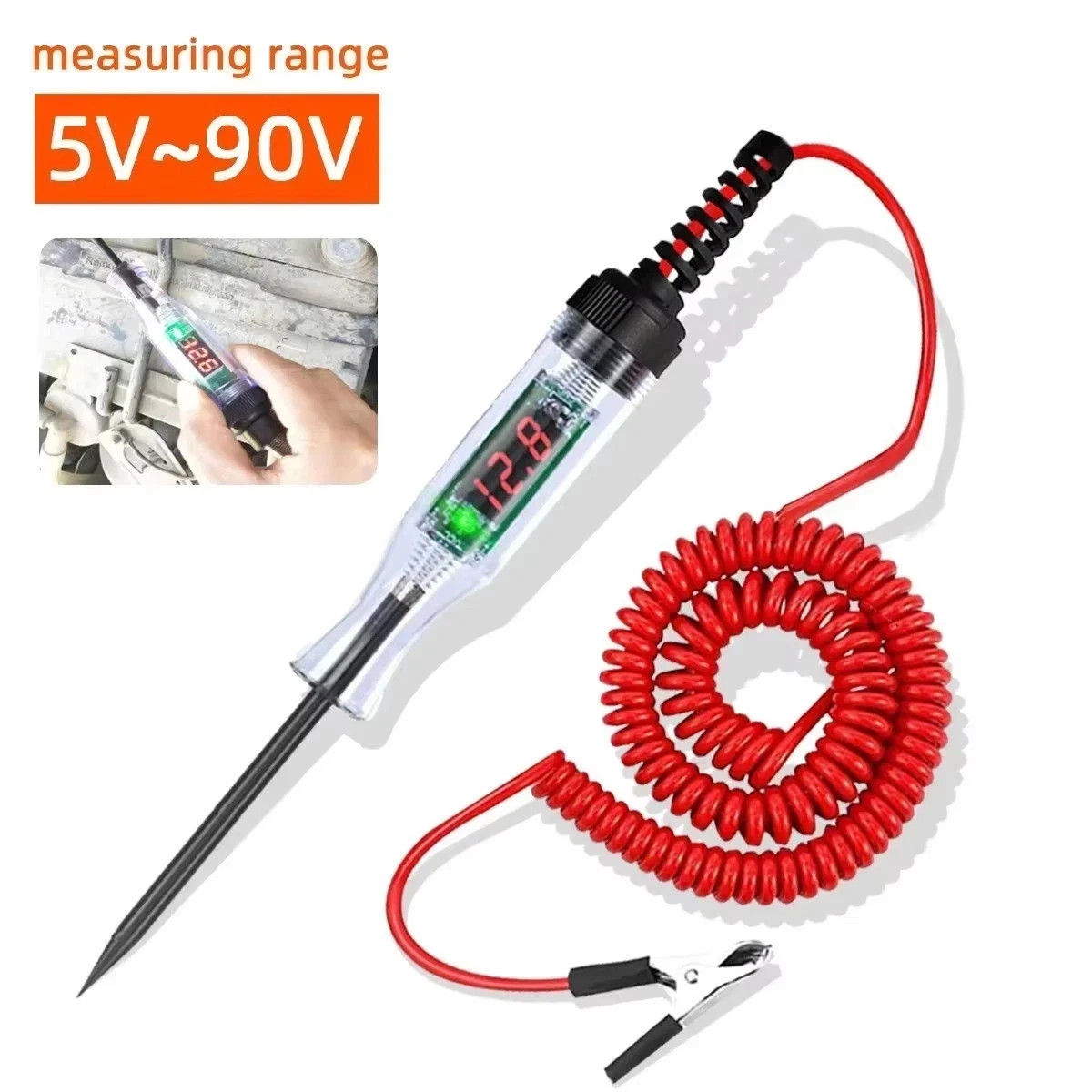 Digital Electric Voltage Circuit Tester Automotive Test Light Car Truck 6V12V24V$4.99View on eBay
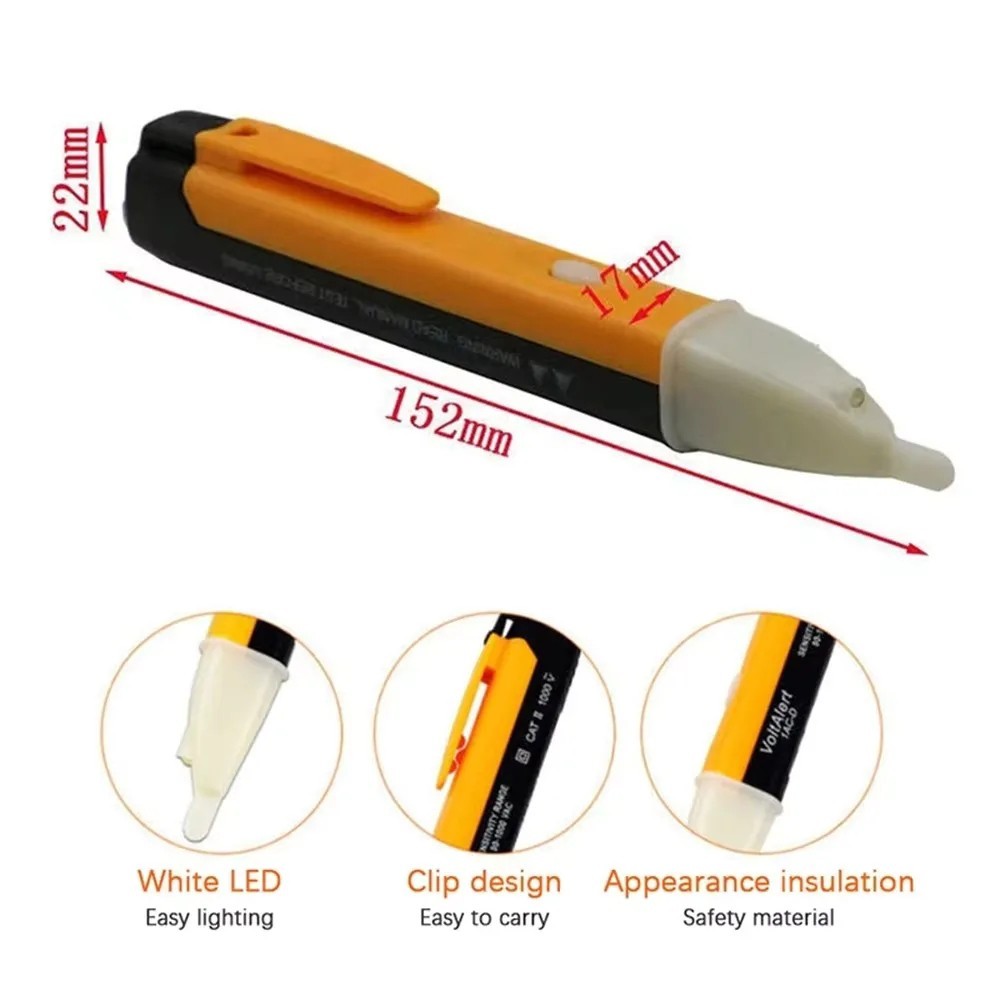 Non Contact AC Voltage Tester Pen 90-1000V LED Detector$6.89View on eBay
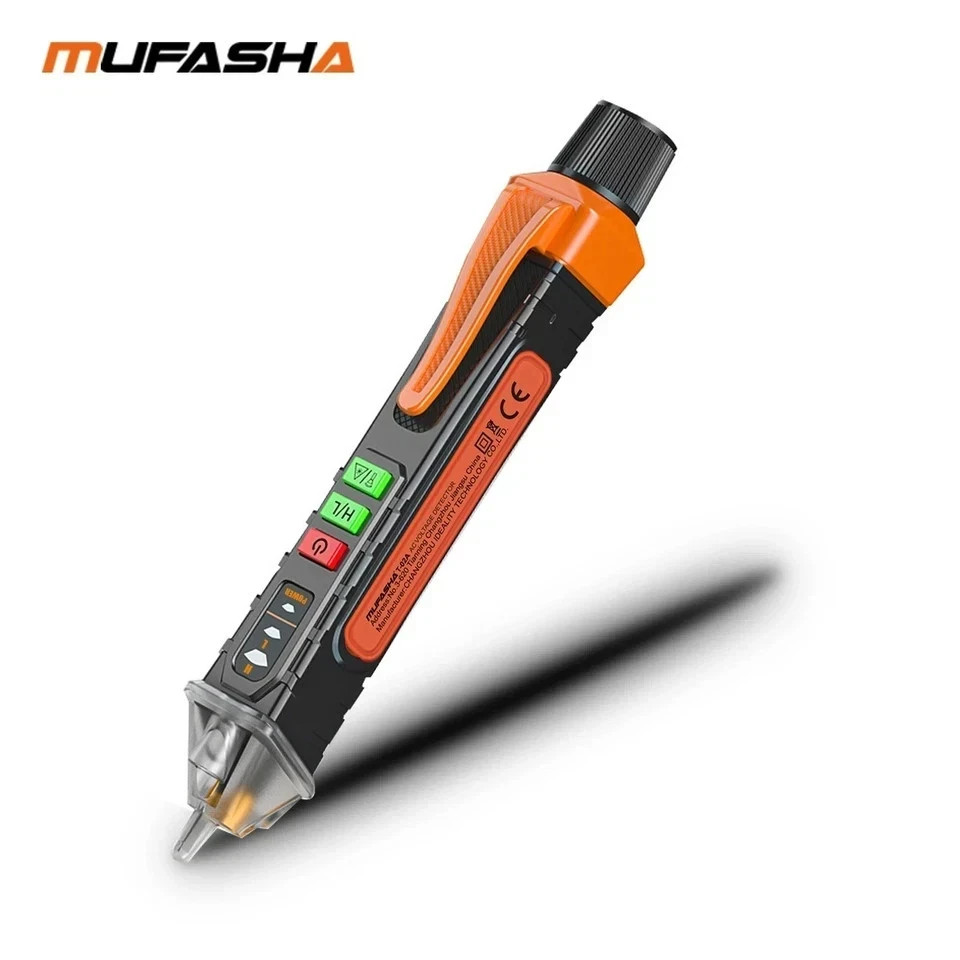 Non-Contact Voltage Detector 12-1000V AC Tester Pen Smart Breakpoint Finder$7.35View on eBay
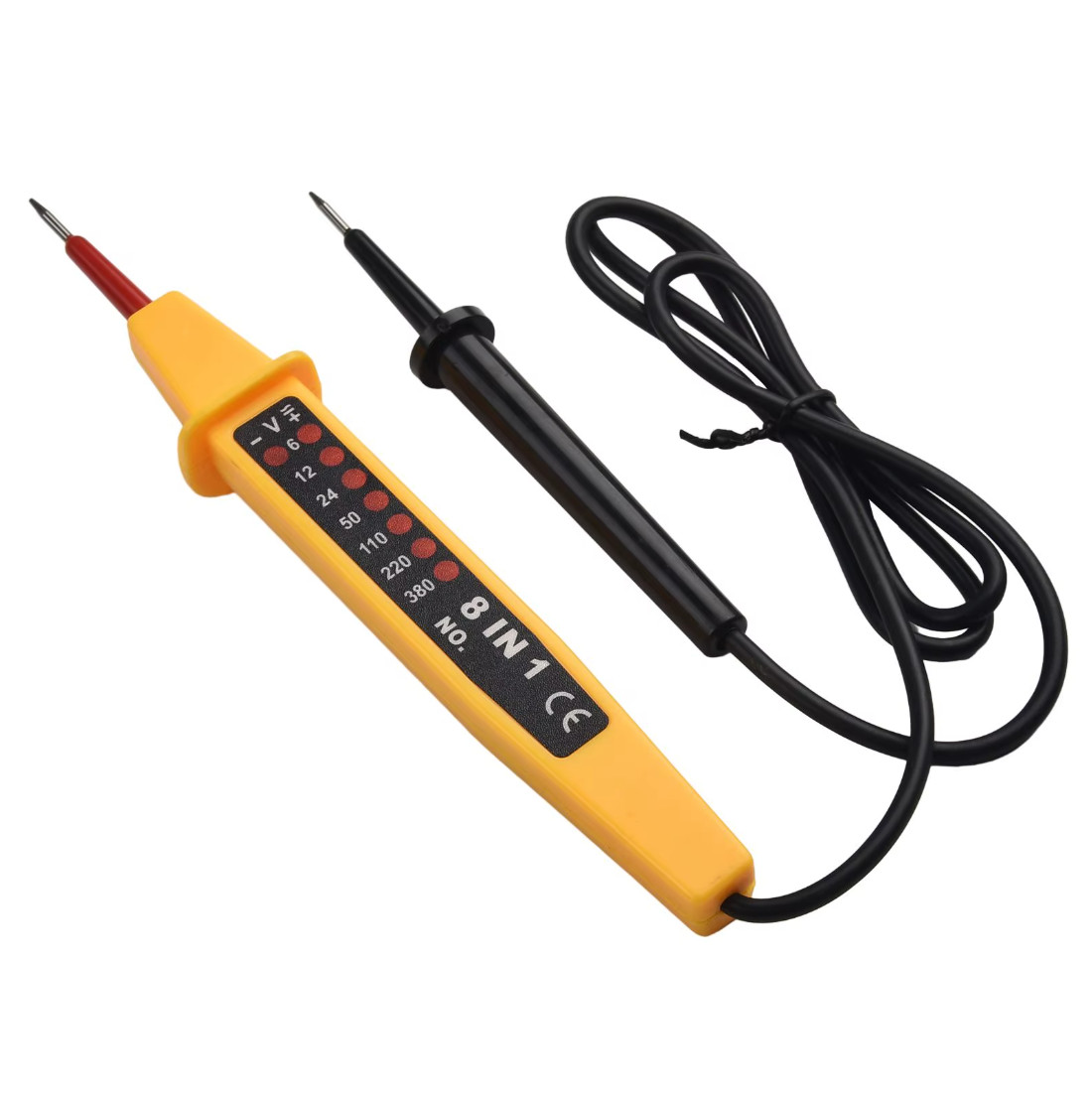 8-In-1 Tester Voltage AC DC 6-500V Auto Electrical Pen Circuit Detector Tester$7.99View on eBay
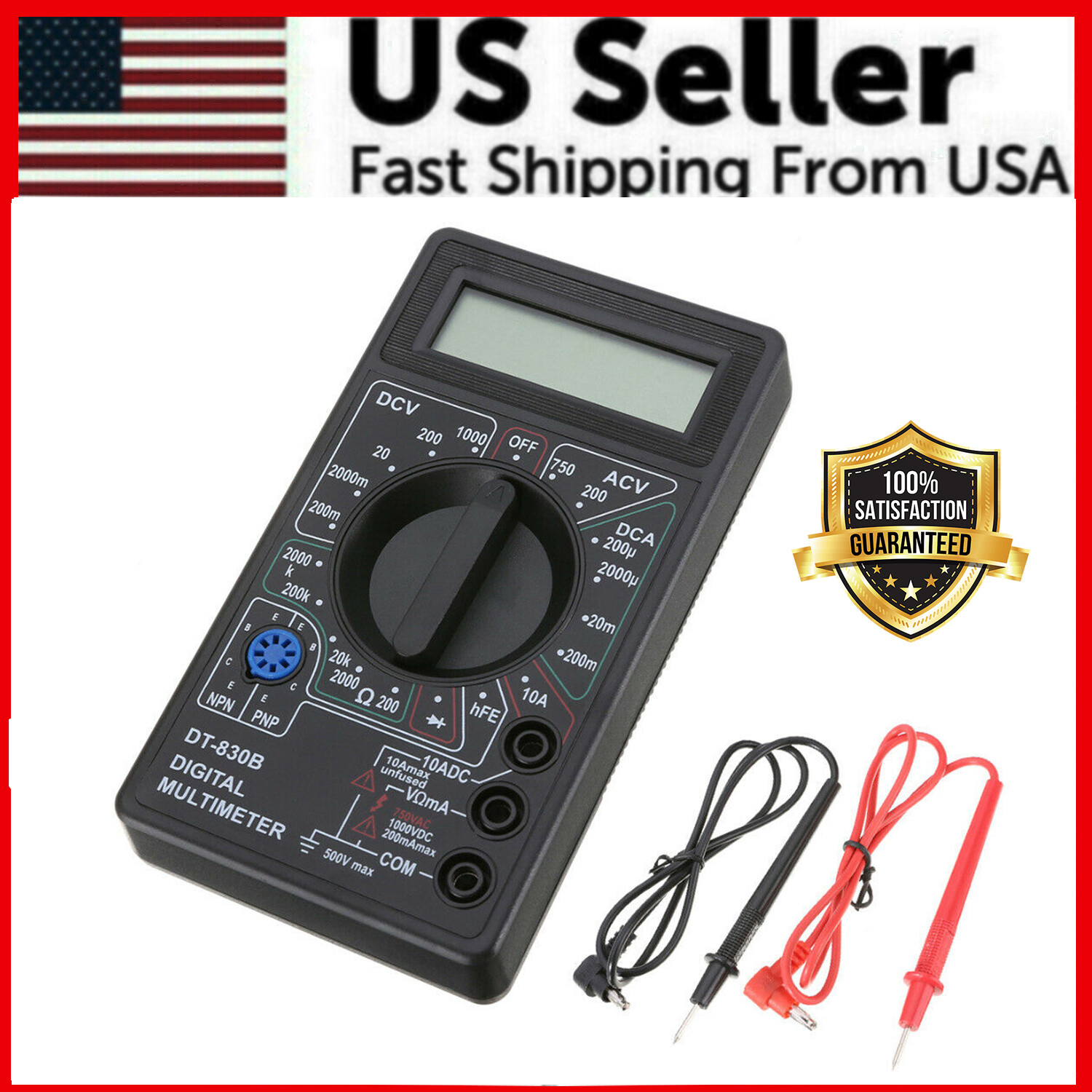 7 Fn Digital Multimeter AC DC Voltage Volt 10 Amp Current Resistance Ohm Meter$8.95View on eBay
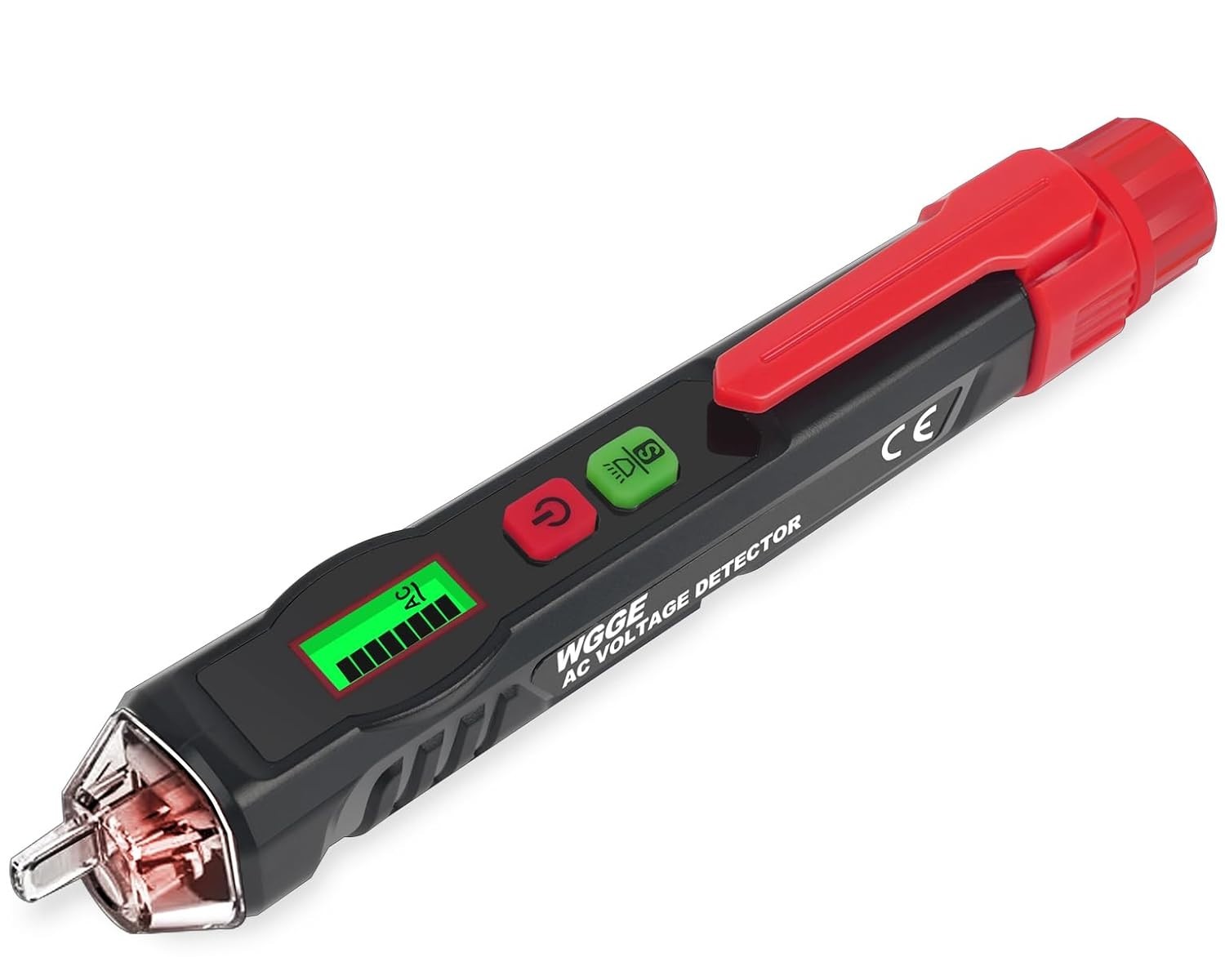 AC Voltage Tester/Non-Contact Voltage Tester with Dual Range AC 12V-1000V$12.99View on eBay
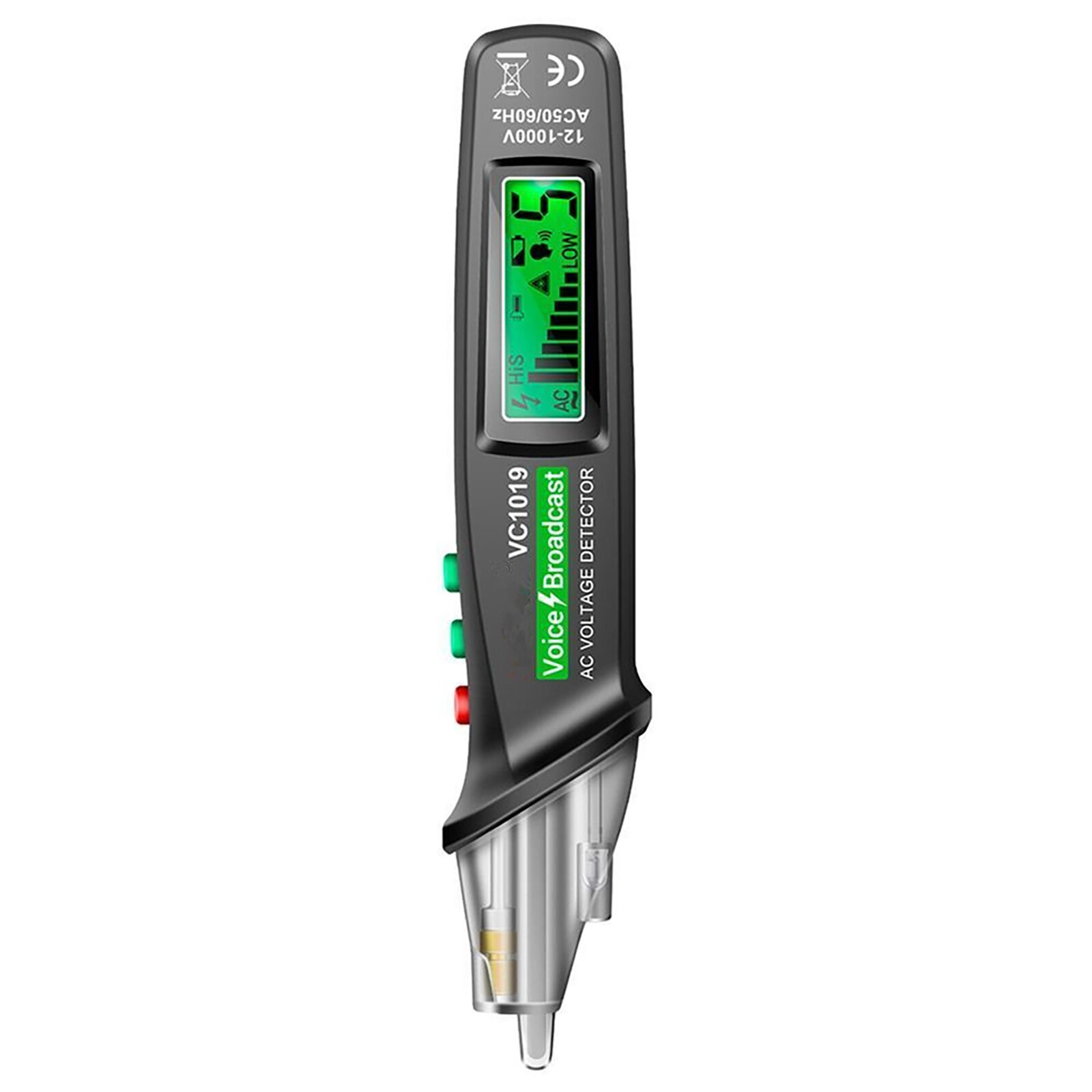 12V-1000V Positioning Voltage Tester Electric Wire Detector Test Pen Tool Kit$13.58View on eBay
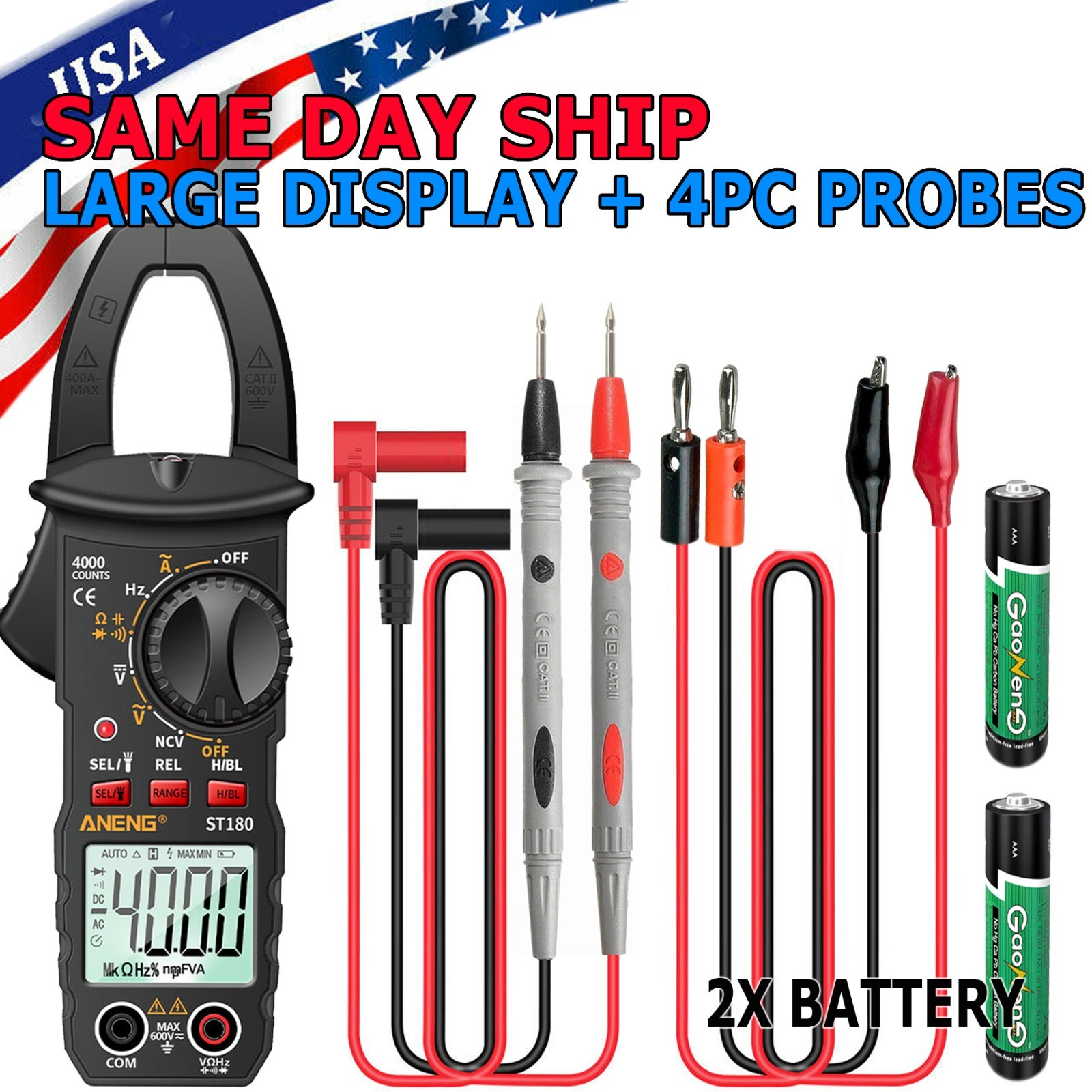 Digital Multimeter Tester AC DC Voltage RMS Amps Clamp Meter Auto Range Handheld$15.95Last checked Nov 27, 2026View on eBay
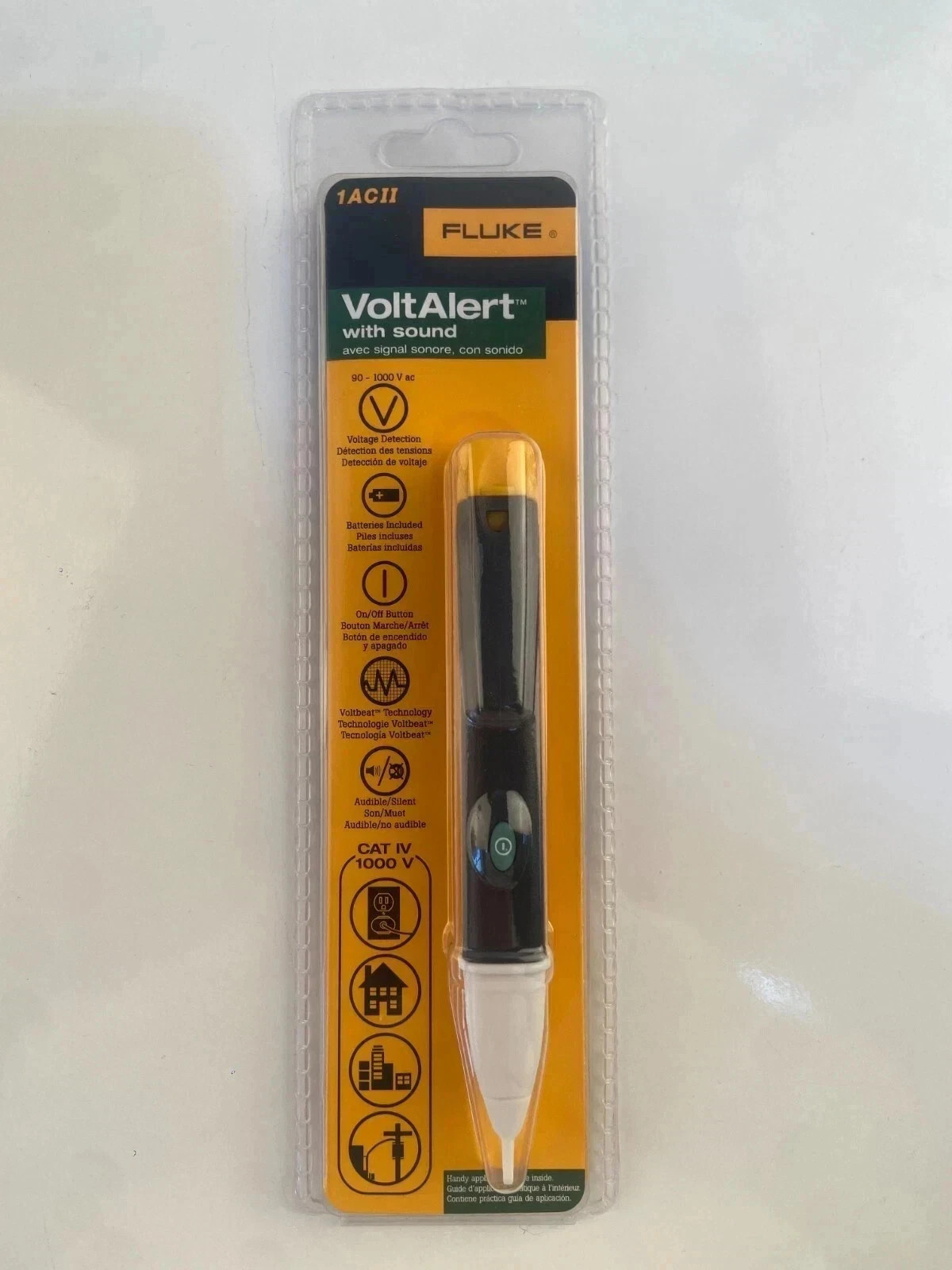 Fluke 1AC II VoltAlert Non-Contact Voltage Tester, Pocket-Sized, 90-1000V AC-NEW$20.00Last checked Nov 27, 2026View on eBay
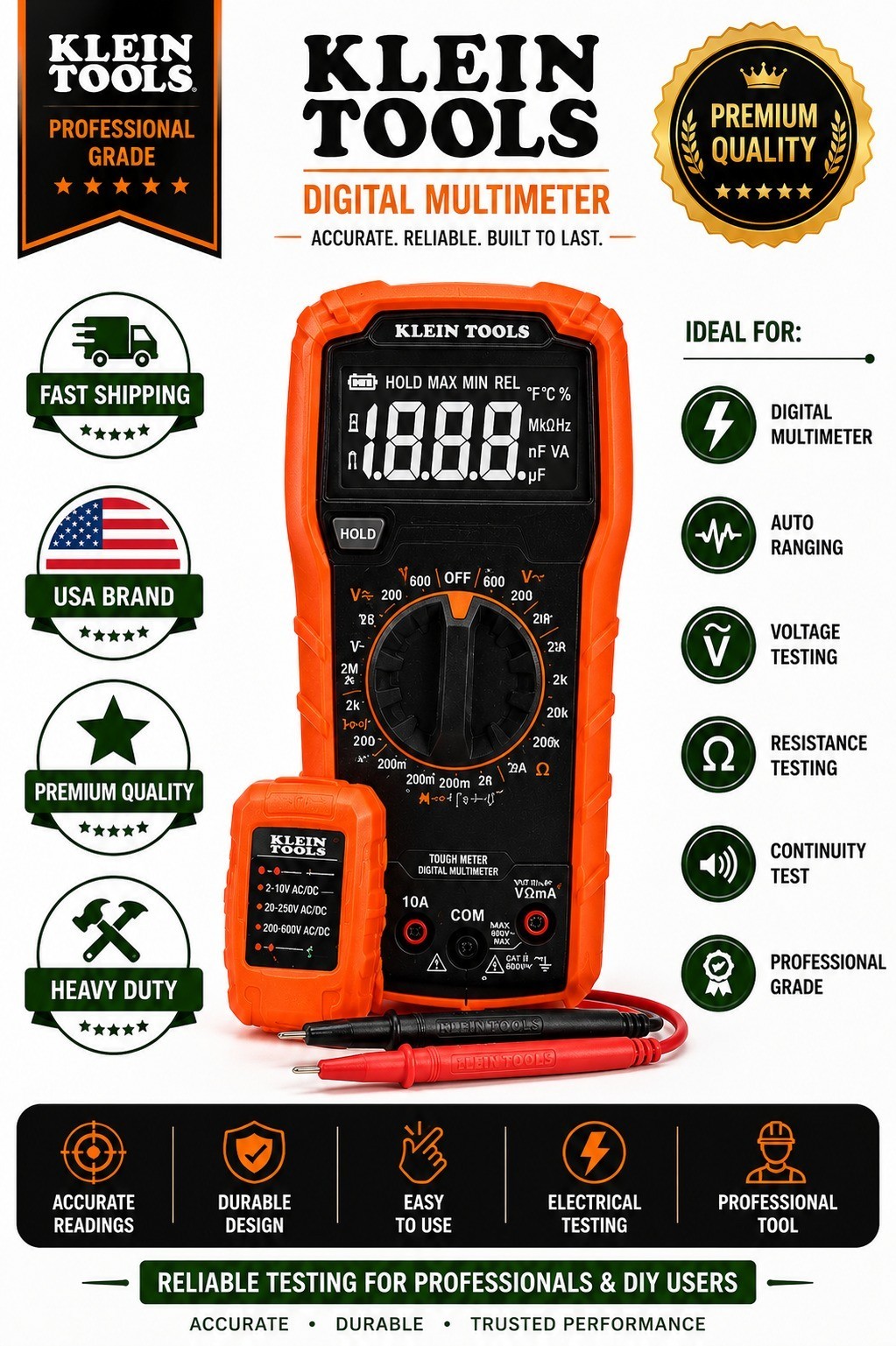 Klein Tools 69149P Digital Multimeter Voltage Tester Outlet Test Kit New$34.99View on eBay
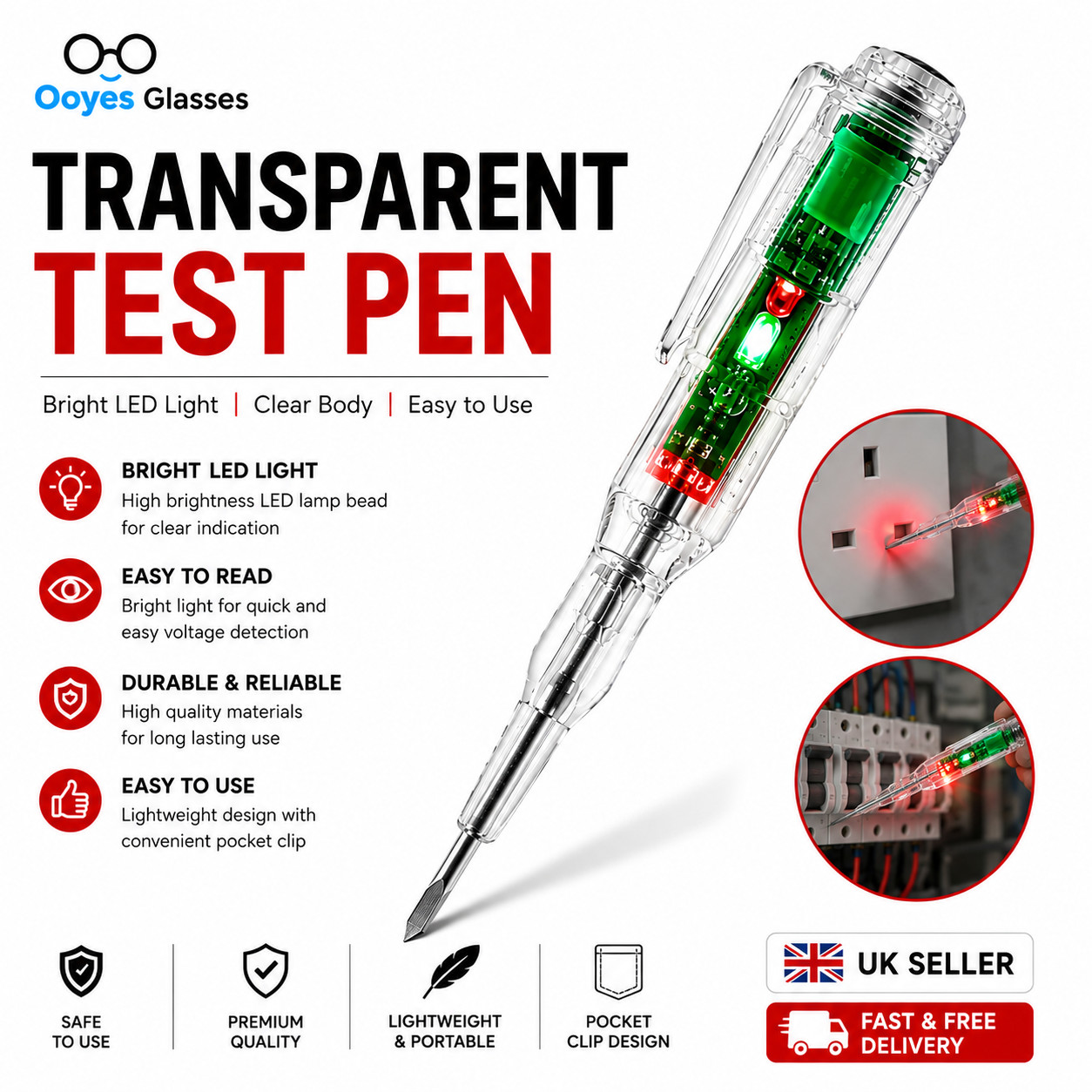 AC24-250V Screwdriver Test Pen Power Circuit Tester Voltage Test Pen + Buzzer$50.00View on eBay
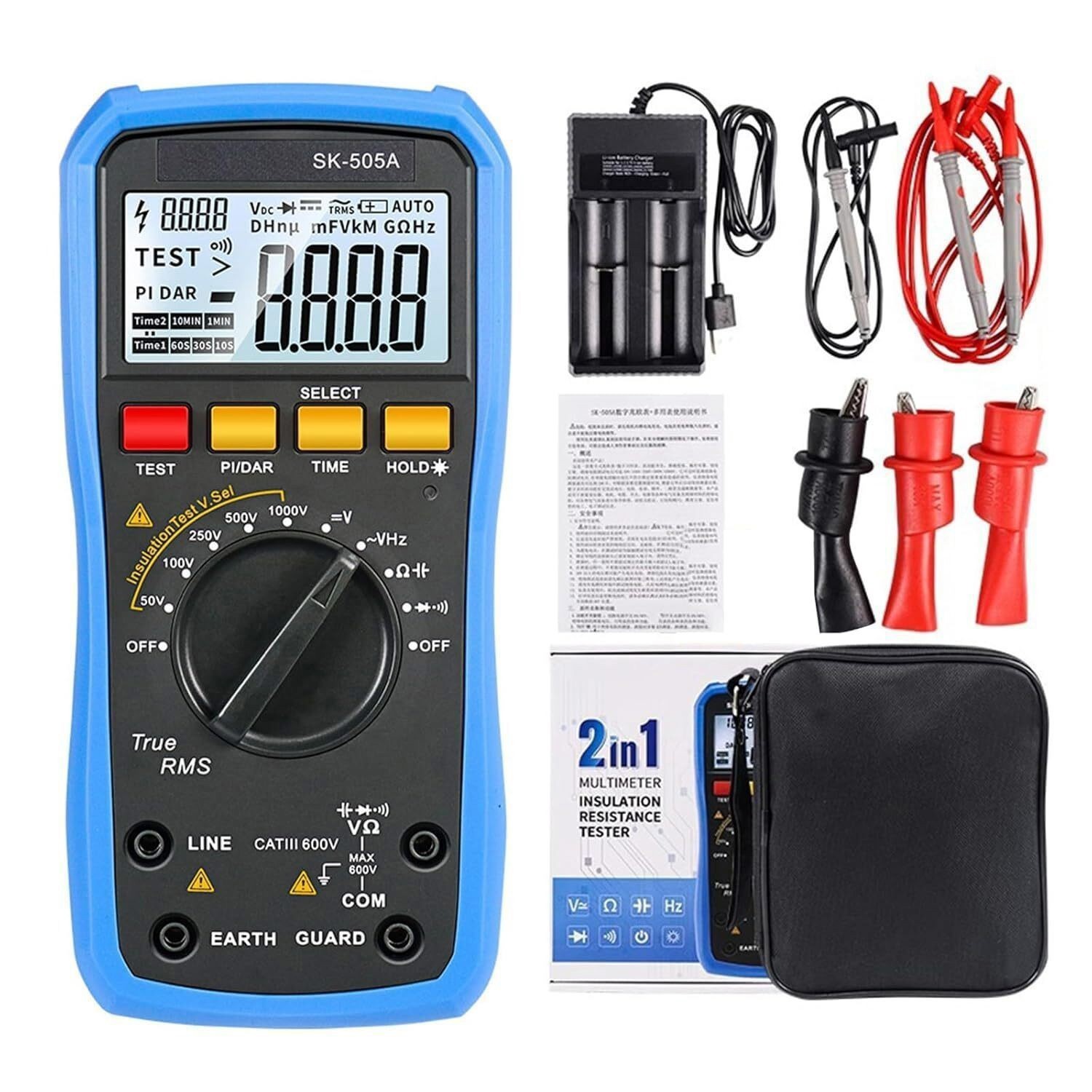 Digital Megohmmeter Insulation Tester 2500V + Multimeter AC DC Voltage Capacitan$56.00View on eBay
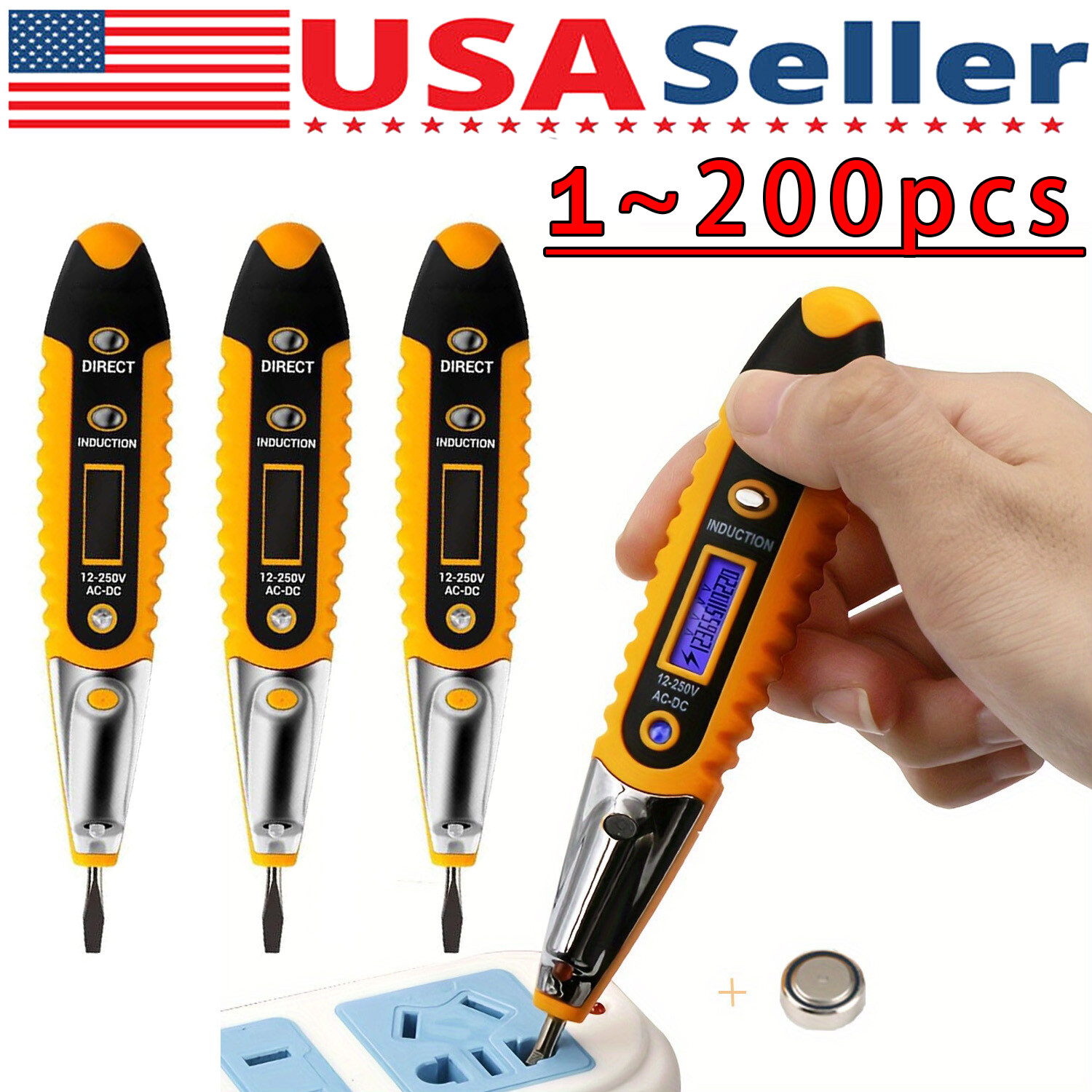 Voltage Electric Tester Volt Detector Test Pen AC DC Non-Contact Sensor 12-1000V$170.29Last checked Nov 27, 2026View on eBay
Highlights
- Non-contact pens sense capacitive AC field from 12-1000V or 90-1000V; dual-range models (12-1000V) detect low-voltage thermostat/landscape wiring that 90V-only pens miss.
- CAT safety ratings (CAT II 300V, CAT III 600V, CAT IV 1000V) define transient withstand; receptacle and panel work demands at least CAT III 600V on the meter's input rating.
- True RMS (TRMS) multimeters accurately read distorted waveforms from VFDs, dimmers, and electronics; averaging meters drift several percent on non-sinusoidal loads.
- Outlet testers light three lamps to flag open ground, reversed polarity, and open neutral; GFCI test buttons trip protected receptacles to confirm trip time and wiring.
Best use cases
- Best fit for non-contact pen: quick live-wire checks before drilling, locating a tripped circuit's hot leg, or tracing breakpoints in a wall — pick a dual-range 12-1000V CAT III pen and skip 90V-only pens for low-voltage work.
- Best fit for outlet tester: verifying receptacle wiring and GFCI protection during home inspection or remodel — choose a 3-lamp tester with GFCI trip button; skip it for measuring actual voltage or resistance.
- Best fit for TRMS multimeter: diagnosing electronics, HVAC controls, or variable-speed motors where waveform distortion matters — pick a 4000-count TRMS unit with CAT III 600V rating; skip averaging meters for inverter-driven loads.
- Wrong fit: using a non-contact pen as the only tester on a dead circuit — it cannot confirm absence of voltage with load, so pair it with a multimeter or solenoid tester for lockout/tagout verification.
Buying tips
- Match CAT rating to the panel: CAT III 600V minimum for distribution boards and fixed wiring; CAT II 300V is only adequate for plug-in appliances and electronics.
- Choose dual-range 12-1000V non-contact pens over 90-1000V models if you work on thermostats, doorbells, or irrigation controls; 90V threshold blanks on 24V AC.
- For multimeters, 4000-count resolution (0.1V on 400V range) and 0.5-1% DC accuracy separate diagnostic-grade units from hobby meters; TRMS adds accuracy on AC loads.
- Automotive test lights must match system voltage (6V/12V/24V) and use a high-impedance LED or incandescent load; a 12V-only probe on 24V truck circuits can fail or read false.
Specs
| Tester Type | Non-contact / Outlet / Multimeter |
|---|---|
| Voltage Range | 12-1000V AC (dual) or 90-1000V |
| CAT Safety Rating | CAT II 300V to CAT IV 1000V |
| Measurement Accuracy | TRMS 0.5-1% DC / 1-2% AC |
Related searches
What to check before buying
- Confirm the receptacle type and wiring system (15A/20A 120V North American, 230V European, etc.) before buying an outlet tester; pin configurations are region-specific.
- Check the meter's input jack spacing and probe compatibility — 4mm shrouded banana jacks are standard, but some compact meters use non-standard probe tips.
- Verify the non-contact pen's CAT rating and IP rating for your environment; CAT III 1000V and IP67 suit outdoor and panel work, basic pens are indoor-only.
- For GFCI testing, confirm the tester supports the GFCI type in your home (standard Class A vs. equipment leakage); GFCI test buttons require a functioning ground reference.
FAQ
Data sources: eBay / Amazon listings and product attribute feeds. Updated Nov 28, 2026.
Some links on this page are affiliate links. If you buy after clicking one, we may earn a commission at no extra cost to you. This does not change which products appear here or their order. Affiliate disclosure.