
Photos from current listings. Actual item, color, and included accessories may vary.
Vector Signal Analyzer Buying Guide
A vector signal analyzer (VSA) is a measurement instrument that demodulates and characterizes digitally modulated signals by capturing both magnitude and phase, unlike a scalar spectrum analyzer that only shows amplitude versus frequency. The core trade-off is between instantaneous analysis bandwidth and EVM/phase-noise performance: wider bandwidth captures more of a modern wideband signal, but higher phase noise and lower dynamic range degrade modulation accuracy. Choose a VSA with analysis bandwidth at least 1.5× your widest modulation bandwidth and phase noise below -110 dBc/Hz at 10 kHz offset for credible 5G/Wi-Fi 6E work; compromise tiers sacrifice EVM floor and real-time capture for cost.
Median $999.95 · Pre-owned listings
Key takeaways
- Analysis bandwidth is the hard limit: a VSA cannot demodulate a signal wider than its capture bandwidth, so 160 MHz 5G NR or 320 MHz Wi-Fi 7 requires an analyzer with at least 320-400 MHz analysis bandwidth.
- EVM floor and phase noise set modulation accuracy: -110 dBc/Hz at 10 kHz offset and residual EVM below 1% separate lab-grade VSA front ends from repurposed spectrum analyzers.
- Real-time vs swept architecture: real-time VSAs with FFT overlap and gap-free capture catch transient events, while swept or stepped analyzers miss short bursts and hopping signals.
At a glance
- Category
- Oscilloscopes, Signal & Spectrum Analyzers
- Last updated
- Nov 28, 2026
Current offers
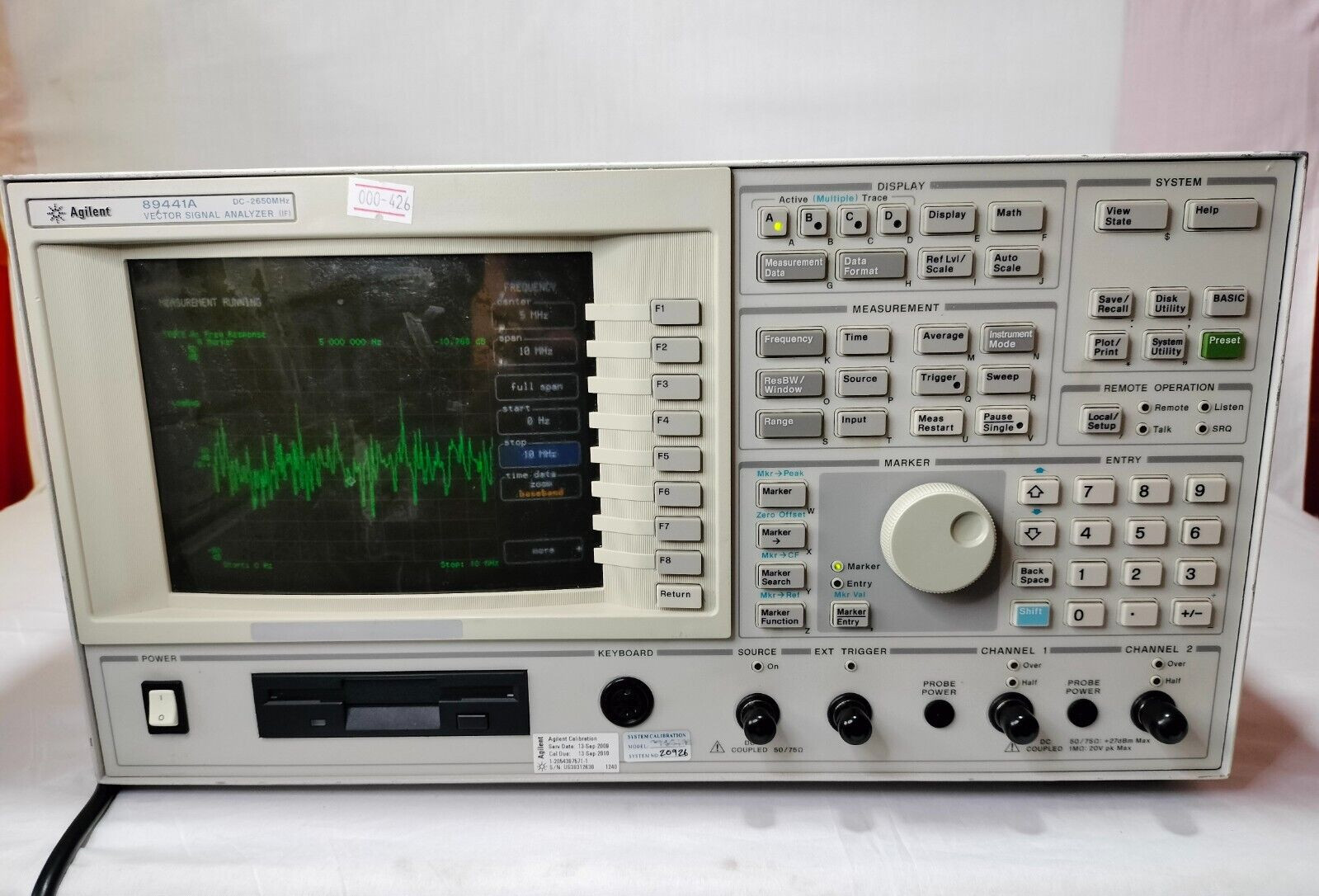 HP Agilent 89441A Vector Signal Analyzer DC-2650MHz Option AY9AYAAYB$279.40Used · Last checked Nov 21, 2026View on eBay
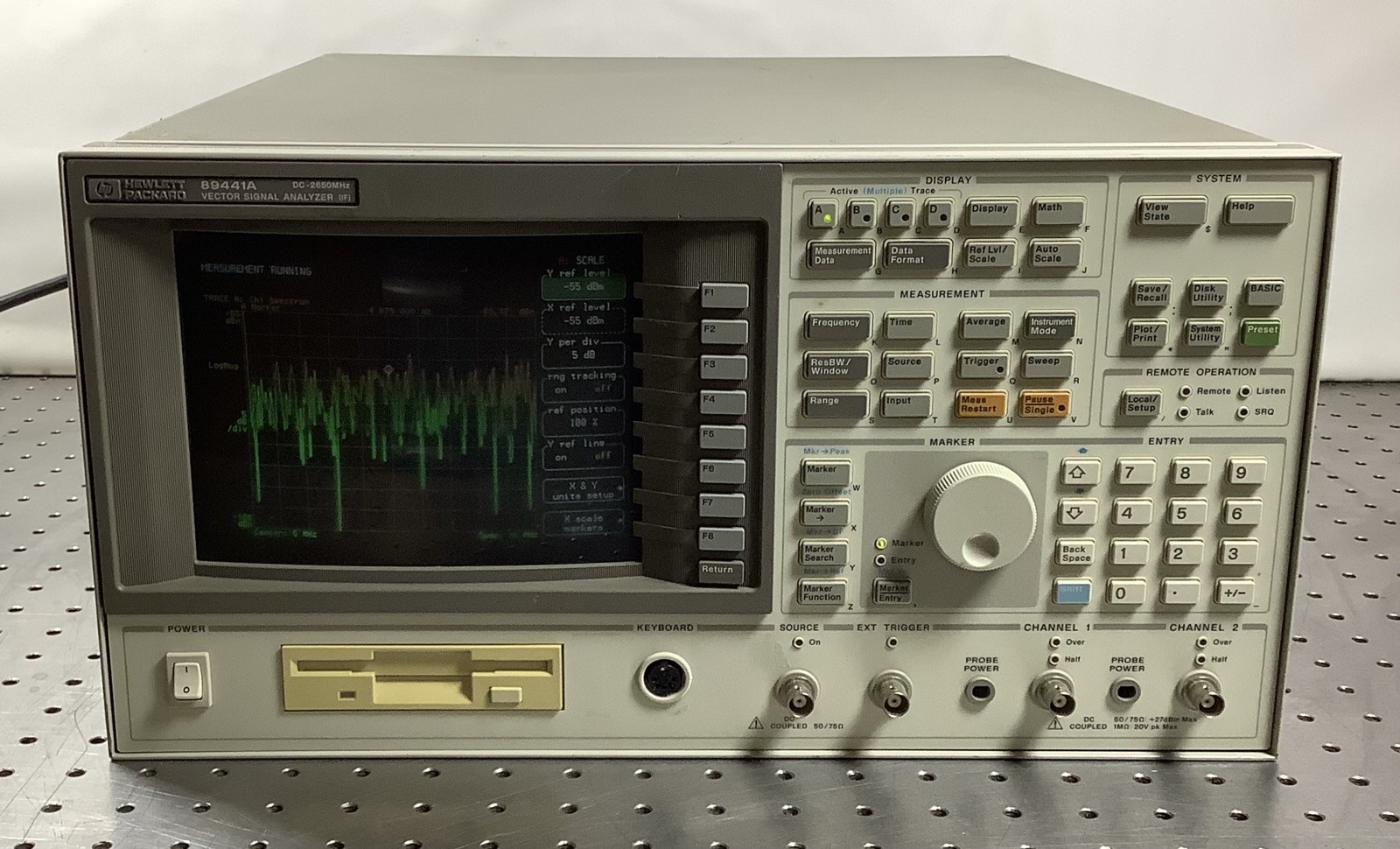 HP 89441A Vector Signal Analyzer$500.00For parts or not working · Last checked Nov 21, 2026View on eBay
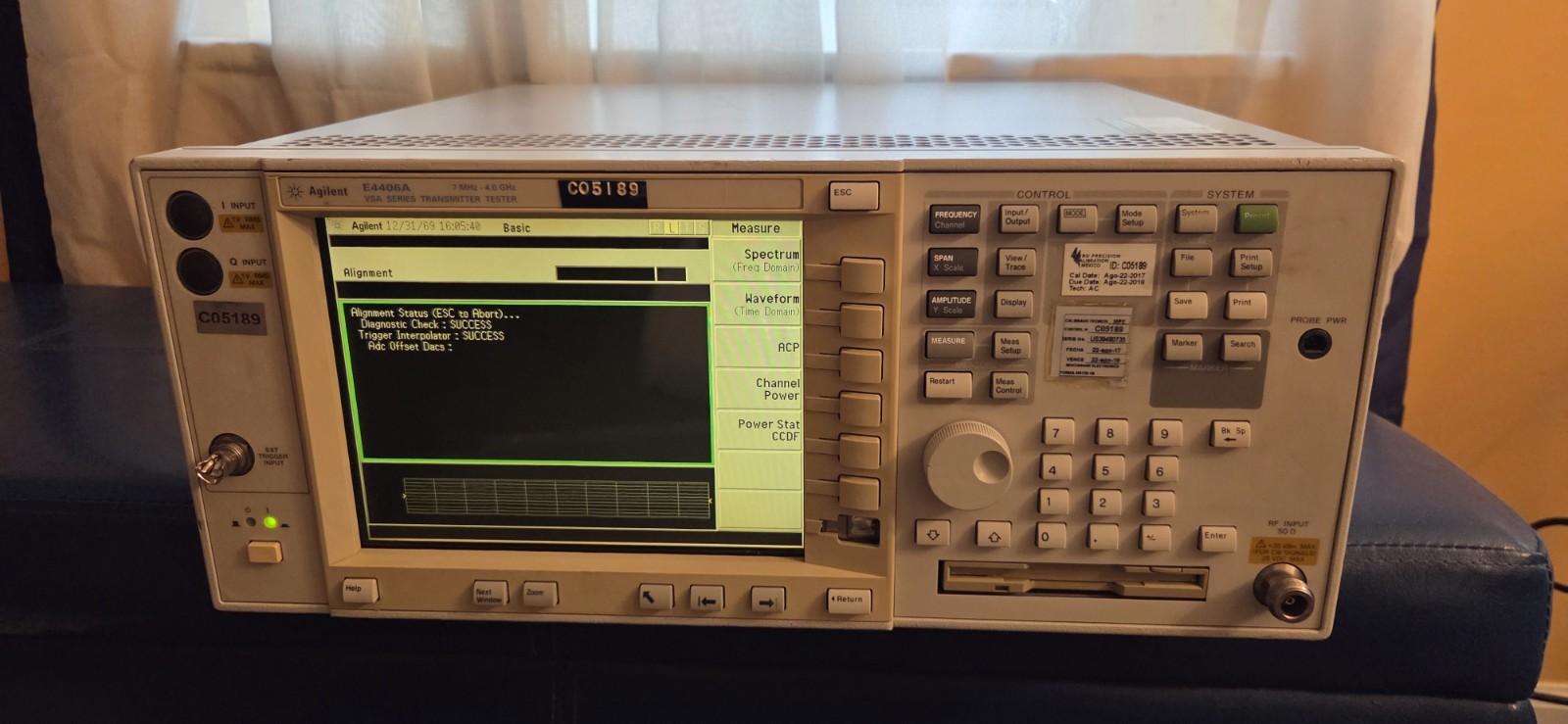 Agilent E4406A Vector Signal Analyzer 7 MHz–4 GHz – Powers On / Untested$699.99Used · Last checked Nov 21, 2026View on eBay
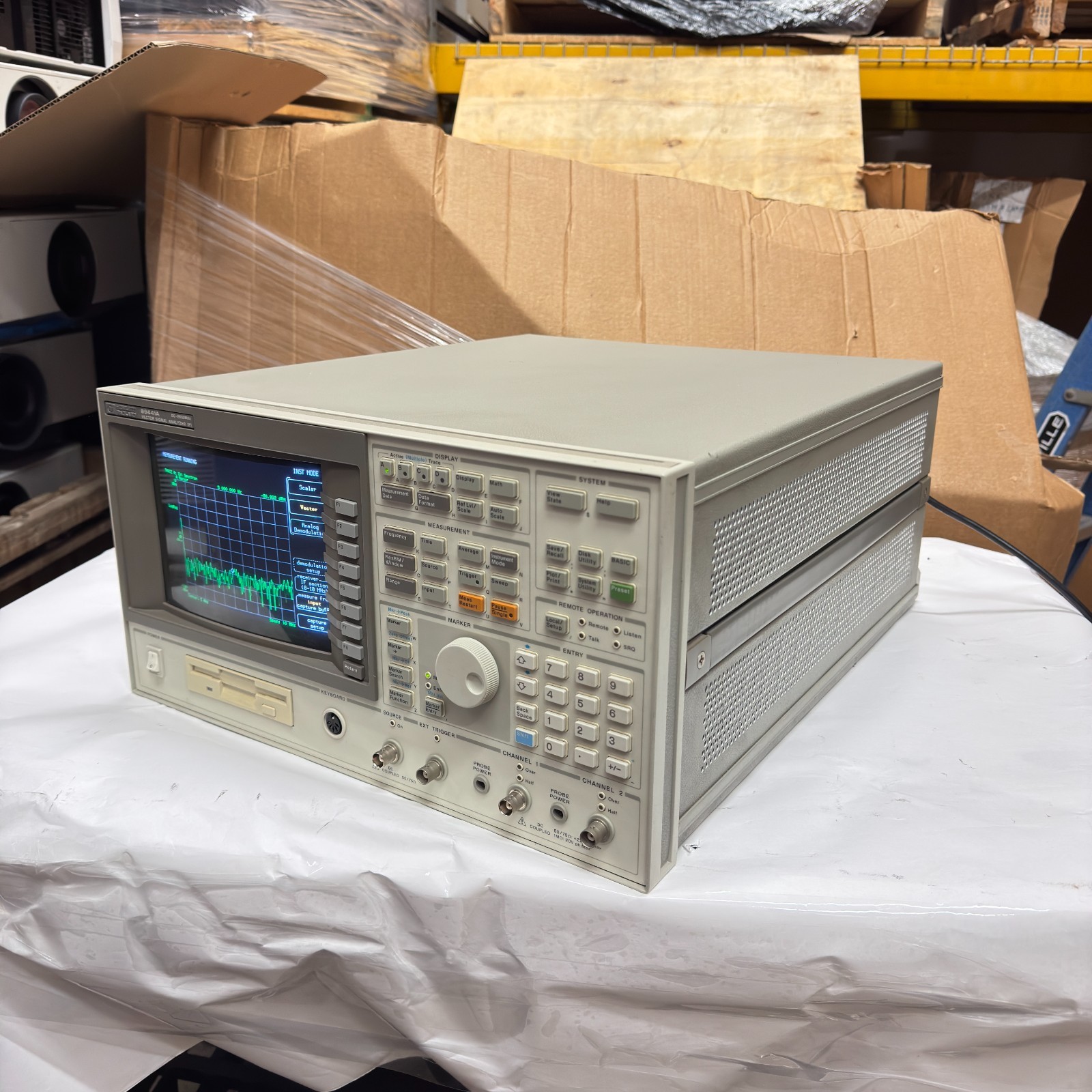 HP 89441A 2.65GHz & HP 89410A 10MHz Vector Signal Analyzers Tested$977.34Used · Last checked Nov 21, 2026View on eBay
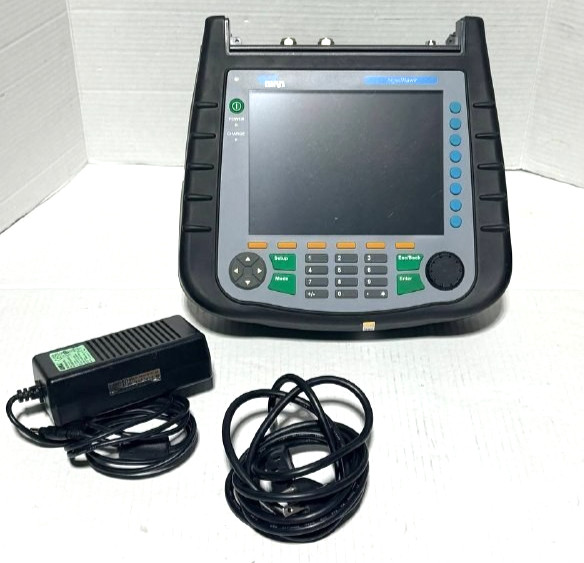 Bird SignalHawk SH-361S Signal Spectrum Analyzer &Vector Network Analyzer$999.95Used · Last checked Nov 21, 2026View on eBay
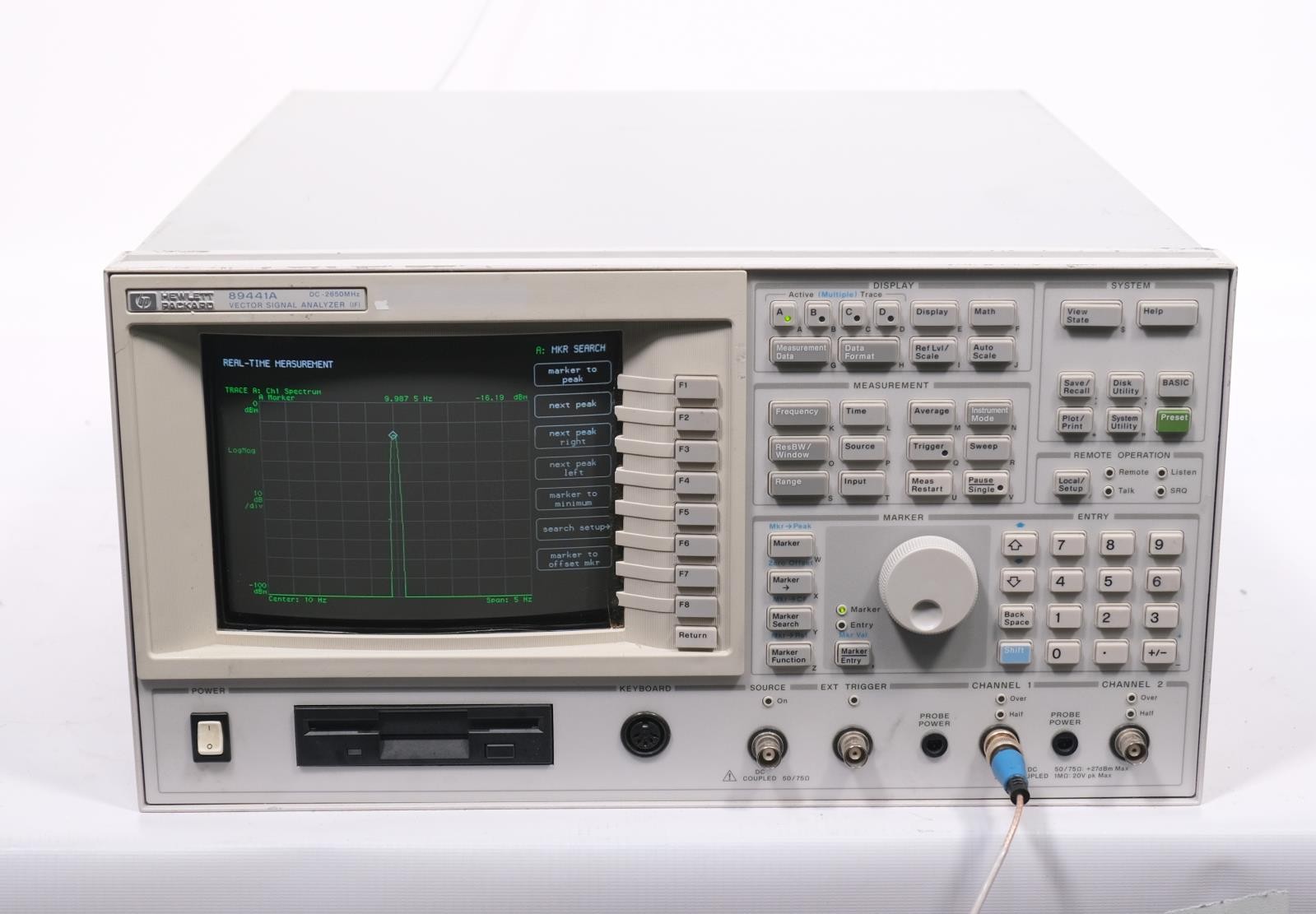 HP 89441A DC - 2650MHz Vector Signal Analyzer$1,200.00Used · Last checked Nov 21, 2026View on eBay
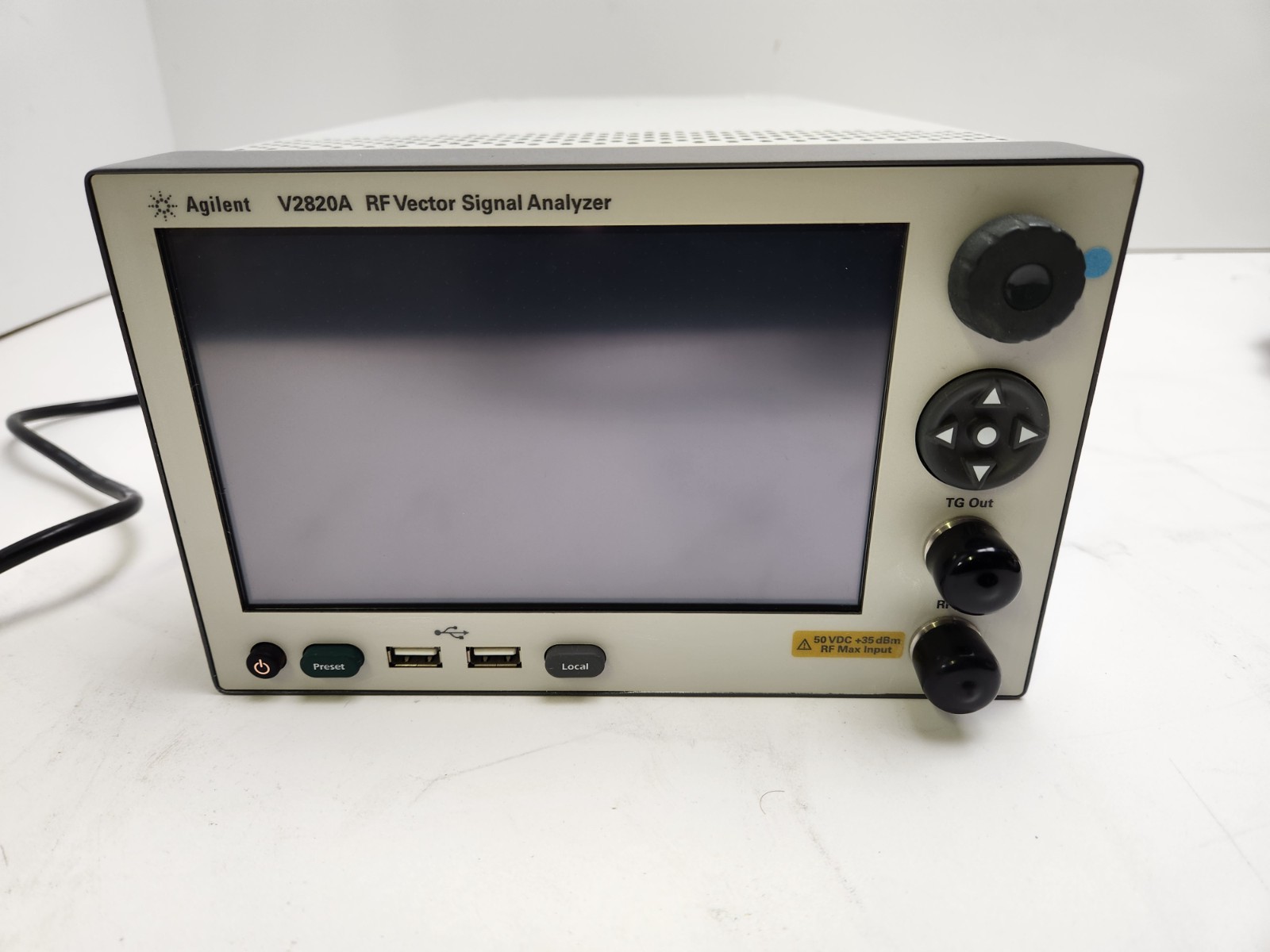 Agilent V2820A 6GHz RF Vector Signal Analyzer$1,755.00Used · Last checked Nov 21, 2026View on eBay
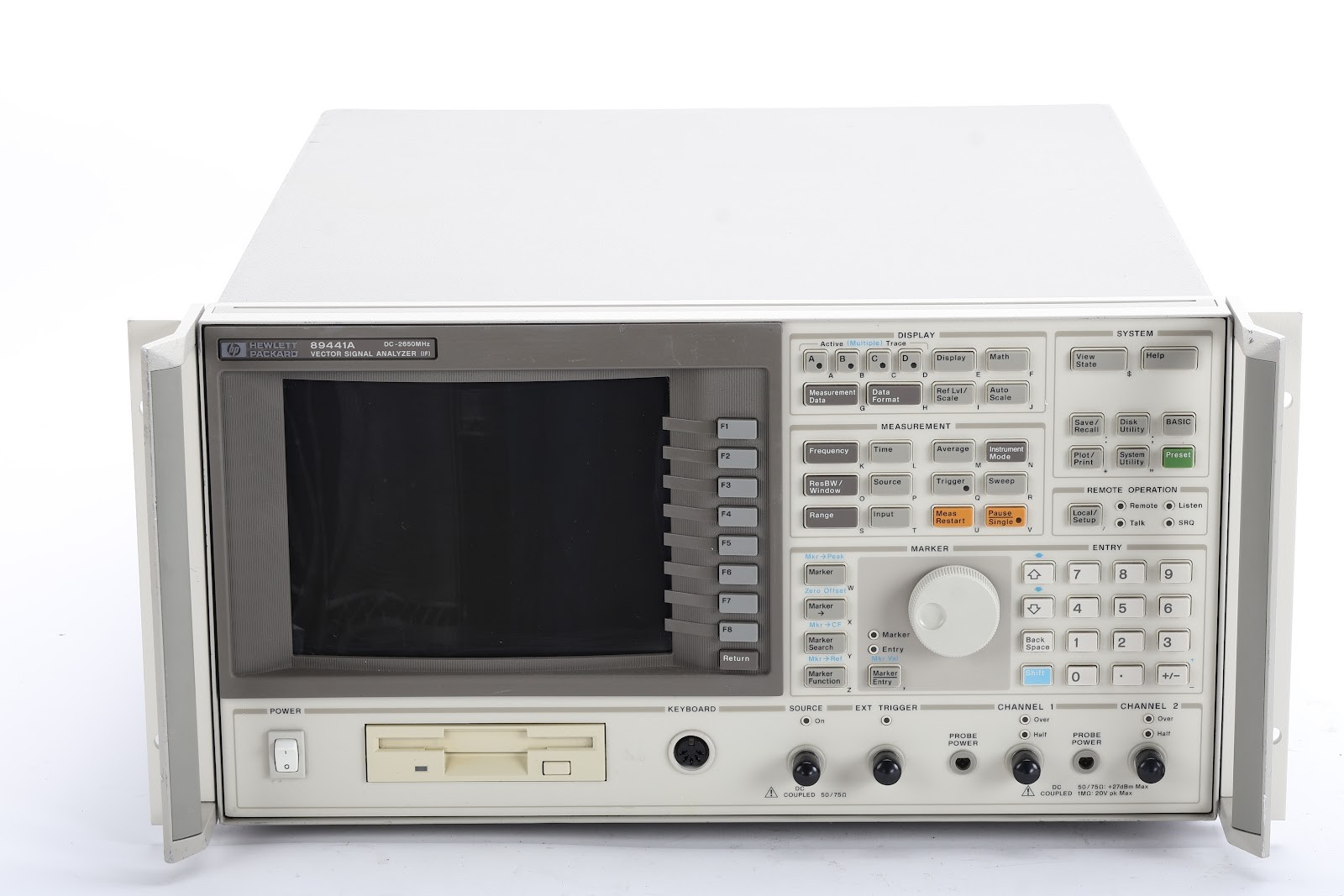 Agilent 89441A Vector Signal Analyzer DC-2.65GHz W/ 1C2, AYB,AYA,UG7,AY7,AY9,UTH$1,881.79Used · Last checked Nov 21, 2026View on eBay
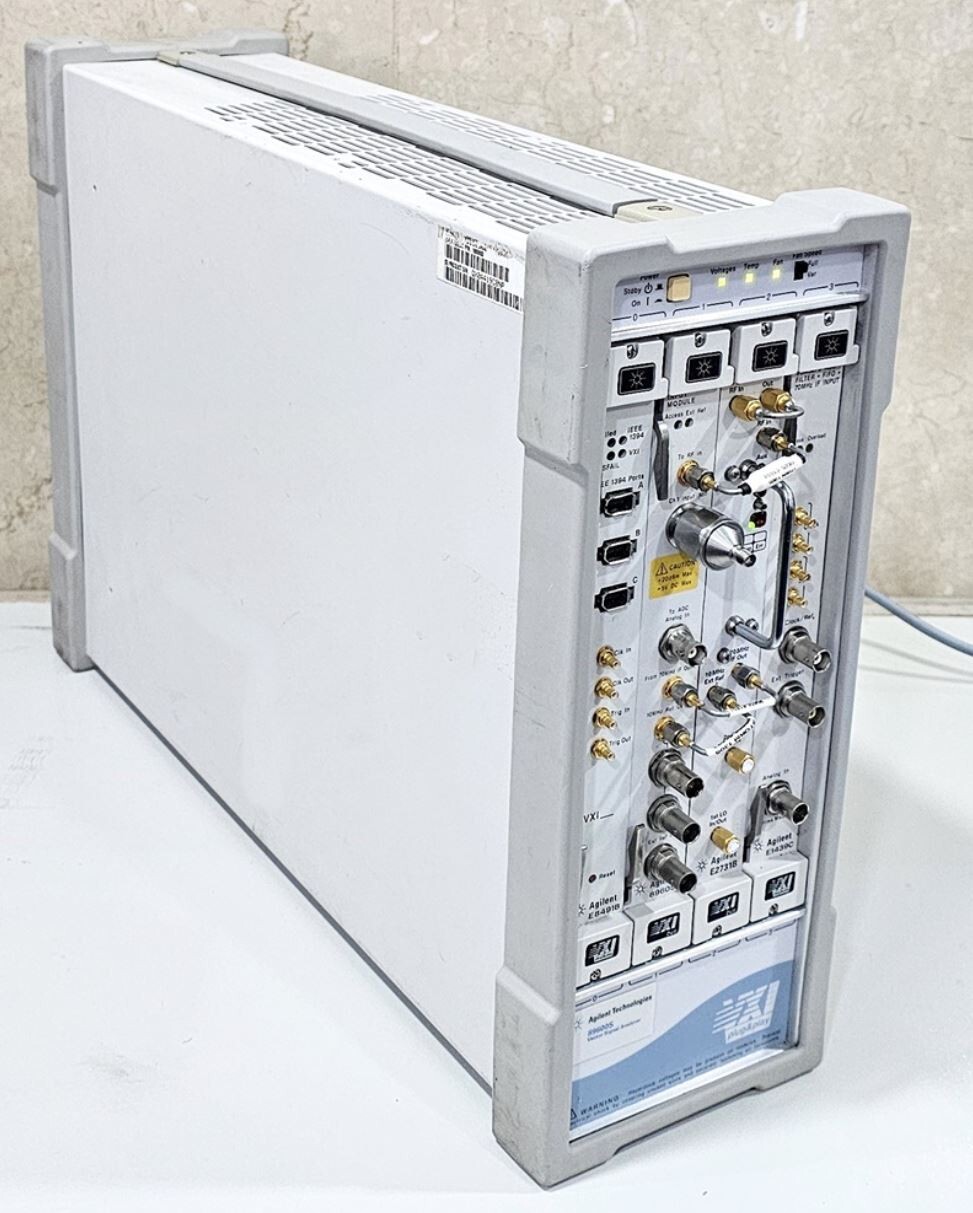 Agilent 89600S VXI Base Vector Signal Analyzer$2,999.00Used · Last checked Nov 21, 2026View on eBay
Highlights
- Analysis bandwidth is the hard limit: a VSA cannot demodulate a signal wider than its capture bandwidth, so 160 MHz 5G NR or 320 MHz Wi-Fi 7 requires an analyzer with at least 320-400 MHz analysis bandwidth.
- EVM floor and phase noise set modulation accuracy: -110 dBc/Hz at 10 kHz offset and residual EVM below 1% separate lab-grade VSA front ends from repurposed spectrum analyzers.
- Real-time vs swept architecture: real-time VSAs with FFT overlap and gap-free capture catch transient events, while swept or stepped analyzers miss short bursts and hopping signals.
- Vector signal generation and analysis often pair: a VSA plus a vector signal generator (VSG) covers both receive and transmit test, but VSA-only units still require an external modulated source.
Best use cases
- Best fit: 5G NR FR1 component and module test at 100-200 MHz bandwidth — pick a VSA with 200 MHz analysis bandwidth, 2-channel phase coherence, and EVM below 1.5% for 256-QAM.
- Best fit: Wi-Fi 6E/7 radio validation at 320 MHz — require 400 MHz analysis bandwidth and phase noise under -108 dBc/Hz at 10 kHz offset; skip 160 MHz-bandwidth units entirely.
- Wrong fit: general RF bench troubleshooting below 1 GHz — a scalar spectrum analyzer or a mid-range oscilloscope with FFT covers this at far lower cost; a VSA is over-specified unless demodulation is required.
- Best fit: radar pulse and hopping-signal capture — choose a real-time VSA with gap-free streaming and at least 40 MHz real-time bandwidth; a swept VSA will miss frequency-agile events.
Buying tips
- Size analysis bandwidth to 1.5× your widest modulated signal: 20 MHz LTE needs 30-40 MHz, 100 MHz 5G NR needs 150-200 MHz, 320 MHz Wi-Fi 7 needs 400-500 MHz.
- Demand residual EVM at or below 1% for sub-6 GHz 5G/Wi-Fi test and at or below 2% for IoT/Bluetooth; above 3% residual EVM the analyzer dominates your measurement uncertainty.
- Check phase noise at 10 kHz offset: -110 dBc/Hz or better for 256/1024-QAM, -100 to -105 dBc/Hz acceptable for 64-QAM and lower-order modulation.
- Prefer USB/Ethernet modular VSAs with external PC processing when bench space and budget are tight, but require a hardware front end with calibrated absolute amplitude accuracy of ±0.5 dB or better.
Specs
| Analysis Bandwidth | 10 MHz to 2 GHz capture tiers |
|---|---|
| Frequency Range | 3 Hz to 6 / 26.5 / 44 GHz |
| Phase Noise @10 kHz | -95 to -120 dBc/Hz |
| Residual EVM | 0.5% to 4% by tier |
Related searches
What to check before buying
- Verify the frequency range covers your device band plus margin: sub-6 GHz test needs at least 6 GHz, Wi-Fi 6E needs 7.125 GHz, and mmWave work needs 40 GHz or external downconverters.
- Confirm the instrument's input connector type and maximum safe input level (typically +30 dBm) and plan for external attenuators or a DC block to protect the front end.
- Check the host PC or embedded controller requirements for modular VSAs: sustained USB 3.0 or Ethernet throughput and sufficient RAM for gap-free streaming at your analysis bandwidth.
- Confirm calibration status and recalibration interval; a VSA without a valid calibration certificate has unquantified amplitude and EVM uncertainty.
FAQ
Data sources: eBay / Amazon listings and product attribute feeds. Updated Nov 28, 2026.
Some links on this page are affiliate links. If you buy after clicking one, we may earn a commission at no extra cost to you. This does not change which products appear here or their order. Affiliate disclosure.