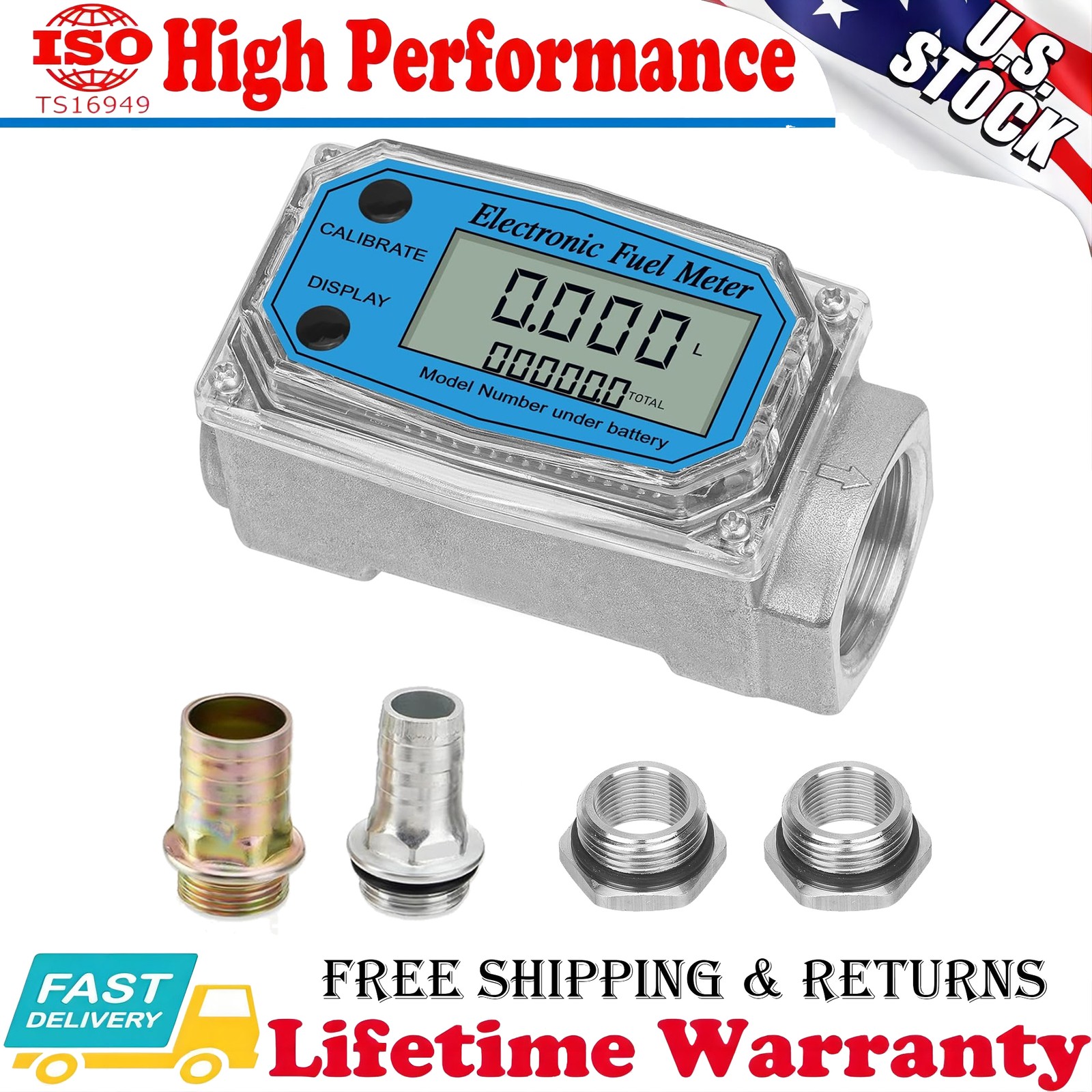

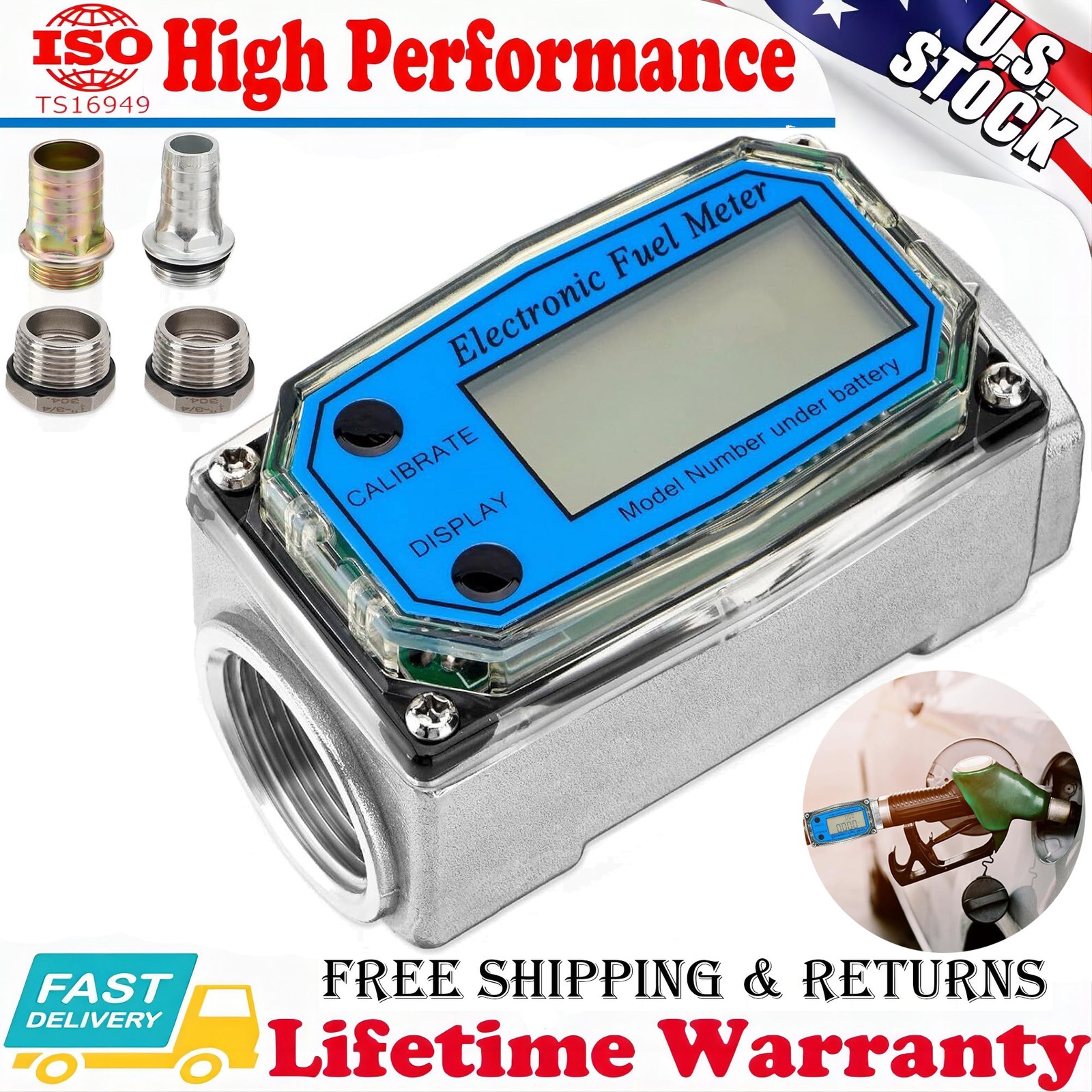
Photos from current listings. Actual item, color, and included accessories may vary.
Fuel Flow Meter Buying Guide
A fuel flow meter is an inline or paddlewheel-style sensor that converts diesel, gasoline, or kerosene movement into a digital rate and cumulative total for boats, generators, and transfer pumps. The core trade-off is turbine-material compatibility versus electronic sealing and display durability: nylon-bodied turbine meters suit low-pressure diesel and water-like fuels, while brass or stainless bodies with rated seals are required for gasoline, high-sulfur diesel, and hot return lines. Choose a meter rated for your fuel type, line pressure, and thread standard; skip unrated plastic units on pressurized gasoline or marine return systems.
Median $34.49
Key takeaways
- Nylon turbine meters are common for 1-inch NPT diesel and kerosene lines at low pressure; brass or stainless bodies are needed for gasoline and higher-pressure fuel systems.
- Flow range scales with bore: 1-inch inline turbine meters typically cover roughly 3-30 GPM, while smaller 1/4-inch or 3/8-inch units suit low-flow engine feed lines.
- Pulse output is standard for integration with boat NMEA 2000 or engine monitors; standalone LCD units trade integration for simple inline rate and total display.
At a glance
- Category
- Pressure, Flow & Process Measurement
- Last updated
- Nov 28, 2026
Current offers
Highlights
- Nylon turbine meters are common for 1-inch NPT diesel and kerosene lines at low pressure; brass or stainless bodies are needed for gasoline and higher-pressure fuel systems.
- Flow range scales with bore: 1-inch inline turbine meters typically cover roughly 3-30 GPM, while smaller 1/4-inch or 3/8-inch units suit low-flow engine feed lines.
- Pulse output is standard for integration with boat NMEA 2000 or engine monitors; standalone LCD units trade integration for simple inline rate and total display.
- Ingress protection separates marine-grade units (IP67/IP68 sealed electronics) from indoor transfer-pump displays that fail under spray or bilge moisture.
Best use cases
- Best fit: diesel marine engines with 1-inch NPT fuel lines and low-pressure feed — pick a nylon or brass turbine meter with IP67 display and pulse output for NMEA 2000 integration.
- Best fit: gravity or pump-fed diesel transfer and kerosene heaters — choose a 1-inch inline turbine with a local LCD totalizer; no marine networking needed.
- Wrong fit: gasoline EFI systems or high-pressure return lines — skip nylon-body meters and unrated plastic seals; use stainless or brass bodies with fuel-rated elastomers.
- Wrong fit: sub-1 GPM low-flow engine feed lines — skip 1-inch turbine meters, which lose accuracy below their rated minimum; move to 1/4-inch or 3/8-inch oval-gear or small turbine meters.
Buying tips
- Match meter bore to line size and expected flow: 1-inch NPT for 3-30 GPM diesel feeds, 1/4-inch to 3/8-inch for under-3 GPM engine supply lines.
- Confirm fuel compatibility before install: nylon and standard Buna-N seals suit diesel and kerosene; gasoline and biodiesel blends require Viton or PTFE seals and metal bodies.
- Choose pulse-output meters when connecting to NMEA 2000, engine computers, or fuel-management displays; choose standalone LCD units for simple totalizing.
- Verify pressure rating against your lift-pump or return-line pressure — low-pressure transfer meters are not rated for common-rail diesel or EFI gasoline pressures.
Specs
| Body Material | Nylon / Brass / Stainless steel |
|---|---|
| Line Size | 1/4 in to 1 in NPT |
| Flow Range | 0.3-30 GPM by bore |
| Output Type | Pulse / 4-20mA / LCD totalizer |
Related searches
What to check before buying
- Measure fuel line OD and thread pitch — most 1-inch marine diesel lines use NPT, but metric and BSP threads require adapters.
- Confirm fuel type and seal material: diesel/kerosene accept Buna-N; gasoline and biodiesel blends demand Viton or PTFE.
- Check display ingress rating: IP67 or IP68 for engine rooms and bilges; IP65 or lower only for dry transfer cabinets.
- Plan for pulse output wiring or NMEA 2000 backbone if integrating with boat electronics; standalone LCD needs only 12V DC power.
FAQ
Data sources: eBay / Amazon listings and product attribute feeds. Updated Nov 28, 2026.
Some links on this page are affiliate links. If you buy after clicking one, we may earn a commission at no extra cost to you. This does not change which products appear here or their order. Affiliate disclosure.