
Photos from current listings. Actual item, color, and included accessories may vary.
Hydraulic Test Kit Buying Guide
A hydraulic test kit is a portable diagnostic set—pressure gauges, hoses, and quick-release couplings—used to measure pressure and flow in machinery hydraulic circuits. The core trade-off is gauge accuracy and coupling compatibility versus kit completeness: analog glycerin-filled gauges survive shock and vibration, while digital sensors offer peak-hold and logging but need battery care. Buy a kit whose coupling set matches your machine's test ports; a bargain kit with the wrong couplers is unusable regardless of gauge quality.
Median $80.99
Key takeaways
- Analog kits typically ship in 250/400/600 bar tiers (about 3,600/5,800/8,700 psi) to cover excavator, tractor, and attachment circuits; digital sensors span 0–700 bar (0–10,000 psi).
- Coupling count is the real differentiator: 6-coupling kits cover common ports, while 9–13 coupling sets add the sizes needed for mixed fleets and import machinery.
- Gauge accuracy class (commonly ±1.6% or ±2.5% full scale) determines whether you can diagnose fine relief-valve drift or only gross failures.
At a glance
- Category
- Pressure, Flow & Process Measurement
- Last updated
- Nov 27, 2026
Current offers
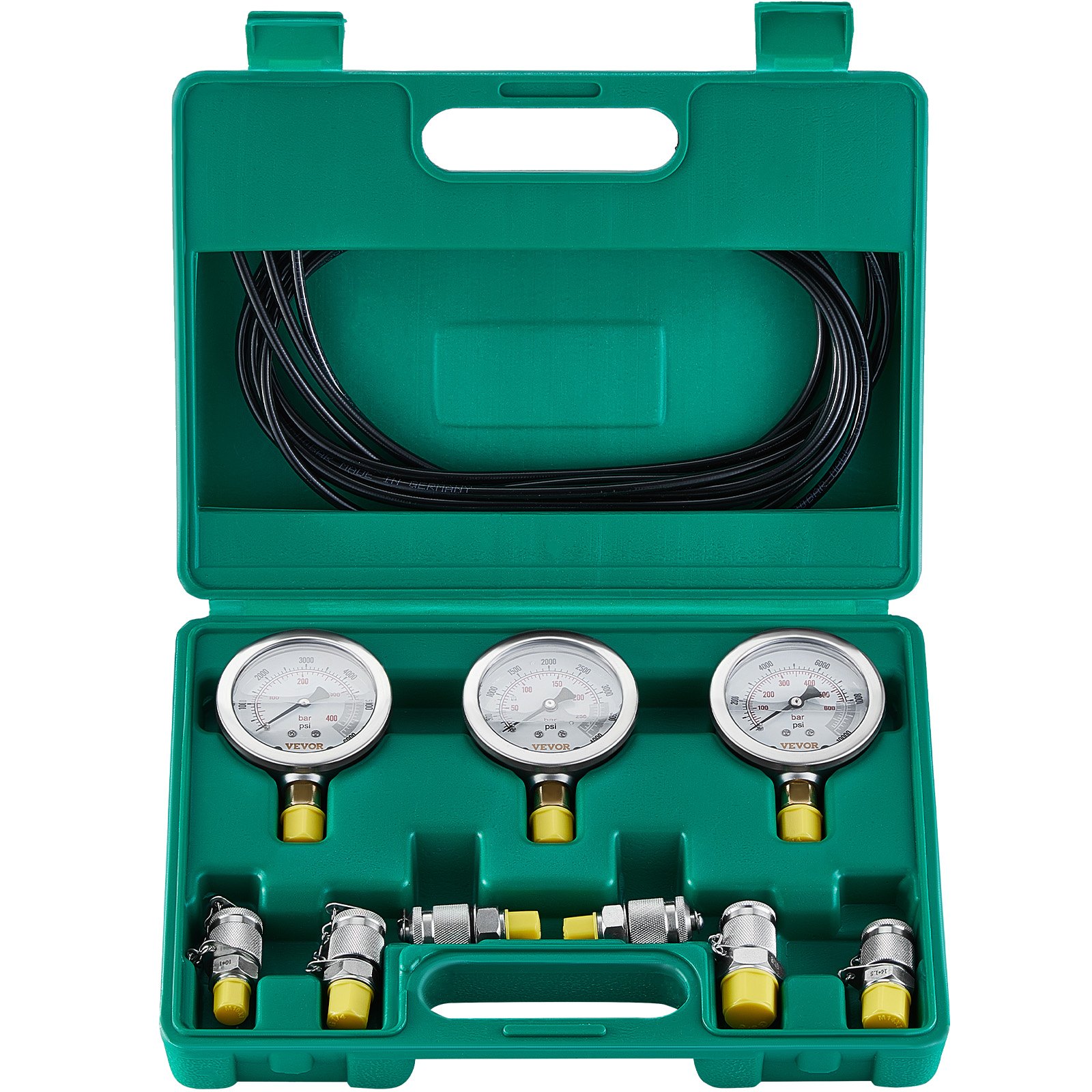 Hydraulic Pressure Test Kit, 250/400/600bar, 3 Gauges 6 Couplings 3 Hoses, Excavator Gauge Set With Portable Carrying Case For Tractors Construction Machinery$61.99View on Mallflare
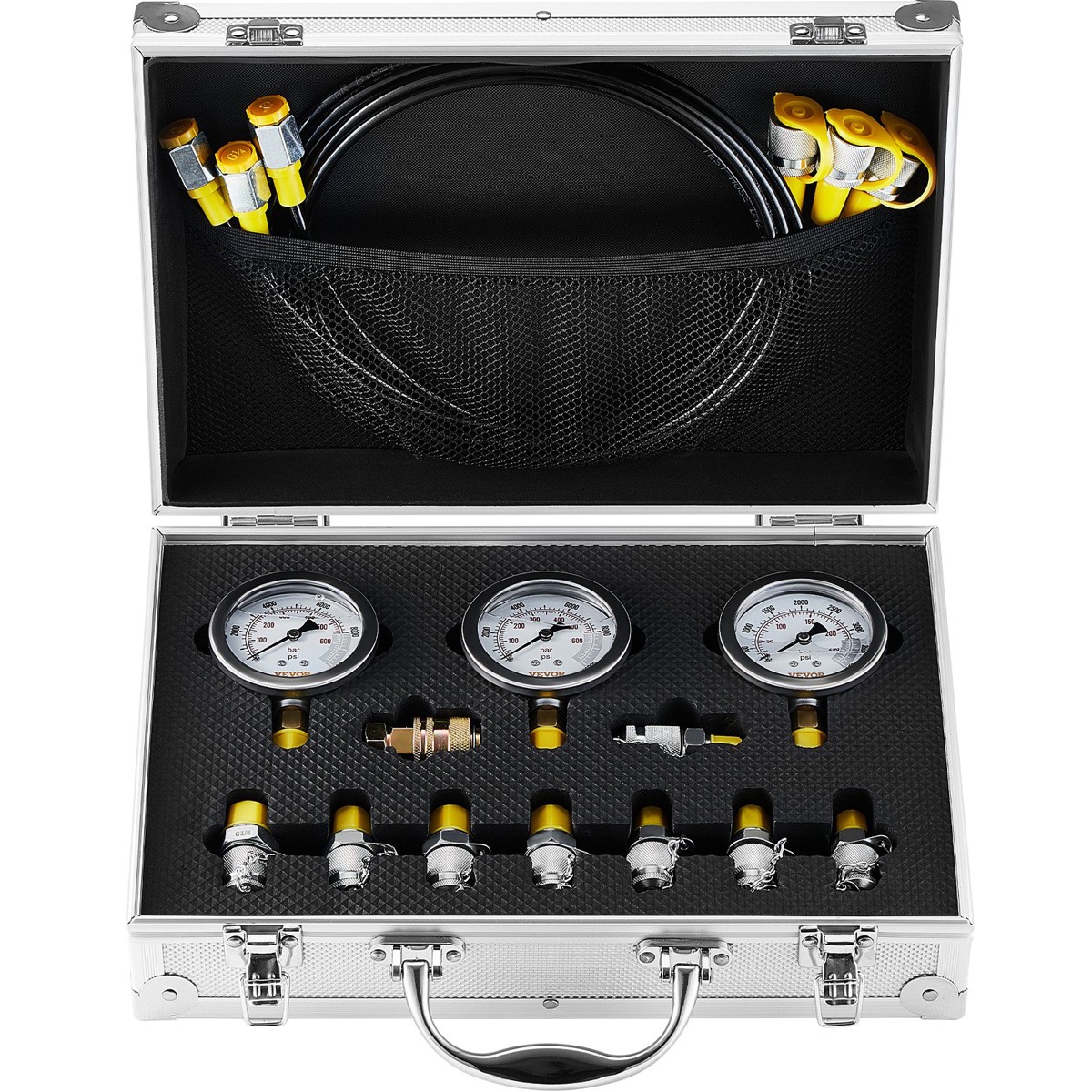 Hydraulic Pressure Test Kit, 250/400/600bar, 3 Gauges 9 Couplings 3 Hoses, Excavator Gauge Set With Portable Carrying Case For Tractors Construction Machinery$71.99View on Mallflare
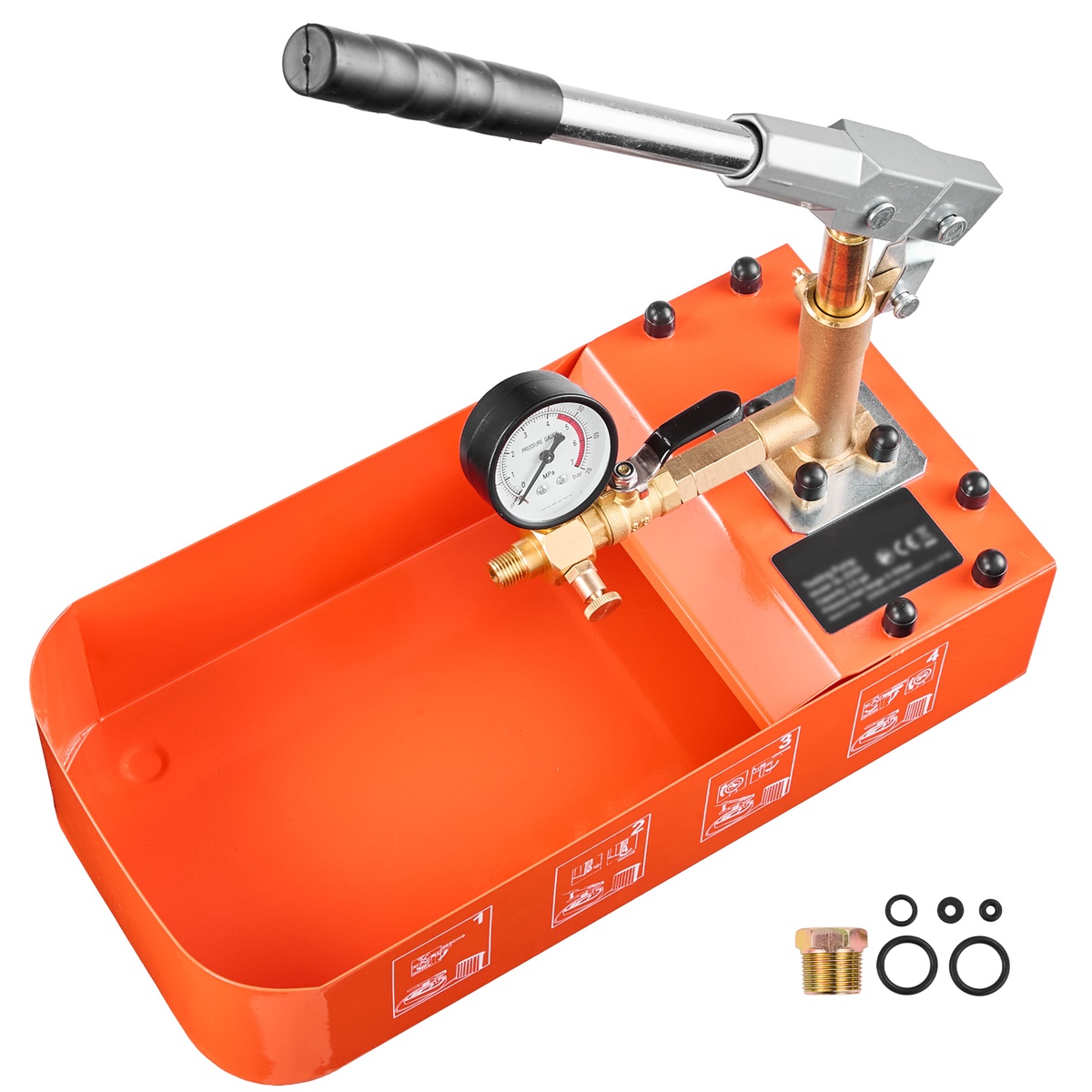 Hydrostatic Test Pump 2 Gallon Hydraulic Manual Water Pressure Tester, Single Valve Pipe Leakage Kit With Gauge & Tank, 0-50 Bar Range, For Pipeline Heating$76.99View on Mallflare
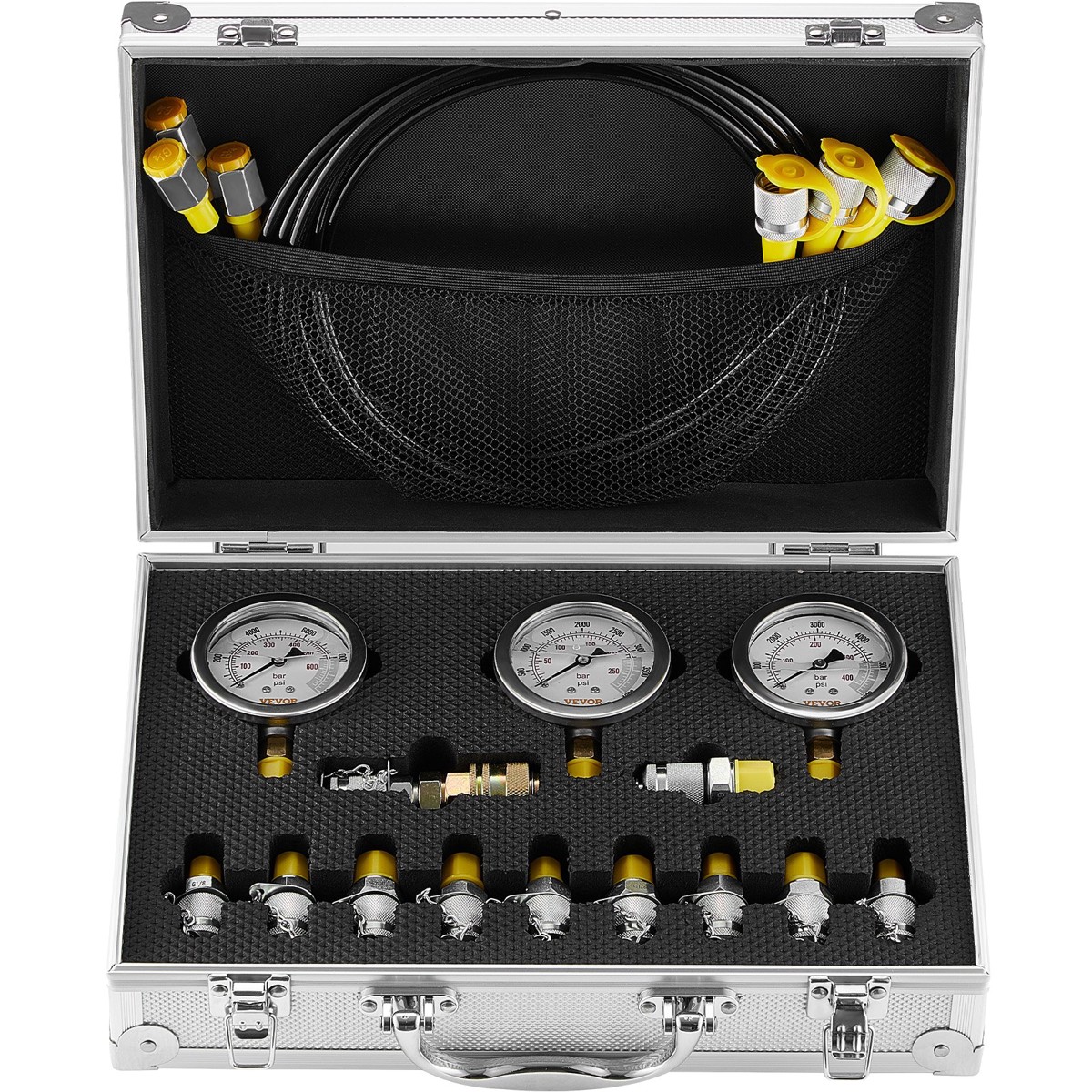 Hydraulic Pressure Test Kit, 250/400/600bar, 3 Gauges 11 Couplings 3 Hoses, Excavator Gauge Set With Portable Carrying Case For Tractors Construction Machinery$80.99View on Mallflare
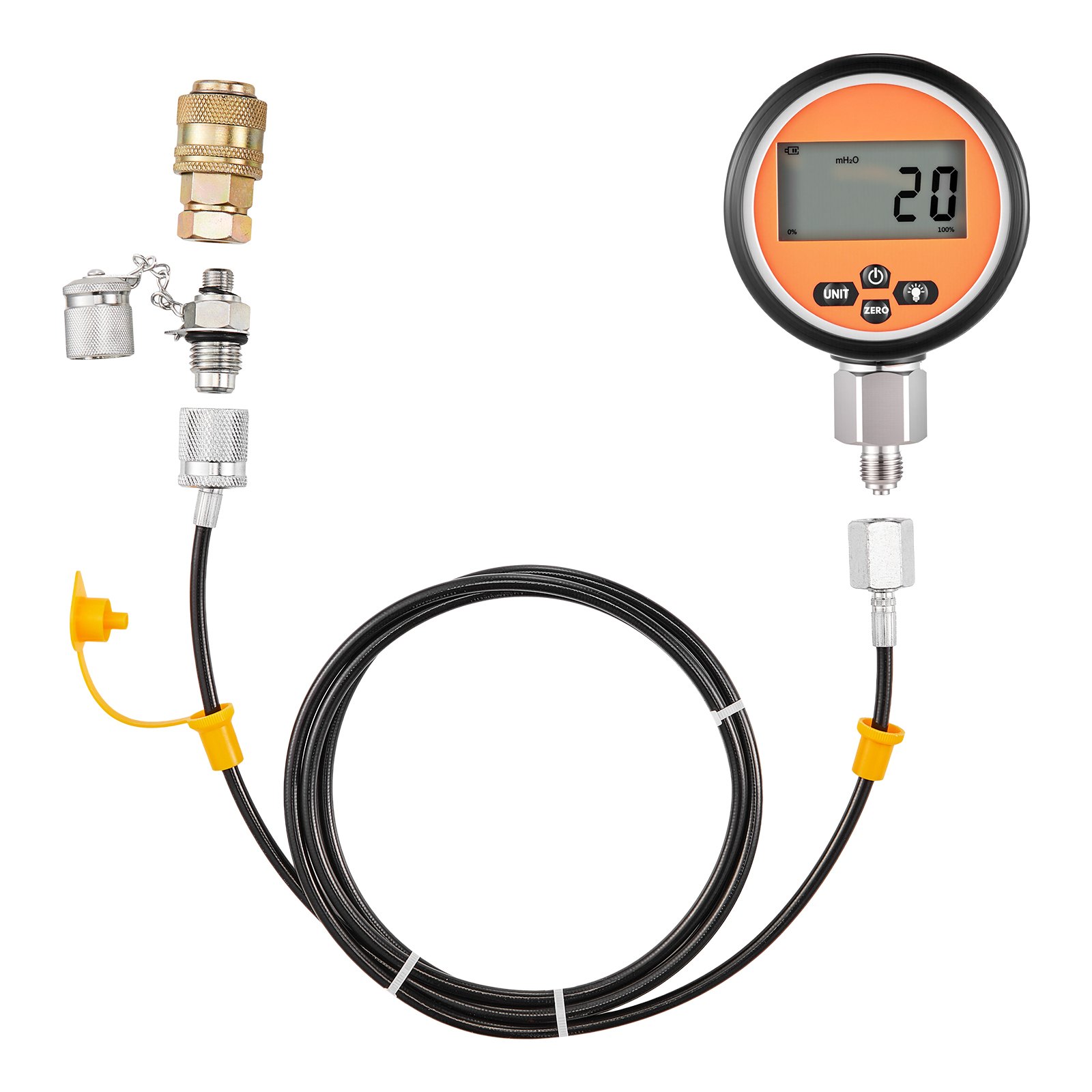 Digital Hydraulic Pressure Test Coupling Kit, 10000 PSI Gauge Manometer Tester With 1 1 1 Quick-Release Coupler, And 1 Hose For Excavator Construction Machinery$139.99View on Mallflare
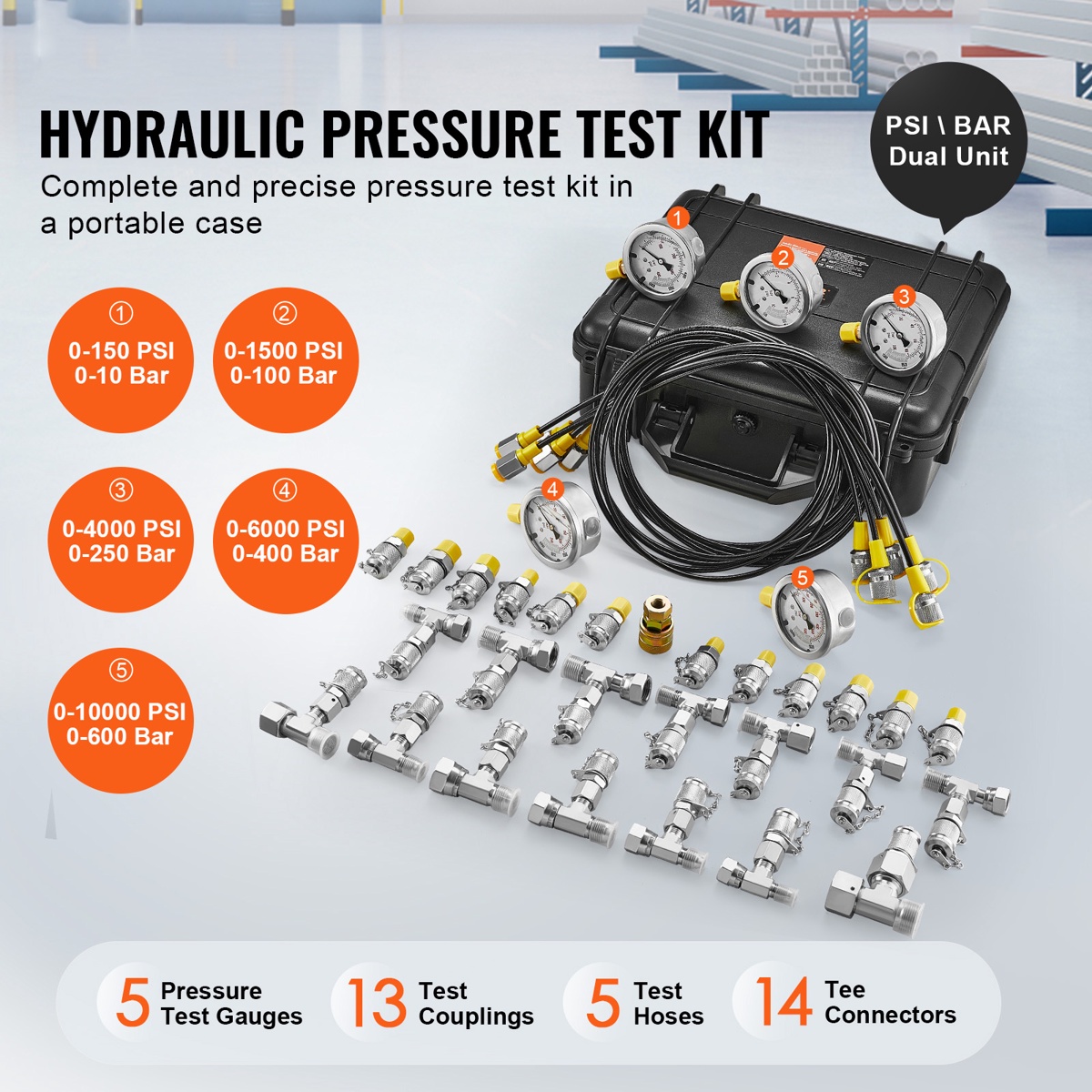 VEVOR Hydraulic Pressure Test Kit, 5 Gauges 13 Couplings 14 Tee Connectors 5 Hoses, Excavator Gauge Set With Carrying Case For Tractors Machinery$182.99View on Mallflare
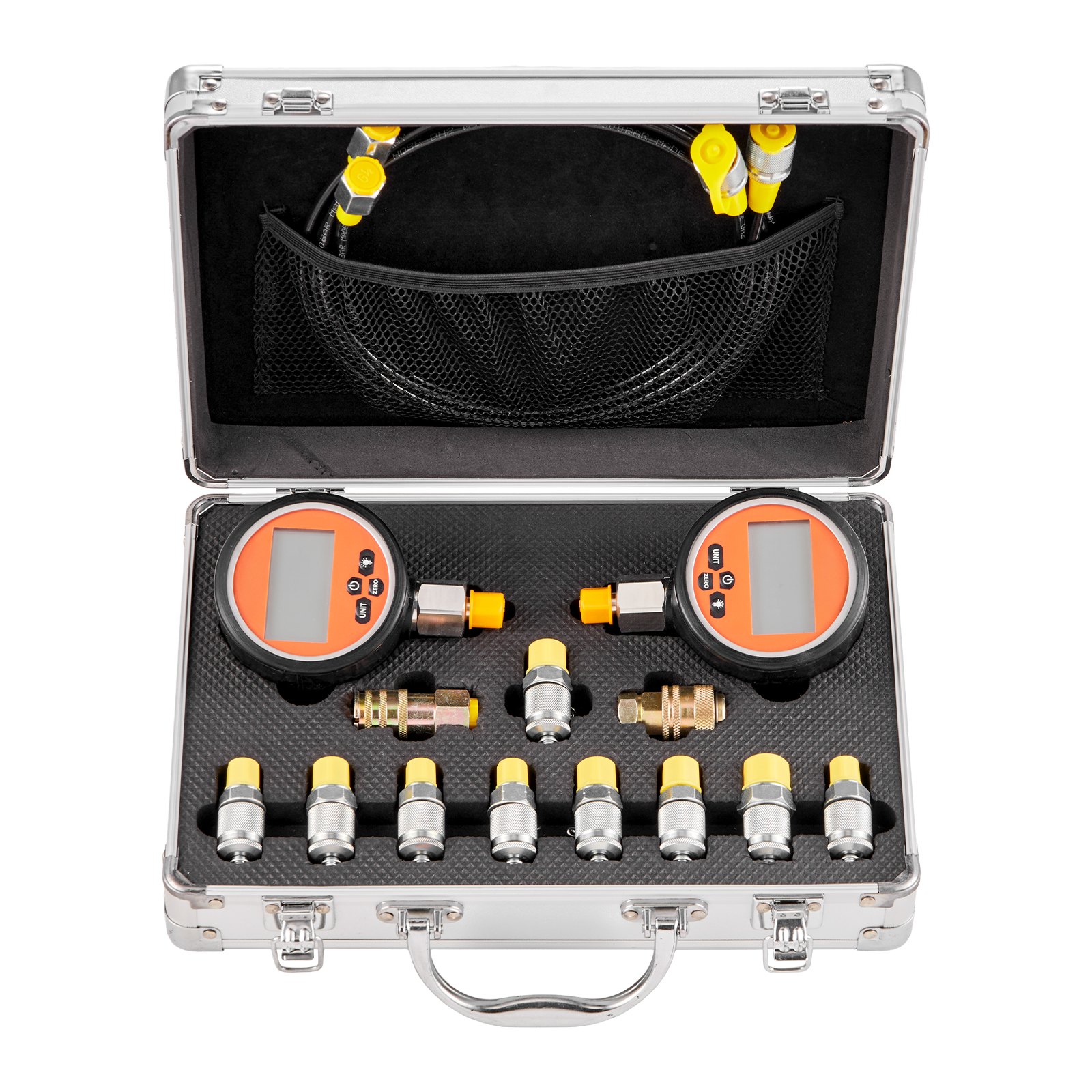 Digital Hydraulic Pressure Test Coupling Kit, 10000 PSI Gauge Manometer Tester With 2 Gauges, 9 Couplings, 2 Quick-Release Couplers, 2 Hoses For Excavator Construction Machinery$230.99View on Mallflare
Highlights
- Analog kits typically ship in 250/400/600 bar tiers (about 3,600/5,800/8,700 psi) to cover excavator, tractor, and attachment circuits; digital sensors span 0–700 bar (0–10,000 psi).
- Coupling count is the real differentiator: 6-coupling kits cover common ports, while 9–13 coupling sets add the sizes needed for mixed fleets and import machinery.
- Gauge accuracy class (commonly ±1.6% or ±2.5% full scale) determines whether you can diagnose fine relief-valve drift or only gross failures.
- Glycerin-filled analog gauges damp needle pulsation and survive pressure spikes; digital units add peak-hold, min/max, and unit switching but depend on battery and sensor condition.
Best use cases
- Best fit: mobile hydraulic tech servicing excavators and tractors — pick a 3-gauge 250/400/600 bar analog kit with 9–13 couplings and 3 hoses to cover main pump, relief, and pilot circuits in one case.
- Best fit: diagnostic work needing peak capture or logged readings — choose a digital 0–700 bar gauge kit with quick-release couplers and at least two hoses.
- Wrong fit: plumbing or hydrostatic pipe testing — a hydraulic oil test kit is not a water hydrostatic pump; buy a dedicated manual hydrostatic test pump with its own tank and 0–50 bar gauge.
- Wrong fit: single-machine owners — a 5-gauge, 14-tee mega-kit adds cost and case bulk; a compact 3-gauge, 6-coupling set is enough for one common port standard.
Buying tips
- Match couplers to your machine's test ports first: common sizes are 1/4-inch NPT and metric quick-release; count distinct port types on your equipment and buy a kit that covers all of them.
- Choose gauge range so normal system pressure sits at 50–75% of full scale: a 250 bar gauge suits 100–180 bar circuits, while 400/600 bar gauges cover high-pressure main circuits.
- Prefer stainless-steel or brass-cored gauge movements and reinforced rubber hoses rated above system peak pressure; burst rating should be at least 2–3x working pressure.
- For fleet work, prioritize kits with replaceable hoses and individually available couplings; sealed proprietary couplers make a kit a dead end when one fitting wears out.
Specs
| Gauge Type | Analog glycerin-filled vs digital sensor |
|---|---|
| Pressure Tiers | 250 / 400 / 600 bar (analog) |
| Coupling Count | 6 / 9 / 11 / 13-piece sets |
| Digital Range | 0–700 bar (0–10,000 psi) |
Related searches
What to check before buying
- List every machine's test-port type and thread (NPT vs metric, quick-release style) and confirm the kit's coupling set includes each one.
- Confirm system working pressure and peak pressure; select gauge tiers where working pressure falls in the middle of the scale.
- Check hose length and end fittings suit your access points—deep excavator valve blocks need longer hoses than tractor remotes.
- Verify case dimensions and weight fit your service vehicle, and that gauges are liquid-filled or shock-mounted for mobile use.
FAQ
Data sources: eBay / Amazon listings and product attribute feeds. Updated Nov 27, 2026.
Some links on this page are affiliate links. If you buy after clicking one, we may earn a commission at no extra cost to you. This does not change which products appear here or their order. Affiliate disclosure.