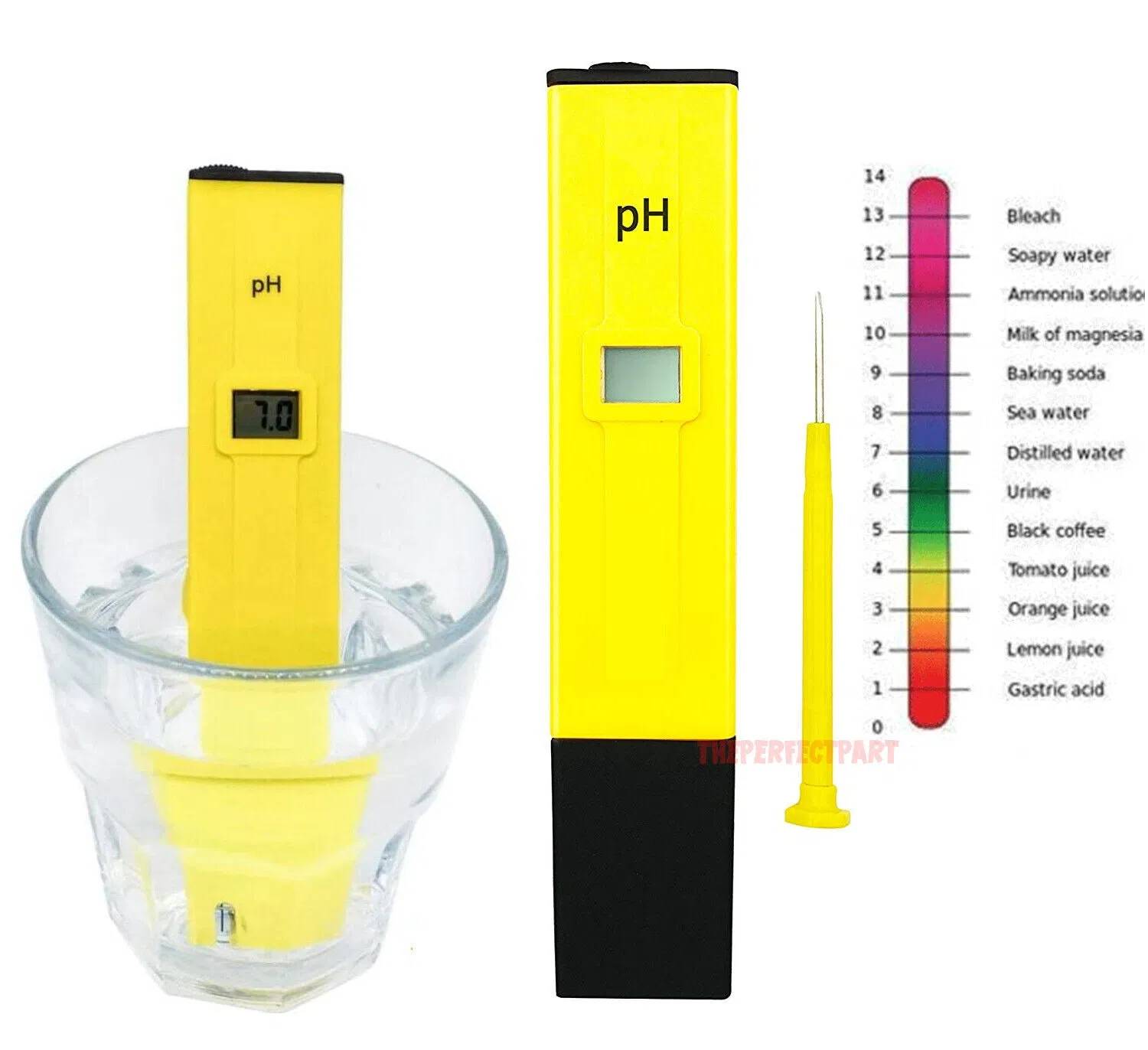

Photos from current listings. Actual item, color, and included accessories may vary.
Digital Ph Meter Buying Guide
A digital pH meter is an electronic sensor that converts hydrogen-ion activity into a numeric readout, and the core trade-off is between a replaceable glass-bulb electrode with proper calibration and a sealed disposable probe with fixed accuracy. Buy a meter with at least two-point calibration, a replaceable electrode, and specified ±0.01–0.05 pH accuracy; skip sealed pens with no calibration or replacement path for anything beyond casual spot checks.
Key takeaways
- Glass-bulb electrodes (often removable BNC or SMA) drift less and last years with storage solution; sealed ISFET/plastic probes are disposable and drift faster but survive rough handling.
- Resolution is not accuracy: a 0.01 pH display with ±0.05 pH accuracy is common at entry tier; lab-grade ±0.01 pH requires a temperature-compensated electrode and fresh buffers.
- Automatic temperature compensation (ATC) matters most outside 25 °C: without it, readings shift roughly 0.03 pH per 10 °C near neutrality.
At a glance
- Category
- Spectroscopy, Analysis & Detection Instruments
- Last updated
- Nov 28, 2026
Current offers
Highlights
- Glass-bulb electrodes (often removable BNC or SMA) drift less and last years with storage solution; sealed ISFET/plastic probes are disposable and drift faster but survive rough handling.
- Resolution is not accuracy: a 0.01 pH display with ±0.05 pH accuracy is common at entry tier; lab-grade ±0.01 pH requires a temperature-compensated electrode and fresh buffers.
- Automatic temperature compensation (ATC) matters most outside 25 °C: without it, readings shift roughly 0.03 pH per 10 °C near neutrality.
- Water meters use two-point 4.00/7.00 or 7.00/10.01 buffers; soil meters need a dedicated extraction or direct-insertion probe because water pH pens read soil slurry only.
Best use cases
- Best fit for hydroponics, aquariums, and drinking-water checks: a pocket pen with ATC, two-point calibration, and ±0.05 pH accuracy; skip uncalibrated three-in-one soil/moisture/light gadgets.
- Best fit for soil and garden testing: a dedicated soil pH probe or a water meter plus a 1:2.5 soil-to-distilled-water slurry method; skip direct-insertion water pens, which clog and drift.
- Best fit for pools and spas: a meter calibrated at 7.00 and 10.01 with replaceable electrode; skip pH test strips when you need repeatable dosing decisions.
- Wrong fit for brewing mash or lab work: entry pens lack the ±0.01 pH accuracy and electrode stability; choose a benchtop meter with ATC and a refillable glass electrode instead.
Buying tips
- Demand two-point calibration minimum; a meter that only offers single-point offset cannot correct slope drift and will read wrong at the ends of the range.
- Choose a replaceable electrode (BNC or screw-in module) so a worn bulb is a part swap, not a whole-meter replacement; sealed pens are landfilled after months of use.
- Match the probe to the medium: water pens for clear liquids, flat-surface or spear-tip electrodes for soil, and never store a glass bulb dry—keep it in pH 4.00 storage solution.
- Verify ATC range covers your conditions (commonly 0–50 °C) and that resolution is 0.01 pH with stated accuracy no worse than ±0.05 pH for meaningful decisions.
Specs
| Accuracy Tier | ±0.01 lab / ±0.05 pen / ±0.1 casual |
|---|---|
| Calibration Points | 2-point (4.00/7.00) minimum |
| Electrode Type | Replaceable glass bulb vs sealed probe |
| Temperature Comp | ATC 0–50 °C vs manual/no ATC |
Related searches
What to check before buying
- Confirm the medium you test most: clear water, soil slurry, semi-solid food, or pool water—each needs a different electrode shape and cleaning routine.
- Check calibration buffers are included or locally available (4.00, 7.00, 10.01) and that the meter supports the two points nearest your expected readings.
- Verify electrode storage: a cap with KCl storage solution or pH 4.00 buffer is required; dry storage ruins glass bulbs within weeks.
- For soil, plan a slurry container and distilled water, or confirm a direct-insertion probe rated for soil; for pools, confirm the meter reads to 0.01 pH and calibrates at 10.01.
FAQ
Data sources: eBay / Amazon listings and product attribute feeds. Updated Nov 28, 2026.
Some links on this page are affiliate links. If you buy after clicking one, we may earn a commission at no extra cost to you. This does not change which products appear here or their order. Affiliate disclosure.