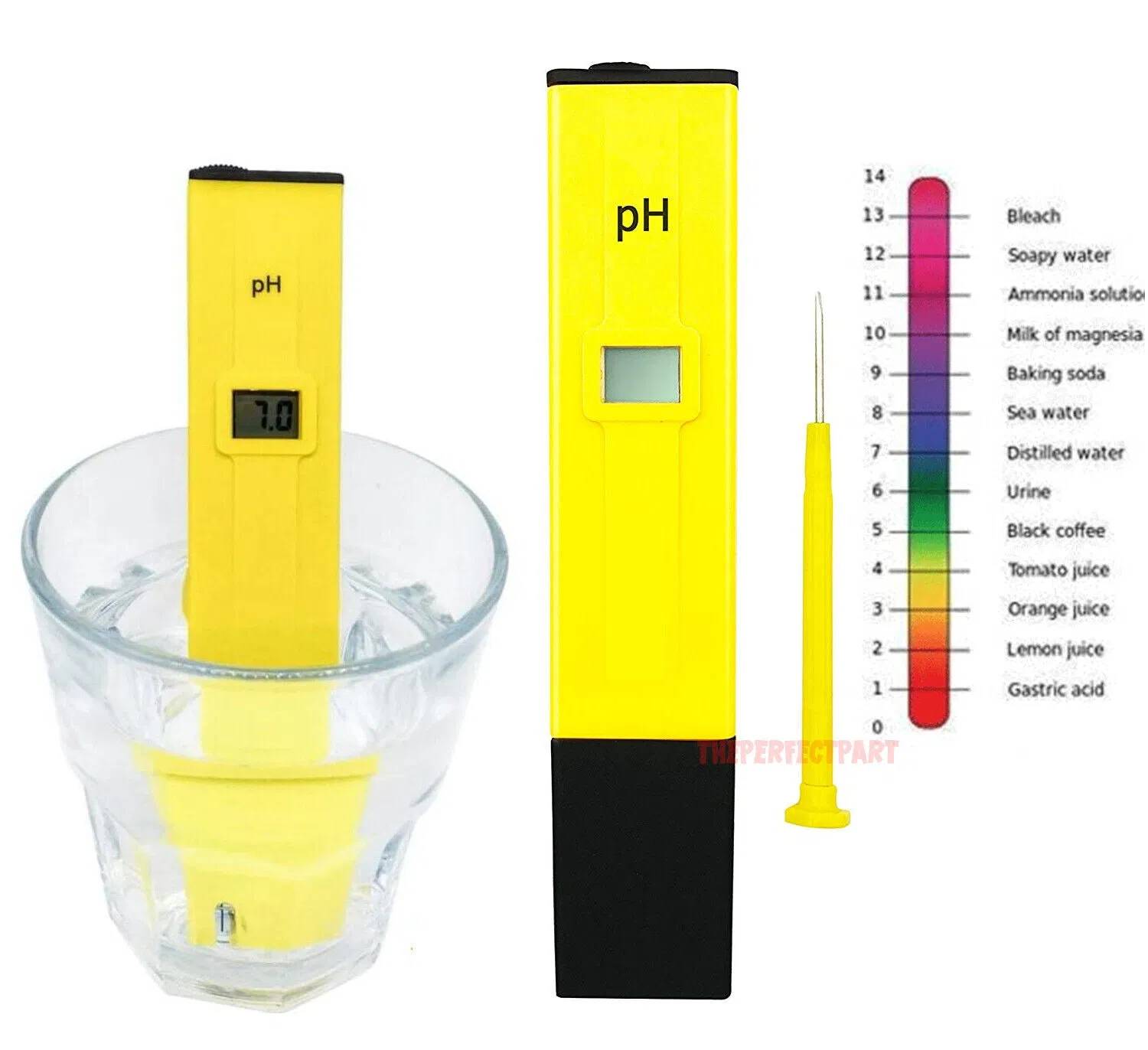

Photos from current listings. Actual item, color, and included accessories may vary.
Digital Ph Meter Aquarium Buying Guide
A digital pH meter for aquariums is a handheld electrochemical pen that converts hydrogen-ion activity into a displayed pH value, and the decisive trade-off is electrode quality versus calibration convenience. Cheap pens use single-junction bulbs with wide drift and no temperature compensation, while durable units pair a replaceable glass electrode with automatic temperature compensation and two-point calibration. Buy a replaceable-electrode, ATC pen with ±0.01 accuracy for any stocked tank; skip sealed non-replaceable pens for reef or discus use.
Key takeaways
- Electrode junction type sets drift: single-junction plastic bulbs drift weekly, double-junction glass bulbs hold calibration for weeks in hard or reef water.
- ATC (automatic temperature compensation) corrects electrode slope across 0-50°C; pens without ATC read 0.1-0.3 pH low in cold water.
- Resolution tiers split pens: 0.1 pH suits fish-only cycling checks, 0.01 pH is required for reef alkalinity and discus breeding.
At a glance
- Category
- Spectroscopy, Analysis & Detection Instruments
- Last updated
- Nov 28, 2026
Current offers
Highlights
- Electrode junction type sets drift: single-junction plastic bulbs drift weekly, double-junction glass bulbs hold calibration for weeks in hard or reef water.
- ATC (automatic temperature compensation) corrects electrode slope across 0-50°C; pens without ATC read 0.1-0.3 pH low in cold water.
- Resolution tiers split pens: 0.1 pH suits fish-only cycling checks, 0.01 pH is required for reef alkalinity and discus breeding.
- Replaceable BNC or screw-in electrode modules extend pen life; sealed pens become e-waste once the bulb coats or cracks.
Best use cases
- Freshwater community tank cycling: pick a 0.1-resolution pen with ATC and two calibration sachets; skip lab-grade 0.01 pens since cycling swings exceed their precision.
- Reef and marine aquariums: choose a 0.01-resolution pen with replaceable double-junction glass electrode and pH 7/pH 10 calibration; skip sealed single-junction pens that drift with salinity.
- Breeding discus or shrimp: select a 0.01 pen with ATC and ±0.01 accuracy plus storage solution; skip 0.1-resolution pens that cannot resolve 0.03 pH spawn triggers.
Buying tips
- Match resolution to livestock: 0.1 pH for fish-only, 0.01 pH for reef, discus, and shrimp; accuracy spec should equal resolution, not exceed it.
- Insist on ATC rated 0-50°C; pens without it misread cold tap water by up to 0.3 pH during water changes.
- Prefer replaceable electrodes (BNC or screw-in module); a sealed pen is disposable once the bulb coats with biofilm.
- Calibrate with fresh pH 7.00 and pH 10.01 buffers, not pH 4.00, because aquarium ranges sit alkaline of neutral; store the bulb in KCl solution, never distilled water.
Specs
| Resolution | 0.1 pH vs 0.01 pH |
|---|---|
| Electrode Type | Replaceable glass vs sealed plastic |
| Temperature Comp | ATC 0-50°C vs none |
| Calibration Points | 2-point (pH 7 + 10 or 4) |
Related searches
What to check before buying
- Confirm your tank's target pH band (6.0-7.5 freshwater, 8.0-8.4 reef) so the pen's calibration points bracket your readings.
- Check electrode access: sump or rear-chamber tanks need a pen with a long 100mm+ probe body to reach water without submerging the display.
- Verify the kit includes pH 7 and pH 10 buffer sachets plus KCl storage solution; pens sold bare need these purchased separately.
- Confirm the pen uses standard button cells (LR44/AG13) rather than a proprietary rechargeable cell that limits service life.
FAQ
Data sources: eBay / Amazon listings and product attribute feeds. Updated Nov 28, 2026.
Some links on this page are affiliate links. If you buy after clicking one, we may earn a commission at no extra cost to you. This does not change which products appear here or their order. Affiliate disclosure.