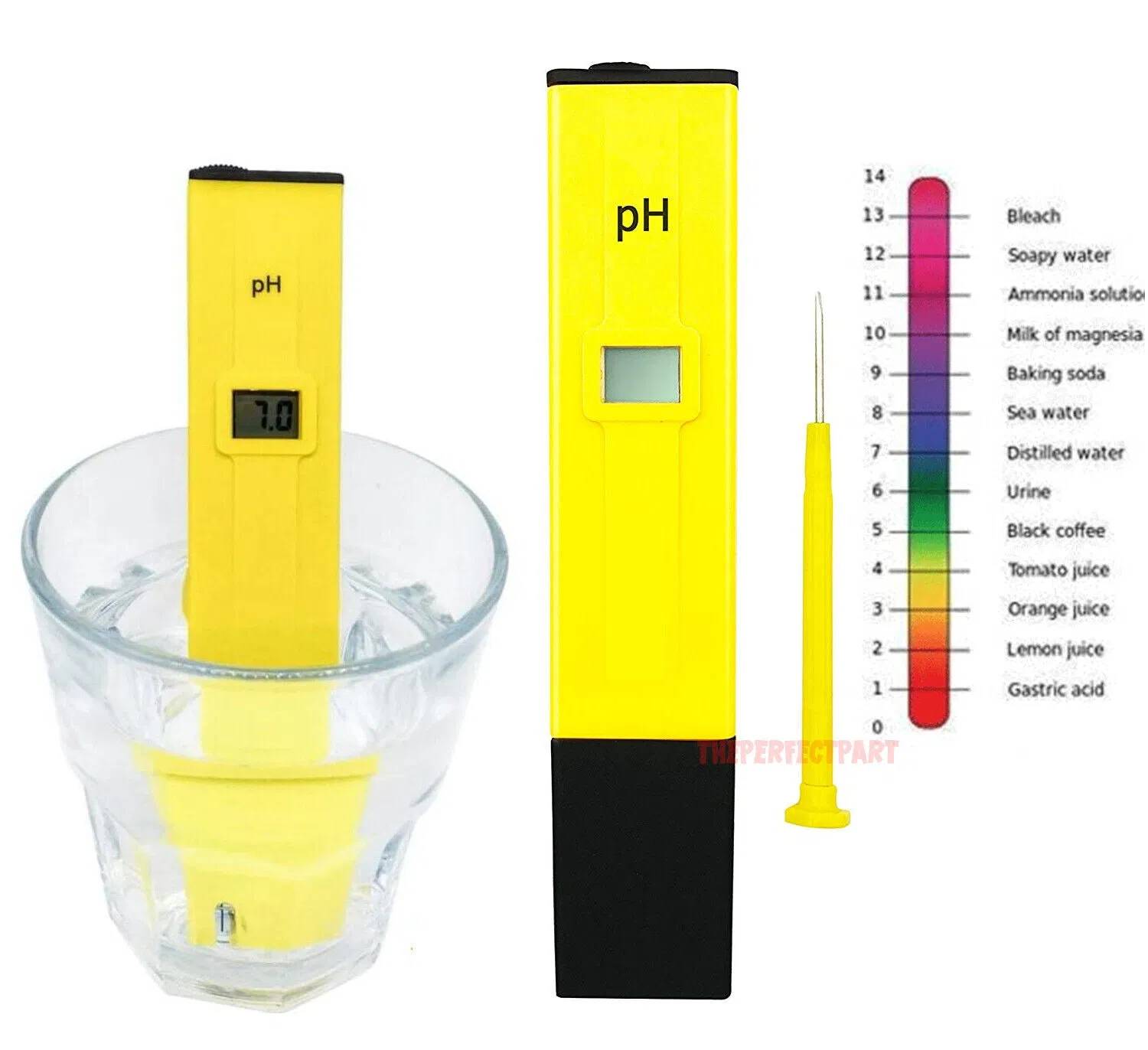

Photos from current listings. Actual item, color, and included accessories may vary.
Digital Ph Tester Buying Guide
A digital pH tester is a handheld electrochemical meter that converts hydrogen-ion activity into a numeric pH reading via a glass electrode and a high-impedance amplifier. The core trade-off is electrode quality and calibration stability versus cost: lab-grade glass bulbs and temperature compensation hold accuracy to ±0.01–0.02 pH, while cheap pen-style units drift to ±0.1 or worse within weeks. The decision rule is simple—buy a meter with automatic temperature compensation (ATC) and at least two-point calibration; skip any pen that lacks ATC or uses a non-replaceable sealed electrode for regular testing.
Key takeaways
- Electrode type defines accuracy: lab-grade glass bulbs hold ±0.01 pH with proper storage, while cheap epoxy or sealed gel electrodes drift to ±0.1 pH or worse.
- Two-point or three-point calibration with fresh pH 4.00, 6.86, and 9.18 buffer solutions is the minimum standard for trustworthy readings; one-point calibration is insufficient for any range work.
- Automatic temperature compensation (ATC) from 0–50°C (32–122°F) is essential—without it, a 10°C swing can shift readings by 0.1–0.2 pH depending on the solution.
At a glance
- Category
- Spectroscopy, Analysis & Detection Instruments
- Last updated
- Nov 28, 2026
Current offers
Highlights
- Electrode type defines accuracy: lab-grade glass bulbs hold ±0.01 pH with proper storage, while cheap epoxy or sealed gel electrodes drift to ±0.1 pH or worse.
- Two-point or three-point calibration with fresh pH 4.00, 6.86, and 9.18 buffer solutions is the minimum standard for trustworthy readings; one-point calibration is insufficient for any range work.
- Automatic temperature compensation (ATC) from 0–50°C (32–122°F) is essential—without it, a 10°C swing can shift readings by 0.1–0.2 pH depending on the solution.
- Resolution and accuracy are separate specs: a 0.01 pH resolution display is common, but only meters rated ±0.01–0.02 pH accuracy pass verification against reference buffers.
Best use cases
- Best fit for hydroponics and aquarium monitoring: a pen-style meter with ATC, two-point calibration, and ±0.05 pH accuracy—skip lab bench meters and meters without replaceable electrodes for daily nutrient checks.
- Best fit for brewing, pool, and spa water testing: a waterproof (IP67) pen meter with 0.01 pH resolution and fast 2–3 second stabilization—skip non-waterproof units and meters that require separate temperature probes.
- Best fit for field or educational sampling: a rugged handheld with a detachable BNC electrode and replaceable cable—skip sealed pocket pens that cannot be recalibrated or repaired.
- Wrong fit for high-precision lab work: any pen-style meter under ±0.02 pH accuracy or without three-point calibration is unacceptable for pharmaceutical or research-grade measurements—choose a benchtop meter instead.
Buying tips
- Verify accuracy spec against resolution: a 0.01 pH display means nothing if the accuracy rating is only ±0.1 pH; demand ±0.02 pH or better for any solution where pH drift matters.
- Check electrode replaceability: BNC connectors or screw-in modules let you swap a degraded bulb for a fraction of a new meter; sealed pens become e-waste once the junction clogs.
- Confirm ATC range covers your sample temperature: 0–50°C covers most water, but brewing mash or heated process samples may need ATC to 80–100°C.
- Buy fresh buffer solutions (pH 4.00, 6.86, 9.18) and storage solution at the same time—a dry electrode loses accuracy permanently; never store a glass bulb in distilled water.
Specs
| Accuracy Grade | ±0.01–0.02 lab / ±0.05 pen / ±0.1 basic |
|---|---|
| Calibration Points | 1-point basic / 2–3 point standard |
| Temperature Comp | ATC 0–50°C (manual without ATC) |
| Electrode Type | Replaceable BNC / sealed gel pen |
Related searches
What to check before buying
- Measure your sample container depth and width: pen meters need at least 3–5 cm of immersion depth for the electrode junction to work correctly.
- Confirm the meter is waterproof to IP67 or better if it will be used near tanks, pools, or outdoor sampling—splash resistance alone is insufficient.
- Check calibration buffer availability: meters calibrated to NIST (4.00/6.86/9.18) versus DIN (4.01/6.87/9.18) standards require matching buffer solutions.
- Verify battery type and replacement: button-cell (LR44) and AAA meters are common, but sealed rechargeable pens cannot be serviced when the cell degrades.
FAQ
Data sources: eBay / Amazon listings and product attribute feeds. Updated Nov 28, 2026.
Some links on this page are affiliate links. If you buy after clicking one, we may earn a commission at no extra cost to you. This does not change which products appear here or their order. Affiliate disclosure.