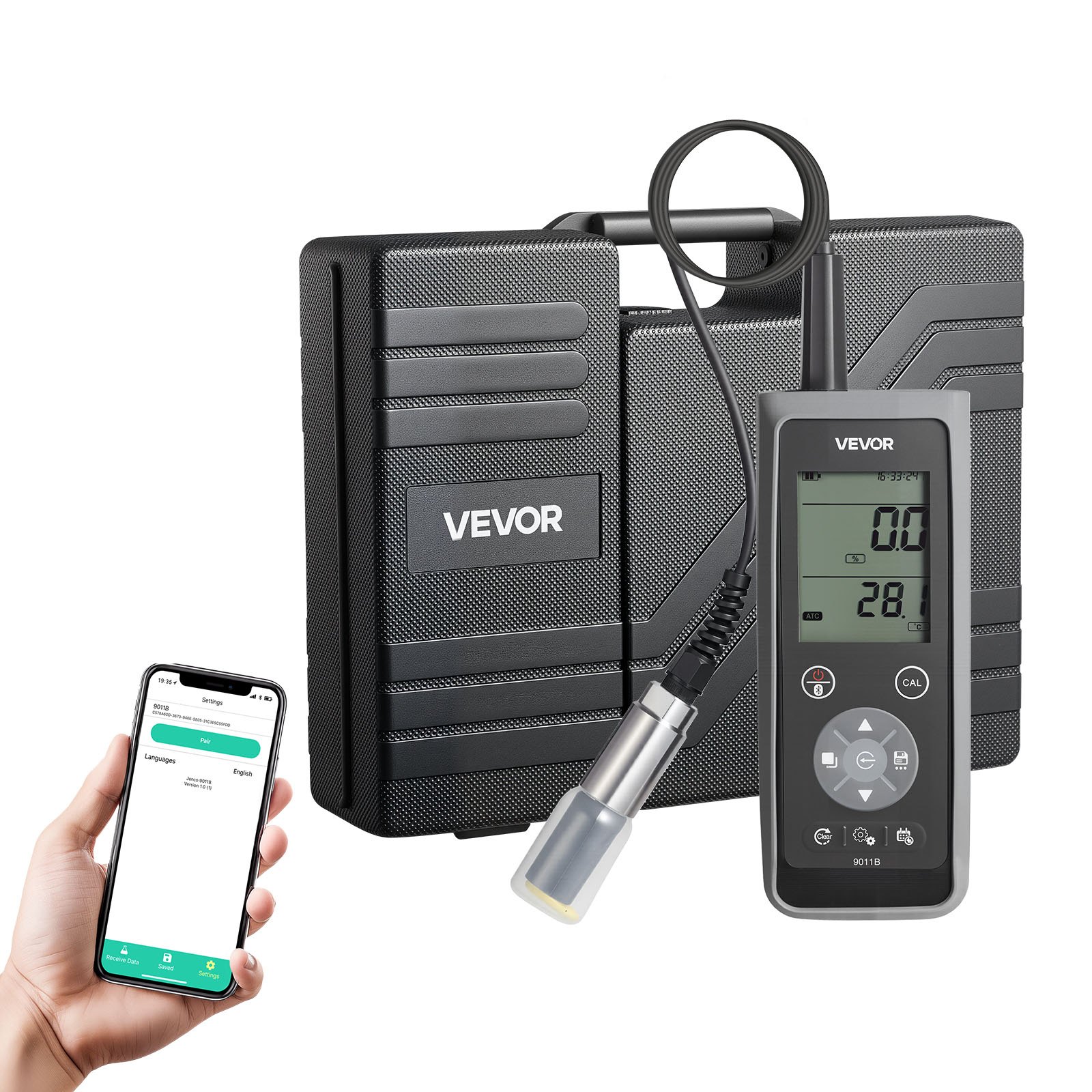

Photos from current listings. Actual item, color, and included accessories may vary.
Dissolved Oxygen Meter Buying Guide
A dissolved oxygen meter measures DO in water via a polarographic or galvanic electrode, with the core trade-off being sensor maintenance (electrolyte/refillable) versus optical (luminescent, low-maintenance) technology. Buyers must match measurement range, salinity compensation, and cable length to their water body and sampling depth. The decision rule: choose a galvanic/optical meter with salinity and barometric compensation for field accuracy; skip uncalibrated pen-style meters for anything beyond spot checks.
Key takeaways
- Galvanic (self-polarizing) sensors need no warm-up and suit field ponds; polarographic sensors require 15-min polarization but offer higher precision in lab use.
- Optical/luminescent DO meters use no electrolyte or membrane, cutting maintenance to an annual cap replacement—ideal for long-term monitoring.
- Measurement range 0–50 mg/L covers supersaturated aquaculture; resolution of 0.1 mg/L and accuracy ±0.3 mg/L is adequate for pond and wastewater checks.
At a glance
- Category
- Spectroscopy, Analysis & Detection Instruments
- Last updated
- Nov 28, 2026
Current offers
Highlights
- Galvanic (self-polarizing) sensors need no warm-up and suit field ponds; polarographic sensors require 15-min polarization but offer higher precision in lab use.
- Optical/luminescent DO meters use no electrolyte or membrane, cutting maintenance to an annual cap replacement—ideal for long-term monitoring.
- Measurement range 0–50 mg/L covers supersaturated aquaculture; resolution of 0.1 mg/L and accuracy ±0.3 mg/L is adequate for pond and wastewater checks.
- Salinity and barometric pressure compensation are essential; without them, readings drift 5–10% in brackish or altitude-variable sites.
Best use cases
- Pond/aquaculture spot checks: pick a galvanic pen or portable with 3–5 m cable, ATC, and salinity compensation; skip optical lab meters that cost more and lack rugged housing.
- Wastewater/field sampling: choose a portable meter with 10–15 ft electrode cable, IP67 housing, and 500+ point storage; skip short-cable pen meters that force you to lean over manholes.
- Long-term remote monitoring: use an optical luminescent meter with data logging and Bluetooth/USB transfer; skip refillable galvanic sensors that need monthly electrolyte changes.
- Lab/BOD measurement: select a polarographic or optical benchtop meter with stirrer and 0.01 mg/L resolution; skip handheld pen meters that lack temperature compensation precision.
Buying tips
- Match cable length to sampling depth: 13 ft (4 m) cable suits ponds and shallow tanks; for deeper profiles, choose 10–15 m or a wireless probe.
- Verify salinity compensation range: 0–50 ppt covers brackish and seawater; freshwater-only meters will misread in estuaries or saltwater ponds.
- Check calibration method: air-saturation calibration is quick for field; zero-oxygen (sodium sulfite) calibration is more accurate for lab and low-DO measurements.
- Pick storage capacity ≥500 sets if you log multiple sites; 750 sets covers a full day of pond profiling without offloading.
Specs
| Sensor Type | Galvanic / Polarographic / Optical |
|---|---|
| Measurement Range | 0–50 mg/L (0–500% sat) |
| Accuracy | ±0.3 mg/L / ±0.5% sat |
| Cable Length | 3–15 m (10–50 ft) |
Related searches
What to check before buying
- Measure your deepest sampling point: cable must reach with slack; 13.1 ft is minimum for pond banks, 30 ft for deep tanks.
- Confirm water salinity: if >0.5 ppt, the meter must have salinity compensation and a 0–50 ppt range.
- Check power: AA/AAA batteries are field-replaceable; rechargeable Li-ion needs USB power and adds weight.
- Verify IP rating: IP67 or IP68 for wet hands and rain; IP54 is splash-only and unsuitable for boat use.
FAQ
Data sources: eBay / Amazon listings and product attribute feeds. Updated Nov 28, 2026.
Some links on this page are affiliate links. If you buy after clicking one, we may earn a commission at no extra cost to you. This does not change which products appear here or their order. Affiliate disclosure.